MONDAY, NOVEMBER 9, 2026
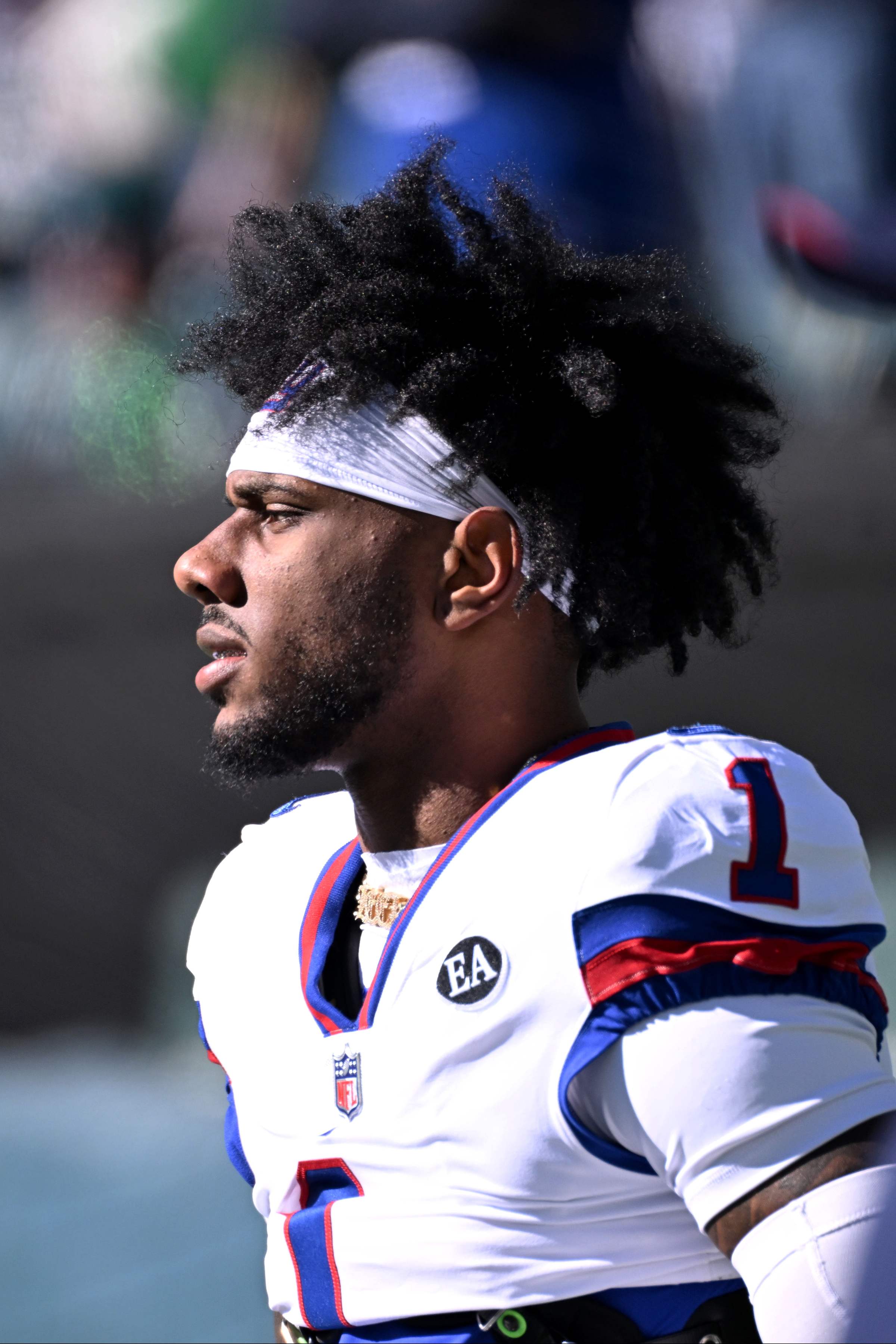
Let’s rewind the tape, because this one is not really about a football game — it is about two words and the long, sloppy road they travelled to reach a superstar’s Instagram. Sunday, at Lincoln Financial Field in Philadelphia: the New York Giants beat the Eagles 19-11, a fistfight of a divisional game that ended a 13-year Giants wait for a win in that building. Malik Nabers, the Giants’ star receiver, had a loud, frustrating afternoon inside the win — five catches for 43 yards on a team-high eight targets, a helmet slammed onto the rack on the sideline, and a dropped end-zone pass in the fourth quarter that would have put the game away. Then he went home, heard what the Fox booth had supposedly said about him, and declared war. “But @gregolsen88 callin me a bad teammate,” he wrote, “when every team I’ve been on, there’s NOBODY I’ve played with had said dat bout me is crazy!” There is one problem, and it is the whole ballgame: Greg Olsen never called him that. Not once. Not in those words, not in any words the broadcast contains. Every Rewind grades the tape that exists — and this tape has a receiver fighting a quote, an analyst publishing his own evidence, and a row of news outlets standing between them holding a sentence nobody said.
What was actually said
Start with the broadcast itself, because almost nobody in this story did. Olsen called Sunday’s game for Fox alongside play-by-play man Joe Davis, and Nabers’ body language became a running topic as his touches dried up. After the helmet slam — Nabers had been wide open and missed on the first throw from backup Jameis Winston, in for the injured J.J. McCarthy — it was Davis, not Olsen, who delivered the sharpest line: “His body language has been terrible today.” Olsen’s contribution, in the passage Awful Announcing transcribed in full, went the other way. He told viewers what Giants offensive coordinator Matt Nagy had told the booth about Nabers: “He’s very vocal. When he didn’t get the ball to start the year, he let everyone know it… What’s perceived as being negative, what’s perceived as being a distraction, I think we both have an understanding of each other that allows it to coexist.” That is a defence, sourced from the receiver’s own coordinator, delivered on national television. Later, when Nabers was still sour after a teammate’s go-ahead touchdown, Olsen laid out the fullest version of his actual criticism: “I have played with a lot of really good wide receivers, a lot really good players. There’s never been a great wide receiver who hasn’t demanded the ball. That kind of comes with the territory. But there is a very fine line between being demanding, being a competitor and all those great things. That’s great. It just can never cross that it feels like it takes away from the success of your teammates. So when your teammate catches a wide open touchdown, you need to be the happiest guy on the field. You can’t still be worried about your targets. That’s the fine line. He is a talented, young, really good player. You’ve just got to keep it in check.” Read it twice. There is a warning in it, and a compliment wrapped around the warning. What there is not — anywhere — is the phrase “bad teammate.”
The criticism that was real
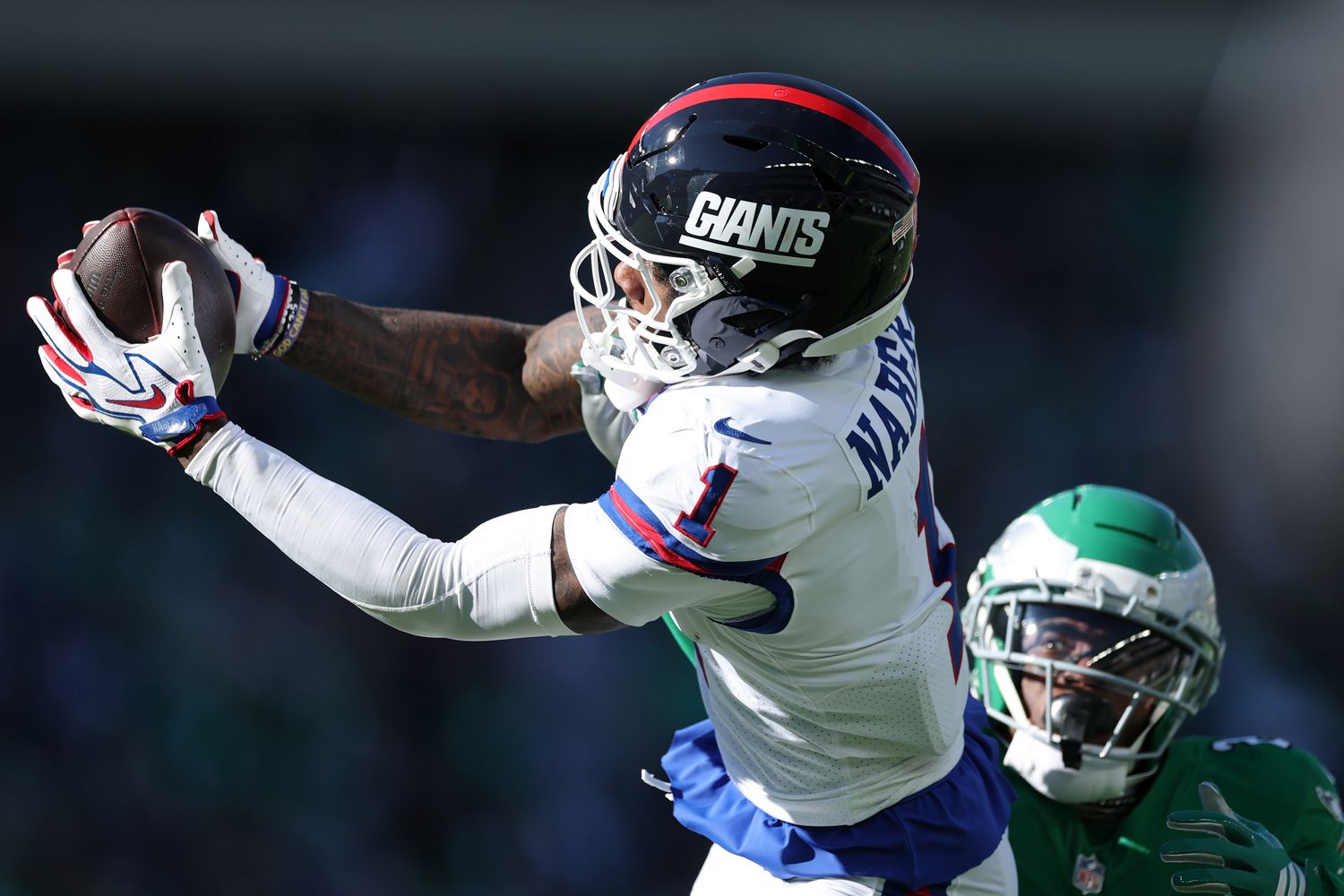
Fairness first, because the Rewind does not launder anybody’s tape: Olsen said hard things about Nabers on Sunday, and Nabers heard a booth that was on him for much of the second half. When McCarthy, back in the game, put a 20-yard pass on him in the end zone in the fourth quarter — a score that would have stretched a one-possession game — Nabers dropped it, hung his head, and hit his own helmet in frustration. Olsen did not soften it: “Listen, you want to demand the ball, you can’t throw that ball any better. That’s a touchdown. You’re a premier player in this league. You’ve got an opportunity there, you’ve got to catch it.” The Post’s version of the same moment carries the blunter compression — “You can’t act like that and drop that pass” — and Nabers himself owned the play afterwards: “I make that play 10 times out of 10.” His wider frustration, in his own postgame words, was with the offence’s first-half sleepwalk: “In a division game, you have to go attack people, you have to go attack the game, and I felt we was just lollygagging our way. I had frustrations about that, trying to wake everybody up.” All of that is on the record, all of it is arguable, and none of it needed inventing. The booth’s real account was already a story: a star receiver visibly fuming through a win, an analyst defending his fire and questioning his face, a dropped touchdown hanging over both of them. Somewhere between the broadcast and the printing press, that story was apparently not enough.
The Instagram post
So Nabers posted. “Y’all be trying create a narrative on me soo bad it’s actually crazy!!” he wrote on his Instagram story after the game. “If you don’t like the way I play the game keep the camera off me!! SIMPLE! But @gregolsen88 callin me a bad teammate when every team I’ve been on, there’s NOBODY I’ve played with had said dat bout me is crazy! My face the same way if I’m havin a good game, bad, winning or losing. If it’s a problem 1. Keep the camera off me. 2. Pray bout it! Simple.” Understand what those words are, because the rest of this story depends on the distinction: that is a player, in his own voice, characterising what he believed a broadcaster had said about his character. It is an accusation, in a deleted-by-morning Instagram story — Yardbarker’s account of the exchange notes the story was deleted, and no apology from Nabers appears anywhere in the reporting. An accusation is where checking starts. In a functioning chain, the next step is a person with the broadcast in front of them pressing play. What happened instead is the donkey, and it has several heads.
The quote that never existed
Here is the chain, link by link, as Awful Announcing reconstructed it on Monday. Nabers’ Instagram characterisation was taken at face value and converted, somewhere upstream, into a direct quotation — Olsen, on the broadcast, calling Nabers a “bad teammate.” The New York Post printed the attribution. USA Today printed it too. Awful Announcing then did the radical thing: it reviewed Sunday’s broadcast, and reports finding no instance of Olsen or Davis using the phrase — concluding that the suggestion originated with Nabers’ social media post, and that both the Post and USA Today appear to have taken their original, inaccurate transcription from a Heavy.com story about Nabers’ remarks. At the time Awful Announcing published, Heavy had not updated its story either. And the chain is still shedding links: the syndicated version of this story carried by Yardbarker (its own footer says it first appeared on Total Pro Sports) prints, as Olsen’s broadcast words, a stitched sentence that exists in no transcript — “There’s a fine line between being demanding and chasing greatness and then being a bad teammate” — which takes Olsen’s real “fine line,” welds Nabers’ two words onto the end of it, and presents the weld as a quote. The same syndicated account has Nabers down for five catches and 40 yards. The box score says 43. When the copying is this careless, the errors do not stay in their lane: a wrong quote, a wrong yardage line, and — in the Post’s own text, whose headline correctly says Fox broadcast while its body and its web address say CBS — even the wrong network gets a turn. None of these outlets invented a game. They just never checked the tape of the one they were covering.
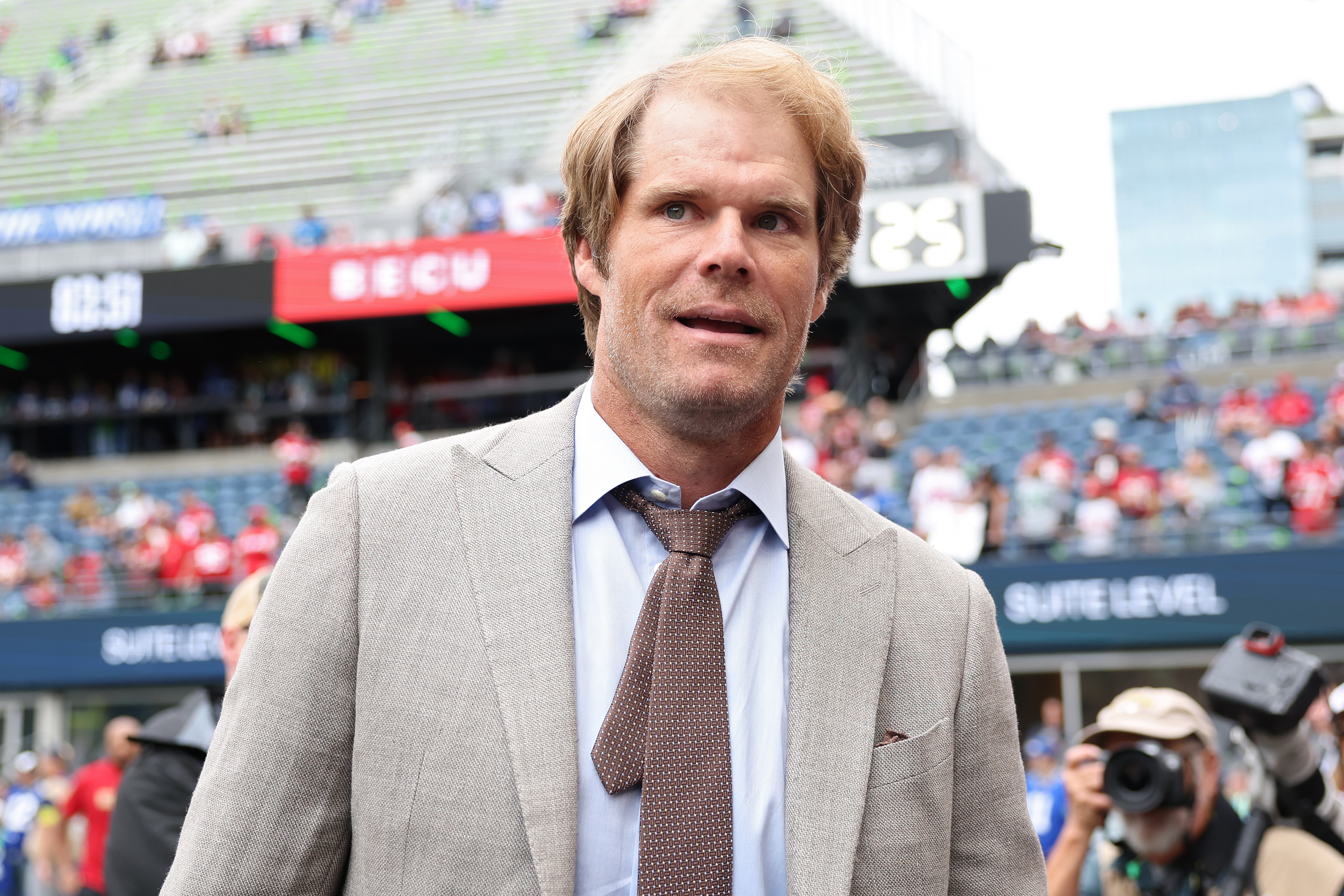
Olsen posted the tape
On Monday morning, the analyst became his own corrections department. Olsen went to X, posted the clip of his actual commentary, and wrote the sentence that should embarrass every desk that touched this before him — accusing the papers of making up quotes and putting “worlds in my mouth,” insisting the booth had never called Nabers a bad teammate, and asking the Post and USA Today to adjust their stories. His full post runs in the embed below. Then he aimed the second post at the printed quote itself, over a screenshot of it: “This quote is just a flat out lie. These words were never said.” Sit with how backwards that is. The primary source in this story is not a document a reporter obtained. It is a video the subject of the reporting published himself, of a broadcast that aired live, in public, the day before — a broadcast any of the outlets in the chain could have rewound at any moment, the way Awful Announcing eventually did. The Post has since adjusted its story: per Awful Announcing’s follow-up, it now includes Olsen’s response and no longer attributes the “bad teammate” quote to him. Adjusted is the whole of it — this piece claims no formal retraction and no apology from the Post, because none is in the reporting, and USA Today’s story was still carrying the attribution when Awful Announcing published.
Since people are going to just make up quotes and put worlds in my mouth, here were my comments on Malik Nabers
— Greg Olsen (@gregolsen88) November 9, 2026
At no point did we ever say he was a bad teammate.
Hopefully @nypost and @USATODAY adjust their stories pic.twitter.com/qV9XR9x5yj
The fairness line
Now the part where this piece refuses to do to Olsen’s critics what the chain did to Olsen. A loud set of fans answered his posts by arguing that the exact wording is a dodge — that he spent minutes on Nabers’ body language and meant every bit of the implication. Sportskeeda rounded the replies up: “I was listening live and you absolutely implied all of that,” one read; another said he was “chewing him out for several minutes” and that the tone is how it came across; others accused him of clipping his own defence out of the clip he posted. Those fans have a real argument about tone, length and emphasis, and it is theirs to make — about what Olsen implied. But implication is criticism’s home turf: you argue it, you quote the real words around it, you let the audience judge. A direct quotation is a different instrument. It is a promise that these words, in this order, came out of this mouth. “Bad teammate” was not a summary of Olsen’s segment that drifted a degree too far. It was two words he never said, promoted from a player’s angry paraphrase into a broadcaster’s quoted verdict, and then syndicated, stitched and reprinted until the analyst had to subpoena his own broadcast. Nabers reacted to what was put in front of him — in a week when his own name was being fitted for a narrative, he read that the booth had called him a bad teammate, in print, and swung at the print. The swing is understandable. The print is the donkey.
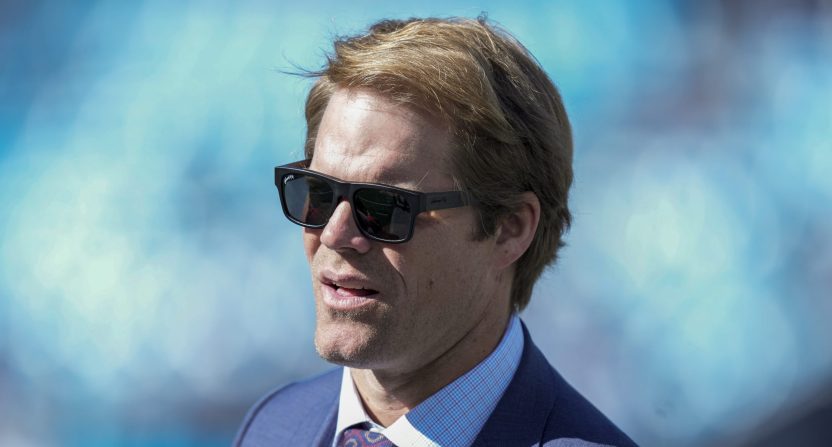
The teaching tape
The Giants, by the way, are fine: 5-2-1, alone in first in the NFC East, hosting Washington on Thursday night, with Nabers — whose four straight 100-yard games the Eagles ended on Sunday — still the most dangerous man in their offence and still, on his own postgame evidence, furious mostly at a first half he thought his team sleepwalked through. Olsen is fine too, in the narrow sense: the tape cleared him, the Post adjusted, and his two Monday posts now sit in the record next to the quote that was never his. What is not fine is the machinery this story exposed, because it runs every day and usually on people without a national broadcast of their own to post in self-defence. A player paraphrases in anger. A transcription site writes the paraphrase down as a quote. Bigger outlets copy the transcription instead of the tape. Syndication copies the copies, welds the seams, and loses three receiving yards on the way. At no point in that journey does the work require malice — it only requires that nobody, at any desk, performs the single cheapest act in journalism: pressing play. The Rewind exists for exactly this grade of tape. The broadcast was always there. It still is. It says what it says, and it does not say “bad teammate.”
THE VERDICT — After review: the donkey is a quotation mark. Two words — “bad teammate” — were set inside them next to Greg Olsen’s name by a transcription chain that never checked the tape, and a star receiver went to war over a sentence that exists nowhere on the broadcast. Olsen said plenty a person can argue with: he defended Nabers, he drew his fine line, and he buried the dropped touchdown — all of it on the record, none of it those two words. Print the criticism. Quote it exactly. But the moment a newsroom stitches a man’s meaning into his mouth and calls it a quote, it is not covering the controversy anymore. It is manufacturing it — and on Monday morning the analyst had to publish his own tape to prove the papers wrong.
Sources · 6 sources
- Greg Olsen calls out New York Post for ‘making up quotes’ about Malik Nabers commentary Awful Announcing · Nov 9, 2026 (the broadcast review — neither Olsen nor Davis used the phrase “bad teammate”; Olsen’s “very fine line” passage and the Nagy defence transcribed in full; the drop criticism in full; Nabers’ Instagram post verbatim; Olsen’s two Monday X posts verbatim; the Post adjusted and USA Today still attributing at publication; the Heavy.com transcription identified as the apparent origin of both papers’ versions)
- Giants’ Malik Nabers slams Greg Olsen for criticism on Fox broadcast: ‘There’s a fine line’ New York Post · Nov 8–9, 2026 (the 19-11 road win; the helmet slam after Winston’s first throw; Davis’s “body language” line; Olsen’s fine-line passage and the “You can’t act like that and drop that pass” line; Nabers targeted a team-high eight times for five catches and 43 yards, ending a four-game 100-yard streak; Nabers’ postgame quotes — “I make that play 10 times out of 10” and the “lollygagging” passage; Olsen’s “flat out lie” response)
- Greg Olsen Goes Right Back At Malik Nabers, Calls Out ‘Flat Out Lie’ Yardbarker (Total Pro Sports syndication) · Nov 9, 2026 (the 19-11 final; Nabers’ Instagram post verbatim; the note that Nabers deleted the story; the stitched “fine line… bad teammate” sentence printed as Olsen’s broadcast words and the five-catches-for-40-yards line — both carried here as exhibits of the chain, not as facts)
- Greg Olsen Pushes Back on Claim He Called Giants’ Malik Nabers a ‘Bad Teammate’ in On-Air Controversy People · Nov 9, 2026 (Nabers, 23, five catches for 43 yards; the Giants led 13-8 midway through the fourth quarter during the second-half demeanour discussion; Olsen alongside Davis in Philadelphia; Olsen, 41, a former tight end who played 14 seasons)
- New York Giants Star Malik Nabers Calls Out Greg Olsen After Game The Spun · Nov 9, 2026 (five catches for 43 yards and the dropped end-zone ball; Davis as the more critical voice; Olsen’s drop quote in full; Olsen’s Monday statement with the broadcast clip)
- ‘You absolutely implied all of that’: NFL fans blast Greg Olsen for calling out media for ‘making up’ quotes about Malik Nabers Sportskeeda · Nov 9, 2026 (the fan replies to Olsen’s posts — the implication argument, the “chewing him out” reply, and the selective-clip accusations — carried as the fairness record; five catches for 43 yards and the end of the four-game streak of 111-plus-yard games)