
SATURDAY, OCTOBER 24, 2026
Let’s rewind the tape to Friday in Austin, because this is a story about a press launch that tackled itself. The Texas Longhorns did not lose a game on Friday. They did something harder to explain: they unveiled a brand-new artificial intelligence platform, chose as its showcase moment a failed fourth down in a loss, and then spent the rest of launch day clarifying that the AI had nothing to do with the play. Nobody made Texas do any of that. The platform did not call the play, the play did not work, and the clarification is not a defence — it is an admission that the example should never have been the example. Roll it from the top.
The launch was not small, and it was not quiet
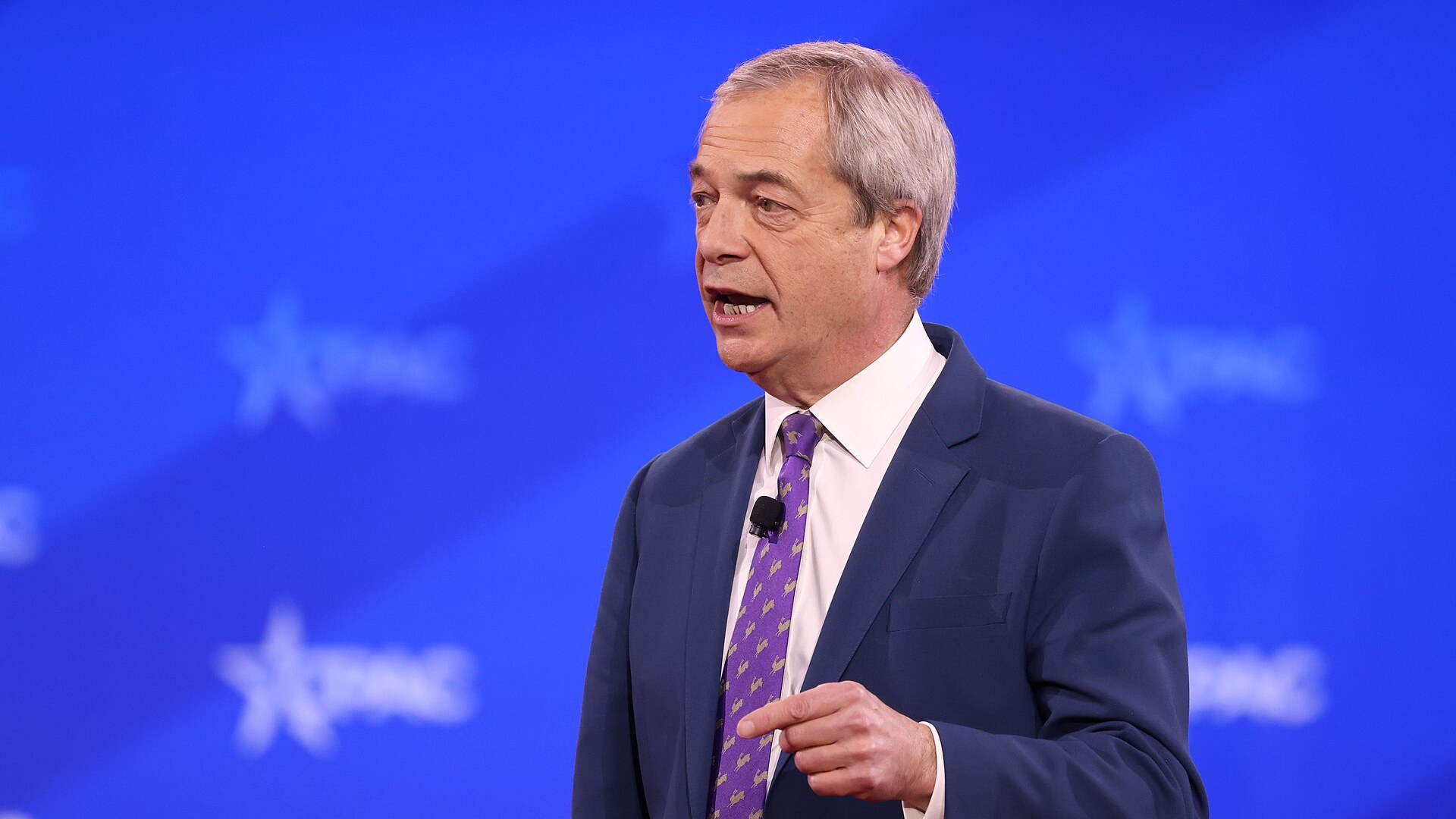
Bevo Lab is a real thing, and Texas wants you to know it is a big thing. Announced Friday, Oct. 23 by Texas Athletics and the Business of Sports Institute in the McCombs School of Business, with Dell Technologies, Google Cloud and SHI International as founding partners, Bevo Lab will, in the school’s own words, “serve as higher education’s premier sports intelligence platform and living laboratory.” It is named for Bevo, the school’s live mascot. It spans all 21 intercollegiate teams and more than 500 student-athletes. It will be housed in Innovation Tower, next to campus. Del Conte, the vice president and athletics director, did not undersell any of it: “Bevo Lab will become the global benchmark for innovation in sports AI and data analytics, making Texas Athletics the most data-driven athletic program in the country,” he said in the announcement. “What starts here changes the world.” In his interviews with the Austin American-Statesman, he went further and called the thing “earth-shattering,” while deputy athletics director Drew Martin said it will “fundamentally change how college athletics programs look at data and utilize data.”
Under the slogans there is actual machinery, and it deserves a fair sentence before the comedy resumes. A unified data warehouse — the Bevo Lakehouse — will pull together sports-specific data that used to sit in separate silos, game film and wearable technology included, starting with football and expanding across all 21 varsity sports. Predictive models, including a “transfer AI” function for roster evaluation, are meant to give coaches usable insight for game strategy, scouting and player development. As many as 40 student researchers a year will work the modelling and data projects under Kirk Goldsberry, the former San Antonio Spurs executive and ESPN analyst who runs the Business of Sports Institute. Texas and Google say their early collaboration has already introduced AI-driven workflows that save coaches more than 15 hours a week in game preparation. That is the pitch, and parts of it are genuinely interesting. A lab that gives coaches their evenings back is a story. Texas just did not lead with that story. Texas led with a fourth down.
Fourth-and-2, from their own 47, down three
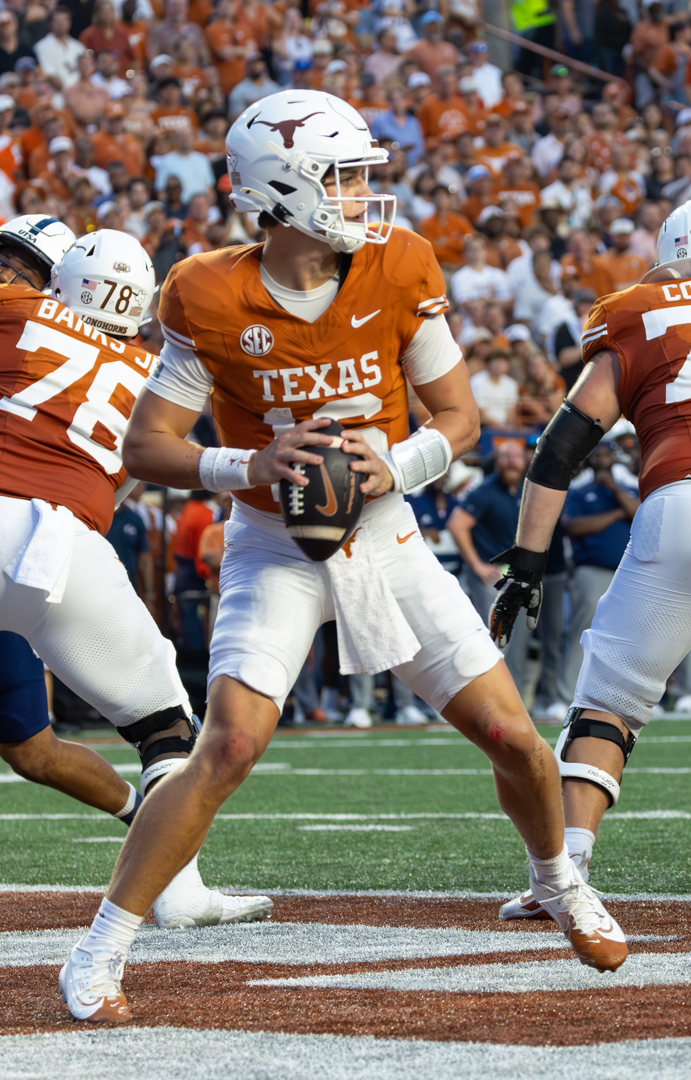
So let’s run the play properly, because launch day produced enough confusion that the record needs setting straight in ordinary sentences. The game was Week 7, Saturday, Oct. 17, at Darrell K Royal–Texas Memorial Stadium in Austin, Florida visiting. Texas built a 17–3 lead, Florida — starting backup quarterback Tramell Jones Jr. for the first time in his career — climbed all the way back, and a 28-yard Patrick Durkin field goal put the Gators in front 20–17 with 10:43 left in the fourth quarter. Texas drove to near midfield. With about 8:30 remaining, down three, head coach Steve Sarkisian kept his offence on the field for fourth-and-2 from the Longhorns’ own 47. The call was a designed quarterback run. Arch Manning was dropped for a three-yard loss. Turnover on downs. Six plays later Jadan Baugh scored from 11 yards out to make it 27–17, and although Manning answered with a 62-yard strike to Emmett Mosley V and a nine-yard touchdown pass to Cam Coleman that cut it to 27–24 with 4:21 left, and although Texas got the ball back one more time, Manning was sacked and lost a fumble with just over two minutes left and Florida ran out the clock. Final: Florida 27, Texas 24. That final matters, because some of Friday’s coverage printed 20–17 as the result. It was not the result. It was the score at the moment of the play — the moment Texas Athletics decided to build a launch around.
And be clear about what this segment is and is not saying about that play, because the desk punches up and it punches accurately. Going for it on fourth-and-2 near midfield, down three in the fourth quarter, is a decision plenty of modern coaches — and plenty of the analytics models Bevo Lab exists to build — would defend in the abstract. The run lost three yards; that happens to aggressive calls every Saturday in college football. Manning executed the call he was given, and nothing in this story is about his run. Sarkisian owned the decision the way head coaches own fourth downs. The donkey in this story is not a play call. The donkey is a communications strategy that took a failed gamble in a home loss — the second straight loss, after Oklahoma, for a team that had started 4–0 — and hung it in the window like a trophy.
“A pivotal embrace”
Here is the sequence, in the order it happened, because the order is the whole joke. In the Statesman’s launch-day report, Del Conte cited that fourth-down decision as an example of the program using its new AI-driven platform. He described the failed decision, in the paper’s account, as “a pivotal embrace” of the technology. In the Longhorns Wire version of the same interview, he is quoted telling the Statesman of the football staff and the platform: “It’s happening. They’re bought in.” Read those two lines the way any normal fan reads them and you reach the conclusion the entire internet reached by lunchtime: Texas let its shiny new AI lab talk it into going for it on fourth-and-2 from its own 47, down three, and the robot’s big idea lost three yards. USA Today reported that Del Conte’s comment drew ire from some Longhorns fans and mockery from elsewhere around the country. Fox News’ OutKick coverage put it in fan terms — supporters scrambling across social media, wondering whether Sarkisian had fired up the platform on the sideline and asked it which play to run, like a head coach playing a video game with the season on the line. When your launch-day conversation is entirely about whether the machine called the worst-looking play of your last loss, your launch day has left the building.
The clarification, same day
To his credit — and the credit is real, because a lot of administrators would have let it ride until Monday — Del Conte walked it back fast. Within hours on Friday, with OutKick putting the turnaround at about an hour, he clarified. The clarification reached the public through Bobby Burton of On Texas Football, and every outlet that carried it carried the same sentence in substance: the fourth-down decision was an example of what the AI platform could suggest, not what it actually did. Larry Brown Sports put the cleanest version on the record: the decision was not based on Bevo Lab analysis; Del Conte had offered the play only as an example of what the platform could suggest. Bleacher Report’s follow-up had Del Conte clarifying comments that suggested Texas used Bevo Lab insights during the Florida loss, while describing the platform itself as “the new wave” — a tool to assist coaches’ decision-making in preparation, available to every Texas team, not a voice in Sarkisian’s headset in the fourth quarter against Florida.
Now hold the two halves of launch day up next to each other and look at them honestly. Half one: this play is a pivotal embrace of our AI — it’s happening, they’re bought in. Half two: the AI did not have anything to do with this play. Both halves cannot be the showcase. If the platform did not inform the call, the call proves nothing about the platform, and choosing it as the illustration was a self-inflicted wound. And if the defence is that the platform could have suggested going for it — well, the play it would have suggested lost three yards and handed Florida the ball at midfield in a game Texas lost by three. There is no version of the example that sells the lab. There was a version of this launch that did: 40 student researchers, coaches getting 15 hours a week back, one warehouse for film and wearable data across 21 sports. Texas had a perfectly good future to announce. It announced a turnover on downs instead. This desk has rewound an AI launch stepping on its own rake before — an AI menu that floated a full English breakfast in a pint of cola — and the pattern holds every time: the technology is never the funniest part. The rollout is.
Rome is not burning. The example is.
Context makes the choice stranger, not softer. Del Conte insisted on Thursday, before launch day, that he is not panicking about a football season that has tilted from a 4–0 start to back-to-back losses and a slide to No. 19 in the polls. “Rome is not burning,” he said, in comments carried by theScore via CBS Sports’ Brandon Marcello. “Expectations should be high. They’re high for us, too. That’s why you come to University of Texas. But the noise is a lot greater outside than it is in our building.” He is right about one thing: the noise is outside the building. On Friday, his own launch handed the noise a microphone, a headline and a three-yard loss to chant about. Texas hosts No. 7 Ole Miss on Saturday night, in a game that now carries the season’s remaining margin for error, and the football team will either win it or it won’t, with coaches making the calls either way. Bevo Lab will do whatever it is actually going to do in the months ahead, in preparation rooms and data projects, where its value was always going to be decided. None of that needed a failed fourth down as a mascot. The tape does not lie, and neither does the timeline: launch in the morning, pivotal embrace by the report, clarification by the afternoon, and a premier sports intelligence platform whose first public lesson was about messaging, not data. More tape lives in The Rewind collection.
THE VERDICT — After review: Texas Athletics is outta pocket.
Sources · 8 sources
- Texas football turned to AI. Then came one very awkward fourth down USA Today · Oct 24, 2026
- Texas Athletics and McCombs School of Business Launch New Bevo Lab Texas Athletics (official announcement) · Oct 23, 2026
- Did Texas use artificial intelligence to call fourth-down play against Florida? Longhorns AD clarifies report Fox News / OutKick · Oct 23, 2026
- Did Longhorns coach Steve Sarkisian use AI for on-field decision? Longhorns Wire / USA Today · Oct 23, 2026
- Texas AD addresses report linking AI to key play in Florida loss Larry Brown Sports · Oct 23, 2026
- Texas AD clarifies AI use on key 4th down in loss to Florida theScore · Oct 23, 2026
- Steve Sarkisian, Texas Using New AI Platform 'Bevo Lab' to Assist with Decision Making Bleacher Report · Oct 23, 2026
- Texas Longhorns vs Florida Gators — Week 7 game record (scoring plays) Sportradar · Oct 17, 2026