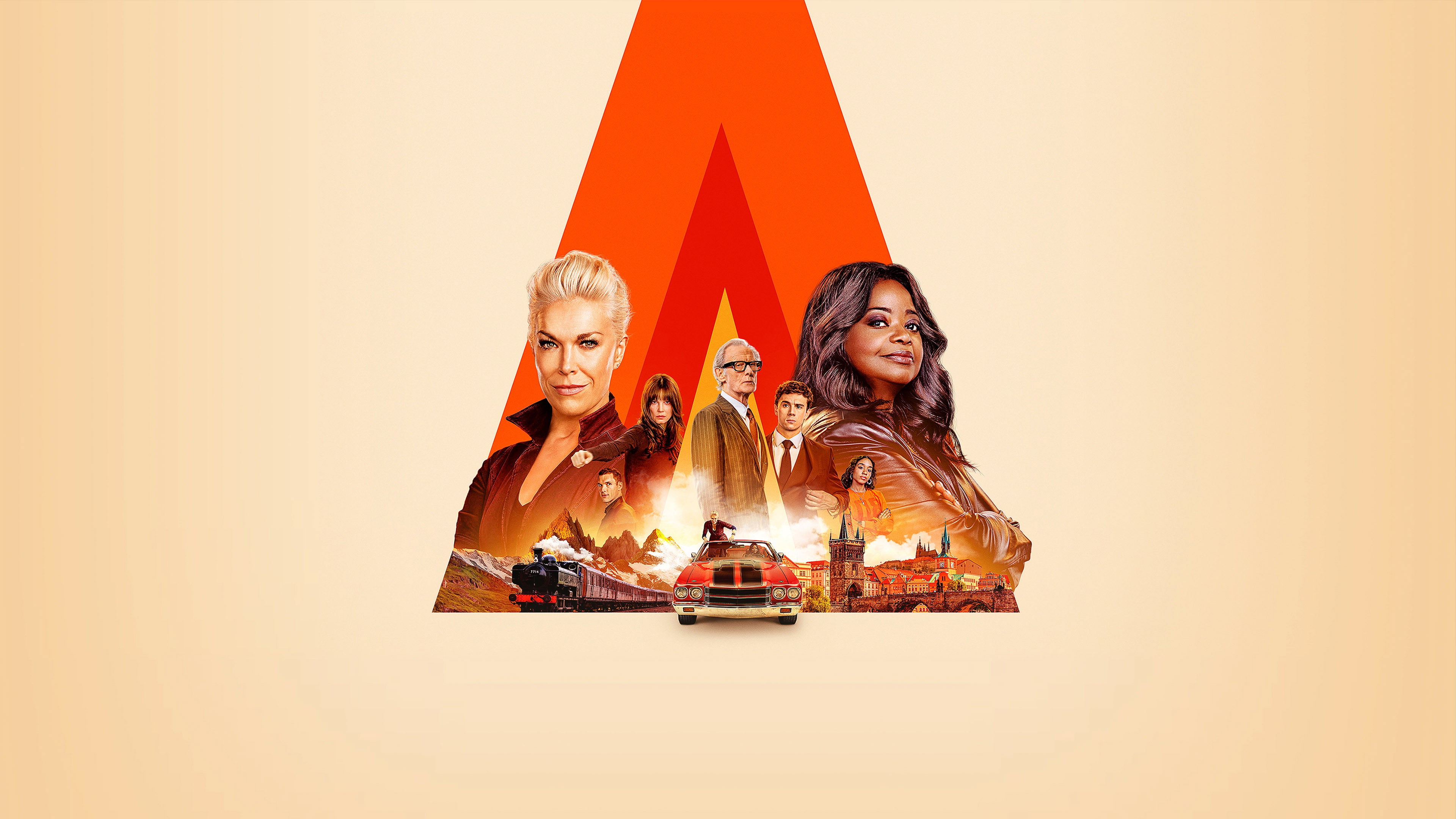
Read the sentence twice, because it doesn't parse on the first pass. On September 19, Prime Video canceled Ride or Die after one season. Ride or Die starred Octavia Spencer and Hannah Waddingham as a buddy spy-comedy duo. In its first two weeks, it became Prime Video's most-watched new scripted series of the past year. Critics gave it a 96% on the Tomatometer; audiences gave it 85%. And then it was gone.
This is the story I keep having to write, and it's the one the audience keeps refusing to believe: viewership is not the currency. Views are the press release. The actual currency — the number that decides whether a show lives — is something closer to cost-per-completed-viewer, and it lives in a spreadsheet nobody outside the building ever sees.
Think about what a show like this costs. Two genuine movie stars, which means two genuine movie-star salaries, plus the backend expectations that come with them. An action-comedy, which means stunts, locations, second-unit days — the expensive kind of television, not the two-people-in-a-room kind. A first season that has to introduce the premise, the characters, and the world from zero, which is the most expensive season any show will ever produce. Now set that against the renewal question: what does Season 2 cost, and how many subscribers does it retain that wouldn't stay anyway?
The cruelest part of the streaming economy is that being watched isn't enough. A show has to be watched by the right viewers — the ones who joined or stayed because of it — at the right cost. A beloved, expensive, star-driven first season that everyone samples and nobody needs a second season of is, in the cold math of the content budget, a marketing expense that already did its job.
And here's the thing the 96% tells you: quality was never the question. Nobody at Prime Video sat in a room and decided Octavia Spencer and Hannah Waddingham weren't good. The Tomatometer doesn't pay for Season 2. The audience score doesn't pay for Season 2. The only thing that pays for Season 2 is a financial model that says the next eight episodes are worth more than whatever else that money could buy — and in 2026, with every streamer trimming, that money is competing against everything.
So the autopsy isn't really about Ride or Die. It's about the gap between what the audience can see (everybody watched it, everybody liked it) and what the audience can't (what it cost, who it kept, what it displaced). Until streamers publish the real math — and they never will — every cancellation that looks insane from the outside will keep looking insane. The numbers that matter are the ones we'll never get. That's not a bug in the coverage. That's the story.
Start with how big 'big' was, because the numbers are genuinely startling. Deadline's original September 19 report laid them out: Ride or Die premiered July 15 with all eight episodes dropping at once, immediately hit No. 1 in the daily U.S. rankings — eclipsing even the big-budget Masters of the Universe film — and logged 927,000 views in just two days on Luminate's weekly U.S. rankings. That was twice what Elle drew in its first two days, nearly four times Off Campus, and more than four times Every Year After. It zoomed to No. 1 in U.S. minutes watched in its first full week, a trend that continued into week three, and the show topped Prime Video's global chart for three weeks before spending more than two months in the streamer's Top 10.
Nielsen told the same story from a different angle: the series debuted at No. 8 on the overall streaming chart and No. 3 among originals with 869 million minutes viewed, then climbed to No. 4 overall and No. 2 among streaming originals in its second week with 922 million minutes. Over its first 14 days, it was, per Deadline, Prime Video's most-watched new scripted series in the U.S. across a full year — July 30, 2025 to July 29, 2026. Read those numbers again and then read the headline: canceled after one season. The gap between the two is the entire story of the streaming era.
The cast didn't go quietly, and Octavia Spencer's response is worth quoting at length because it's really about the industry, not the show. Posting to Instagram on September 21 — two days after Deadline broke the news — Spencer, 56, who starred as Debbie Claybourne and executive-produced the series, wrote: 'I hope every creative out there gets to have the incredible experience that I've had bringing this project to life with the unwavering support from Skydance/Paramount these past three years.' Then the line that traveled: 'Projects like this shouldn't be the exception, they should be rule! For all the women out there who felt seen, laughed out loud, lived out loud with Debbie and Judith, thank you. This was a fun one!' She thanked creator Tessa Coates and executive producers Matt Thunnell, Dana Goldberg, and Barbara Muschietti by name.
What exactly got canceled: an action-comedy created by Coates and directed by Peyton Reed, built around a premise with real engine — Debbie Claybourne (Spencer) learns her best friend Judith Burton (Waddingham) is secretly an international assassin, and when a hit goes wrong, both their worlds turn upside down as they're forced to go on the run together. The supporting cast stacked character-actor gold: Ed Skrein, Calam Lynch, Savannah Steyn, Jamie Parker, Jacky Ido, Sylvia Hoeks, and Bill Nighy as a figure billed only as The Director. For Waddingham — the Emmy-winning Ted Lasso breakout — it was her first major action lead, and the Debbie-and-Judith chemistry was the thing critics and audiences agreed on: 96% Tomatometer, 85% audience score.
The business context makes the cancellation legible, if not less painful. The series was developed and produced at Skydance Television before moving to Paramount Television Studios after Skydance Media's acquisition of Paramount Global — with Amazon MGM Studios, Spring Tide, Double Dream, and Orit Entertainment also producing. Paramount Television is now shopping a second season to other buyers, per Deadline, and the season ended on several cliffhangers, so a rescue isn't structurally impossible. Meanwhile, the cancellation landed three months after Amazon MGM Studios restructured its television leadership — Kara Smith was bumped to head of drama, and development and drama executives including Odetta Watkins exited. New regimes cancel old regimes' bets. That's not a conspiracy theory; it's a calendar.
And here's the contrast that stings. In the same fortnight Prime Video walked away from its most-watched new scripted series of the year, it handed Reacher a two-season renewal and picked up the Neagley spinoff for Season 2. One streamer, two verdicts, same month. The difference is the one this column keeps circling: Reacher is a proven procedural chassis with a 30-novel backlog and multi-season production economics; Ride or Die was a beloved, expensive, star-driven first season whose audience sampled it without the model proving they'd stay for Season 2. Browse what's still standing in the TV section and you can feel the strategy: franchises get the benefit of the doubt, and everything else gets the spreadsheet. Until the math goes public — and it never will — the insane-looking cancellations will keep looking insane. The numbers that matter are the ones we'll never get.