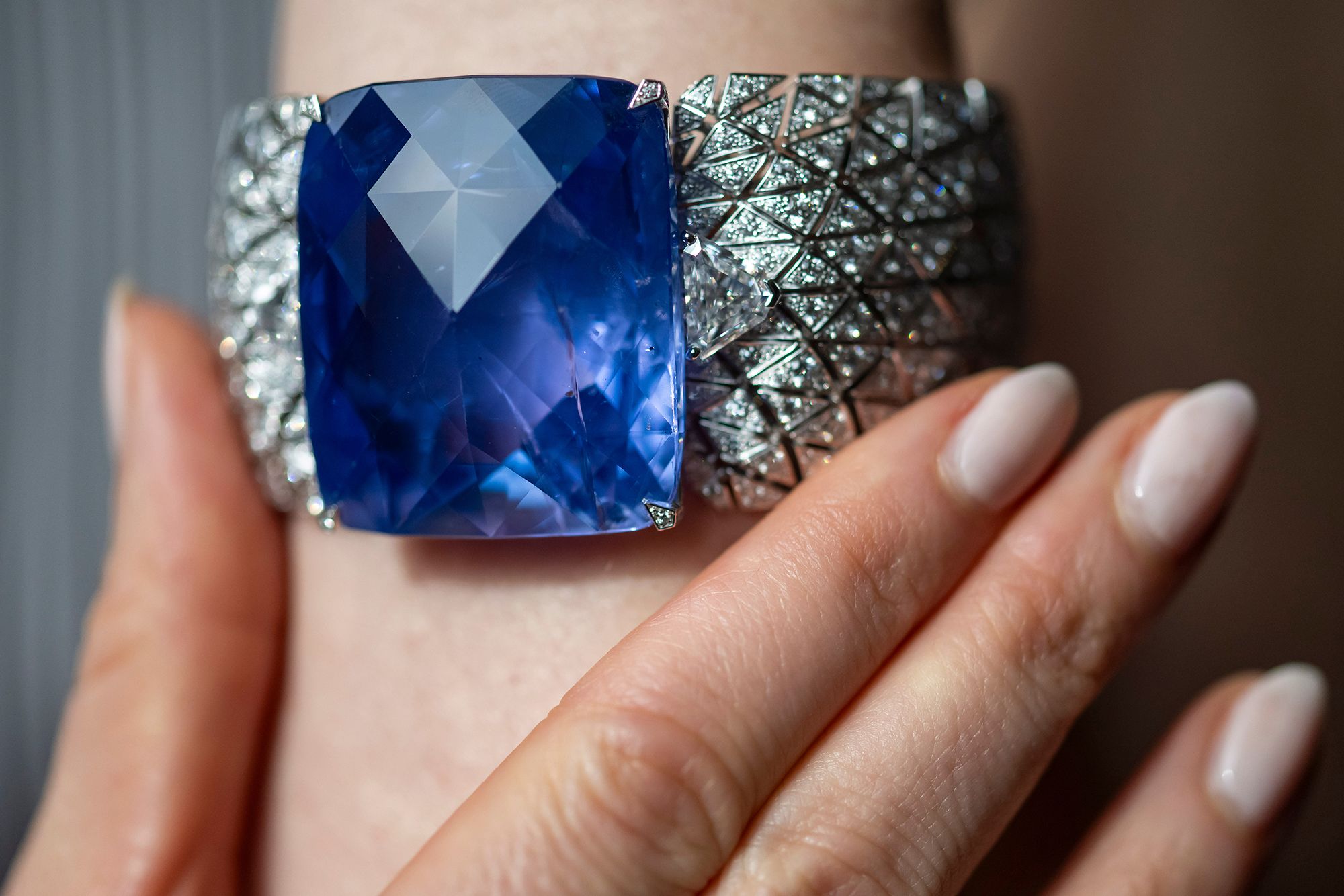
The lot came late in the evening, number 1080 in Sotheby's Royal & Noble Jewels sale in Geneva on Wednesday, and the room had been waiting for it. Bidding opened at 700,000 Swiss francs. Two private European collectors traded it upward for ten minutes before an anonymous telephone bidder took it at 4.1 million francs — $4.9 million, against a pre-sale estimate of 850,000 to 1.7 million francs. More than double the top of the range. The Associated Press reported the buyer as a private collector, not identified, and Rapaport put the sale's total at 15.3 million francs, $18.4 million, with the sapphire as its top lot.
A hundred and ninety-seven carats, never heated
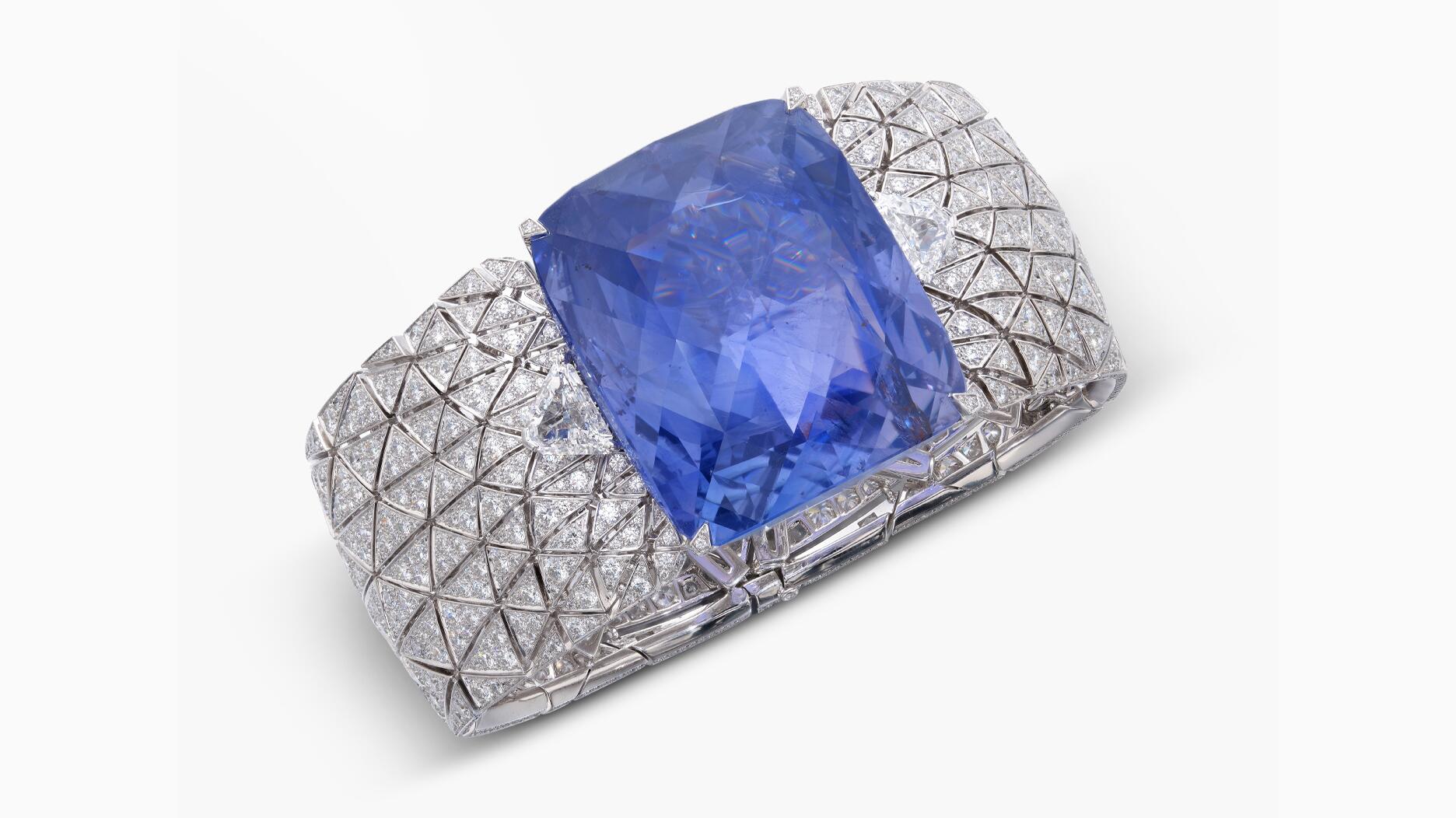
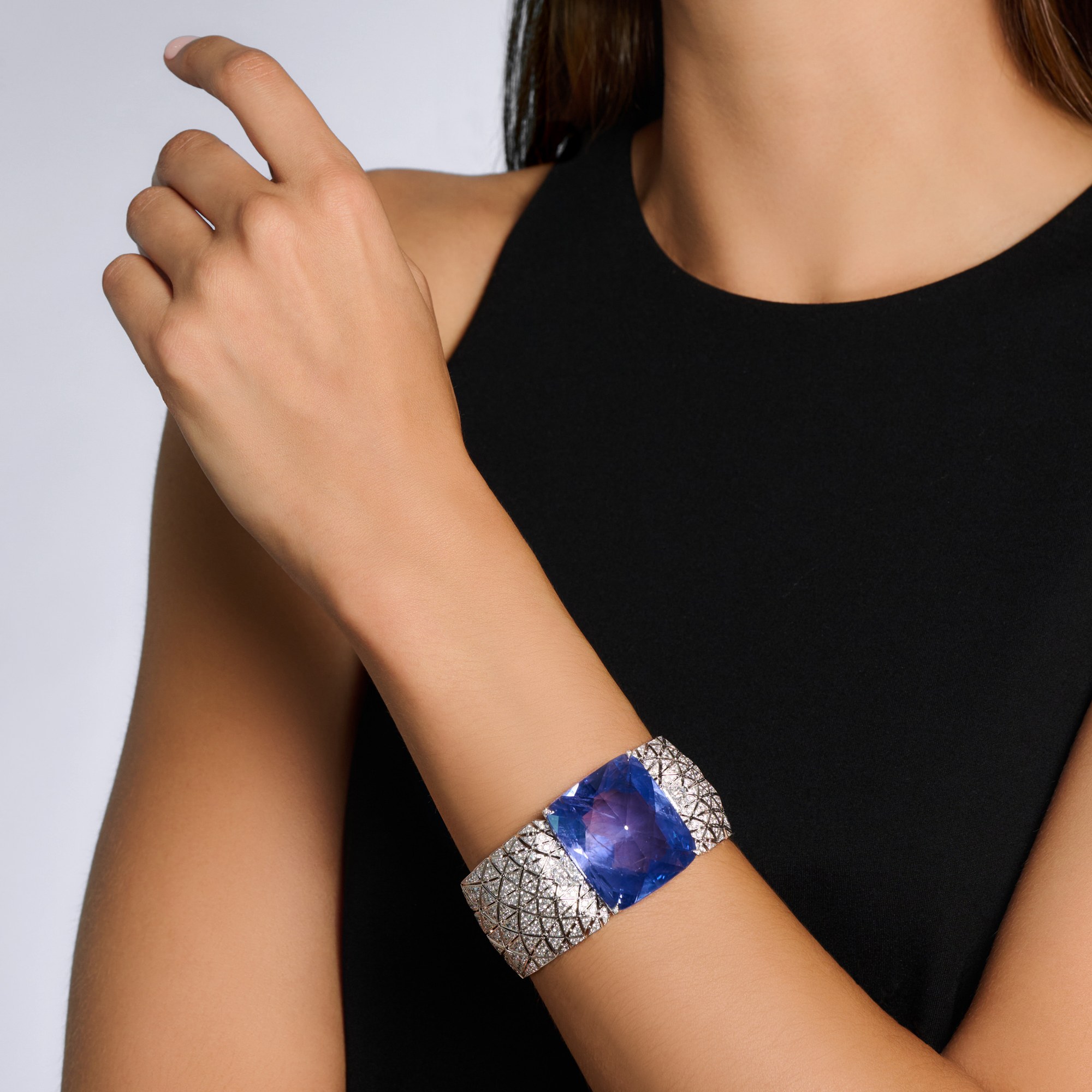
The bracelet is the youngest thing about the lot. At its centre sits a cushion-shaped sapphire of 197.80 carats, from Ceylon, and — the detail specialists build careers on — never heated. Almost every sapphire on the market has been heat-treated to deepen its colour; a stone of this size that reached the present day untreated is a museum object that happens to be wearable.
Both Swiss laboratories have said so four times over: SSEF examined it in 2014 and again in January 2026, Gübelin in 2015 and in December 2025, and all four reports conclude Ceylon origin with no indications of heating. Sotheby's specialists take the stone's unusual faceting — a domed, almost pyramidal cut — as the mark of a Mughal-era cutter, which would make the gem itself older than the empire that collected it. At the estimate, the house was asking roughly 4,300 to 8,600 francs a carat. The room paid more than 20,000.
The last ball
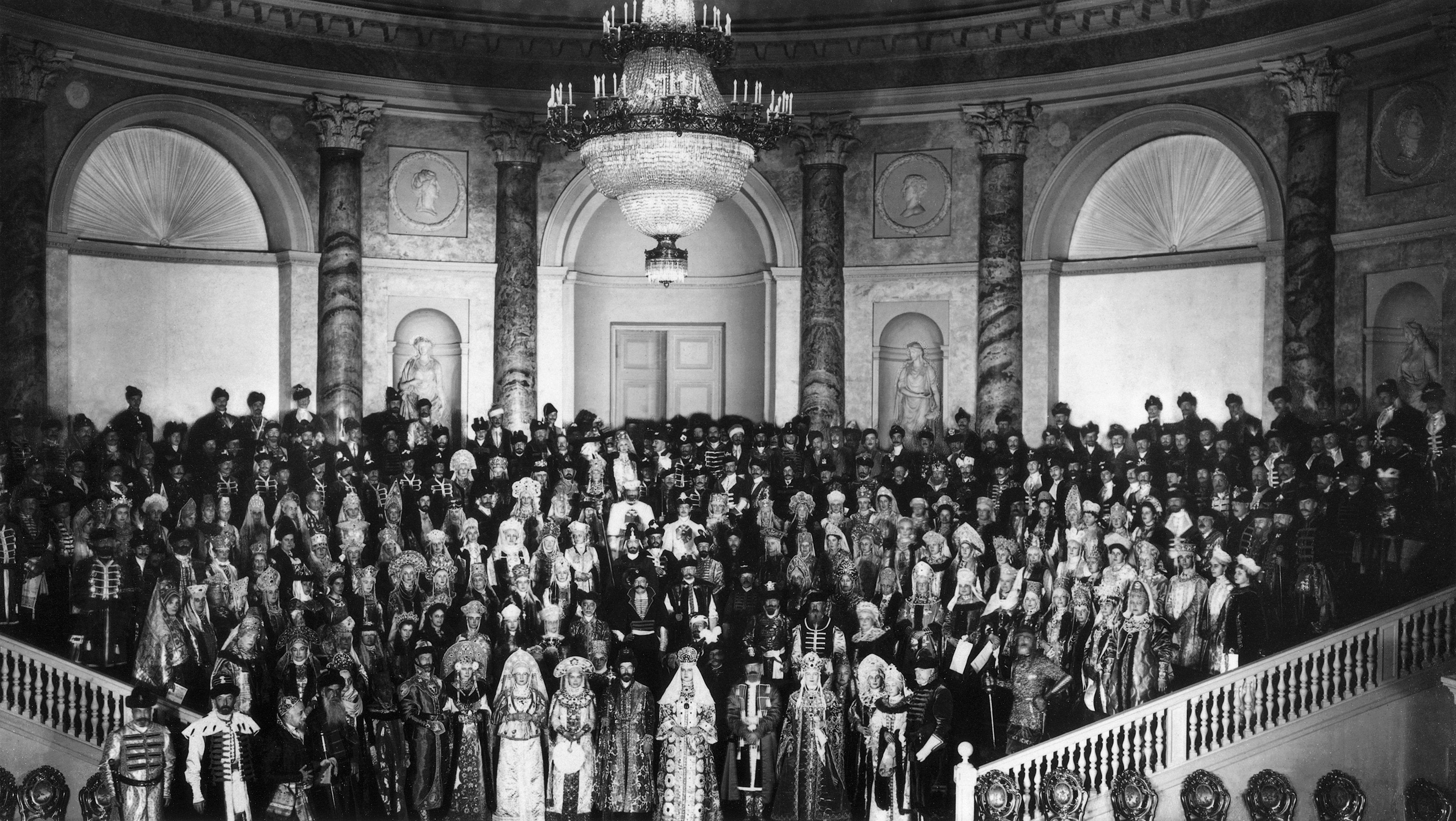
The sapphire entered the record at the top of the Romanov world. Set by Fabergé, it was one of a pair of great Ceylon stones the Dowager Empress Maria Feodorovna — mother of Nicholas II, Russia's last tsar — wore together on the front panel of her skirt at the Winter Palace costume ball of February 1903. The ball, staged for the bicentenary of St Petersburg with the court dressed in the fashions of seventeenth-century Muscovy, is remembered now as the last great spectacle of imperial Russia. Fourteen years later that world ended, and the sapphires went into store rooms.
Sold without its name
After the Revolution, the Soviet commission led by the mineralogist Aleksandr Fersman inventoried the crown jewels and sorted them by worth. The pieces judged central to the nation's history stayed in Moscow. The Romanov sapphire fell into the third class — stones whose value was treated as purely intrinsic — and it was sold off anonymously, its imperial past deliberately left out of the transaction. It resurfaced in 1927 at Cartier, where the soprano and socialite Ganna Walska bought it as the centre of a sautoir.
Walska wore it, reworked it, and held it for more than four decades; when she finally sent her jewels to auction in New York in 1971 to fund her California garden, Lotusland, the sapphire was lot 75 of the sale. It crossed the block again in Geneva in 1992, hanging then from a rope of emerald and sapphire beads — a great stone still travelling without a settled home.
Cartier, twice
The house that sold the stone to Walska bought it back in 2012, and in 2015 Cartier gave it the setting it wears now: a wide bracelet built as a geometric field of brilliant-cut diamonds, with modified shield-cut diamonds at either shoulder of the stone. The mounting is transformable — an engraved rock-crystal centre, set with triangular diamonds, can take the sapphire's place, giving the bracelet a second, paler life. In this form the jewel was exhibited in Cartier's The Crystallization of Time in Tokyo in 2019. It is a thoroughly modern object wrapped around an ancient one, and the Geneva room priced it as both.
What the room was buying
A French edition of the Fersman catalogue now accompanies the lot as literature — the very inventory that once consigned this sapphire to anonymity, sold as a gemstone alone, travelling with it a century later as proof of pedigree. That is the whole transaction, stated plainly. In the 1920s the stone's history was worth nothing because the sellers chose to erase it; on Wednesday night the history was the premium. Ten minutes of bidding doubled the estimate, and a crown jewel the commissars discounted walked out of Geneva as the top lot of the season — name restored, at $4.9 million.
Sources · 6 sources
- Associated Press — "A Romanov sapphire bracelet sells for $4.9 million at a Geneva auction" (November 12, 2026): the CHF 4.1 million / $4.9 million result, the 850,000–1.7 million franc estimate, the private-collector buyer
- Rapaport — "Romanov Sapphire Sails Past Estimate to Score $5M at Sotheby's" (November 12, 2026): the result against the estimate and the sale total of CHF 15.3 million / $18.4 million, the sapphire its top lot
- CNN — "Romanov sapphire bracelet smashes auction estimate, sells for $4.9 million" (November 12, 2026): the price and estimate, the Cartier mounting, the lot listing's provenance
- Sotheby's — Royal & Noble Jewels, Geneva, lot 1080: the house's own lot description — the crown-jewel provenance, the 1903 ball, the Soviet dispersal, Ganna Walska, the 2015 Cartier bracelet and the SSEF / Gübelin reports
- Newstro — "Historic 198-Carat Romanov Sapphire Bracelet Sells for $4.9 Million at Geneva Auction" (November 12, 2026): the bidding account — opened at 700,000 francs, a ten-minute contest between two private European collectors, taken by an anonymous telephone bidder
- Photos: Associated Press via CNN (hero, Geneva preview); Sotheby's lot photography via National Jeweler and via PA Media; the 1903 Winter Palace ball photograph, public domain via Wikimedia Commons. Video: Sotheby's official YouTube film for the sale. No photograph is captioned as an event it does not show.