There is no US price tag on this system. There is a process, and the process has a first step with a number on it: $10,000. That is the reservation deposit on Sennheiser's US page for the HE 1 — after which a representative reaches out to confirm the order, production of your system starts, and only when it is ready for shipment does Sennheiser get in touch to complete the final payment. The page states no full US price, and this story does not invent one. The deposit is the first step, not the system price.
The full-system figures that do exist belong to other markets or other years, and each is labelled. In Sennheiser's own EU store the HE 1 lists at €89,990. In Britain the maker's store has carried it at £79,000. In the United States, the figure in print is reporting, not a quote: ecoustics' factory reporting from Tullamore in March 2024 carried the system at $70,000, and Popular Science's 2025 factory tour reported the same figure — dated independent reporting in both cases, not a current maker price. A written complete-system US quote exists only at the end of that representative conversation, and until it is public, the honest American number is the deposit.
One system, two halves, a block of marble
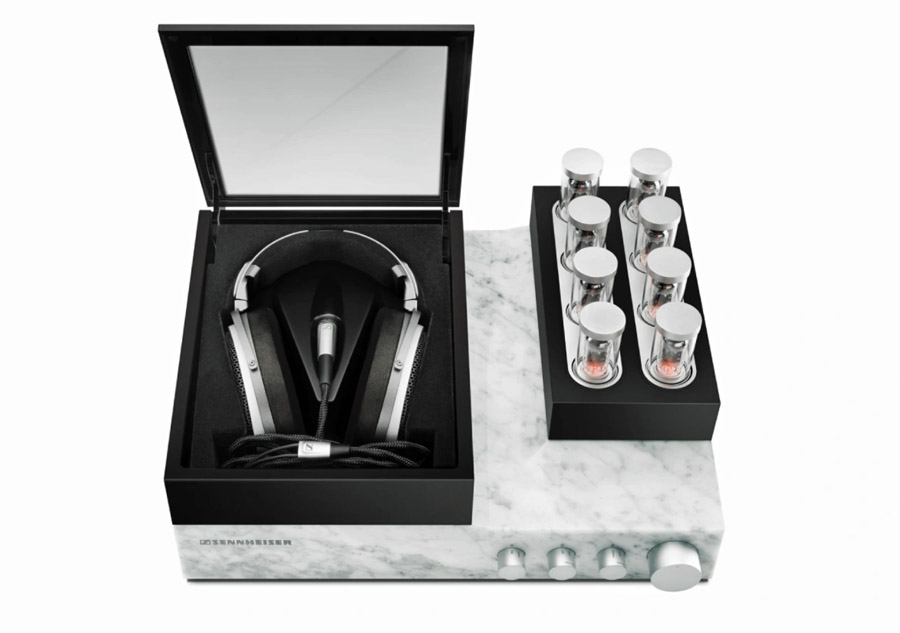
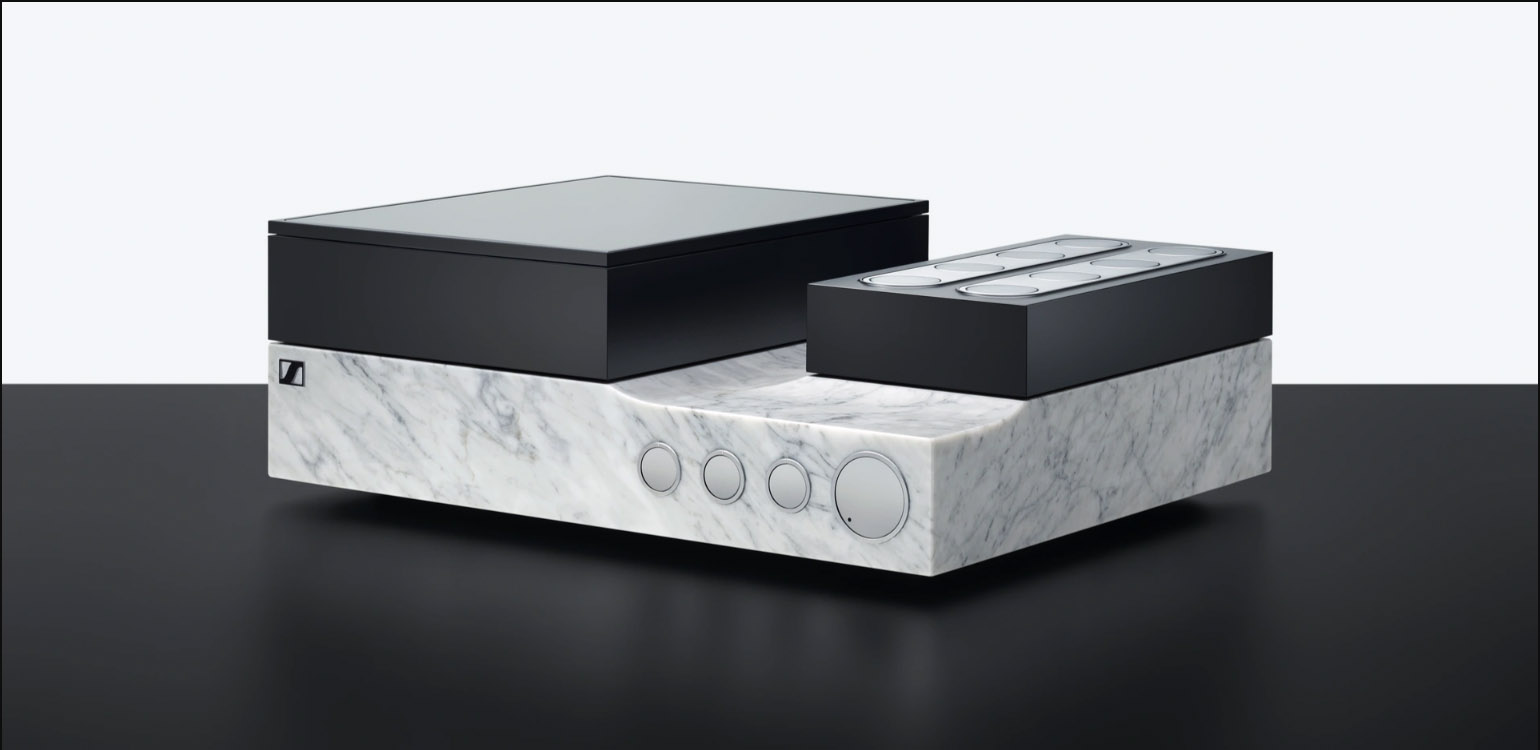
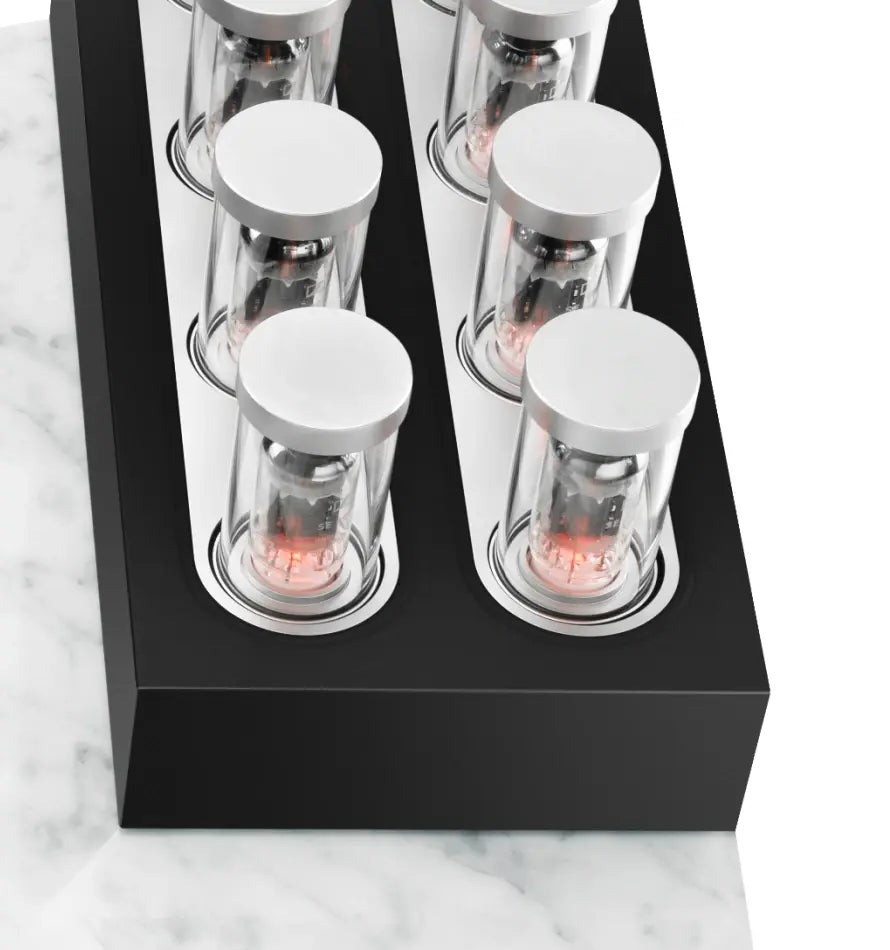
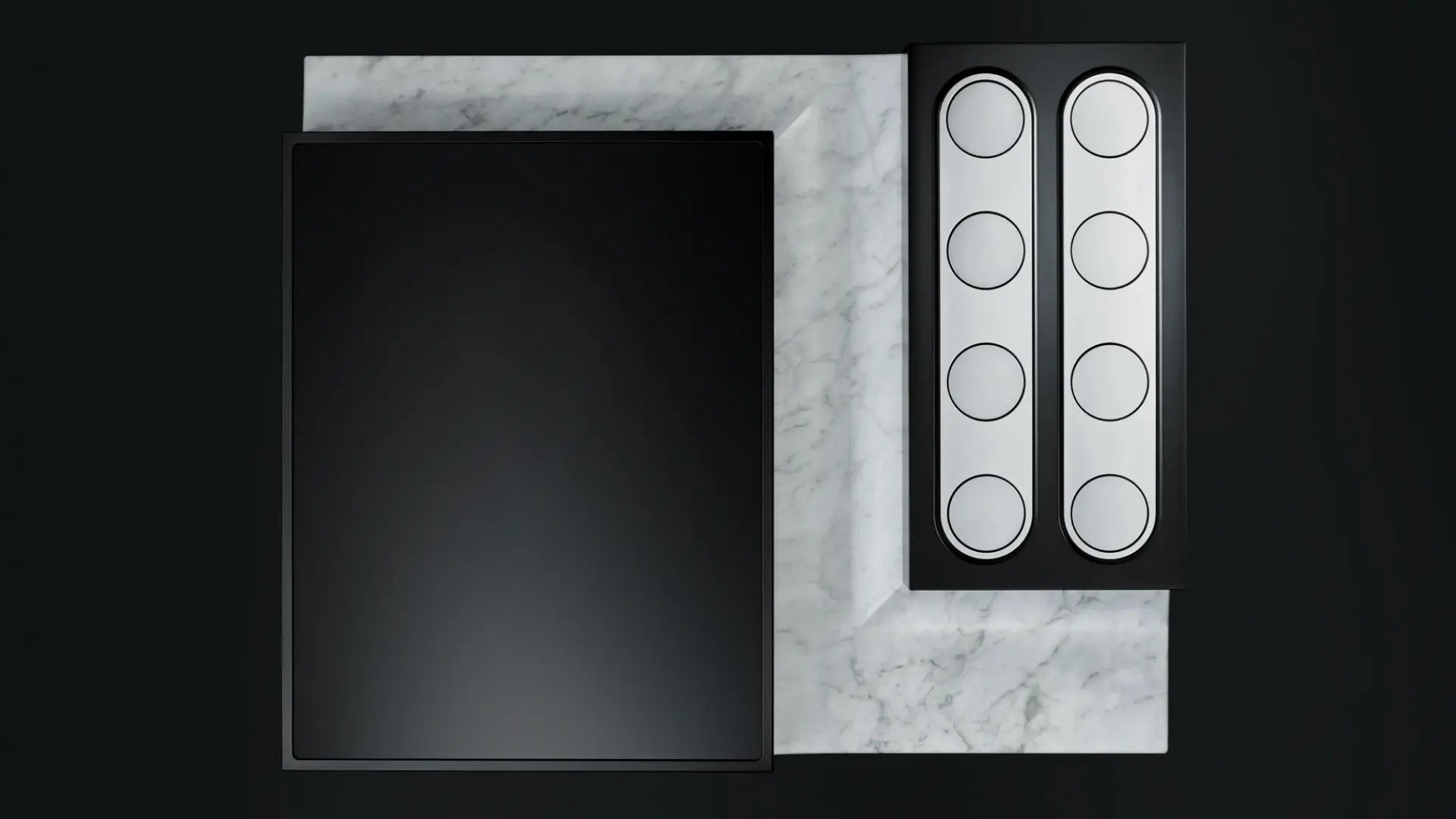
The HE 1 is not a pair of headphones with an accessory. It is one system in two parts, designed and sold together: an electrostatic headphone and the amplifier built for it, the amplifier housed under glass in a solid block of Carrara marble. The stone is functional before it is beautiful — the tube assembly is mounted on the spring-loaded, damped marble housing to kill structure-borne noise, and each vacuum tube sits inside a quartz bulb against air-borne noise. The control dials are milled from single pieces of brass and chrome-plated. Switch it on and the system performs its own start-up: a pause while the tubes rise and reach temperature, the glass compartment opening to present the headphones.
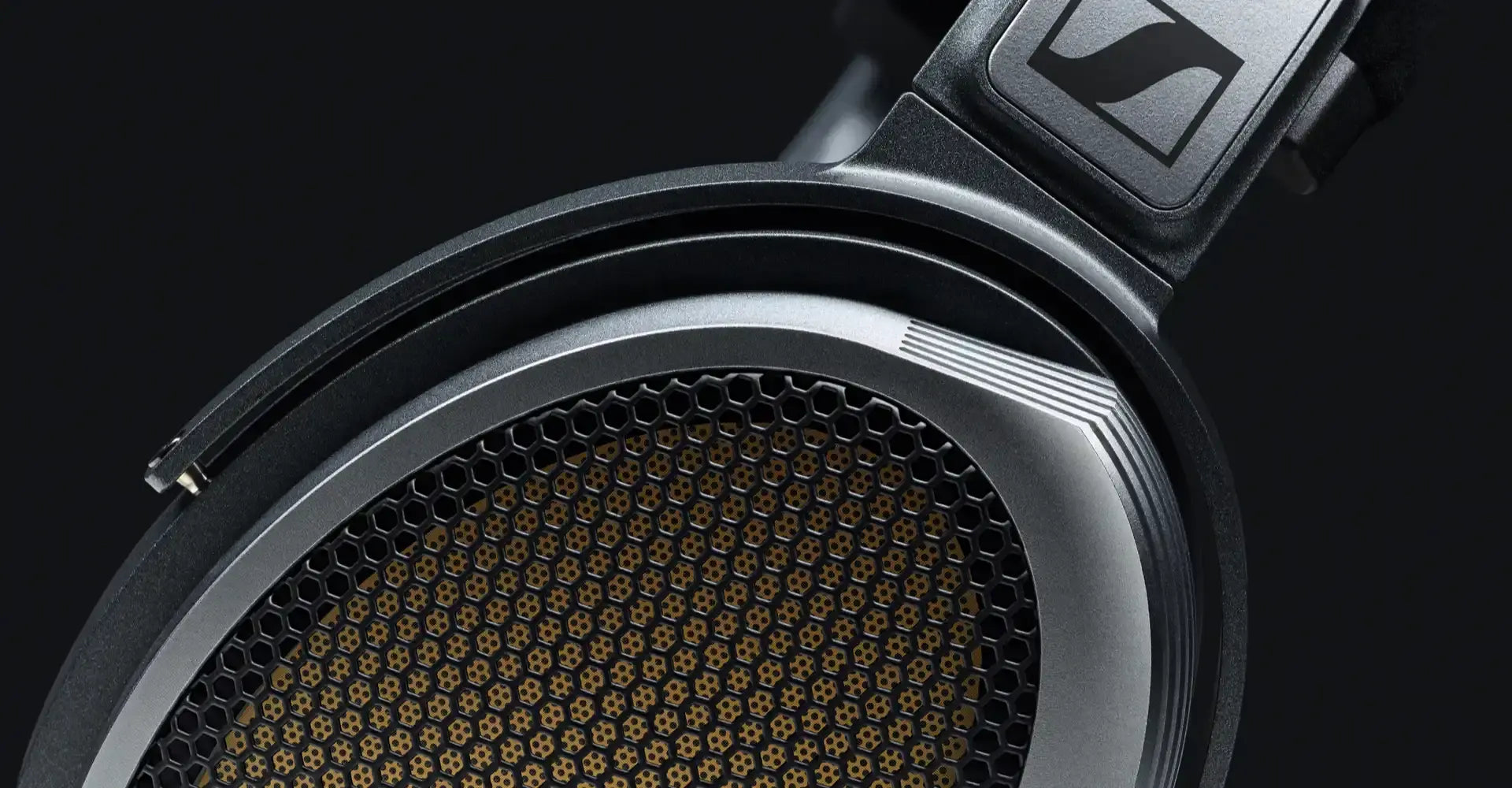
The headphone half carries its own amplification — the first electrostatic headphone with a Cool Class A MOS-FET high-voltage amplifier integrated into the ear cups, which takes the cable's capacitive reactance out of the drive path. The diaphragms are 2.4-micrometre, platinum-vapourised; the transducers gold-vapourised ceramic; the cables 99.9 percent silver-plated OFC; the ear cups machined from solid aluminium with handmade leather and velour pads. The amplifier's digital side runs eight ESS SABRE ES9018 DACs, four channels in parallel per side. Sennheiser's stated figures — a range of 8 Hz to more than 100 kHz, distortion of 0.01 percent at 1 kHz and 100 dB SPL — are the maker's specifications, stated as the maker's; the claim that the distortion figure is the lowest ever measured in a sound reproduction system is likewise Sennheiser's sentence about its own product.
One technician, two weeks, one system
Every HE 1 is hand-assembled at Sennheiser's plant in Tullamore, Ireland, where production moved in 2019. Factory reporting is consistent about the shape of that work: a single master technician assembles each system — some 3,000 parts — spending up to two weeks on each unit, with a waiting time measured in weeks after the deposit.
That is the proven part of the premium: a solid marble housing, solid aluminium cups, platinum- and gold-vapourised transducer parts, silver-plated cable, brass dials, and a production line that finishes a system every week or two rather than thousands a day. Low volume here is structural, not a marketing cap. The system is the successor to the 1991 Orpheus, the HE 90 — the cost-no-object statement Sennheiser built a generation earlier, originally $16,000 and limited to about 300 units — and it exists to answer it.
The deposit is twice the reference system
The counterpart has to be a complete system too, so take Sennheiser's own reference pairing: the HD 800 S headphones with the HDV 820 digital headphone amplifier, sold as a set by Sennheiser US at $4,749.95 — a serious audiophile system from the same house, not a token cheap alternative. Against it, the HE 1's deposit alone — $10,000, before the final payment exists — is a little over twice the whole set (about 2.1 times). Against the 2024 reported US figure of $70,000, the multiple is about 14.7 — labelled for exactly what it is, a 2024 reported figure against a November 2026 list price: the scale of the step from reference to flagship, measuring expenditure, not sound.
And that is where this story leaves the money, deliberately. What a reader can verify is the build, the materials, the hand-assembly time and the made-to-order process. What no price list can verify is what it sounds like — and no figure in this piece claims to. The first $10,000 buys a place in a build queue in Ireland, a representative's phone call, and a system that starts existing because you ordered it. Whatever the final American total is, that is what the deposit is actually for.
Sources: Sennheiser's US HE 1 page (deposit and purchase process, re-checked November 2026) and EU/UK stores; ecoustics' Tullamore factory reporting (March 2024); Popular Science's factory tour (2025).
Sources · 3 sources
- {'outlet': 'Sennheiser'}
- {'outlet': 'ecoustics'}
- {'outlet': 'Popular Science'}