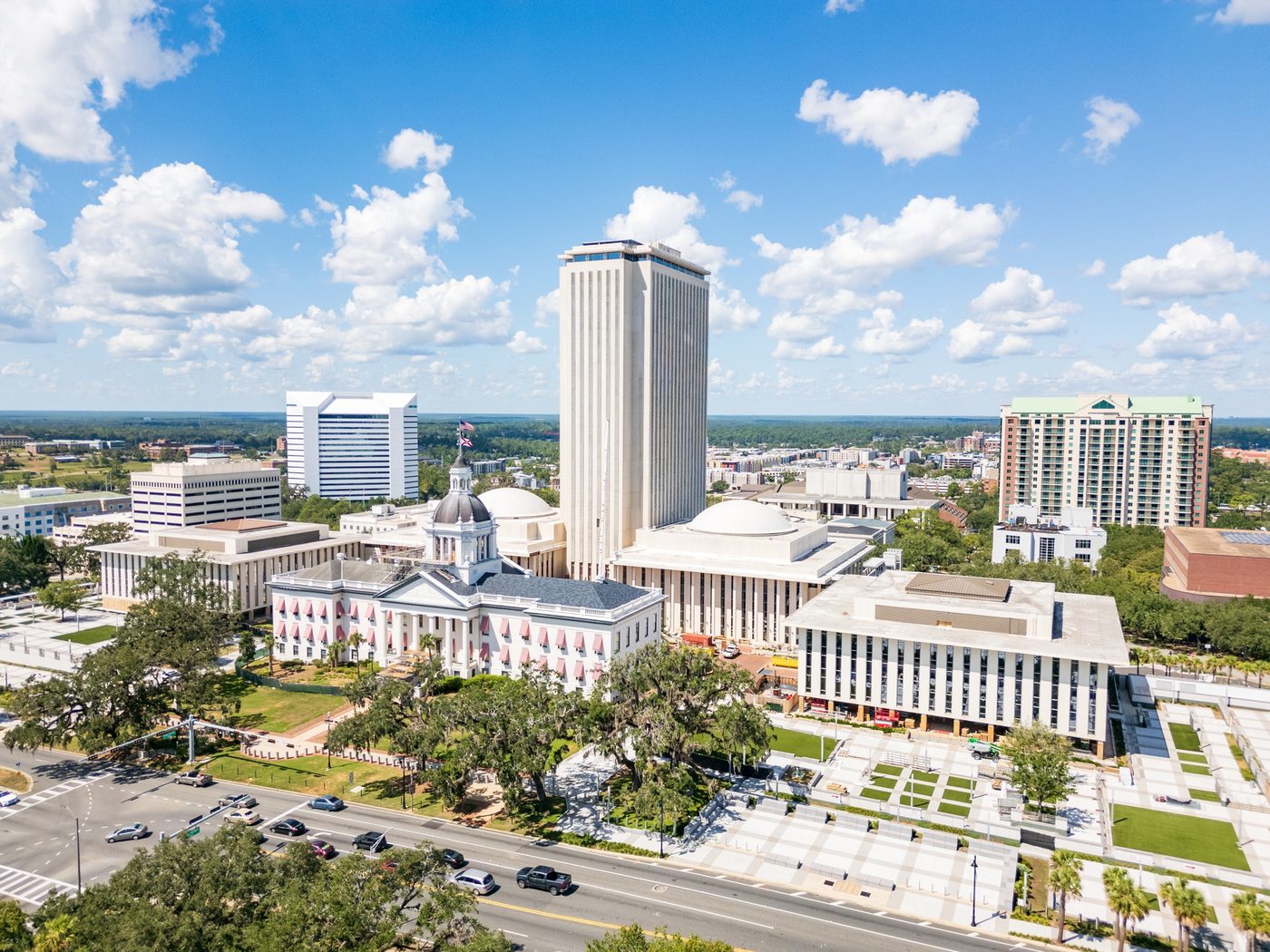
The first sign that something was wrong underneath downtown Tallahassee on Tuesday morning wasn't a siren. It was an explosion — then another — and then manhole covers, those heavy cast-iron discs engineered to never move, launching into the air as an underground electrical fire ripped through the streets near the Florida Capitol.
By sunrise, the damage was impossible to miss. Two craters had been torn open in the middle of Monroe Street — one near Jefferson Street, another closer to Apalachee Parkway — and work crews were already laboring to fill them in. One photo from the scene showed fire bursting straight through a manhole cover. Reporters on the ground said the smell of smoke hung over everything, with plumes visibly rising out of manholes up and down the street. Monroe Street, normally packed with morning commuters, stood virtually empty — nothing moving but law enforcement and work crews.
The shutdown
Police closed down the downtown core Tuesday morning as first responders converged on what the Tallahassee Democrat first described as a "fire-related incident" and later identified as underground electrical fires amid reports of explosions. The Tallahassee Fire Department, the Tallahassee Police Department, and the Leon County Sheriff's Office all responded to the area east of the Capitol complex, near the Leon County Courthouse. Motorists were told to avoid downtown entirely, use alternate routes, and expect delays.
The closures were expected to stay in place through the day: Monroe Street between Jefferson Street and Apalachee Parkway, along with adjacent roads. Lane closures stretched along North Monroe Street from Apalachee Parkway north to Park Avenue and east to Franklin Boulevard. The sheriff's office mapped the closure perimeter as far south as S. Monroe and FAMU Way, west to Gaines Street and S. Adams, east to Apalachee Parkway and Franklin Boulevard, and north to Calhoun and N. Monroe Street at College Avenue.
Traffic signals were knocked out at multiple intersections, with officers directing traffic by hand along stretches of Monroe and Calhoun streets. For a city whose downtown runs on state government, a courthouse, and two universities' worth of commuters, losing the core on a Tuesday morning is about as disruptive as it gets.
No injuries — and no natural gas
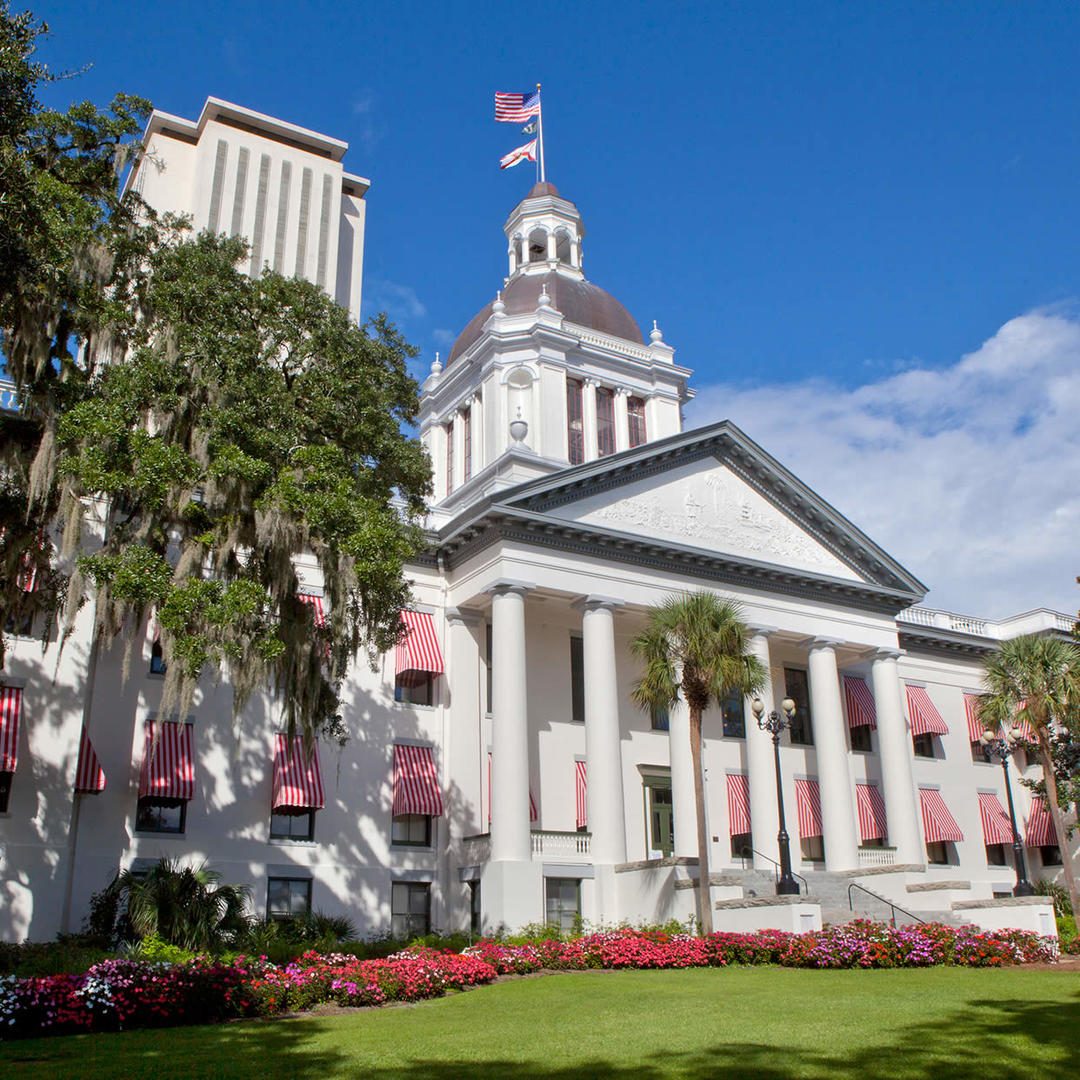
The two questions everyone asks first both got answers by mid-morning. As of 10 a.m. ET, no injuries had been reported, City of Tallahassee communications director Alison Faris told the Tallahassee Democrat, adding that the bulk of the damage was confined to Monroe Street. And natural gas — the usual suspect when streets start exploding — has been ruled out. Investigators determined natural gas was not involved in the fire or the manhole ruptures, Faris said, even though a Democrat reporter found natural gas caps lying in the road at the Park and Franklin intersection.
The actual cause was still unknown as of 10 a.m., and Faris said a comprehensive update was coming. That's the honest state of it: the street blew open, nobody knows exactly why yet, and the city is still in make-it-safe mode, with the figuring-it-out part still to come.
Tallahassee's grid is having a month
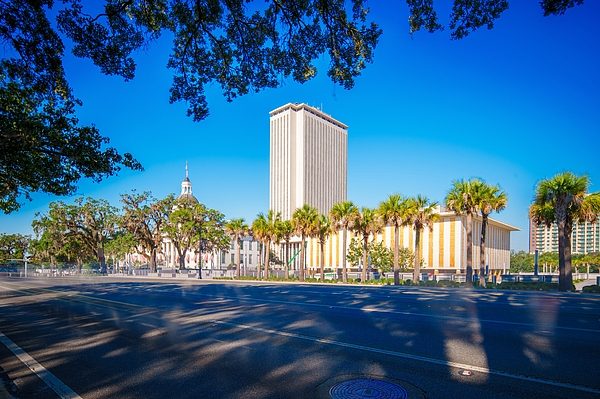
Here's the part that should raise an eyebrow: this is not the city's first electrical drama lately. Not even close. Last month, a faulty underground cable knocked out power across most of downtown around 4 p.m. — including the Capitol itself — with more than 6,000 customers in the dark, people trapped in elevators, and traffic lights down on North Monroe and along Gaines Street. About a week before that, the blackout at Doak Campbell Stadium delayed Florida State's game against SMU by nearly two hours; an FSU spokesperson blamed an underlying electrical fault that caused a main breaker to fail beyond repair And the day before that game, a car crashed into an electrical box in CollegeTown around midnight, blacking out CollegeTown and Florida A&M's campus.
Four incidents. One month. One city's electrical infrastructure. At some point "bad luck" stops being a satisfying explanation, and Tallahassee is officially at that point. The underground network that just blew two craters in Monroe Street is the same class of buried infrastructure behind September's downtown outage — and residents, not unreasonably, are going to want to know what's being done about it once the street is patched.
What happens now
Crews spent the morning filling the two craters around manholes in the middle of Monroe Street, and the closures are expected to hold through the day while the damage is assessed and repaired. The city's advice is simple: stay out of downtown, use alternate routes, and expect the evening commute to be ugly. Underground cable faults are among the hardest electrical problems to diagnose — the infrastructure is literally buried, and faults can smolder for hours before they announce themselves the way Tuesday's did.
We'll update this story as the city's comprehensive update lands — including, hopefully, an actual explanation for why the street exploded. In the meantime, if you were planning to be downtown today: don't.
Reporting this story is based on
- Responders swarm downtown underground electrical fire that blasted roads
Tallahassee Democrat — 2026-10-06 - Photos, video show downtown Tallahassee explosion, fire damage
Tallahassee Democrat — 2026-10-06 - Underground electrical fire damages roads, keeps Monroe Street closed through the day
Fox 49 Tallahassee — 2026-10-06 - How a faulty underground cable darkened downtown Tallahassee
Pembroke Pines FL News — September 2026 (background on prior outage)