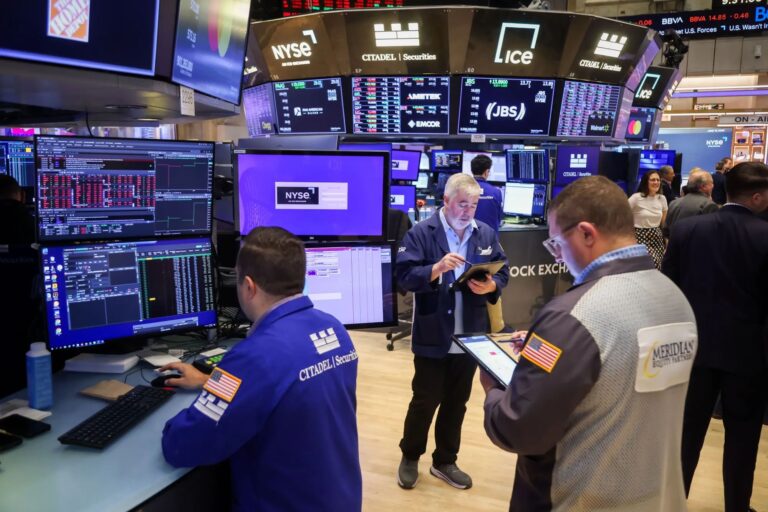
NEW YORK — The Nasdaq Composite closed Monday at a record high, the S&P 500 sits within a percentage point of its own record, and stock futures pointed higher again Tuesday morning as falling oil prices and a pullback in Treasury yields gave investors a second straight day of relief.
The Short Version
- The Nasdaq closed Monday at a record high; the S&P 500 is within 1% of its Aug. 13 record. Tuesday premarket, Dow futures were up roughly 0.5% and Nasdaq futures up 0.3% to 0.7%, depending on the morning snapshot.
- WTI crude fell more than 2% to about $87.40 a barrel; gold rose 1% to $4,205 an ounce; bitcoin traded near $86,100, down from Monday’s roughly $87,000 high.
- The 10-year Treasury yield pulled back to about 5.26% after touching 5.35% on Monday — its highest level since April 2002.
- Elon Musk is a trillionaire again after Tesla and SpaceX gains; Nvidia’s market cap sits near $5.77 trillion, closing in on the first-ever $6 trillion valuation.
- The engine under it all: weaker-than-expected September jobs data eased fears the Fed could hike again this month — traders now put the odds of a hold at 78%, per CME’s FedWatch tool.
Records in reach
Monday was the kind of session that resets the tape. The Nasdaq Composite — powered by heavyweight AI and tech names — notched a record close, while the S&P 500 finished within striking distance of its Aug. 13 record closing high, up roughly three-quarters of a percent on the day in a broad advance that left every sector but real estate in the green, according to Investopedia’s market coverage. The Dow Jones Industrial Average, which has lost ground in four of the previous five weeks, still sits about 6% off its August record — but even it was pointing higher Tuesday.
The rally was tech-led once again. Nvidia climbed 2.1% to a record-high close Monday, Microsoft, Meta and Tesla all advanced, and the market’s biggest names carried the indexes with them. As Kyle Rodda, a senior analyst at Capital.com, told Reuters, “the marginal easing of interest rate uncertainty along with a slight moderation in geopolitical risk” let investors refocus on “the extraordinary earnings growth being delivered by AI names.” Asia followed the lead overnight: MSCI’s broadest index of Asia-Pacific shares outside Japan rose 0.2%, and Japan’s Nikkei gained 0.7%.
Yields finally take a breath
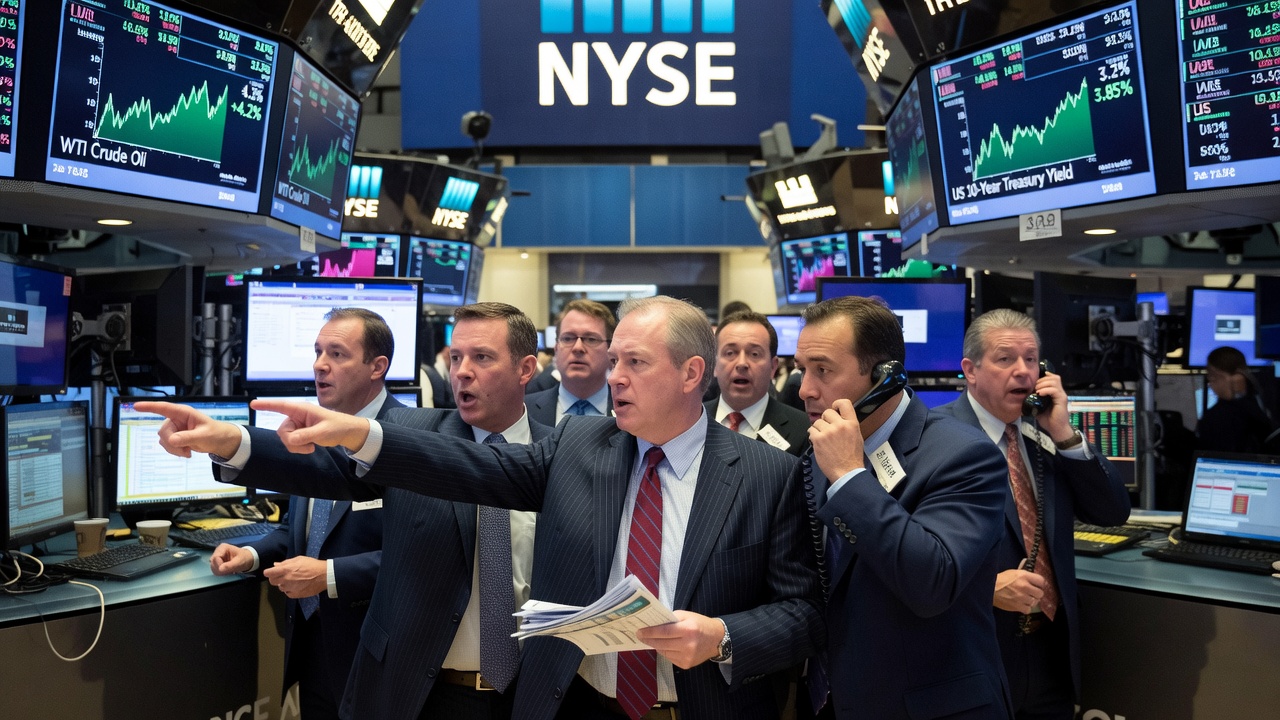
The morning’s most important number may not have been on the stock screens at all. The 10-year Treasury yield — the benchmark for everything from mortgages to corporate borrowing — pulled back to around 5.26% Tuesday after climbing as high as 5.35% on Monday, its highest reading since April 2002, a 24-year high. The 30-year yield, which touched a multi-decade high of 5.702% Monday, fell back to 5.626%, Reuters reported.
The bond sell-off that drove yields to those heights has been fed by two anxieties: high fuel prices threatening to re-ignite inflation, and mounting government debt. The pain is spreading through the economy — the average 30-year mortgage has climbed above 7.6%, a three-year high, tied in part to the 10-year’s march. Any sustained retreat in yields would be welcome relief for housing and for growth stocks, whose valuations live and die by the discount rate.
Oil’s slide does the heavy lifting
Crude gave back ground for a second reason to celebrate. West Texas Intermediate futures fell more than 2% to about $87.40 a barrel Tuesday morning, while international benchmark Brent traded near $97–$98, down nearly 3% from recent levels, according to Investopedia. The trigger: increased tanker shipments through the Strait of Hormuz and a G7 pledge to boost supplies, Reuters reported — though traders remain watchful of attacks by Iran-backed Houthi rebels on Saudi targets.
Cheaper oil matters twice over. It cools the inflation fears that have been pushing bond yields higher, and it leaves more money in consumers’ pockets. With fuel prices one of the two forces blamed for the bond rout, Tuesday’s slide in crude and yields was a self-reinforcing loop — exactly the kind of macro backdrop that lets equity rallies breathe.

A trillionaire, and a nearly $6 trillion chipmaker
Two milestones underscored just how concentrated this market’s firepower has become. Elon Musk’s net worth climbed back above the $1 trillion mark, according to Forbes, after Tesla shares gained 2% Monday on third-quarter deliveries that topped estimates and SpaceX surged more than 7.5%, closing above $170 for the first time since June. Musk briefly became the world’s first trillionaire after SpaceX’s massive summer IPO; Tuesday’s premarket action had both stocks edging higher again.
And then there’s Nvidia. The AI chip giant’s record close Monday lifted its market capitalization to about $5.77 trillion — comfortably the world’s most valuable company, ahead of Apple’s roughly $4.86 trillion, and within sight of a milestone no company has ever touched: $6 trillion. Shares were up about 1% in premarket trading Tuesday. The stock has shaken off last month’s worries about an AI-development slowdown and the sustainability of AI financing, with investors betting the chip cycle still has room to run.

The Fed question
Underneath the records sits a policy pivot. The Federal Reserve raised its benchmark rate last month for the first time in three years — and until recently, markets feared another hike could be coming later this month. Friday’s weaker-than-expected September payrolls report changed the calculus: with the labor market cooling, traders now see a 78% chance the Fed holds rates steady at its next meeting, according to CME Group’s FedWatch tool, though a December hike remains largely priced in.
The calendar favors the bulls from here. It’s a quiet week for economic data and earnings, and third-quarter earnings season kicks into gear next week with reports from the big banks. Goldman Sachs estimates consensus forecasts point to 27% growth in S&P 500 earnings last quarter — with more than half of that growth coming from companies benefiting from AI infrastructure spending. If those numbers land, the Nasdaq’s record may just be the opening act. A record high for the S&P 500 would also affirm that the bull market that began in October 2022 remains intact — a run now entering its fifth year.

Bitcoin, for its part, traded near $86,100 Tuesday morning, down from Monday’s roughly $87,000 high — a reminder that not every risk asset is moving in lockstep. But on Wall Street, the direction of travel was unmistakable: up, and faster than the bond market can spoil it.
More markets coverage at Previously’s markets desk, including Monday’s Nasdaq record close and the September jobs report.
Sources
- Investopedia · 5 Things to Know Before the Stock Market Opens on Tuesday, Oct 6 2026
- Investopedia · Stock Market Today: Futures Rise After Nasdaq Closes at Record, Oct 6 2026
- Reuters · Wall St futures rise as yields, oil dip, Oct 6 2026
- Reuters · Asian shares track Wall Street higher, Treasury yields near multi-decade highs, Oct 6 2026
- MarketWatch · S&P 500 eyes new record above 7,800, Oct 6 2026