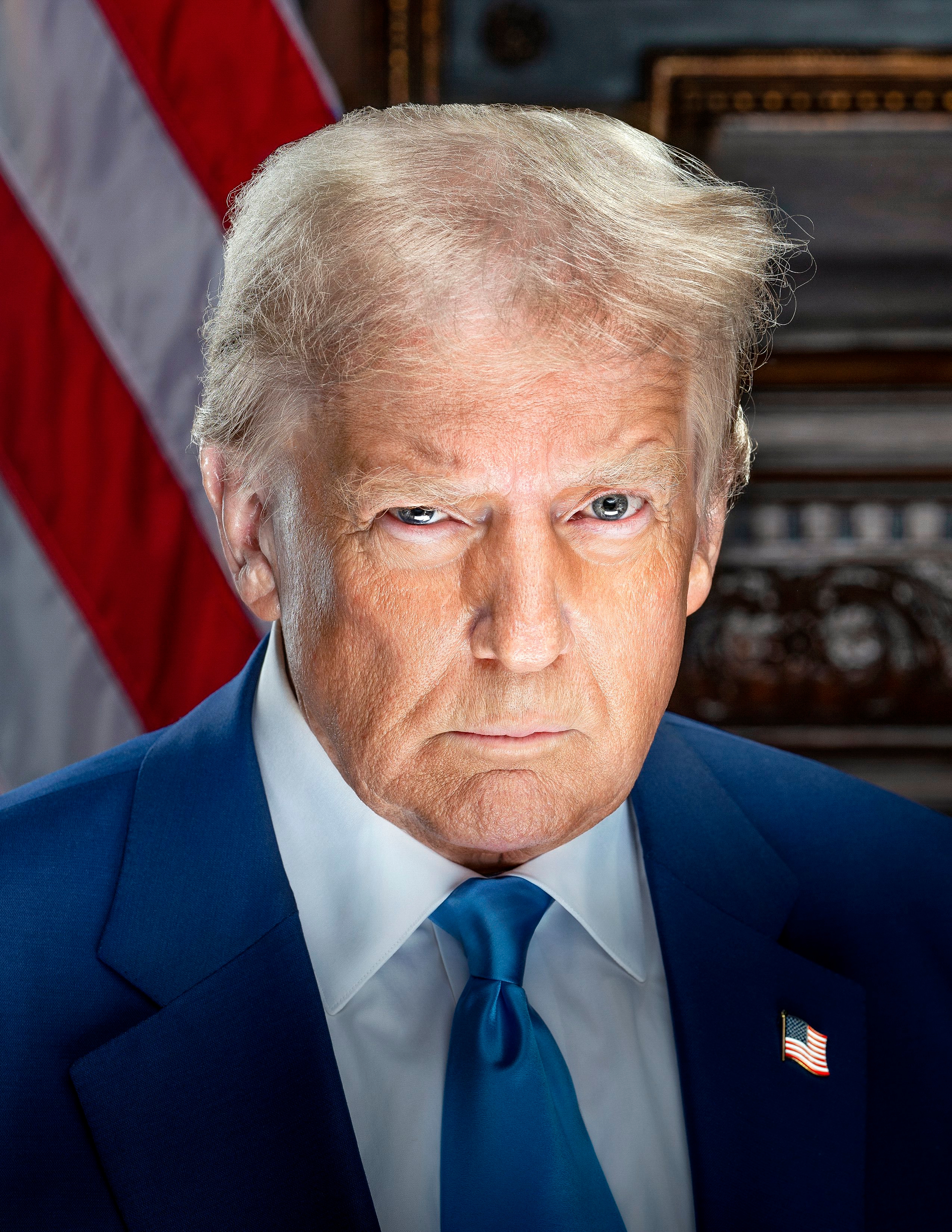
WASHINGTON — President Donald Trump is back on the $5,000 checks. In a video posted to Truth Social on Saturday, the president renewed his pledge to send a $5,000 payment to every adult U.S. citizen — but only if Republicans retain control of the House and Senate in November's midterm elections. "If Republicans win the House of Representatives and the Senate in the 2026 Midterm Elections, I'm going to give all Adult Citizens in the United States of America, $5,000," Trump said. "Thank you for your attention to this matter, and I look forward to signing those checks!"
Let's be clear about what this is, because the distinction matters more than the headline. As of today, October 5, 2026, this is a pledge — a campaign promise tied to an election outcome. It is not an approved program. No legislation has been introduced. No agency has been named to run it. No funding source has been identified. No timetable exists. Congress would have to pass a law and appropriate the money before a single check could go out, and none of that has happened. If you're waiting on $5,000, you are waiting on an election, then a bill, then a bureaucracy — in that order.
The Saturday video framed the offer in Trump's familiar terms. "Our country is doing well under Republican leadership that only I can make you this promise," he said, arguing the country is bringing in "massive amounts of money" through tariffs and pointing to what he described as record economic success as the reason the payments are possible. Sending the checks, he said, would be a "very easy thing to do." And for anyone considering the alternative: "It will be a 1929 disaster if they get in," Trump warned, predicting an economic depression "much like 1929" if Democrats take Congress.
This isn't a new idea — it's a revival. Trump first promised the $5,000 payment at the Republican National Committee's first-ever midterm convention in Dallas on September 9, dubbing it the "Trump Dividend" and adding the caveat that the money must be spent in the United States. "If the Republicans win, you win with us, and you get $5,000," he told the Dallas crowd. "Now, all we have to do is win." Saturday's video was the encore, timed for the final month of the campaign.
The math is the part nobody in the White House has fully explained. Economic estimates put the cost of $5,000 for every adult citizen at roughly $1.2 trillion — Trump himself has estimated "approximately $1 trillion," calling it "a very easy thing to do" and pointing to tariff revenue and what he describes as $21 trillion in investment over the past 15 months. A trillion dollars is not a rounding error; it's roughly a sixth of the entire federal budget, and it would require explicit congressional approval and new legislation. The White House has not said which agency would authorize the payments or where the money would come from.
The criticism has come from both parties, which tells you something. Rep. David Schweikert (R-Ariz.) warned last month that the plan could drive interest rates higher — a Republican congressman, publicly, saying the president's signature campaign promise might overheat the economy. Rep. Jamie Raskin (D-Md.) went further, calling the proposal a "political bribe" in a September 10 CNN interview. When your own party's fiscal hawks are flinching — as Schweikert himself said last month — the "very easy thing to do" framing has some tension in it.
The politics of the pledge are genuinely interesting, though — and the polling suggests the White House knows exactly what it's doing. A Strength in Numbers/Verasight poll found 53 percent of Americans support the $5,000 payments, with 35 percent opposed. But when respondents were told the checks depend on Republicans winning the House and Senate, support dropped sharply to 35 percent and opposition climbed to 54 percent. The checks are popular. The condition is not. Tying the money to the election is the whole strategy and, per the numbers, also the whole problem.
Context helps here, because the $5,000 pledge doesn't exist in a vacuum — it's the biggest item in a growing menu of direct payments the administration has rolled out ahead of the midterms. On Friday, Trump announced one-time $90 checks to 20.8 million Medicare beneficiaries, drawn from the Medicare Improvement Fund and scheduled for distribution this month — a program we covered in detail last week. Separately, the government began issuing $500 "refund" checks last week to roughly 950,000 people with unsubsidized coverage through the federal marketplace; according to a Reuters analysis, 71 percent of that $339 million is going to residents of 13 states with competitive Senate and gubernatorial races. The lineage goes back further: a $2,000 tariff-dividend idea floated in late 2025, a $1,776 bonus for service members that Trump called the "Warrior Dividend," and all the way back to the $5,000 "DOGE dividend" that Trump floated in February 2025. None of the big ones have resulted in payments. The small ones are going out now, a month before the election.
That's the pattern worth noticing. The administration has gotten very good at announcing checks and considerably less good at sending the large ones. The $90 Medicare payments and the $500 marketplace refunds are real money moving through real programs — modest, targeted, already authorized. The $5,000 checks are a promise about a future Congress passing a future law to spend a future trillion dollars. Both can be true at once: the small checks are happening, and the big check is a campaign pledge wearing a policy costume.
None of this is to say the pledge is meaningless. Campaign promises move votes, and $5,000 is a number designed to be remembered in a voting booth. The Trump Dividend branding, the spend-it-in-America caveat, the 1929 warning — it's a complete political product, focus-grouped by instinct. Whether it's also a viable fiscal product is a separate question, and on that one the administration hasn't shown its work: no bill, no agency, no funding mechanism, no timeline.
So where does this leave the average adult citizen? With a conditional promise. If Republicans hold both chambers in November, the pledge says you get $5,000 — pending legislation that doesn't exist yet, from a funding source that hasn't been named, on a timetable nobody has set. If Democrats win either chamber, the pledge evaporates by its own terms. Either way, as of this morning, there is no program, no application, no check with your name on it. There is a video, a promise, and a month until the election. That's the whole story, and it's worth knowing exactly that much — no more, no less.
Markets are watching the midterms for their own reasons, and the administration's spending fights keep stacking up. But the $5,000 check is the one with your name on it — hypothetically. We'll believe it when there's a bill number.
Sources
- The pledge: USA Today (Oct. 5, 2026)
- Quotes and details: El Paso Times (Oct. 5, 2026)
- Feasibility and critics: Delaware Online (Oct. 5, 2026); The American Star News (Oct. 5, 2026)
- Marketplace refund analysis: Reuters


