
There is a shot in the campaign for Whalefall that tells you everything about the gamble 20th Century Studios is taking this weekend: a teenage diver, alone in black water, lit only by what little light survives inside the belly of an 80-foot sperm whale. The survival thriller, directed by Brian Duffield, opens in U.S. theaters on Friday, October 16, 2026 — and it is built, deliberately, as the anti-Jaws.
Duffield put it plainly in remarks to Reuters, describing the film as "the opposite of Jaws" and explaining that the whale is, in many ways, the hero of the story. That framing matters, because Whalefall is not a creature-attack movie in any conventional sense. The whale is not hunting anyone. It is simply enormous, indifferent and alive — and being swallowed by it is an accident its young hero has roughly one hour of oxygen to survive.
A dive for his father becomes a fight to get out
Austin Abrams stars as 17-year-old Jay Gardiner, a scuba diver who goes down off California's central coast — Monastery Beach, in Monterey Bay — searching for the remains of his father, Mitt, played by Josh Brolin. It is a grief dive as much as a search: a son looking for something to bury, and for closure he cannot get on land. What he finds instead is a sperm whale — some 80 feet long and 60 tons — and in a moment drawn from the deep well of real cetacean encounters, Jay is swallowed alive.
From there, the film becomes a countdown. Jay has about an hour of air, a body that is slowly failing him, and exactly one toolkit: the survival lessons his father taught him. The father-son story is not decoration on the premise; it is the premise. Brolin has said he sobbed at the end of Daniel Kraus's novel, and that the relationship — a father's voice guiding a son through the worst hour of his life — is what drew him to the project. Kraus's 2023 novel was adapted for the screen by Kraus himself alongside Duffield, a pairing that generally bodes well for fidelity to the book's emotional architecture.
The cast around the central pair includes Elisabeth Shue as Jay's mother Zara, with John Ortiz, Jane Levy and Emily Rudd in supporting roles. The film runs 106 minutes and was produced for a reported $38.3 million budget by Imagine Entertainment, with Brian Grazer among the producers — serious, mid-budget theatrical filmmaking of a kind the industry keeps claiming to want more of.
Built, not rendered: the practical whale
Perhaps the most encouraging sign in the production story is how much of the whale is real. Rather than staging Jay's ordeal entirely in a digital volume, the filmmakers built large practical sets — including a 30-foot whale head complete with an animatronic tongue — and used CGI to enhance rather than replace them. For a film that lives or dies on claustrophobia, that choice is not cosmetic. An actor reacting to a physical space, with physical light and physical resistance, gives the camera something no render farm can fake: genuine discomfort.
It also gives Abrams, who carries long stretches of the film essentially alone, something to act against. Early reactions out of the premieres — London hosted a gala screening on October 5, and Los Angeles held the U.S. premiere on October 13 — have praised his performance in exactly those terms, with several first viewers calling the film a claustrophobic new classic of the survival genre. Not every note has been rapturous; some responses have flagged the tone as an uneasy blend, veering between primal terror and sentiment. But even the mixed reactions tend to concede the central sequence works.
Abrams arrives at this moment with momentum — he is coming off Resident Evil, and Whalefall is the kind of physically punishing, dialogue-light lead role that either strands a young actor or announces him. On the early evidence, it is the latter. Moviegoers weighing their weekend options can compare it against the very different spectacle in our preview of the Street Fighter movie opening the same day.
The opposite of Jaws — and proud of it
Duffield's "opposite of Jaws" line deserves unpacking, because it is a genuine creative thesis rather than a sound bite. Jaws made the ocean's largest predator into malice itself and taught generations to fear the water. Whalefall inverts the relationship: the whale is a fellow creature, the ocean is neither kind nor cruel, and the terror comes from scale and chance rather than evil. Jay's survival depends not on defeating the animal but on understanding it — on everything his father taught him about respecting a world that was never built for humans in the first place.
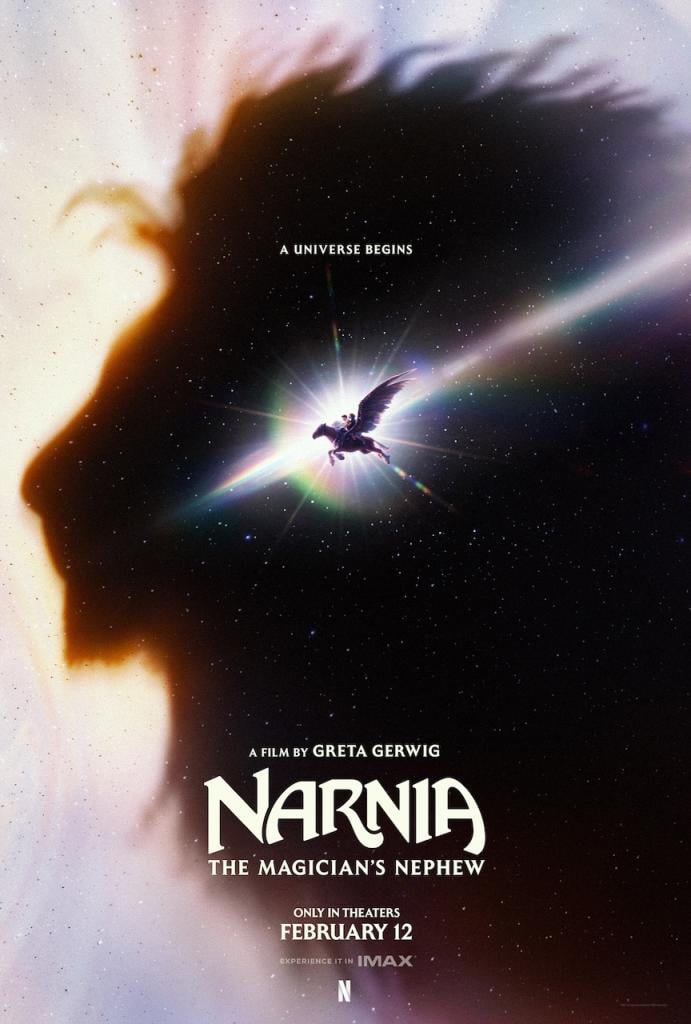
That makes the film a fitting companion to the season's other literary adaptation in the spotlight, Greta Gerwig's Narnia — two films, at opposite ends of the budget and wonder spectrum, both arguing that awe is a stronger engine than cynicism.
What to know before you go
Whalefall opens Friday, October 16, in U.S. theaters via 20th Century Studios, running 106 minutes. It is a single-location survival story for most of its length, an adaptation of a well-regarded 2023 novel, and a $38.3 million bet that audiences will show up for tension, craft and a father-son story wearing a monster movie's skin — except the monster, the filmmakers insist, is the hero. If the premiere reactions hold through the weekend, Duffield may have made the rare thing his own pitch promised: a whale movie with no villain at all, and no shortage of fear anyway.