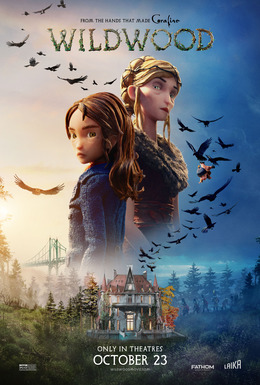

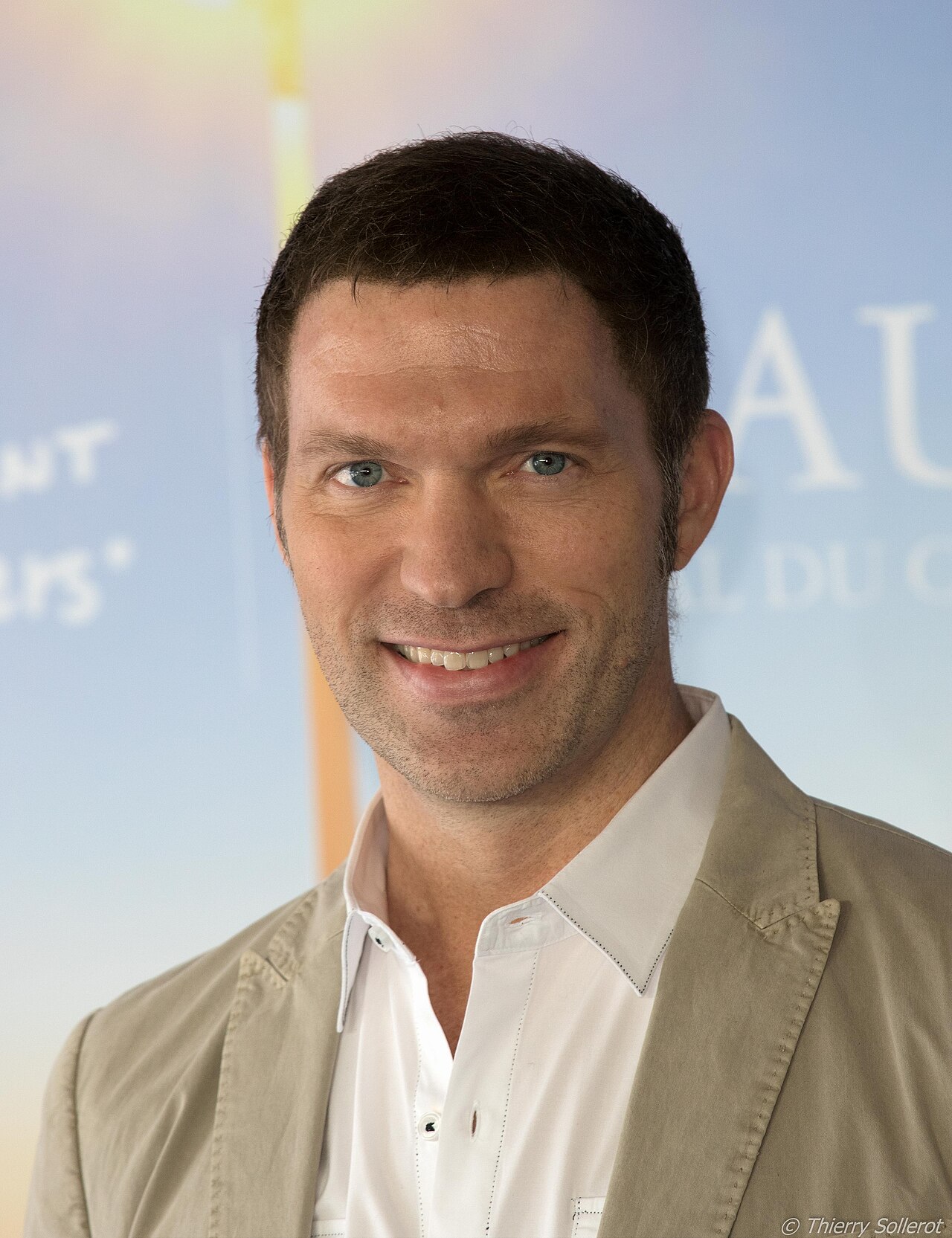
The most patient studio in American animation is back. Wildwood, the new stop-motion feature from LAIKA, opens in theaters on Friday, October 23, 2026, closing out one of the longest development stories in modern animation. The film is directed by LAIKA chief executive Travis Knight, written by Chris Butler, and rated PG-13 — the studio’s first film with that rating — with a runtime of 2 hours 12 minutes, according to FanBolt’s weekly release guide and the Streaming Movie Night marquee.
It is LAIKA’s sixth feature and its first since Missing Link in 2019, ending a seven-year gap between releases. The studio built its reputation on handcrafted, slightly dangerous children’s fantasy — Coraline in 2009, ParaNorman in 2012, Kubo and the Two Strings in 2016 — and Wildwood is positioned, by everyone involved, as the biggest world it has ever built. Previously’s coming-soon guide tracks the rest of Friday’s crowded opening slate.
A rescue mission into the Impassable Wilderness
The story begins in Portland, Oregon, where 13-year-old Prue McKeel is babysitting her baby brother, Mac, when a murder of crows snatches him and carries him into the forest beyond the St. John’s Bridge — the Impassable Wilderness, a hidden, enchanted realm that outsiders are forbidden to enter. Prue goes in after him, joined by her classmate Curtis Mehlberg, and the two find a world of talking animals, bandits and warring factions whose fragile balance is coming apart.
Peyton Elizabeth Lee voices Prue and Jacob Tremblay voices Curtis. The danger at the center of the forest is Alexandra, voiced by Carey Mulligan — described in the film’s synopses as a powerful former ruler of this magical world, a grieving witch who commands a coyote army and wants her power back. Around the three leads, LAIKA has assembled one of the largest voice casts in its history: Mahershala Ali as the bandit king Brendan, Awkwafina, Angela Bassett, Jake Johnson and Maya Erskine as Prue’s parents, Charlie Day, Amandla Stenberg, Jemaine Clement, Tantoo Cardinal, Tom Waits and Richard E. Grant.
The credits fill out the world around them. Mahershala Ali’s Brendan leads the bandits, Awkwafina voices Septima, Angela Bassett voices the General, Charlie Day voices Dmitri, Amandla Stenberg voices Niamh, Jemaine Clement voices Roger Swindon, Tantoo Cardinal voices Iphigenia, Tom Waits voices Maksim, the coyote commander serving Alexandra, and Richard E. Grant voices Owl Rex, according to the film’s full cast listings. Behind the camera, the score is by Dario Marianelli and the cinematography is by Caleb Deschanel, a six-time Oscar nominee whose live-action eye LAIKA brought in to light a world built entirely by hand. The PG-13 rating itself signals the film’s darker register: the Motion Picture Association cited strong fantasy violence and bloody images, thematic material, suicide-related material, brief partial nudity and language — territory no previous LAIKA film has entered, and a deliberate step away from the studio’s family-film shelf.
From a Decemberists frontman’s novel to the screen
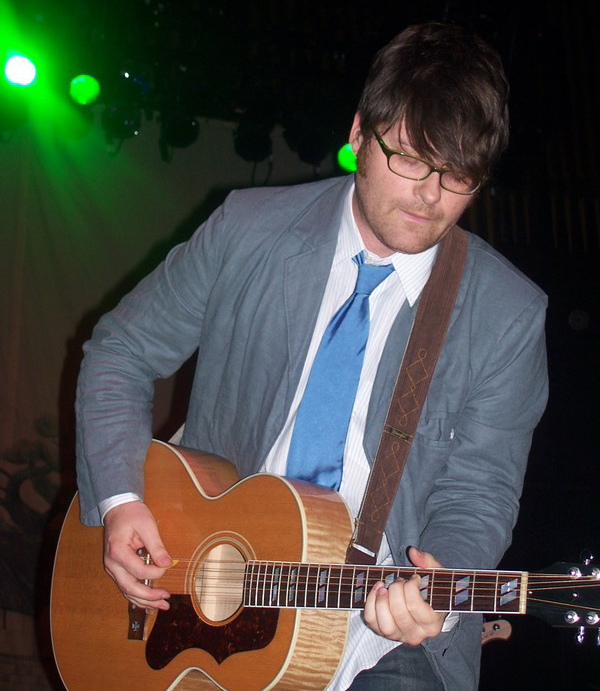
Wildwood adapts the 2011 fantasy novel by Colin Meloy — the lead singer and songwriter of The Decemberists — illustrated by Carson Ellis, the first book in Meloy’s Wildwood Chronicles. Knight has said he wanted to adapt the book for sixteen years, dating back to the completion of Coraline in 2009, but that the studio could not yet make the film he had in mind: the story required enormous environments, flying creatures and action on a scale that is punishing when every actor is a puppet a few inches tall. “This movie took us 16 years to make,” Knight said at the film’s London premiere, in remarks reported this month.
The hands-on production, which began in 2021, was stop-motion at industrial scale. Animation Scoop’s set-visit report counts 233 handcrafted puppets, including 83 unique puppet builds, and 142,030 replacement faces — a LAIKA record — created so animators could swap expressions frame by frame. FanBolt’s guide summarises the same figures as more than 230 handcrafted puppets. The point of the numbers is not the record itself; it is that every performance in the film, down to a record number of shots containing visible tears, was physically built and photographed by hand.
A long road to Friday — and an early critical glow
The finished film premiered at the BFI London Film Festival on October 11, and makes its United States premiere on October 21 as the opening-night selection of the 40th AFI Fest, two days before the nationwide opening through Fathom Entertainment in the US, with FilmNation Entertainment handling international sales. Early festival reaction was unusually warm: after the London premiere, the film debuted with a 100 percent score on Rotten Tomatoes from its first pool of reviews, and reviewers have praised its scale and emotional weight. How long that perfect score survives a wide release is another question — but for a studio that has repeatedly won critical adoration without commensurate box office, the commercial test begins Friday. Previously’s news front and browse catalogue will follow the opening weekend.
What is not in doubt is what Wildwood represents for its makers: a bet that in an era of automation, audiences will still show up for a world that somebody physically built. Knight’s own summary of the stop-motion process, delivered at the premiere, was equal parts craft talk and warning — his teams build tiny objects, photograph them, move them by microscopic increments, and repeat, he said, “until either the film emerges or society collapses.” The film has emerged. Friday, the audience decides the rest.