MONDAY, OCTOBER 5, 2026 — The most interesting debut of the publishing year doesn’t exist yet. It’s a novel-in-progress called Confessions of an Alien, written in a language that isn’t the author’s, and the Women’s Prize Trust just bet £5,000 and a Curtis Brown contract on it. Ruixi Zhang, a London-based writer born in China and raised in Beijing, has been named the 2026 Discoveries winner — the first winner in the prize’s history writing in English as her second language.
Discoveries is the writer-development prize run by the Women’s Prize Trust in partnership with Audible, Curtis Brown, and the Curtis Brown Creative writing school. It’s aimed at unagented, unpublished women in the UK and Ireland writing their first novels, and it has quietly become one of the most effective launchpads in British publishing. Zhang’s win gets her £5,000 and an offer of representation from Curtis Brown — plus, along with the other shortlisted writers, a one-to-one mentoring session with a Curtis Brown agent, a six-week Curtis Brown Creative course, and an invitation to Audible’s studio.
The book about language, written across one
Here’s the thing that makes this win feel like something more than a prize ceremony: the book is about the condition in which it was written. Confessions of an Alien is described as a literary thriller exploring the power dynamics in interracial marriage and examining an immigrant’s relationship with the English language. Zhang wrote it in English, her second language. In her own words, via the Trust’s announcement: “Crafted in a language that is not mine, at times, it feels alien to me.” The alien of the title isn’t just a character. It’s the writer, the wife, the language itself.
She’s said she’s grateful to judges who saw something in “this dark little story that has, for the past three years, lived in my head and kept me awake at night writing,” and that winning marks “the beginning of a long and exciting journey.” You read that and you hear a writer who’s been carrying this book around for three years. That’s the kind of sentence that makes you want the book finished.
The judges evidently felt the same way. The 2026 panel was chaired by Kate Mosse, the bestselling writer and founder-director of the Women’s Prize for Fiction, joined by novelists Dorothy Koomson and Nussaibah Younis — the 2025 Women’s Prize for Fiction shortlisted author of Fundamentally — Curtis Brown agent Ciara Finan, and Curtis Brown Creative’s Anna Davis. Mosse said the judges “were all swept up by the intrigue, the skill and the pace of Confessions of an Alien and couldn’t wait to read more.” When a room full of professional readers says they couldn’t wait to read more, that’s the whole review. Put this on your radar now; by the time it’s published, you’ll be glad you heard the name early.
A tradition of writing across languages
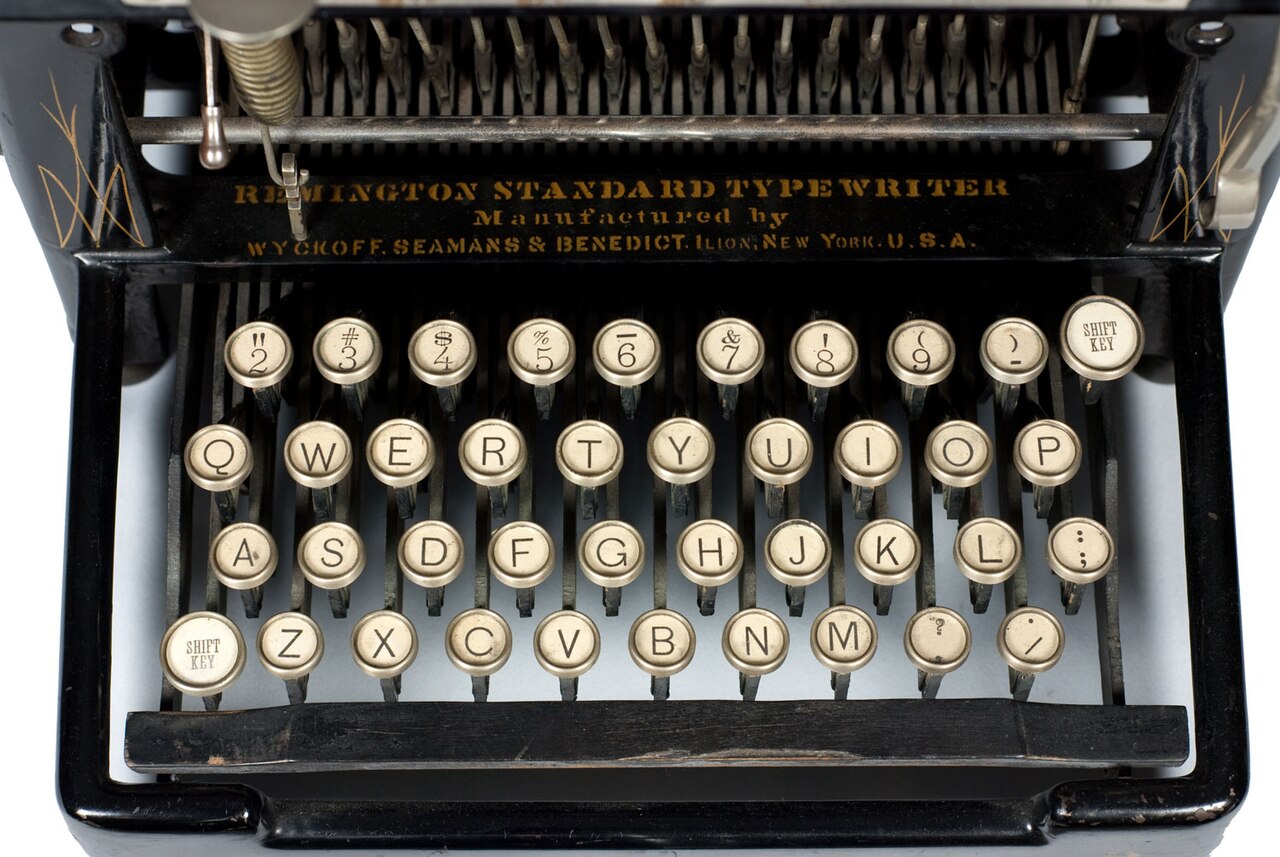
Zhang’s win lands inside a real literary lineage, and the Trust named it: she follows exophonic Women’s Prize for Fiction winners Chimamanda Ngozi Adichie, who won in 2007, and Yael van der Wouden, who won in 2025 — writers whose English carries the memory of other languages. Her path to London ran through Beijing, then Wellesley College in the US and the University of Oxford. You don’t need to be told that a writer who studied at Wellesley and Oxford can write beautiful English; the interesting thing is what she chooses to do with the discomfort of it, and the novel seems to make that discomfort the subject.
There’s a long shelf of writers who made their second language their instrument — Nabokov, Beckett, Conrad, Ishiguro, Lahiri — and they share a particular quality: English heard from the outside, slightly estranged, noticed the way a native speaker stops noticing it. A literary thriller about interracial marriage and power is already promising material. Written by someone for whom English is a learned terrain, it has a chance to be something sharper: a book where language isn’t just the medium, it’s the stakes.
The scholar and the shortlist
The winner wasn’t the only story. Mirha Butt was named the Discoveries Scholar for her novel-in-progress Notes From The Valley of Unclaimed Daughters, a free scholarship to a three-month Writing Your Novel course with Curtis Brown Creative. Butt, from Watford and working in London, is a public policy and research professional and a recent London School of Economics graduate; her novel, told from the perspectives of a mother and daughter, is set in Kashmir during the 1990s insurgency and its aftermath, inspired by her grandfather’s commitment to human rights. It’s exactly the kind of book a development prize exists for: personal, historically grounded, and needing time.
Both were chosen from a record-breaking 3,216 entries — a number that tells you something about how many women are out there writing novels in stolen hours. The shortlist of six, drawn from a longlist of sixteen, also included Uduak-Abasi Ekong’s Welcome Back, Darling, Melissa Oliver-Powell’s Sea-Mouth, Jo O’Neill’s The Peat Cutter’s Wife, and Sithara Ranasinghe’s The Spare. The programme is free to enter and aimed at writers at every stage, with a stated commitment to writers currently underrepresented in UK publishing.
Why this prize actually works
Discoveries, launched in 2020, has the receipts. Between 2024 and mid-2026, six alumni published their debut novels — including 2021 winner Emma van Straaten — and eleven more are set to publish between now and 2027, among them 2024 winner Niamh Connolly with Hodder & Stoughton. Out of 80 longlisted alumni, 40% have agents and 21% have book deals. Those are remarkable numbers for any prize, let alone one for writers who walked in unagented and unpublished.
And that’s what makes the Zhang win feel right, not just nice. This prize doesn’t exist to hand out a trophy; it exists to find the writers the industry would otherwise miss, and then to give them the two things money can’t usually buy: a serious agent’s attention and a room full of readers who couldn’t wait for the next chapter. The industry found Ruixi Zhang. The rest of us just have to wait for the book. If the judges are right — and they usually are with this prize — it’ll be worth it.
More from the culture desk: our 2026 Holiday Gift Guide for the book lovers on your list, and Dawn Richard’s Creole futurism.
Sources
- 2026 Women’s Prize Trust Discoveries winner announced: The first writing in a second language London Daily News · 2026
- Shortlist Announced for Women’s Prize Trust: Discoveries writing.ie
- Women’s Prize Trust: Discoveries 2026 writing.ie