Results
The Story of Manchester United
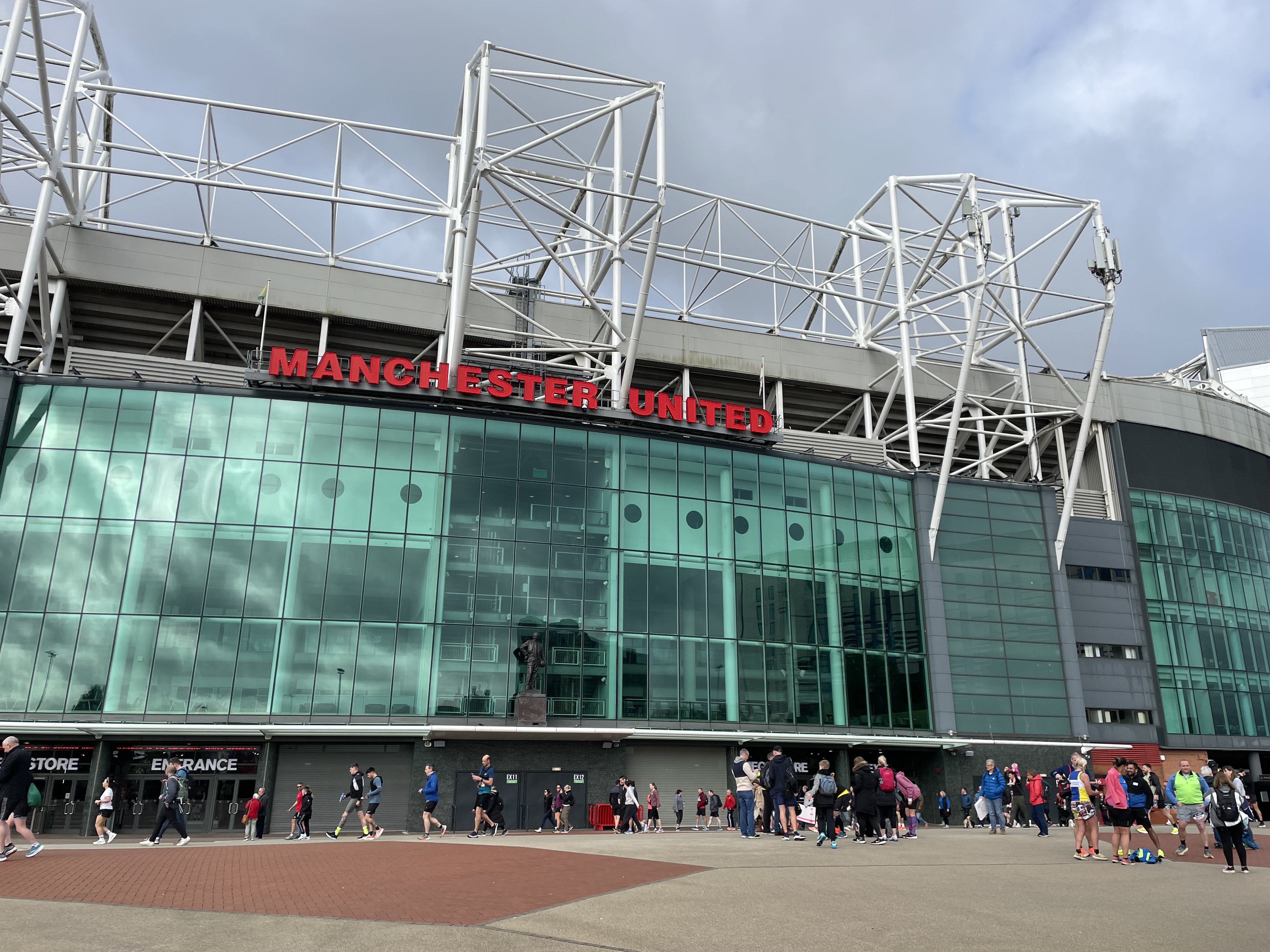
Manchester United began life in 1878 as Newton Heath LYR, a team of railway carriage-and-wagon workers in Manchester. Near bankruptcy in 1902 brought in local investors and a new name — Manchester United — and the club won its first league title in 1908, moving to Old Trafford in 1910.
The club's soul was forged by two great managers. Sir Matt Busby built the youthful 'Busby Babes' of the 1950s, rebuilt the club after the 1958 Munich air disaster that killed eight players, and made United the first English club to win the European Cup in 1968. Sir Alex Ferguson then ran the club from 1986 to 2013, winning 13 Premier League titles, the historic 1999 treble and another Champions League crown in 2008.
United remains English football's most decorated club (a record 20 league titles) and one of the most supported teams on the planet, and Old Trafford — 'The Theatre of Dreams' — is its cathedral. The modern identity is built on attacking football, famous comebacks, and a tradition of trusting young academy talent. The current chapter is a rebuild under former midfielder Michael Carrick.
Manchester United began life in 1878 as Newton Heath LYR, a team of railway carriage-and-wagon workers in Manchester — and nearly died in 1902, when debts of £2,670 brought the bailiffs to the door. Local brewery magnate John Henry Davies paid the bills, the red shirts arrived, and the name became Manchester United. Ernest Mangnall’s side won the first league titles in 1908 and 1911, and the club moved to Old Trafford in 1910, the ground Matt Busby would later call the Theatre of Dreams. But the soul of the club was forged in the 1950s. Busby’s ‘Babes’ — Duncan Edwards, Tommy Taylor, Eddie Colman, kids winning league titles in 1956 and 1957 — were the most exciting young team England had ever seen. Then came Munich, 6 February 1958: the plane crash on the runway that killed eight players and fifteen others, and left Busby fighting for his life. He rebuilt from the wreckage — through Denis Law, through George Best, through the survivor Bobby Charlton — and in 1968, ten years after Munich, United became the first English club to win the European Cup, beating Benfica 4-1 at Wembley.
Sir Alex Ferguson’s twenty-six years turned the tragedy-forged club into the dominant force in English football. Arriving in 1986 with United drifting, he won the 1990 FA Cup — the trophy that saved his job — and then set about “knocking Liverpool off their perch.” The 1993 title ended a 26-year wait; Eric Cantona’s arrival turned contenders into champions; the Class of ’92 — Giggs, Scholes, Beckham, the Nevilles, Butt — became the core of the greatest side the Premier League has seen. The 1999 treble, sealed by two stoppage-time goals against Bayern Munich in Barcelona, remains the single most famous night in English club football, and the 2008 Champions League in Moscow, won on penalties after John Terry’s slip, confirmed Ferguson’s second great team. Thirteen Premier League titles, two European Cups, and a farewell in 2013 as champions. What followed was the lost decade: Moyes, Van Gaal, Mourinho’s Europa League in 2017, Solskjær’s near-misses, Ten Hag — a carousel of managers and rebuilds while the club stayed a commercial giant and Old Trafford aged around it.
Michael Carrick’s appointment on a permanent basis, after a successful interim spell, was supposed to steady the ship. Last season’s third-place finish set the expectation — at least match it — but this campaign has started in the worst way. One win from five league games, five points: United’s joint-lowest tally after five games since the Van Gaal season of 2014-15, and already ten points behind Manchester City. The details have been cruel. In the derby, Erling Haaland’s winner stood — until the referees’ body later admitted it should have been disallowed. In the League Cup third round, United blew a 2-0 lead against Brighton and went out. At Craven Cottage, with Carrick under real pressure and Fulham leading through Lisandro Martínez’s farcical own goal — Calvin Bassey’s shot saved by Senne Lammens, rebounding in off the defender — it took Matheus Cunha’s deflected 89th-minute strike to salvage a 1-1 draw and avoid a third defeat in a week. Carrick’s refrain has been the “moments”: the Everton goal in the 95th minute, the City goal that wasn’t a goal, the Fulham own goal. “It’s going that way at the moment, which it won’t always.”
The squad he is working with is his project, and it is not yet firing. The summer’s marquee business was the midfield: Carlos Baleba arrived from Brighton as the physical shield the rebuild was built around, but the new engine room has yet to click. Bruno Fernandes, the captain and creative heartbeat, hit the woodwork at Fulham and has not hit his usual heights — and as one analysis put it, United look directionless without their star man at the top of his game. The attack was overhauled with proven Premier League end product — Bryan Mbeumo and Cunha — plus Benjamin Sesko, the towering Slovenian No. 9, who is currently sidelined with a shin problem: “We’re not sure with Ben yet,” Carrick admitted. Amad Diallo is yet to play this season, Matthijs de Ligt was deemed unfit for the Fulham trip, and with Sesko out the only bench option was Joshua Zirkzee — nine goals in two years at the club. Kobbie Mainoo, the academy midfielder whose role has grown hugely under Carrick, is the face of the new United; Leny Yoro the defensive cornerstone being groomed. But the through-line of the season so far is a team that looks passive in the big moments — and a manager insisting calmness and composure while the table says the pressure is real.
What United still have — what they have always had — is the identity: the Stretford End, the tradition of youth, the comebacks, the sheer scale of the following. The Theatre of Dreams still fills, still believes, still turns on a single spark. The three-week international break has come as a pressure valve: time to get Sesko assessed, time to get Amad back, time for Baleba and the new midfield to learn each other’s games. The fixtures after the break will define whether this is a blip or a slide — because at Manchester United, the question is never whether the manager gets time; it’s whether the results give him any. Carrick the player was the metronome of title-winning sides; Carrick the manager now has to prove he can build one. The history of this club says never write them off. The evidence of this season says the writing needs to start soon.
Key Players
Bruno Fernandes
Captain and creative heartbeat; nearly everything dangerous United do runs through him.
Kobbie Mainoo
Academy midfield star whose role grew hugely under Carrick; the face of the new United.
Amad Diallo
Fearless left-footed winger and a dressing-room voice backing Carrick's project.
Bryan Mbeumo
Proven Premier League goalscorer brought in to give the attack real end product.
Matheus Cunha
Brazilian forward with the swagger and ball-carrying to unlock packed defences.
Carlos Baleba
Marquee summer-2026 midfield signing from Brighton; the physical shield the rebuild was built around.
Leny Yoro
Young French centre-back United are grooming as the defensive cornerstone.
Benjamin Sesko
Towering Slovenian striker — the No. 9 option when fit and firing.
Club Legends
Sir Bobby Charlton
Munich survivor and World Cup winner; for decades, the club's conscience.
George Best
Northern Ireland's genius; arguably the most naturally gifted footballer Britain ever produced.
Eric Cantona
The King — the catalyst whose arrival turned United from contenders into champions.
Ryan Giggs
One-club winger with the most appearances in club history; a career spanning four decades.
Wayne Rooney
United's all-time top scorer; the street-fighter talent who carried the club into the post-Ferguson era.