
Results
The Story of Newcastle United
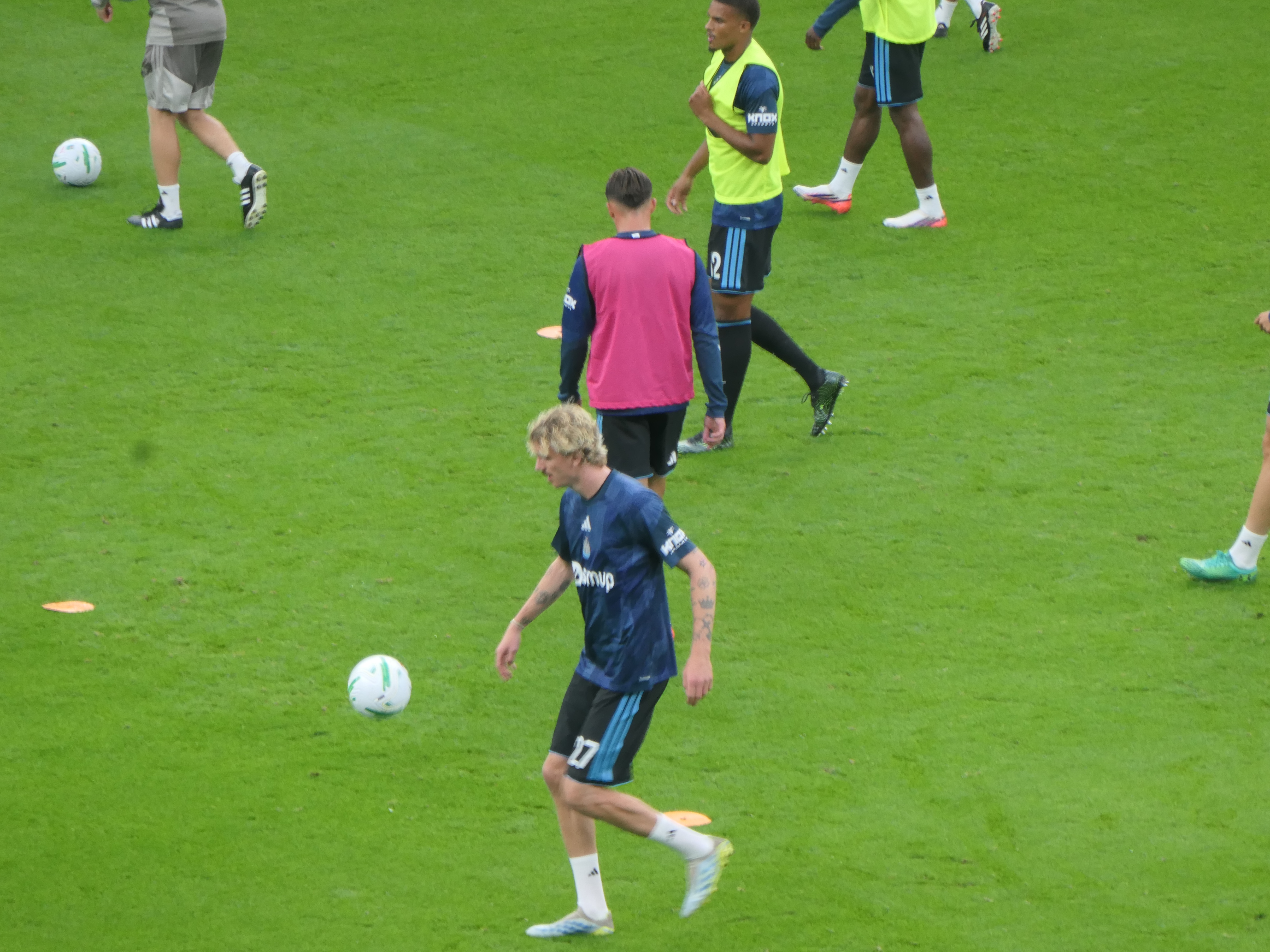
Newcastle United were formed in 1892 from the merger of two local clubs, Newcastle East End and Newcastle West End, and have played at St James' Park ever since. The black-and-white stripes became iconic in the Edwardian era, when the club won three league titles and two FA Cups before the First World War.
The modern mythology has two chapters: the 1969 Inter-Cities Fairs Cup — the club's first European trophy — and Kevin Keegan's 'Entertainers' of the 1990s, whose thrilling title race with Manchester United remains one of the Premier League's great stories. The 2021 Saudi-led takeover ended the divisive Mike Ashley era and brought ambition back to Tyneside, culminating in the 2025 League Cup — the club's first major domestic trophy in 70 years.
Newcastle is a one-club city, and its fans are among the most famously devoted in England: St James' Park sits on a hill above the city and shakes on big European nights. The identity is emotional, all-in attacking football and a civic pride that treats the club as Newcastle's heartbeat. The Jaissle era marks a deliberate youth-driven rebuild after the summer 2026 departures of Bruno Guimaraes, Sandro Tonali and Anthony Gordon.
Newcastle United were formed in 1892 from the merger of Newcastle East End and Newcastle West End, and St James’ Park — on its hill above the city — has been home ever since. The black-and-white stripes became iconic in the Edwardian era, when the club won league titles in 1905, 1907 and 1909 and FA Cups in 1910 and 1924, and Hughie Gallacher’s side added the 1927 championship. Then came the 1950s cup hat-trick: Jackie Milburn — ‘Wor Jackie’ — leading the line for FA Cup wins in 1951, 1952 and 1955, the post-war hero whose name still hangs over the Gallowgate. The club’s first European trophy followed in 1969, the Inter-Cities Fairs Cup, and for long stretches that was the summit: a giant club with a giant following and a trophy cabinet that didn’t match either.
The modern mythology has one towering chapter: Kevin Keegan’s Entertainers. Keegan arrived as manager in 1992 with the club nearly falling into the third tier; within four years Newcastle were playing the most thrilling football in England and taking Manchester United to the wire in the 1995-96 title race — the “I would love it if we beat them” season, the 4-3 at Anfield, Andy Cole and then Alan Shearer up front, David Ginola and Les Ferdinand and Peter Beardsley weaving through teams. They finished second again in 1996-97, and then it slipped away. The decades that followed were defined by Mike Ashley’s ownership from 2007: two relegations, the selling of the club’s soul in increments, the Rafael Benítez interlude, and a fanbase that filled St James’ Park anyway, week after week, in protest and in hope. The October 2021 Saudi-led takeover ended fourteen years of division overnight — and Eddie Howe, arriving weeks later, did the most remarkable job: from relegation candidates to the Champions League, and in 2025 the Carabao Cup at Wembley, the club’s first major domestic trophy in seventy years.
This season is the great reset. Howe departed in August 2026 after five transformative years, and the new man is Matthias Jaissle — 38 years old, two Austrian titles with Red Bull Salzburg, the AFC Champions League Elite with Al-Ahli, appointed on a contract to 2030 after Newcastle paid around £9.4 million in compensation. He inherited a club in churn: a disappointing 12th-place finish last season, and then the exodus. Sandro Tonali went to Tottenham for £100 million, Bruno Guimarães to Arsenal, Anthony Gordon to Barcelona — on top of Alexander Isak’s British-record £125 million departure to Liverpool the previous summer. The response was eight senior arrivals for more than £250 million, and a deliberate pivot to youth: Nico González from Manchester City as the midfield anchor, Bazoumana Touré from Hoffenheim, deadline-day Belgian attacker Matias Fernandez-Pardo from Lille, Ajax’s Sean Steur at just 18, Monaco’s Aladji Bamba, Benfica full-back Amar Dedić — who worked with Jaissle at Liefering and Salzburg — and two goalkeepers, Ewen Jaouen from Reims and Lukáš Horníček from Braga. Four of the seven summer signings were under 21. “It’s a goal of the club to work with young talent, to develop them,” Jaissle said, asking — reasonably — for patience.
The early signs have been encouraging without being spectacular: two wins, two draws, one defeat, eight points — and the season opened with a 2-2 draw at home to Liverpool, the champions, on Jaissle’s first day in the dugout. Yoane Wissa has led the line in the rebuilt attack, Harvey Barnes has been one of the senior survivors of the exodus, and Anthony Elanga’s pace stretches defences when fit — he missed the Leeds trip through injury, while González was forced off in that game after a blow to the face. Malick Thiaw has captained the side in the new era, Lewis Hall has signed a new long-term deal at left-back, and Joe Willock’s late winner at Millwall sent Newcastle into the Carabao Cup fourth round. Joelinton remains sidelined, and the midfield — González, Bamba and Steur competing with Lewis Miley, Jacob Ramsey and Willock — is the great experiment of the season: can a unit with an average age in the low twenties replace Guimarães and Tonali?
What never changes is the setting. Newcastle is a one-club city, and its supporters are among the most famously devoted in England — the Gallowgate End, the Wor Flags displays, the ground shaking on big European nights, the civic pride that treats the club as the city’s heartbeat. Jaissle’s teams are built on aggressive pressing, fast transitions and attacking football, and the owners — who share the PIF link with his former club Al-Ahli — believe he is the progressive, front-foot manager to reignite stalled momentum. The scale of the rebuild is stark, and replacing a manager as beloved as Howe is the hardest job in the league. But the vision is clear now: young, hungry, high-energy — a team built to grow into the shirt rather than shrink inside it. The question that will define Newcastle’s season is how fast the kids become men, and whether St James’ Park’s famous patience holds while they do.
Key Players
Yoane Wissa
Front-line leader in the rebuilt attack; a proven Premier League finisher.
Harvey Barnes
One of the senior survivors of the summer exodus; direct, goal-hungry wide man.
Anthony Elanga
Swedish speedster whose runs in behind stretch every defence.
Nico Gonzalez
£50m arrival from Manchester City; the anchor tasked with replacing a departed midfield core.
Bazoumana Toure
£43m winger from Hoffenheim; raw pace and already off the mark in black and white.
Matias Fernandez-Pardo
Deadline-day Belgian signing from Lille; versatile attacker Jaissle rates highly.
Lewis Hall
Young England left-back who signed a new long-term deal; the most reliable defender in the squad.
Malick Thiaw
German centre-back who has captained the side in the new era.
Club Legends
Alan Shearer
The Premier League's all-time top scorer and Newcastle's record marksman; a Geordie folk hero.
Jackie Milburn
'Wor Jackie' — post-war goalscoring icon and Shearer's boyhood idol.
Kevin Keegan
As player and twice as manager, the man who made Newcastle the most exciting team in England.
Paul Gascoigne
Gazza — the dazzling, troubled genius who lit up St James' Park in the 1980s.
Peter Beardsley
The magician of Keegan's Entertainers; one of England's cleverest-ever forwards.