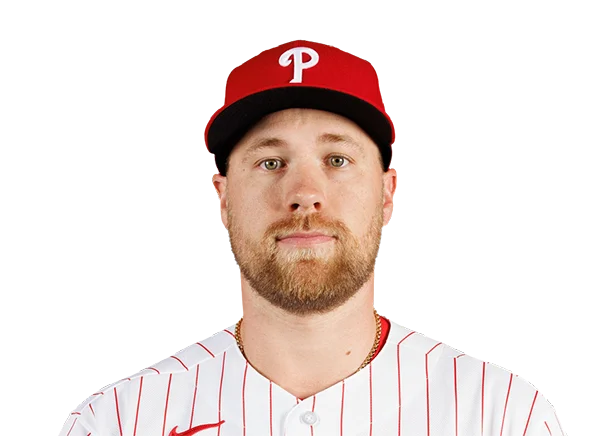
The Philadelphia Phillies were born in 1883, making them one of the oldest franchises in American professional sports — and for most of their first century, they were defined by glorious, spectacular losing. The Phillies lost more games than any franchise in baseball history, and their fans turned suffering into an art form: booing Santa Claus, booing their own stars, loving the team with a ferocity that borders on beautiful dysfunction. Then, twice, the losing stopped — and Philadelphia threw the two biggest parties in its history.
What defines the Phillies is the two championships and the eras around them. The 1980 team — Mike Schmidt's MVP season, Steve Carlton's 24 wins, Tug McGraw on the mound to close out the Kansas City Royals — delivered the franchise's first World Series title after 97 years of waiting. The 2008 team — Chase Utley, Ryan Howard, Jimmy Rollins, Cole Hamels' October masterpiece, Brad Lidge perfect in save chances — beat the Tampa Bay Rays for the second title, capping a five-year run of division dominance that made the late 2000s the golden age of Philadelphia baseball.
The legends are the city's adopted sons. Schmidt, the greatest third baseman ever, whose number 20 is retired. Carlton's 32. Richie Ashburn's 1. Robin Roberts' 36. And the modern era's heroes: Utley, Howard, Rollins, Hamels — the homegrown core that ended the drought. The Bryce Harper era brought the next wave: the 2022 pennant run, an underdog sprint to the World Series that fell to the Houston Astros but reminded everyone what October in South Philly feels like.
Citizens Bank Park, opened in 2004, is one of the game's great home-field advantages — a bandbox where the ball flies in summer and the crowd noise rattles visiting pitchers. The Phillie Phanatic, the greatest mascot in sports, patrols the stands. The "Fightins" play an emotional, all-out brand of baseball that mirrors the city: loud, relentless, and allergic to quitting.
The rivalries are NL East blood feuds: the Mets, the big-city foil; the Braves, the divisional overlord the Phillies spent decades chasing; the Nationals, the newer neighbor. Philadelphia baseball is about the wait and the payoff — 97 years for the first title, 28 for the second — and a fan base that never stopped believing, or booing, for a single inning.
The 2026 season ended the way Phillies seasons have ended for five straight Octobers: too soon, and with the wrong team celebrating. Philadelphia finished 88-74, claimed the National League’s final wild-card spot — the sixth seed — and lost the wild-card series to the Atlanta Braves two games to one: 5-3 in Game 1, a 4-3 ten-inning triumph in Game 2 on home runs from Kyle Schwarber and Bryce Harper, and a 6-2 elimination in Game 3 at Truist Park on October 1. Michael Harris II’s three-run homer in the first inning of the decider set the tone; Ozzie Albies and Matt Olson added homers; Aaron Nola was pulled after 1 2/3 innings, and even Zack Wheeler — who had clinched the wild-card berth with a Sunday gem — couldn’t stop the bleeding in four innings of relief. It was Atlanta’s first playoff series victory over the Phillies, and the Braves’ first series win of any kind since the 2021 World Series.
The season nearly ended in April. The Phillies fired manager Rob Thomson after a 9-19 start — a stunningly early hook for a manager who had taken the club to the 2022 World Series — and turned to Don Mattingly on an interim basis. Mattingly went 79-55 the rest of the way and dragged a flawed roster into October, yet the club never made him the permanent manager, and his future is now the winter’s first open question. The flaws were real: a poor September, Edmundo Sosa starting at third base in the decider despite a balky groin, Luis Arraez missing the series with an ankle sprain, and an offense that too often waited for the big swing that never came.
The trend line is the uncomfortable part. Since the magical 2022 pennant, it’s been all downhill: lost the 2023 NLCS, lost the 2024 NLDS, lost the 2025 NLDS, lost the 2026 wild-card round — five straight postseasons ending earlier than the last, each with a more expensive roster. The three highest-paid hitters — Harper, Schwarber, and Trea Turner — make a combined $780 million, and the Phillies carried the game’s fourth-highest payroll into a season that ended in the wild-card round. Alec Bohm and José Alvarado could reach free agency, the core isn’t getting younger, and the Braves — the divisional overlord the Phillies beat in the 2022 and 2023 Division Series — have now returned the favor and moved on to face the two-time defending champion Dodgers.
What’s happening now is an offseason of reckoning. The managerial chair is the first domino: Mattingly earned the job on the record and lost it, apparently, on the org chart. The roster needs the flexibility and run prevention the front office has preached and never quite built. And the identity question looms largest: the “Fightins” of 2022 played like the city — loud, relentless, allergic to quitting. The 2026 club played like a team waiting for October to save it, and October declined. Citizens Bank Park remains one of the game’s great cauldrons, the Phanatic remains the game’s great mascot, and the fan base remains the game’s great beautiful dysfunction. But Philadelphia has thrown two championship parades in 143 years, and the window that opened in 2022 is narrowing. The wait and the payoff — that’s always been the deal. The payoff is overdue.