
The Houston Astros were born in 1962 as the Colt .45s, and three years later they did something no baseball team had ever done: they moved indoors. The Astrodome — the "Eighth Wonder of the World" — made the Astros the franchise of the future, playing on artificial turf under a roof while the rest of baseball baked in the sun. The name changed to Astros to match the space-age moment, and Houston baseball has been chasing the cutting edge ever since, for better and for worse.
The first golden age belonged to the Killer B's: Craig Biggio, Jeff Bagwell, and Lance Berkman, homegrown stars who turned the Astros into National League contenders through the late '90s and early 2000s. The 2005 team won the franchise's first pennant — then got swept by the White Sox in the World Series. It felt like the peak. It wasn't even close.
What came next is the most complicated dynasty in modern sports. The teardown of the early 2010s — three straight 100-loss seasons — produced the draft picks and the data-driven machine that won the 2017 World Series over the Dodgers in seven games. Then came the revelation that the 2017 team had run a sign-stealing scheme, and the title has carried an asterisk in the minds of many fans ever since. Here's the uncomfortable truth about the Astros: they didn't stop winning. Seven straight American League Championship Series appearances from 2017 through 2023 — an AL record — and a second, cleaner-feeling championship in 2022 over the Phillies. Love them or hate them, and plenty do both, no franchise has sustained October excellence like this in the wild-card era.
The faces of the era are unforgettable. José Altuve — 5-foot-6, undrafted out of Venezuela, turned into a future Hall of Famer and the beating heart of the lineup. Justin Verlander, the ace who reinvented himself in Houston. Alex Bregman, Yordan Alvarez, Kyle Tucker, Carlos Correa: a homegrown core that kept producing MVPs and October heroes. The retired numbers at Daikin Park tell the longer story too — Biggio's 5, Bagwell's 7, Nolan Ryan's 34 from his fire-breathing late-'80s run.
The 2026 season: the worst playoff team ever — and into October anyway. Only the Astros could make history out of mediocrity. Houston finished 81-81, the definition of average, and won the American League West anyway — their fifth division title in six years and ninth postseason trip in ten. In doing so they became the first team in baseball history to reach the playoffs with a non-winning record over a full 162-game season, breaking the mark set by the 82-80 Padres of 2005. It took until Game 162: a 9-0 rout of the Athletics in West Sacramento on the season's final Sunday, sealed when Texas lost at Minnesota minutes earlier, putting Houston one game up on the Rangers at 80-82 with the tiebreaker in hand.
The ride was pure Astros chaos. They sat 11-20 in April, at which point first baseman Christian Walker looked around the clubhouse and declared, "There's a hundred wins in this room." He was off by nineteen. They bottomed out at 20-31 in late May, eleven games under .500, then ground their way back through the summer. A home sweep by Atlanta in the final week erased a one-game West lead and dropped them a game behind Texas with six to play — before four closing games in Yolo County flipped the whole division. Somebody had to win the weakest division in recent memory. The Astros made sure it was them.
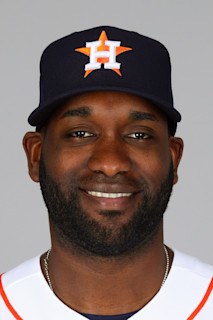
Houston had one player to thank above all: Yordan Alvarez, who finished as the major league batting leader at .316 and carried an otherwise punchless lineup for six months. When the pitching wobbled and the defense sagged, Alvarez was the constant — the rare superstar hitter good enough to drag an 81-win roster into October almost by himself.
October, however, was a reckoning. The Astros drew the upstart Chicago White Sox in the best-of-three wild-card round and were swept out in flames at Daikin Park — 6-3 on Tuesday, 7-3 on Wednesday — finishing 81-83. It was their ninth straight home playoff loss, a stunning fall for a franchise that owned October for the better part of a decade. The scene told its own story: an announced crowd of 34,011 for Game 1 left more than 7,000 empty seats, and the fans who did show up booed. "The fans here are definitely spoiled with a lot of ALCS and World Series runs," reliever Bennett Sousa said afterward. "We have to earn that right to bring this team back to that position."
Now comes the most fascinating winter in Houston in a decade. The club parted ways with general manager Dana Brown in August and manager Joe Espada's contract expired with the sweep, leaving the franchise's leadership in flux. The dynasty core — Altuve, Alvarez and the remnants of the machine that won in 2017 and 2022 — is aging, the farm system is thin, and the 81-81 title, historic as it was, papered over real cracks. As one Houston columnist put it after the elimination: a fascinating winter awaits for a franchise that may finally have to confront its competitive crossroads. The Astros didn't stop winning for a decade. The question now is what winning looks like next.
The rivalries are personal now. The Texas Rangers and the Silver Boot series became a genuine blood feud when the two met in the 2023 ALCS. The Dodgers series still simmers from 2017. And the Yankees have been Houston's October sparring partner for a decade. The Astros play in a hitter-friendly downtown ballpark with the Crawford Boxes in left, and they play with a swagger that drives opponents insane. Houston went from expansion afterthought to the team everybody measures themselves against. The rest of baseball is still trying to figure out how to feel about that.