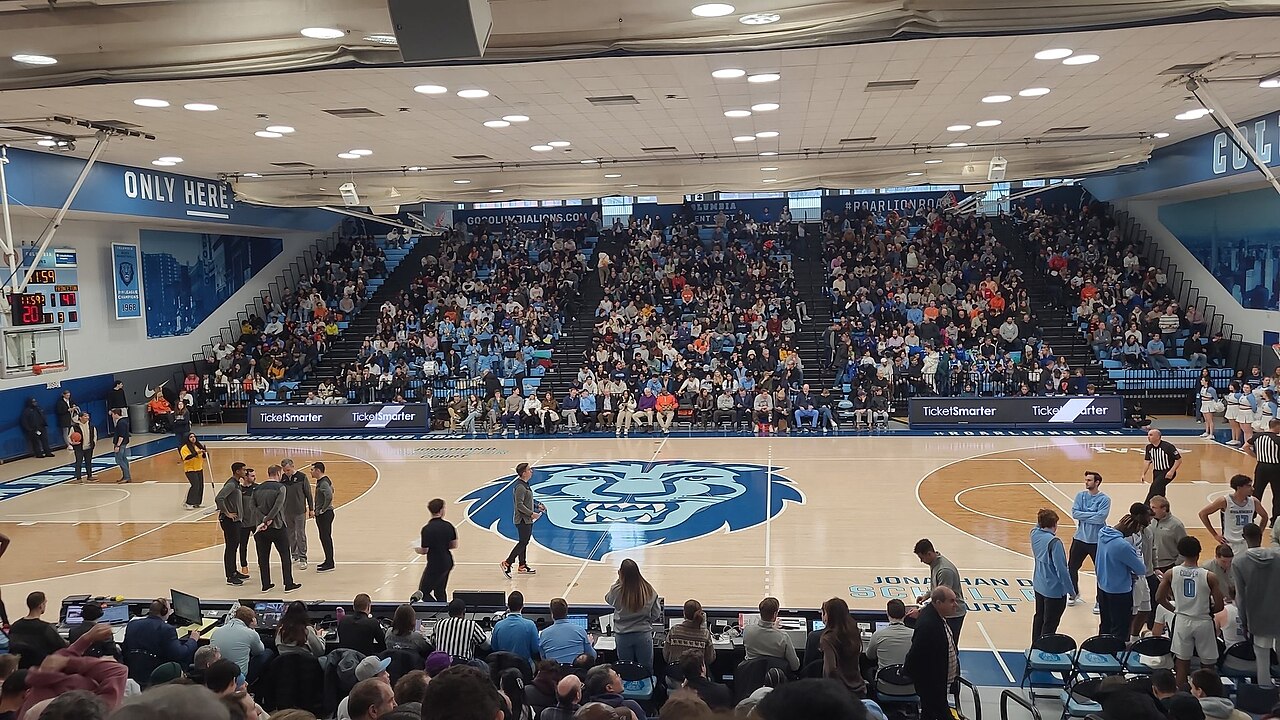
Walk into Levien Gymnasium on a Friday night in January and you’ll feel something that hasn’t existed in Manhattan for a decade: belief. The Columbia Lions — the Ivy League’s program of ancient glory and modern drought — finally have momentum again. Kevin Hovde’s first season on the sideline delivered the program’s first winning campaign in ten years, and it did it with a brand of basketball nobody in the league was ready for: ferocious rebounding, a 104-point eruption at Cornell, and an offense that scored like it was making up for lost decades. The question for 2026–27 is whether year one was a spark or the start of a fire.
The hire itself was a statement. On March 24, 2025, Columbia named Hovde the 24th head coach in program history, replacing Jim Engles after his resignation. The résumé turned heads across college basketball: Hovde had spent three seasons as an assistant at Florida under Todd Golden, helping the Gators to the 2025 national championship, and before that he worked on Kyle Smith’s Columbia staff from 2011 to 2016 — he knew the building, the league, the academic grind. “Our goal for our men’s basketball program is to win Ivy League championships,” athletic director Peter Pilling said at the time. Nobody has won one at Columbia since Lyndon Johnson was president.
That last part is the weight every Columbia team carries. The Lions’ last NCAA Tournament appearance was 1968, when Jack Rohan’s team reached the Sweet 16 — nearly six decades ago, one of the longest droughts in Division I. Before that, the program was royalty: Helms Foundation national championships in 1904, 1905 and 1910, a program that helped invent the sport in the Ivy League’s earliest days, and stars like Jim McMillian, who went from Morningside Heights to an NBA championship with the 1972 Lakers. The history is real. So is the gap. Every coach since has inherited both.
Hovde’s first team attacked the gap head-on. The 2025–26 Lions went 16–12 and 5–9 in the Ivy, finishing tied for fifth — but the record undersells the transformation. Columbia finished with the eighth-best rebounding margin in the entire country and ranked inside the top 35 nationally in offensive rebounds and rebounds per game. In 14 Ivy League games, the Lions led the conference in offensive rebounds. Eight of their 16 wins came by 15 points or more. This was not a cute overachieving academic squad. This was a physically punishing team that beat people up on the glass.
And then there was the offense. Hovde earned his first career win on November 7, 2025, at New Haven, and by late November the Lions were putting up numbers the program hadn’t seen since the Ford administration. On November 26 at Fairfield, Columbia scored 106 points and shot 62.5 percent from the field — its first 100-point game against a Division I opponent since 2010 and its first 60-percent shooting night on the road since 2016. Across a four-game span from November 21 to 29, the Lions averaged 93.8 points; the last Columbia team to average 90-plus over four games did it in the 1976–77 season. Then came January 4: down nine in the second half at Cornell, Columbia stormed back for a 104–99 win — just the second time ever scoring 100 on the Big Red, the first 100-point Ivy game for the program since February 6, 1993 against Harvard, and the first 100-point road Ivy game since February 19, 1972 at Harvard. The Ivy opener as a coronation.
The engine was senior guard Kenny Noland, a first-team-caliber star who averaged 17.1 points, 3.7 assists and 1.4 steals while shooting 92.1 percent from the free-throw line — the best mark in the nation among qualified players. Noland went off for 27 twice in the nonconference slate and set the tone every night. Around him, the frontcourt did the dirty work: Zine Eddine Bedri pulled 7.4 rebounds per game and hit 44.4 percent from three, a rare inside-out weapon; Blair Thompson muscled his way toward 500 career rebounds, the first Lion to reach the mark since Mark Cisco in 2012–13; Ryan Soulis anchored the paint as the team’s top shot-blocker; Mason Ritter shot 54.7 percent and owned the offensive glass. Columbia out-rebounded its opponent in all 11 of its nonconference wins — and by more than 20 boards five times. When the Lions owned the glass, they were unbeatable.
The Ivy slate was the reality check. Yale remains the league’s class, Princeton and Cornell are deep, and Columbia’s 5–9 conference record kept it out of Ivy Madness. A 75–65 home win over Princeton on Valentine’s Day was the highlight of February, but closing losses to Yale and Harvard ended the year. The lesson of year one: this program can now win in November and December. Winning in February is the next wall.
Year two brings change and continuity in equal measure. Noland and Thompson — the senior heartbeat of the turnaround — have graduated, and replacing a 17-point-per-game first option and a 500-rebound enforcer is the whole offseason. But Hovde’s second roster retains real pieces: Soulis, Ritter, Gerard O’Keefe and Hampton Sanders give the Lions a veteran core that already knows the system, and the staff’s recruiting pitch has never been stronger — first winning season in a decade, a modern up-tempo identity, New York City as the backdrop. The season opens November 2, 2026 against Elon at Levien, and the nonconference slate will again tell us plenty before the Ivy wars begin.
The stakes are clear and they haven’t changed since Pilling’s opening press conference: win an Ivy League championship, end the drought that stretches back to 1968. Yale, the defending champion, isn’t going anywhere. But for the first time in a decade, Columbia isn’t asking its fans to believe on faith. The 104 points at Cornell, the glass-cleaning dominance, the winning record — that’s evidence. The Lions finally look like a program going somewhere. Now they have to get there.