For six years, the Harvard Crimson watched the Ivy League's March party from the outside. The program that owned the Ancient Eight in the 2010s — four straight NCAA Tournament bids from 2012 to 2015, the league's first real national brand — had gone quiet since 2020. Then came the 2025-26 season, and Tommy Amaker's 18th Harvard team kicked the door back open: 17-12 overall, 10-4 in the Ivy League, a second-place finish that was the program's highest since 2019-20, and a return to the Ivy League Tournament — the program's first appearance since 2020 and first actual games at the event since 2019. The rebuild, it turns out, worked.
The clincher was pure Harvard basketball. On a February afternoon at Cornell's Newman Arena, the Crimson dismantled the Big Red 73-54 to punch their Ivy Madness ticket, riding sophomore guard Tey Barbour's career-high 30 points and near-triple-doubles from junior forward Thomas Batties II (10 points, nine rebounds, seven assists) and captain Chandler Piggé (seven points, nine rebounds, eight assists). The defense did the talking: Cornell came in averaging 88.8 points per game, and Harvard held the Big Red to their lowest offensive output of the season. That was the 2025-26 Crimson in miniature — the Ivy League's top scoring defense at 66.7 points allowed per game, a unit that made every possession feel like an exam.
The league noticed. At season's end, Amaker and his staff earned Ivy League Co-Coaching Staff of the Year honors, and three Crimson players landed All-Ivy recognition: guard Robert Hinton '28, a unanimous First Team All-Ivy selection as a sophomore; Piggé; and Batties. Hinton, the 2025 Ivy League Rookie of the Year, made the sophomore leap into one of the conference's genuine stars — the kind of player opposing coaches game-plan around. Piggé was the captain and the connective tissue, a senior who did a little of everything. Batties brought the versatility that lets Amaker play his preferred style: long, switchable, smart.
That style has a lineage. Amaker arrived in Cambridge in April 2007 from Michigan — a former Duke point guard who started all 138 games of his college career, won two national titles as a Blue Devil assistant, and then rebuilt Seton Hall and Michigan — and he proceeded to do what nobody thought possible at Harvard: win, at scale. The 2009-10 team, led by Jeremy Lin, produced the program's best season ever to that point and its first win over a ranked team (No. 17 Boston College). Then came the dynasty years: Ivy titles in 2011, 2012, 2013, 2014 and 2015, with NCAA Tournament wins over New Mexico in 2013 and Cincinnati in 2014 that put Harvard on the national map. Eight postseason appearances under Amaker. Seven All-America honors, 42 all-conference selections, three Ivy Players of the Year. The Crimson became the rare program that could lose a recruiting battle to Duke and still beat teams like Duke's peers in March.
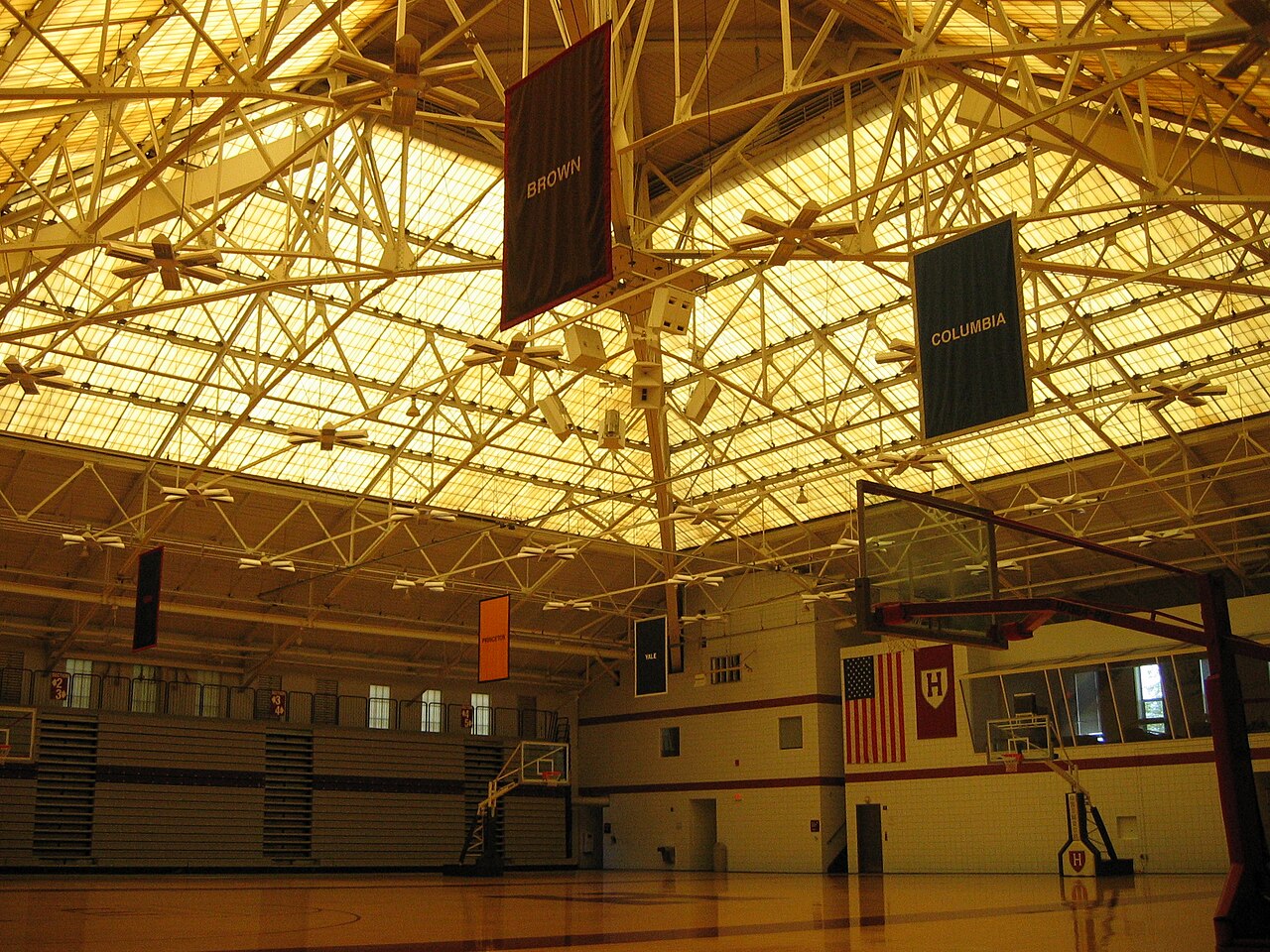
The setting is part of the story. The Crimson play at Lavietes Pavilion, a 1,636-seat bandbox in Allston where the crowd is close enough to hear the play calls — intimate, loud, and, when Harvard is good, one of the toughest small rooms in the country. The Ivy League's structure makes every game a referendum: a 14-game round-robin, no nights off, and a four-team Ivy Madness tournament that decides the league's lone NCAA bid. There is no at-large safety net. Second place is a triumph and a heartbreak at the same time, because it means you were one weekend from the dance.
What makes the 2025-26 revival meaningful is what came before it. The pandemic canceled the entire 2020-21 Ivy season, and Harvard — more than most — felt the aftershocks: the program's model depends on multi-year development of players who choose Cambridge for the degree and the basketball, and the lost year scrambled the pipeline. Amaker's staff rebuilt it the slow way, through evaluation and development rather than the portal, and last season was the payoff: a winning Ivy record for the first time since 2019-20, an undefeated 5-0 start in road conference games, and a team that belonged in the league's top tier again.
What's happening now is the next chapter of that story. Fall practice is underway in Cambridge ahead of the 2026-27 season, and the Crimson open in early November with a roster built around Hinton — now a junior and the face of the program — and Batties, a senior leader in the frontcourt. Piggé's graduation costs Harvard its captain and its Swiss Army knife, so the offseason's central question is who becomes the connective tissue: Barbour's 30-point explosion at Cornell suggests the scoring punch is there, and Amaker's track record with guard development is the program's deepest well. The Ivy race will run through the usual suspects — Princeton, Yale, and the rest of the Ancient Eight — but Harvard goes into the season as a program that has already proven the hard part. The standard, as Amaker built it, is not making the tournament. It's expecting to.