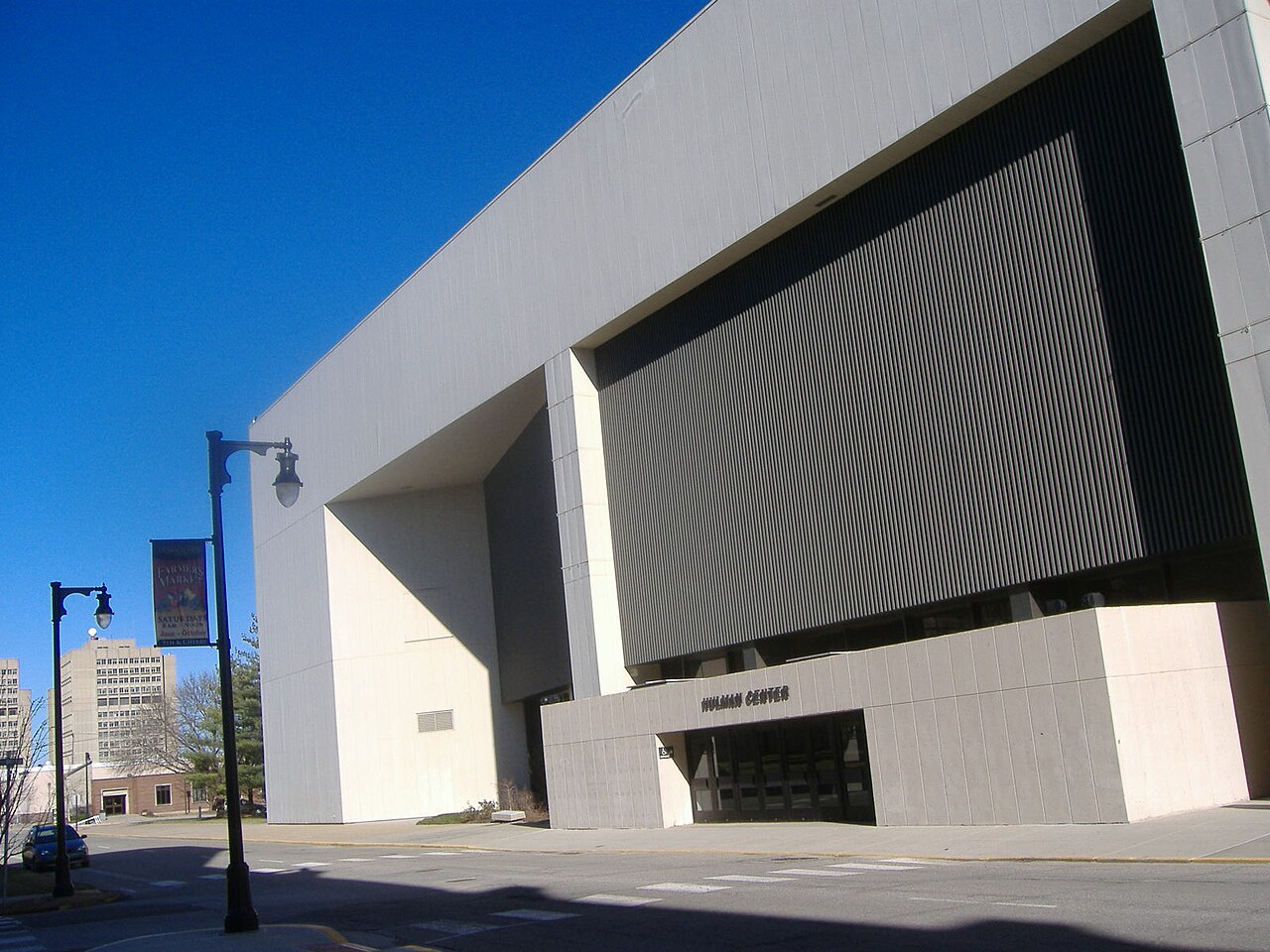
Three Aprils ago, Indiana State was the story of college basketball. Josh Schertz's Sycamores won 32 games, captured the Missouri Valley regular-season crown, and rode the viral stardom of Robbie Avila to the NIT championship game — the nation's darlings, with the Hulman Center shaking every night. Then Schertz left for Saint Louis, the entire starting lineup entered the transfer portal, and Matthew Graves inherited a full rebuild. The 2026-27 season is year three of the Graves era — and the first where the roster is unmistakably his.
Graves, the former Butler player and assistant who spent five seasons as South Alabama's head coach before joining Schertz's staff in 2021, kept the program standing through the transition and has rebuilt it in his own image: long, international, and deep. The 2026-27 roster carries a distinctly global flavor, with players from Spain, Belgium, Norway, Germany, Italy, Canada, and Grenada alongside a core of Indiana and Midwest talent.
The Harding brothers anchor the middle. Hunter Harding, the 7-foot-1 sophomore from Toronto, and Markus Harding, the 6-foot-10 senior, give the Sycamores a twin-tower look, with junior Derek Vorst (6-foot-10, Ohio) adding more size. Senior forward Ian Scott (Plainfield, Indiana) and junior Enel St. Bernard (Grenada) bring experience to the frontcourt, while freshman Alessio Calamita — a 6-foot-10 Italian from the FC Bayern Munich pipeline — is the developmental big to watch.
The backcourt is veteran-led. Seniors Xavier Hall (Kansas), Sterling Young (Queens, New York), and Zyair Greene (Atlanta) give Graves three experienced guards, with juniors Caden Huttenlocker (Ellettsville, Indiana), Jo Van Buggenhout (Brussels), and Camp Wagner (Dallas) in the mix. Sophomores Bruno Alocen (Barcelona), Cooper Bean (Noblesville), and Jayan Walker (Raleigh) plus freshmen Martin Kaupanger (Washington) and Sivert Waerstad Nordheim (Oslo) round out one of the Valley's deepest guard rotations.
The schedule is ambitious. After exhibitions at Butler (October 10) and against Rose-Hulman (October 24), the Sycamores open November 2 against Charlotte, visit Ball State on November 6, and head to the Paradise Jam in the U.S. Virgin Islands (November 20-23), opening against Stephen F. Austin. December brings two heavyweight road tests: at Oregon on the 12th and at Kansas — Allen Fieldhouse — on the 22nd. Then it's the Valley grind and Arch Madness in St. Louis.
The 1979 legacy is the program's soul. Larry Bird's Sycamores went 33-0 into the national championship game against Magic Johnson's Michigan State — the highest-rated basketball game ever played, the duel that launched the sport into the modern era. In Terre Haute, Bird is immortal: the Hick from French Lick who carried a Missouri Valley school to the title game and changed everything.
The modern chapters matter too. The 2000 and 2001 tournament teams brought the program back to March; Duane Klueh's 1950s NAIA dynasty built the small-college foundation; and the 2024 renaissance — 32 wins, the NIT final, Avila's stardom — reconnected the generations and proved the Hulman Center could still shake like the old days.
The Hulman Center remains the Wabash Valley's cathedral: 10,200 seats of Sycamore intensity, one of the Valley's toughest trips when the team is rolling. The community that packed it in 2024 showed what Terre Haute can be for a winner — and Graves' rebuild is aimed squarely at giving them another one.
The Valley is the annual war: Bradley, Drake, Illinois State, and the rest, every game a rock fight, with the automatic bid going through St. Louis. In a one-bid league, the non-conference résumé — Kansas, Oregon, the Paradise Jam — is about building the at-large case the committee ignored in 2024.
What defines Indiana State is the Bird magic and the 2024 proof of concept: this program can captivate the country, and it can win big in Terre Haute. Graves' third team is young, long, and international — the next chapter of the Sycamores' story is being written now, and the mission is the same as ever: get back to March.
The 2026-27 Sycamores won't be picked to win the Valley, and that's fine — the program has been at its best as the hunter. With size, shooting, and a coach who learned the league from the inside of its greatest modern run, Indiana State is building toward something. The Bird standard hangs over everything; the next dance is the goal.
For the fans who filled the Hulman Center in 2024, the message is patience with purpose: Graves kept the program standing through the portal exodus and has assembled a roster with real upside. The Sycamores' story has always been about more than one season — and the climb back to the top of the Valley is officially underway.
Graves' rebuild has followed the blueprint Schertz proved works in Terre Haute: find undervalued talent, develop it, and let the Hulman Center do the rest. The international pipeline — Bayern Munich, Barcelona, Brussels, Oslo — gives Indiana State a recruiting edge few Valley programs can match, and the roster's length and skill fit the up-tempo, spaced-out style that made the 2024 team must-see television. The next breakout star is in this locker room; it's just a matter of who.