
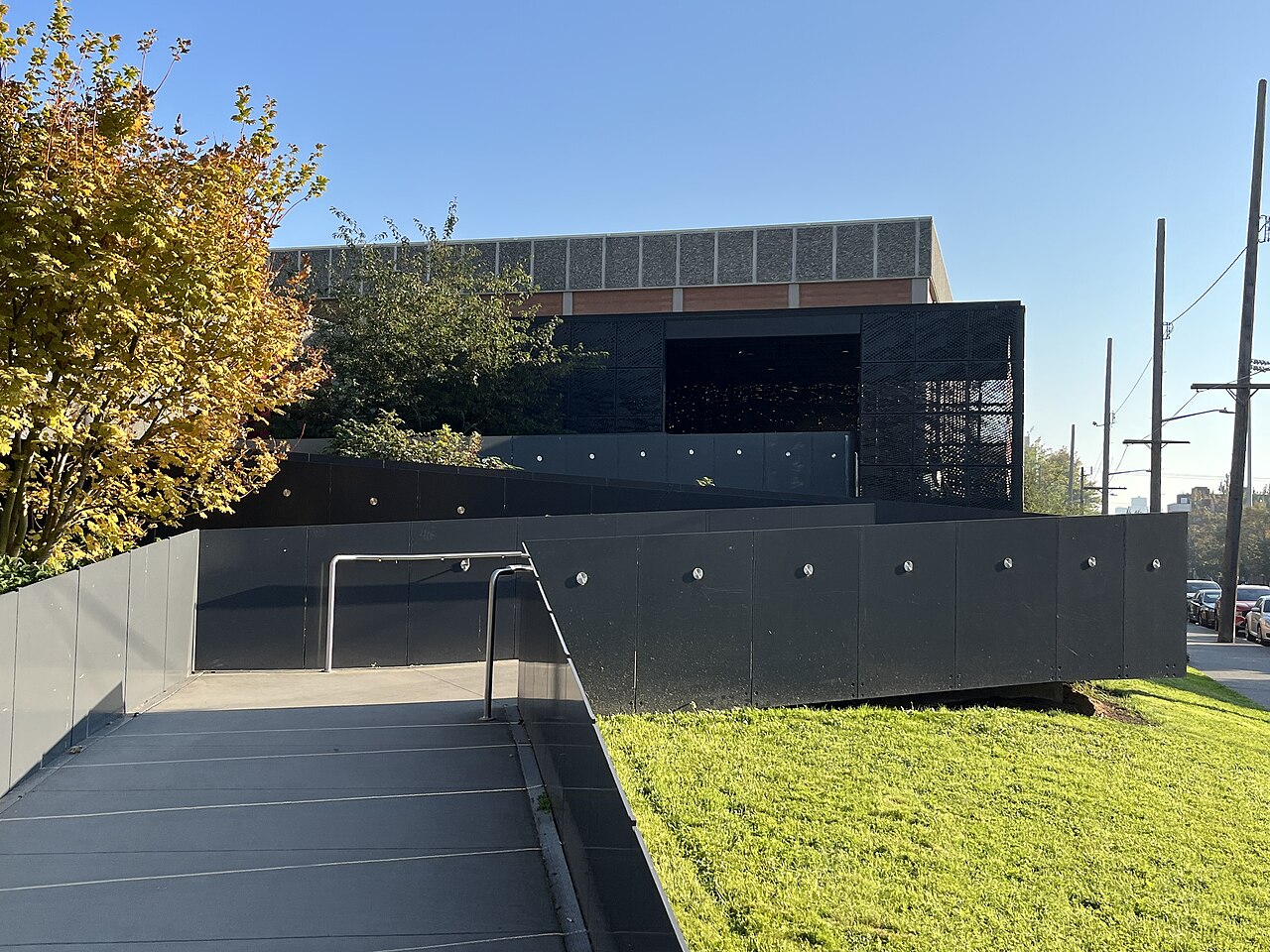
The Seattle U Redhawks' basketball story begins with one of the most breathtaking talents the sport has ever produced. In 1958, Elgin Baylor — the 6-foot-5 forward who played the game a decade ahead of its time — put Seattle University on his back and carried the Redhawks to the national championship game, where they fell to Adolph Rupp's Kentucky Wildcats. Baylor dropped 25 points in that final, capping a collegiate career so brilliant that the school retired his No. 43 and named the Redhawk Center floor after him. Ask anyone on Capitol Hill about Seattle U basketball and you'll hear about Baylor first, because everything the program has ever been flows downhill from that season.
The 1960s turned that moment into an era. Under coach John Castellani and then Vince Cazzetta, Seattle U became a genuine national power — producing pros like Eddie Miles and Charlie Williams, stacking NCAA tournament appearances, and packing the old Seattle Center Coliseum. The Redhawks were the pride of the Pacific Northwest before the region had much basketball pride to claim. Then came the fall: by the 1980s the program had slid out of Division I entirely, spending years in the NAIA and Division II wilderness. Seattle U basketball spent a generation off the national map.
The climb back is one of the great program resurrections in college basketball. Seattle U rejoined Division I in 2009, joined the Western Athletic Conference, and slowly — patiently — rebuilt. The breakthrough arrived under Chris Victor, the head coach who took over in 2021 and engineered the most sustained winning the modern program has known. The 2021-22 Redhawks won the WAC regular-season title — the first Division I conference championship in school history — and Seattle U has since stacked three 20-win seasons in four years, including the 2023-24 CBI championship, the program's first national postseason title of the modern era.
The latest chapter is the biggest stage yet: in 2025-26, Seattle U joined the West Coast Conference, the league of Gonzaga and Saint Mary's, and announced its arrival with a 21-14 campaign, an 8-10 conference mark, and a run to the second round of the NIT. That first WCC season was about survival and respect; year two is about more. The Redhawks have gone 63-16 at home over the last four-plus seasons under Victor, splitting time between the intimate Redhawk Center and big-game nights at Climate Pledge Arena — a fortress mentality that travels well into the WCC's road gauntlet.
For 2026-27, Victor has reloaded with a roster that blends continuity and international ambition. The headline addition is Tómas Thrastarson, the 6-foot-7 Icelandic guard who transferred in from Washington State after earning WCC All-Freshman honors there and averaging 8.8 points and 4.1 rebounds as a sophomore despite missing time with a foot injury. Thrastarson gives Seattle U a big, versatile playmaker who already knows the league. The freshman to watch is Jaden Bailes, a 6-foot-2 guard from JSerra Catholic in Southern California who lit up the Adidas 3SSB circuit — 16.0 points a game and All-Breakout Team honors — and whom Victor has already tabbed as an immediate-impact piece.
The senior core is the engine. Guards Maleek Arington (Auburn, Washington), John Christofilis (a Seattle native), Jojo Murphy, JT White, Brayden Maldonado (Anchorage, Alaska) and forward Junseok Yeo (Seoul, South Korea) give the Redhawks experience at nearly every spot. Up front, 7-footer Austin Maurer continues to develop into a real rim presence. And the roster reads like an airport departures board — players from China, Japan, South Korea and Greece alongside a heavy Washington contingent — a global footprint that has become Victor's signature recruiting lane.
What defines Seattle U is the weight of history paired with a program finally climbing toward it again. The standard is Baylor's flight in 1958, and the mission is the first NCAA tournament bid of the modern Division I era — the one dance the resurrection hasn't produced yet. The WCC gives the Redhawks annual shots at Gonzaga in a genuine Pacific Northwest rivalry, plus a crosstown edge against Washington that the city feels. Home has been a fortress; now the mission is stealing enough road games in the WCC to matter in March.
The 2026-27 schedule wastes no time: nonconference tests build toward the January and February WCC wars, with a December 19 date against Thrastarson's old school, Washington State, adding a personal subplot. Every season now is judged by one question — is this the year Seattle U finally breaks through and plays in the NCAA tournament for the first time since 1969? Baylor's banner hangs in the Redhawk Center as the reminder of what this program has been. The modern Redhawks are done rebuilding. They're chasing history.