The South Alabama Jaguars own one of the great in-state upsets in tournament history — and they did it against the team they share the state with. In 1989, the 11th-seeded Jaguars stunned sixth-seeded Alabama 86-84 in the first round, an all-Alabama showdown that the Jags won with swagger. In a state where college football is religion, South Alabama's basketball program gave the Gulf Coast a March immortal: the little school from Mobile took down the Crimson Tide on the sport's biggest stage. Thirty-seven years later, it's still the program's signature win — the one that gets retold every March in Mobile.
The Jaguars have danced in multiple eras. Ronnie Arrow's teams went in 1989 and 1991, and the program was back in 2006 and again in 2008 — with the 2008 team, the Sun Belt's best, pushing Butler to the absolute wire before falling in overtime. That Butler loss hurt because everyone in the building knew what it was: a genuine Sweet 16 team running into a buzzsaw one game too early. South Alabama has been a Sun Belt fixture for generations, a program with real March history and a fan base that measures seasons by whether the Jags are in the league-title conversation.
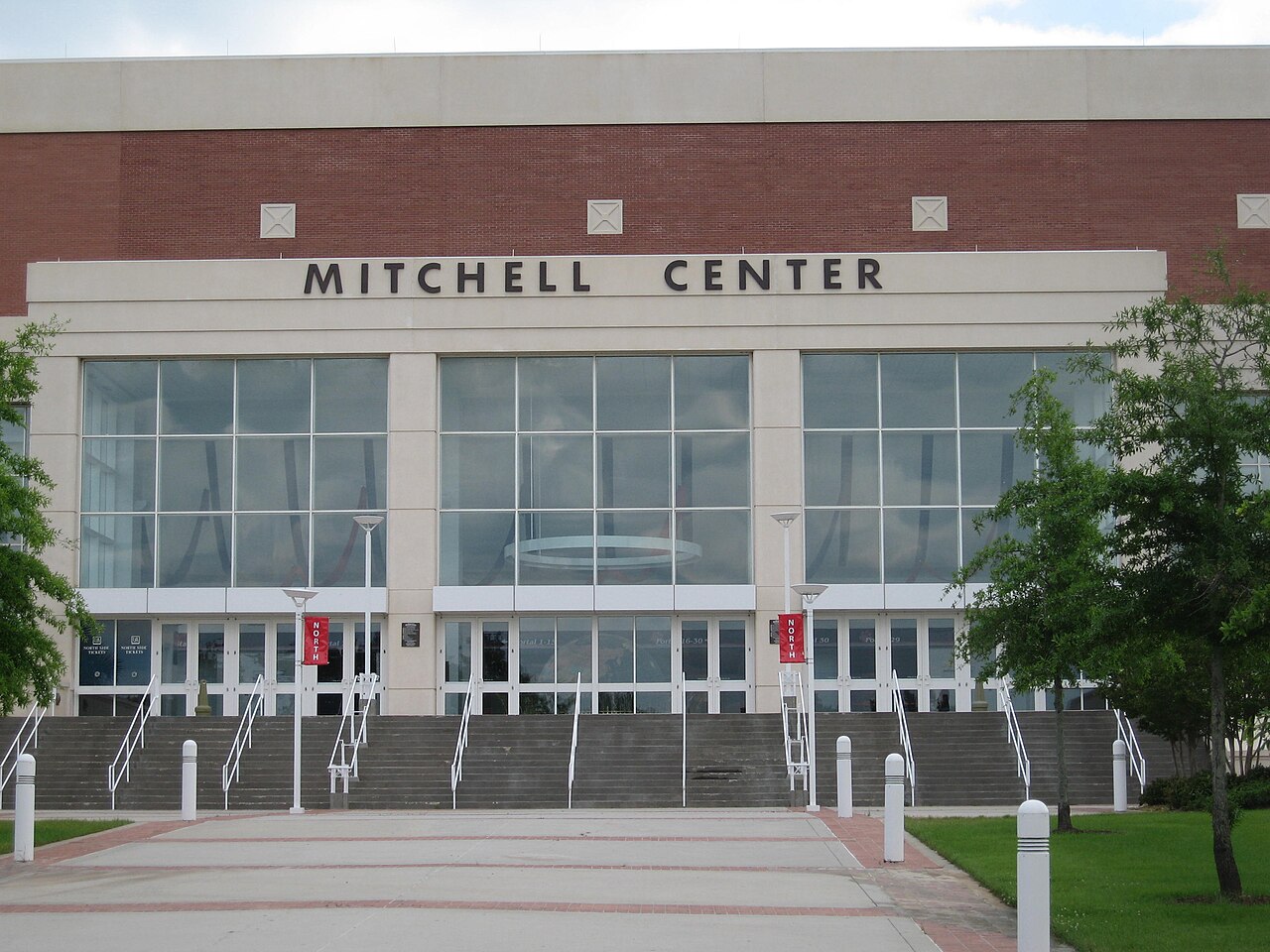
The modern era belongs to Richie Riley, the head coach who has been building in Mobile since 2018. Riley's teams play the way Gulf Coast basketball is supposed to look: fast, physical, guard-driven, and relentless on the glass. The Jaguars are perennial Sun Belt contenders, the kind of program that wins 20 games, hosts a league semifinal, and makes the rest of the conference check the schedule when the trip to Mobile comes up. The Mitchell Center isn't the biggest building in the league, but on a good night it's one of the loudest — and the Jags feed off it.
For 2026-27, Riley has assembled one of his most intriguing rosters: young, long, and remarkably international. The veteran presence is grad student Peyton Law, the 6-foot-7 forward from Calhoun, Georgia, and senior guard Aaron Goldstein, the Staten Island product who brings backcourt steadiness. The junior class is the core: 6-foot-9 Stephen Williams (Atmore, Alabama), 6-foot-10 Lenni Kunzewitsch (Gotha, Germany, via ratiopharm Ulm) and 6-foot-7 Owen Kenney (Barrie, Ontario, via the University of Ottawa) give the Jags real size and skill up front.
The sophomores are the upside swing. Samuel Shoptaw (London, Kentucky), Jalen Langsy (Shakopee, Minnesota), Mobile's own Desmond Williams, Roderick Williams Jr. (Magnolia, Arkansas), Keyne Costa (Brussels, Belgium) and Davaughn Hueitt (Chula Vista, California) all return with a year in the system — and the two freshmen, 6-foot-8 Diego Roman (Morges, Switzerland) and 7-foot Russian Alexey Sereda, give Riley the kind of international size that can change a mid-major's ceiling. Junior guard Aedan Lewis (Pensacola) rounds out a rotation that is deep enough to press and run the way Riley wants to play.
The Sun Belt itself has never been deeper, which is what makes the Jaguars' annual contention so impressive. The league has become one of the country's best mid-major battlegrounds — veteran coaches, veteran rosters, and a tournament in March where the top seeds are genuinely at risk from day one. South Alabama's path is always the same: survive the road, defend home, and be playing your best basketball in the second week of March. Riley's teams have made a habit of it, and the Jags have been the team nobody wants to draw in the conference tournament for years.
What defines South Alabama is the Gulf Coast chip on the shoulder. This is a program that has been winning in the Sun Belt for decades without ever getting the national respect its résumé deserves — the Alabama upset, the Butler classic, the 20-win seasons, and still the Jags are the league's perennial underdog story. The Sun Belt is a war zone: Troy, James Madison, Marshall, Appalachian State, Georgia Southern — every road trip is a fight, and the Jags play like it. The identity is pure Mobile: tough guards, relentless effort, and a building that believes.
The 2026-27 season is about turning youth into contention. Riley's international frontcourt — Kunzewitsch, Kenney, Sereda, Costa — has to anchor a defense that can win the ugly January road games, and the sophomore guards have to take the leap from role players to closers. If the size develops and the shooting comes around, this is a roster that can be playing on the final day of the Sun Belt tournament in March. In Mobile, they don't need a reminder of what's possible — 1989 is the eternal flame. The question every season is whether this is the team that adds the next chapter.