The Dallas Wings carry a championship pedigree that predates their name, their city, and their conference. The franchise was born in 1998 as the Detroit Shock, and under the combustible Bill Laimbeer — the former Bad Boy turned championship coach — the Shock won three WNBA titles in six years: 2003, 2006, and 2008. Those Detroit teams were famously tough, famously physical, and famously disliked by everyone who wasn't from Detroit. It was glorious. In 2010 the franchise moved to Tulsa; in 2016 it moved to Dallas and became the Wings. The banners say Detroit. The team says Dallas. The history belongs to both.
What defined the Wings was the gap between that pedigree and the present. Since the move to Texas, the franchise was stuck in the league's middle — talented rosters, lottery picks, never the right formula. The Dallas years produced genuine stars: Skylar Diggins-Smith, Liz Cambage, and above all Arike Ogunbowale, the Notre Dame legend whose 30-point explosions can take over any game on any night. Ogunbowale's fearlessness — the same gene that produced her back-to-back buzzer-beaters in the 2018 NCAA Final Four — made her the face of the franchise.
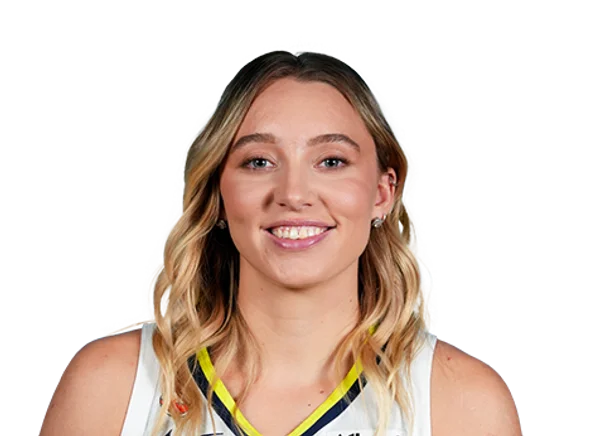
The new era arrived with the 2025 number-one overall pick: Paige Bueckers. The UConn superstar — the most decorated college player of her generation, a national champion, and a cultural phenomenon — landed in Dallas as the stage for her pro career, instantly making the Wings one of the league's most-watched teams. Her rookie season brought the 2025 Rookie of the Year award (19.2 points per game) and precious little else: Dallas finished 10-34, tied for the worst record in the league, and head coach Chris Koclanes was dismissed after a single season. "To be where we were last year where we won 10 games, I was down bad," Bueckers said later. "I love to win and I hate losing with a passion."
Then came the turnaround — the biggest in WNBA history. Hired in October 2025, Jose Fernandez arrived from South Florida, where he had spent 25 seasons building the Bulls into a consistent mid-major power, and made history simply by taking the job: the Cuban American became the first Latino head coach in the league's three-decade existence. Dallas retooled around him — acquiring Jessica Shepard, retaining Ogunbowale, drafting Bueckers' old UConn running mate Azzi Fudd — and the result was staggering: a 27-17 record in 2026, a 17-win improvement that stands as the largest single-season turnaround the WNBA has ever seen, and a playoff berth for the first time since 2023, after cycling through five head coaches in seven seasons. Fernandez took criticism over rotations and minutes all season long and publicly called out a "selfish" locker room after a loss to Minnesota; he now holds the league record for the biggest improvement by a first-year coach.
Bueckers' sophomore leap was the engine. She started all 42 games, averaging 20.9 points, 5.9 assists and 4.1 rebounds while shooting 51.2 percent from the field and 41 percent from three — up across the board from her rookie year. Her 878 points and franchise-record 247 assists shattered Skylar Diggins' single-season assists mark of 199 set in 2018, and her 1,514 career points are the most by any player in their first two WNBA seasons, ever. The pull-up jumper remained one of the most lethal weapons in the league — 102 makes on 206 attempts, 43.9 percent from three on pull-ups — and she scored 30 or more three times, including 32 against Seattle on 12-of-16 shooting with six threes. Shepard, the offseason acquisition, was named the league's Most Improved Player. And in September, Bueckers added another line to the résumé: a stint with Team USA at the FIBA World Cup in Berlin, learning championship habits alongside veterans like Chelsea Gray before returning for the playoff push.
The playoffs delivered a classic. Seeded seventh, Dallas drew the second-year Golden State Valkyries in the first round. Game 1 in San Francisco slipped away. Game 2 at College Park Center became an instant franchise landmark: Ogunbowale detonated for 45 points — the most ever scored in a single WNBA playoff game — dragging the Wings to a 108-100 overtime win, with Bueckers (10 points on 3-of-13) happily ceding the stage. "Paige virtually carried us in Game 1 when it was out of hand," Fernandez said. "Now we have a great opportunity to go back there and play for a berth as one of the final four teams." Game 3 was there for the taking — Dallas led most of the night and Ogunbowale poured in 30 more — but Golden State erased a 16-point deficit to win 77-73 and end the Wings' season. Ogunbowale used the moment afterward to make sure her coach got the credit: "He's a winner. He wants us to win. He deserves a lot of praise for what he did this year. Jose has been really special to me in our relationship."
The Wings play at College Park Center in Arlington, on the UT Arlington campus — an intimate building that puts one of the league's most passionate fan bases right on the floor. Texas women's basketball culture runs deep, and Dallas has embraced the team as its own. The rivalries are Western Conference wars: the Las Vegas Aces, the standard-bearers; the Seattle Storm, the old dynasty; the Phoenix Mercury, the desert foil.
The Wings' story is about a proud franchise remembering what it used to be — three championships in the rafters, the most exciting young backcourt in the WNBA on the floor, and a coach who just authored the greatest single-season turnaround in league history. The pieces are there. Dallas knows what winning looks like. For the first time in a long time, it's starting to look like it again.