I Want to Love You Till Your Dying Day
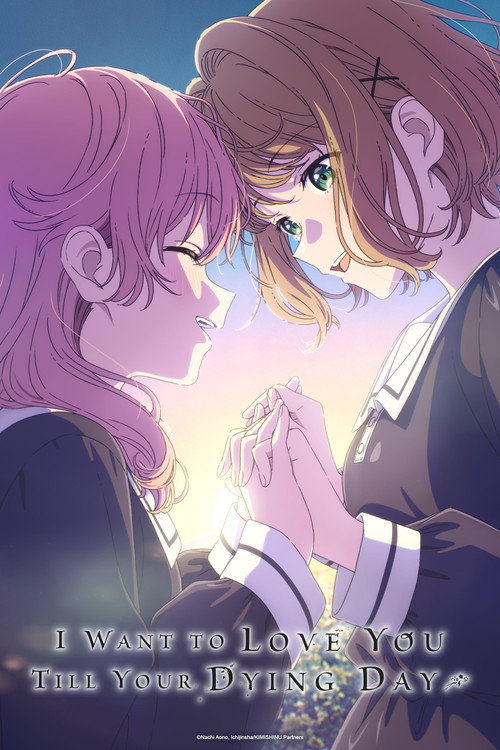
TV SERIES
At a secret academy where orphaned girls are raised as weapons, death is routine and grief is forbidden. Sheena, a 14-year-old who questions this brutal life, meets Mimi, a mysterious, blood-soaked girl who refuses to break. In a world built on violence, the two cling to fragile hope and fight to hold on to their humanity.
I Want to Love You Till Your Dying Day (2026)
At a secret academy where orphaned girls are raised as weapons, death is routine and grief is forbidden. Sheena, a 14-year-old who questions this brutal life, meets Mimi, a mysterious, blood-soaked girl who refuses to break. In a world built on violence, the two cling to fragile hope and fight to hold on to their humanity.
Genres: Animation, Drama, Sci-Fi
Rating: TMDB rating 9.3/10
Vivian’s Take
The hook
A 9.3. Read that number again. On TMDB, where the entire internet grades on a curve of grudges, a 9.3 isn’t a rating — it’s a distress flare. I Want to Love You Till Your Dying Day is anime operating at its most emotionally extreme: a secret academy where orphaned girls are raised as weapons, where death is routine and grief is forbidden — and at the center of it, Sheena, fourteen years old, asking the question the whole system is designed to prevent: what if we deserve more than this?
Then Mimi arrives — mysterious, blood-soaked, refusing to break — and the show’s thesis locks into place. This is a story about two girls clinging to their humanity in a world built to strip it, and the title is a promise the show clearly intends to keep. ‘Till your dying day’ isn’t poetry here. It’s a plot point.
The deep cut
What works: the emotional stakes are absolute. The ‘child soldier’ setup is anime with a long lineage, but the shows that transcend it are the ones that make the system feel lived-in rather than decorative — and a 9.3 suggests this one earns its horror. The relationship between Sheena and Mimi is the engine: one girl questioning, one girl enduring, both of them choosing each other in a place designed to make attachment impossible.
What doesn’t: this is harrowing by design, and ‘by design’ doesn’t make it easier to watch. The violence-as-worldbuilding can numb even sympathetic viewers, and the premise’s bleakness is a genuine barrier — this is not a show you recommend casually. It’s a show you recommend with a warning and a hand on the shoulder.
Who it’s for: viewers who want anime to hurt them in the good way — the audience that believes the medium’s greatest strength is its willingness to go all the way. If you need your stories to flinch, look elsewhere.
Cultural context
The ‘girls raised as weapons’ lineage runs deep in anime — it’s one of the genre’s most revisited nightmares, precisely because it literalizes something real about how societies treat the vulnerable. What separates the great entries from the exploitative ones is the question the story asks: is the suffering the point, or is the resistance? The title answers it. The love story isn’t the relief from the darkness; it’s the argument against it.
And the 9.3 matters culturally, not just numerically. Scores that high, on that platform, with that premise, mean the show found its exact audience and detonated. In an era of infinite content, the most valuable thing a series can be is undeniable to the people it was made for.
The verdict
A 9.3 on TMDB isn’t a rating; it’s a distress flare. I Want to Love You Till Your Dying Day earns it by going all the way: a secret academy raising orphaned girls as weapons, death as routine, grief as contraband — and at the center, Sheena asking the question the whole system is designed to prevent, and Mimi refusing to break. The love story isn’t the relief from the darkness; it’s the argument against it. This is anime at its most emotionally extreme, and it’s not for everyone. For the ones it’s for, it’s essential.
Vivian’s grade: A — Devastating by design and impossible to shake — the rare 9.3 that feels earned rather than inflated.