Paolo
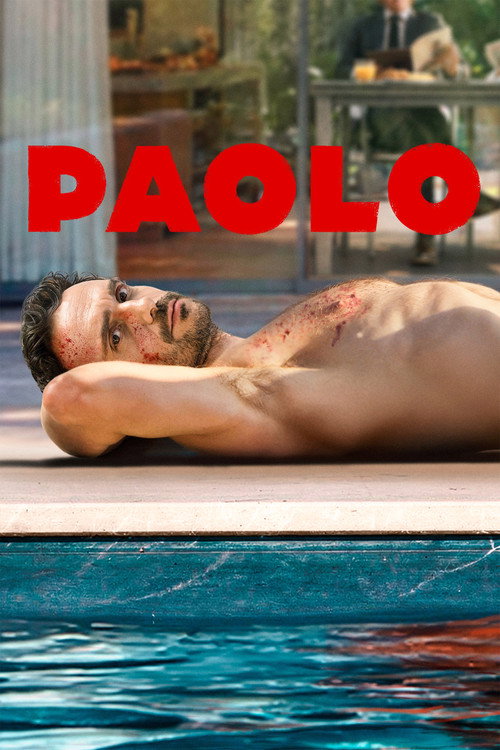
TV SERIES
Follow working-class Paolo's unsettling intrusion into the life of Téophane Tolbiac, a young and up-and-coming politician.
Paolo (2026)
Follow working-class Paolo's unsettling intrusion into the life of Téophane Tolbiac, a young and up-and-coming politician.
Genres: Mystery
Rating: TMDB rating 10.0/10
Vivian’s Take
The premise
Paolo is a seven-episode French psychological thriller that premiered on HBO Max on September 25, 2026, with new episodes arriving every Friday through November 6. The setup is disarmingly ordinary: Paolo, a working-class man living a quiet life, bumps into Téophane Tolbiac, a former schoolmate who is now running for mayor of his town. What begins as simple admiration — Paolo becomes fascinated, starts trying to enter Téophane's inner circle, volunteers for the campaign — gradually develops into a consuming, unhealthy obsession. The show's own logline chooses its word with care: Paolo's "unsettling intrusion" into the young politician's life.
The series is adapted from Mimi, the novel by Sébastien Marnier, who also created and directed the series and co-wrote it with Juliette Soubrier. Each episode runs about 52 minutes. It is rated TV-MA, it is in French, and it is, in the current streaming landscape, something of an anomaly: a slow-burn European character thriller given the full HBO prestige rollout — weekly episodes, a proper Friday slot, and the network's implicit promise that patience will be rewarded.
The cast
Jérôme Niel plays Paolo, the working-class man at the center of the intrusion — a role that lives or dies on the actor's ability to make obsession feel human rather than cartoonish, to keep the audience inside Paolo's head even as his behavior curdles. Opposite him, Yoann Gasiorowski plays Téophane Tolbiac, the young up-and-coming politician: the golden boy, the former classmate who made it, the object of a fascination he does not fully see coming.
The ensemble fills out the world on both sides of the class divide: Magalie Lépine-Blondeau as Géraldine, Marie Oppert, Léo Chalié, Véronique Ruggia Saura, Guslagie Malanda as Winnie, Salif Cissé as Jean Baptiste, and — in the kind of casting that tells you about the show's cultural ambitions — Françoise Lebrun and Philippe Katerine, plus Guilaine Londez, David Ayala, Cyril Metzger, and Louise Lehry. It is a cast built for texture: the political machine around Téophane, the ordinary world around Paolo, and the widening gap between them.
How it got made
Sébastien Marnier is a filmmaker with a track record in French psychological unease — his features include the school-shooting drama L'Heure de la sortie (School's Out) — and adapting his own novel gave the series a rare unity of vision: the same hand that wrote the book directed all seven episodes. The scripts were co-written with Juliette Soubrier, and the series was produced by Mintee Studio for HBO Max, part of the network's ongoing investment in international originals that can travel.
That the series plays the American French Film Festival circuit — it was listed among the festival's 2026 drama selections ahead of its September 25 digital launch — says something about how HBO is positioning it: not just as content, but as cinema-adjacent television, the kind of slow, deliberate French thriller that used to live exclusively in art houses. The trailer rollout in the summer of 2026 leaned into the same register: Jérôme Niel's face, the word "disturbing," and the promise of a thriller that earns its tension rather than manufacturing it.
Season one
The season is structured as a tightening spiral. Episode 1, which aired September 25: after learning that his former classmate Téophane Tolbiac is running for mayor, Paolo becomes obsessed with getting into his inner circle. From there, the architecture is classic slow-burn — each episode deepens the entanglement, each small boundary crossed makes the next one easier, until admiration has fully fermented into something dangerous.
Two episodes are out as of this writing, with the remaining five arriving weekly through the November 6 finale. The Friday slot matters: this is weekend viewing for people who like their television to sit with them, the kind of show where you spend Saturday thinking about a look someone gave someone on Friday night. The 52-minute episodes give scenes room to breathe — long conversations, long silences, the particular French patience with letting a moment land before cutting away from it.
The reception
The TMDB audience score sits at a perfect 10.0 — a number that demands context. A perfect ten almost always means a small, fervent early audience rather than a mass consensus; the show's real test is surviving wider exposure, where the slow-burn psychodrama either becomes a phenomenon or remains a beautiful secret. What the 10.0 tells you right now is that the people who found Paolo early loved it without reservation — and for a show this specific, that kind of passionate core is exactly how cult followings start.
The premise is doing the heavy lifting with critics and early viewers alike. The class-intruder story is eternally potent because the resentment underneath it is real — everyone has felt the locked door. Setting it in French politics, with a young politician on the rise, gives the collision a specific texture: this is not generic power, it is the particular theater of political ambition, where image is infrastructure and the wrong admirer can become a liability overnight.
Cultural context
Paolo belongs to a long and distinguished lineage: the class thriller, from The Talented Mr. Ripley to Parasite, the story of the outsider who breaches the insider's world and forces the question of who actually has the power. What distinguishes the French telling is the political setting — this is not just wealth, it is elected power, the kind that depends on public love, which makes an obsessive admirer both the campaign's dream and its nightmare.
It also belongs to the current wave of international prestige television on American platforms — the bet that a French-language slow burn can hold an HBO Friday slot in the age of infinite scrolling. That bet has paid off before, and the ingredients here are right: a director adapting his own novel, a psychologically precise lead performance, and a premise that weaponizes the oldest dynamic in the book — the have and the have-not, the watched and the watcher.
The verdict
Grade: A−. A perfect-10 French slow-burn about class, power, and obsession — patient, precise, and quietly unnerving. The kind of show that starts as admiration and ends as a warning.
The full picture: Paolo
Premise & development
Paolo is a 2026 French psychological thriller created and directed by Sébastien Marnier and written by Marnier with Juliette Soubrier, adapted from Marnier’s own novel Mimi. It is a seven-episode HBO Max original that premiered on September 25, 2026, with new episodes arriving every Friday through November 6. Rated TV-MA and presented in French, it is one of HBO Max France’s flagship European productions — it was selected for the international competition at Series Mania 2026, the premier showcase for global television.
The setup is deceptively quiet. Paolo lives a simple, fulfilling life in a small provincial town: he moves pianos by day and is planning a wedding with his fiancée Winnie in his spare time. Then a chance encounter pulls him to a campaign event for his former classmate Téophane Tolbiac, an ambitious, magnetic local politician on the rise — a young man now running for mayor of their hometown. What begins as genuine admiration and a commitment to Téophane’s campaign soon spirals. Paolo becomes fascinated by Téophane’s success, wealth and aura, and his all-consuming desire to belong to the hopeful mayor’s inner circle curdles into obsession.
HBO describes the series as “a gritty and spellbinding thriller” and “an unflinching look at how easily the lines can blur between admiration and obsession.” The action unfolds in the claustrophobic world of a provincial town in turmoil, where transgression, class anxieties, power games and deception collide. Early episodes run close to an hour — 52 minutes for the premiere, 56 for the second — giving the slow burn room to breathe.
Cast & characters
Jérôme Niel delivers what early coverage calls a powerful performance as Paolo, an ordinary man caught in a relentless downward spiral. Opposite him, Yoann Gasiorowski — a sociétaire of the Comédie-Française — is magnetic as Téophane Tolbiac, the embodiment of a success story as dazzling as it is ambiguous. The series lives or dies on their face-off: the working-class piano mover who wants to be seen, and the rising politician who may or may not see him at all.
The ensemble around them is deep with French stage and screen talent: Magalie Lépine-Blondeau as Géraldine, Marie Oppert (also Comédie-Française), Léo Chalié, Véronique Ruggia as Saura, Guslagie Malanda as Winnie, Salif Cissé as Jean Baptiste, Françoise Lebrun, Léa Lopez (Comédie-Française), Philippe Katerine, Guilaine Londez, David Ayala, Cyril Metzger and Louise Lehry. The production comes from Mintee Studio for HBO Max.
Reception & cultural context
As a late-September 2026 premiere, Paolo is still early in its run, with audience scores just beginning to accumulate — early IMDb sampling sits in the mid-6s, and the show carries a perfect early TMDB audience mark as word spreads. The official trailer and key art, unveiled by HBO Max in late August, positioned it squarely as prestige European thriller fare: no gimmicks, just class tension and a protagonist sliding somewhere he cannot climb back from.
The show belongs to a rich French tradition of slow-burn moral thrillers, but its particular nerve is class. Paolo’s intrusion into Téophane’s world is not a heist or a con — it is the fantasy of proximity to power, the working-class belief that admiration might be convertible into belonging. Marnier, directing his own adaptation, keeps the camera close and the town small, so that every campaign handshake and every unanswered text lands like a verdict. In a television landscape crowded with Parisian procedurals, Paolo’s provincial setting is itself a statement: the most dangerous obsessions grow where everyone knows your name.
In the U.S. the series streams on HBO Max, including through the HBO Max Prime Video channel and as a Hulu add-on; it is also available in the U.K. on HBO Max. With four of its seven episodes still to air as of early October, the question hanging over the back half is the one the premise was built for: when admiration becomes obsession, who is actually in danger — the man being watched, or the man doing the watching?