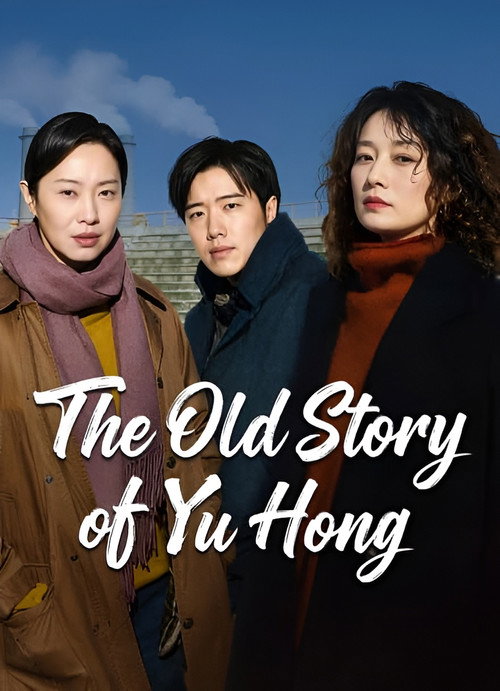
The Old Story of Yu Hong (2026)
Adapted from Ban Yu’s acclaimed novel Yu Hong, this 12-episode iQIYI mystery unfolds in a declining industrial city in 1990s Northeast China, where a string of bizarre deaths — a drunkard frozen into an ice sculpture, a strongman dismembered, a thug vanished without a trace — reveals the intertwined fates of victims and the flickers of hope beneath brutal survival. Premiered September 29, 2026. Stars Ma Yili, Wang Jiajia, and Zhang Zhehua.
Year — 2026
Network — iQIYI
Episodes — 12
Director — Yu Miao
Based on — Yu Hong by Ban Yu (班宇)
Starring — Ma Yili, Wang Jiajia, Zhang Zhehua
Vivian's grade — B
Vivian's Review
Is it worth your time?
Read Vivian's full review▾
The Hook
A declining industrial city in 1990s Northeast China. A drunkard is found frozen into an ice sculpture. A strongman is brutally dismembered. A local thug vanishes without a trace. Three deaths that look like nothing — accidents, bad luck, the weather — until the pattern underneath starts to show: a web of emotional entanglements and coincidences binding the victims together, and a chain of “accidental deaths” that unravels into something stranger and sadder than murder.
The Old Story of Yu Hong (余红旧事) is iQIYI’s 12-episode adaptation of Yu Hong, the novel by Ban Yu (班宇) — one of the defining voices of contemporary Northeast Chinese literature, the writer who made the rust belt’s decline into the great subject of a generation. Directed by Yu Miao and premiered September 29, 2026, the series stars Ma Yili (马伊琭) — one of China’s most decorated television actresses — alongside Wang Jiajia and Zhang Zhehua. Full episodes stream on iQIYI with multi-language subtitles, including on the platform’s YouTube channel.
The Place Is the Point
Yu Hong is a real district of Shenyang, the capital of Liaoning province — the heart of the Dongbei rust belt, where the state-owned factories that once guaranteed a life (“the iron rice bowl”) collapsed in the 1990s and took whole cities’ certainties down with them. Ban Yu’s fiction has always been about what that collapse did to people: not the economics, but the weather of the soul in a place where the future was cancelled.
The series understands that the setting is the thesis. The bizarre deaths are the plot; the town is the point. Every frozen street, shuttered factory gate, and kitchen-table interrogation does double duty as social autopsy — a murder mystery that is also a diagnosis of an era. This is crime drama the way the best of the genre has always worked: every murder is also a murder of a time and place.

The Players
Ma Yili leads the cast, and her presence is the series’ biggest signal of intent — this is prestige casting for prestige material. One of China’s most awarded TV actresses, she brings a weary, watchful gravity to a story that needs its center to hold while everything around it thaws and refreezes. Wang Jiajia and Zhang Zhehua round out the principal cast, playing figures caught in the victims’ widening orbit: neighbors, creditors, lovers, survivors, each carrying a piece of the puzzle and a piece of the town’s grief.
The performances are pitched at the series’ register: restrained, weathered, refusing melodrama. In a story about people enduring the unendurable, the acting understands that survival doesn’t look like heroism — it looks like getting up the next morning in minus twenty degrees and going to work in a factory that may not exist next year.
The Deep Cut
What works is the patience. This is slow-burn noir in the truest sense: the series trusts that atmosphere is evidence, that a dying town tells you who the killer is before the detectives do. The ice-sculpture image that opens the story is the whole show in miniature — grotesque, beautiful, and deeply of its place. And the promise that the chain of deaths will reveal “the warmth within complex human nature” gives the bleakness somewhere to go; it’s not misery for misery’s sake.
What doesn’t: patience is a risk. The deliberate pace loses as many viewers as it converts, and “bizarre, seemingly unrelated deaths” is a structure that demands a payoff worthy of the setup. Crime audiences trained on propulsive pacing may find this one asks more than it gives, at least early — the first episodes are all weather and implication, and the plot takes its time arriving. It’s also, inevitably, a culturally specific text: the full weight of the rust-belt elegy lands hardest for viewers who know what the iron rice bowl meant.
Who it’s for: noir purists, slow-TV devotees, readers of Ban Yu, and viewers who want their crime stories to explain a place, not just a perpetrator.
Cultural Context
Chinese crime drama has been one of global television’s quiet revelations — a wave of series using the genre to map the country’s fault lines: industrial decline, migration, the collision of old certainties with new money. The Old Story of Yu Hong plants its flag in the most storied of those fault lines, and it arrives as part of the broader “Northeast renaissance” — the surge of Dongbei-set literature, film, and television reclaiming the region’s story from decades of punchlines.
Ban Yu is central to that renaissance: his short-story collections made him one of China’s most celebrated young writers precisely because he wrote the rust belt from the inside, with love and without sentimentality. A television adaptation of his work is therefore a cultural event in a way an ordinary crime drama isn’t — it’s the literary establishment’s Dongbei meeting the streaming era’s appetite for prestige mystery. Whether the series fully honors the novel’s strange, mournful magic is the question every adaptation faces; that it tries, with this cast and this patience, is already something.
Vivian's verdict: A rust-belt elegy disguised as a murder mystery — patient, atmospheric, and culturally specific in the best way. The town is the killer’s accomplice and the show’s real subject.