The Short Version
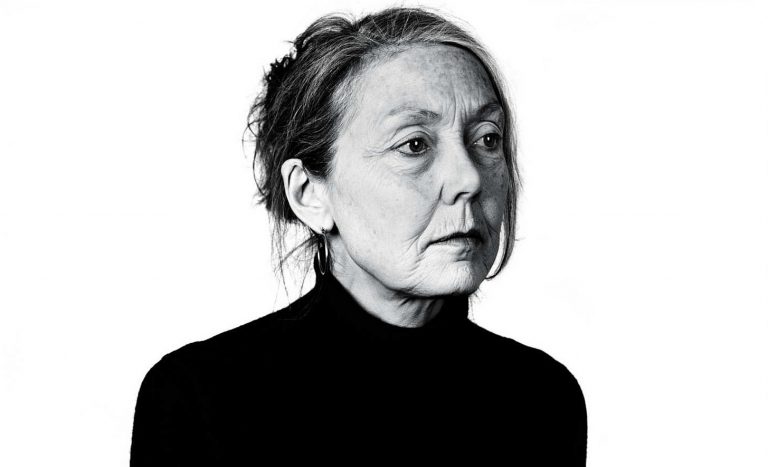
- Anne Carson, 76, the Canadian poet, essayist and classicist, has won the 2026 Nobel Prize in Literature, announced Thursday in Stockholm.
- The Swedish Academy honored her "for her bold and inventive oeuvre that, in playful dialogue with the classical tradition, has created new forms for contemporary literature."
- She is the second Canadian laureate after Alice Munro (2013), and learned the news in Reykjavik, Iceland — where she told the Nobel Prize she had been "listening to the wind."
- The prize carries 12 million Swedish kronor (about $1.2 million). The Nobel Peace Prize is announced Friday.
STOCKHOLM — The Nobel Prize in Literature went to a poet who writes like nobody's watching — and now, officially, everybody is. Anne Carson, the 76-year-old Canadian classicist whose work crashes ancient Greek poetry into essays, verse novels and performance pieces, won the 2026 prize Thursday, the Swedish Academy announced in Stockholm. It's one of the most interesting literature picks in years, precisely because Carson's writing refuses to sit still long enough to be categorized.
Read the citation and you can feel the Academy straining a little to describe her. Carson was honored, they said, "for her bold and inventive oeuvre that, in playful dialogue with the classical tradition, has created new forms for contemporary literature." Translation: she writes poetry that borrows from Euripides and Sappho, essays that behave like detective stories, and books that aren't really books at all. The Academy threw up its hands, in the nicest possible way, and called it an oeuvre.
Carson's own account of the moment is, characteristically, better than any press release. When the Nobel Prize reached her — she was in Reykjavik, Iceland — she said she had been "listening to the wind," according to Swedish Academy permanent secretary Ingrid Carlberg, relaying the conversation via the University of Toronto. If you wanted a single sentence that explains why Anne Carson just won the Nobel Prize, you could do worse than that one.
"for her bold and inventive oeuvre that, in playful dialogue with the classical tradition, has created new forms for contemporary literature"— The Swedish Academy, citation for the 2026 Nobel Prize in Literature
She is only the second Canadian to win the literature prize, following short-story master Alice Munro in 2013 — and notably, Carson beat out fellow Canadian and perennial favorite Margaret Atwood, whose name tops the oddsmakers' lists almost every October. The Atwood-watch has become its own little ritual of Nobel season, which makes this year's pick feel like a gentle course correction: instead of crowning the most famous name in Canadian letters, the Academy went deeper into the canon and chose the writer the writers read.
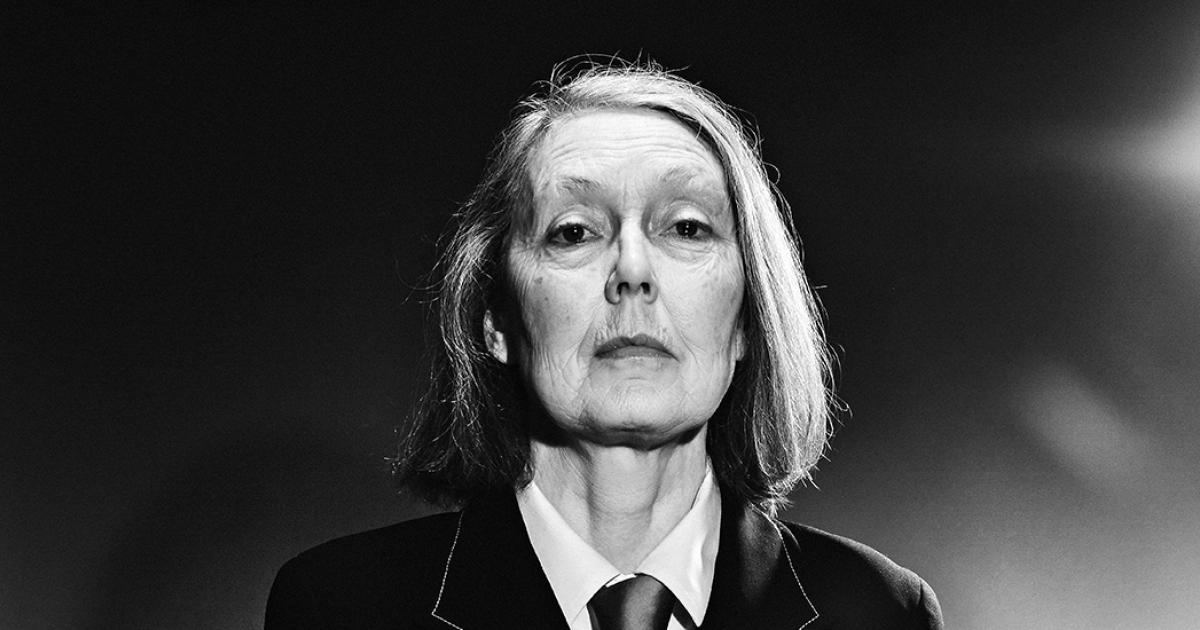
Born June 21, 1950, in Toronto, Carson trained as a classicist before she became known as a poet — and the Greek never left the work. She earned her BA in 1974, MA in 1975 and PhD in 1981, all from the University of Toronto, which made her its Northrop Frye Professor in 2020 and awarded her an honorary degree in 2012. She has taught at the University of Toronto, McGill, the University of Michigan and Princeton. The resume reads like a scholar's; the books read like nothing else on the shelf.
Start with Autobiography of Red (1998), the verse novel that made her famous — a retelling of the Geryon myth that plays like a coming-of-age story told in hot, compressed lyric bursts. Then there's The Beauty of the Husband, a book of 29 "tangos" about a marriage falling apart. Eros the Bittersweet took Sappho and ran her through the history of desire. Nox is an elegy for her brother built like an accordion-folded artifact — part poem, part scrapbook, part grief made physical. Grief Lessons (2006) gave us her translations of four Euripides tragedies. Antigonick (2012) rewrote Antigone with illustrations and a cast that wanders off-script. And Norma Jeane Baker of Troy (2019) fused Marilyn Monroe with Helen of Troy as a performance text. Listing them feels like describing rooms in a house that keeps adding wings.
The poetry establishment has known what Carson is for decades. The Nobel just made it everyone else's business — and that's the fun part. Prizes like this have a funny way of landing in airports and grocery-store book racks, and suddenly the person in front of you at the bookstore is holding Autobiography of Red because it won something. This is how canons get built in real time.
The timing fits a wider pattern. Last year's prize went to Hungary's Laszlo Krasznahorkai; before him, Han Kang and Jon Fosse. The Academy has been alternating between novelists and poets, between the epic and the compressed, and Carson is the most formally radical pick of the run. It also continues what's been a quietly blockbuster Nobel week on Previously: the chemistry prize to Kagan and Soai, the medicine prize for optogenetics, and the physics prize for Francis Halzen and the IceCube Neutrino Observatory all landed in the last few days.
The week's not over. The Nobel Peace Prize is announced Friday — here's our preview of what to expect — and the literature prize will be presented, along with the rest, by King Carl XVI Gustaf in Stockholm on December 10, alongside the 12-million-kronor check (roughly $1.2 million). Carson, one suspects, will spend the intervening two months the way she spent the morning the call came: listening to something the rest of us can't quite hear yet.
Sources
- CNN — Oct 8, 2026 — Carson wins 2026 Nobel Prize in Literature
- Reuters — Oct 8, 2026 — Canadian writer Anne Carson wins 2026 Nobel Prize in Literature
- Le Monde — Oct 8, 2026 — Canadian writer Anne Carson awarded 2026 Nobel Prize in Literature
- NPR — Oct 8, 2026 — Poet and essayist Anne Carson wins 2026 Nobel Prize in Literature