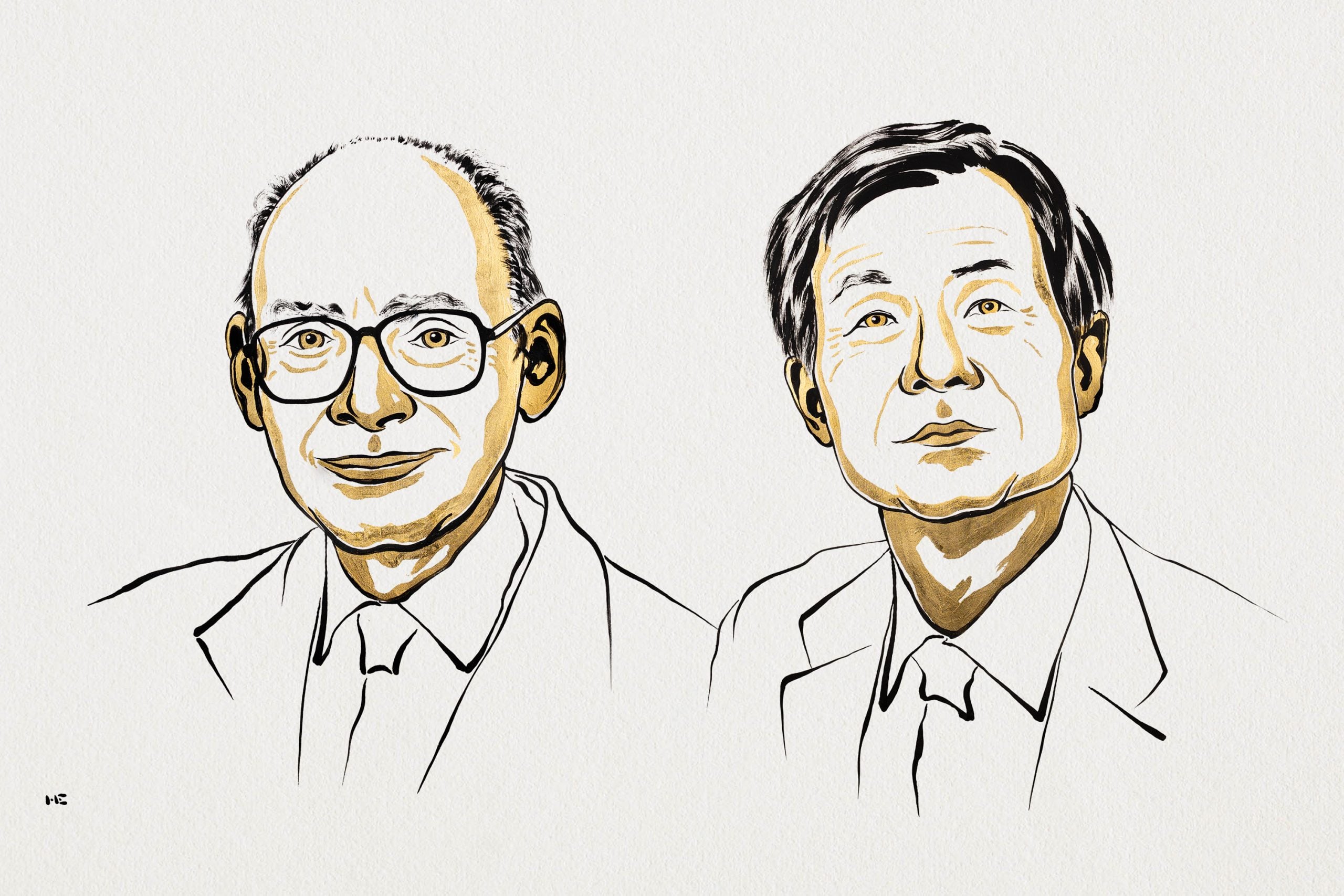
WEDNESDAY, OCTOBER 7, 2026 — STOCKHOLM — One day after the physics prize honored a telescope made of Antarctic ice, the Royal Swedish Academy of Sciences turned to a mystery at the scale of molecules. The 2026 Nobel Prize in Chemistry goes to Henri B. Kagan of France and Kenso Soai of Japan, “for the discovery of non-linear effects and autocatalysis in asymmetric organic synthesis,” the Academy said on Wednesday morning. Kagan, 95, is an emeritus professor at Université Paris-Saclay and a pioneer of asymmetric catalysis; Soai, of the Tokyo University of Science, designed a reaction in which a molecule essentially copies its own handedness — amplifying a whisper of asymmetry into a shout.
02 Choosing the Mirror Image
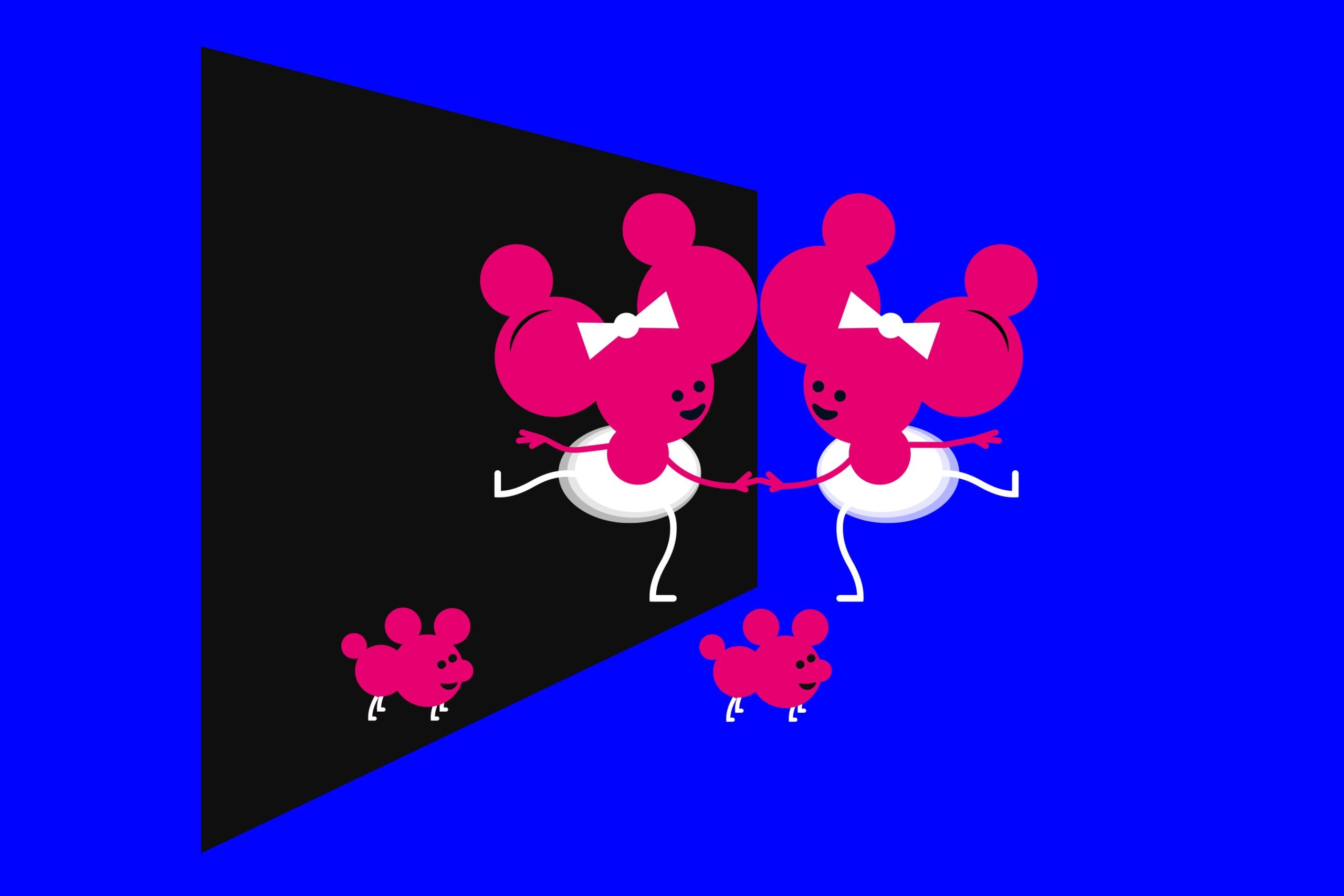
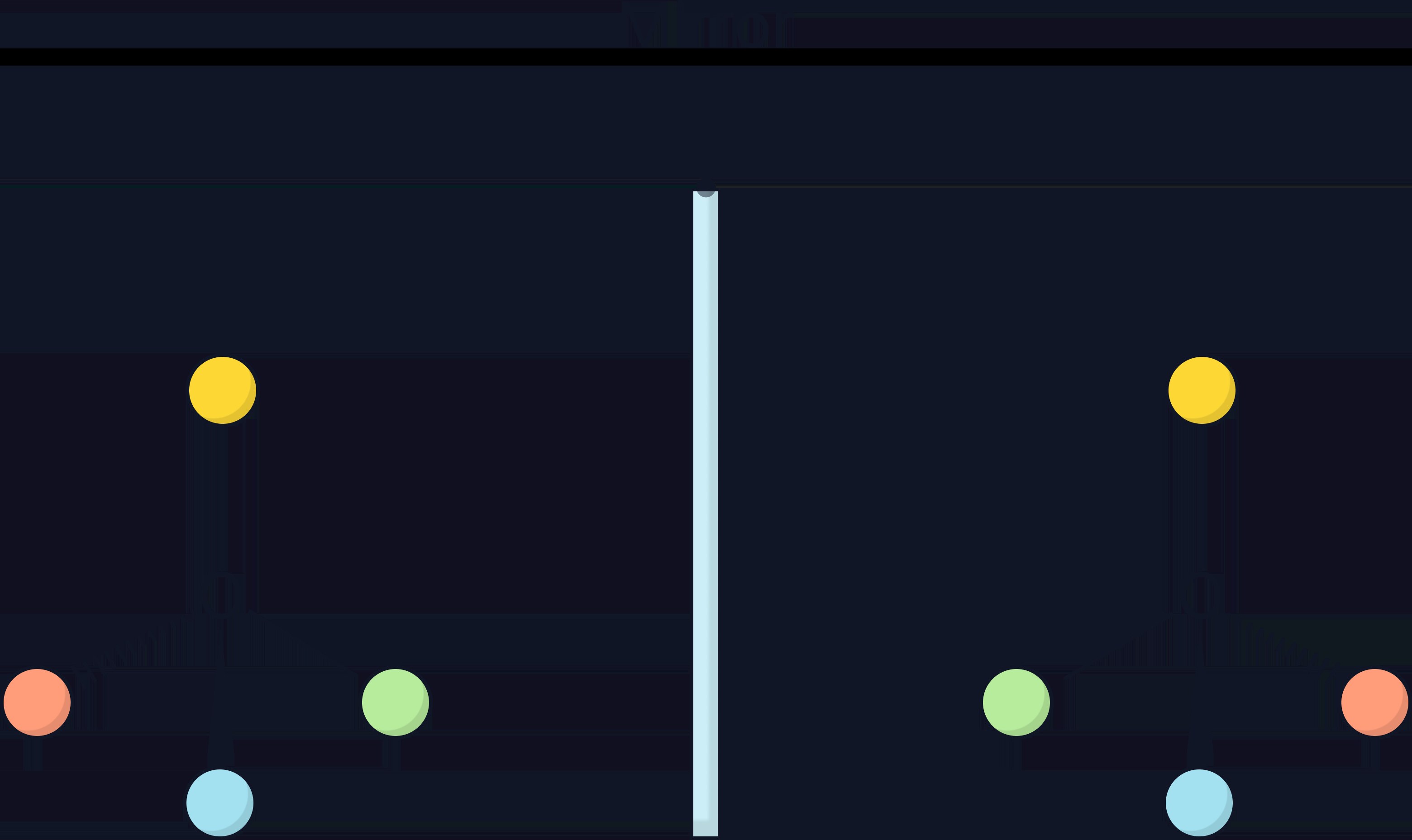
The problem at the heart of this year’s prize is one of the oldest puzzles in chemistry. Many molecules — including the amino acids that build every protein in your body — come in two versions that are mirror images of each other, like left and right hands. Chemists call them enantiomers. Yet living organisms use only one of the two forms. How that one-sidedness could arise from a world that makes both has been a mystery for more than a century.
“This year’s prize is about making chemistry choose its mirror image,” said Ellen Moons, the permanent secretary of the Academy’s board, as the prize was announced in Stockholm. Kagan and Soai, working decades apart on different continents, each discovered a way to tip that choice — and, crucially, to amplify it.
According to the Academy’s announcement, Kagan “discovered a new way of manipulating chemical reactions, allowing a greater excess of one of the mirror images to be created than was previously assumed possible.” His discovery, the Academy said, “has been revolutionary for chemists who develop reactions for the manufacture of pharmaceuticals, flavours, scents and new materials.” Soai, meanwhile, “designed the first chemical reaction in which only one of the potential mirror images was formed. Other than life itself, no one had ever achieved this feat. The Soai reaction is one of the most spectacular chemical experiments ever conducted.”
03 Henri Kagan: The Pioneer of Asymmetric Catalysis
Henri Boris Kagan was born on December 15, 1930, in Boulogne-Billancourt, France, and trained at the Sorbonne, the École nationale supérieure de chimie de Paris, and the Collège de France. He is now an emeritus professor at Université Paris-Saclay, south of Paris — and one of the founding figures of modern asymmetric catalysis, the art of steering reactions to favor one mirror image over the other.
His landmark achievements read like a history of the field. In 1972 he developed DIOP, one of the first C2-symmetric ligands for asymmetric catalysis — a molecular scaffold that wraps around a metal catalyst and forces it to prefer one handedness. The DIOP breakthrough opened the door to a whole family of related ligands that remain workhorses in pharmaceutical manufacturing today. Honors followed for decades: the Prelog Medal, the Chirality Medal, the Tetrahedron Prize, and the Wolf Prize in Chemistry in 2001, shared with K. Barry Sharpless and Ryoji Noyori — both of whom would themselves win the Nobel Prize that same year.
The discovery that earned him a share of this year’s prize came in 1986, when Kagan observed the first examples of non-linear effects in asymmetric catalysis — and built the mathematical models to explain them. The idea is subtle but powerful: normally, you would expect the purity of your product to track the purity of your catalyst in a straight line. Kagan showed that with the right chemistry, a catalyst carrying only a small excess of one handedness can deliver a product with a much larger excess. A little asymmetry in, a lot of asymmetry out. The finding turned non-linear effects into a field of chemistry in its own right — a tool for probing how catalysts really work at the molecular level, and, as researchers later realized, a possible window onto one of the deepest questions in science.
04 Kenso Soai: The Reaction That Copies Itself
If Kagan showed that asymmetry could be amplified, Kenso Soai built a reaction that does the amplifying itself. Soai, a chemist at the Tokyo University of Science, discovered asymmetric autocatalysis: a reaction in which the chiral product doubles as the chiral catalyst for its own production.
In the classic Soai reaction, a pyrimidine aldehyde reacts with diisopropylzinc to form a pyrimidyl alcohol — and that alcohol product then catalyzes the formation of more of itself, in the same handedness. Start with even a trace imbalance between the two mirror images, and the reaction snowballs: each cycle enriches the winning hand further, until essentially only one mirror image remains. As the Academy put it, Soai designed the first chemical reaction in which only one of the potential mirror images was formed — something that, outside of living organisms, no chemist had ever achieved.
The result has fascinated chemists for a generation, not least because of what it implies beyond the flask. If a simple chemical system can spontaneously amplify a tiny initial imbalance into total one-handedness, then the dominance of left-handed amino acids in all known life may not require a miracle — just the right chemistry, given time. Researchers have since shown that even the whisper of chirality carried by different carbon isotopes can be enough to tip the Soai reaction, a finding that keeps the origin-of-life conversation very much alive.
05 Why Your Medicine Cabinet Cares
For all its philosophical sweep, this year’s prize is also intensely practical. The two mirror images of a drug molecule can behave very differently in the body — one may heal while the other harms, a lesson the pharmaceutical industry learned at terrible cost in the 20th century. Modern drug manufacturing therefore depends on making single-handed molecules reliably and at scale, and Kagan’s non-linear effects and the ligand designs they enabled are part of the foundation that industry stands on.
The same chemistry reaches into everyday life far beyond the pharmacy. Chiral molecules carry the scents of perfumes and the flavors of foods; the materials in displays and sensors increasingly rely on precisely handed structures. Every one of those industries leans, somewhere upstream, on the asymmetric catalysis that Kagan helped invent — and on the conceptual leap, shared with Soai, that asymmetry in chemistry is not just something to measure but something to multiply.
That practical legacy is part of why the prize feels overdue to many chemists. Kagan’s 1986 non-linear effects paper is a citation classic; the Soai reaction has been called one of the most beautiful experiments in chemistry. The Nobel committee has a habit of waiting decades to confirm that a discovery truly changed the field. On Wednesday morning in Stockholm, the wait ended for both men at once.
06 What Comes Next
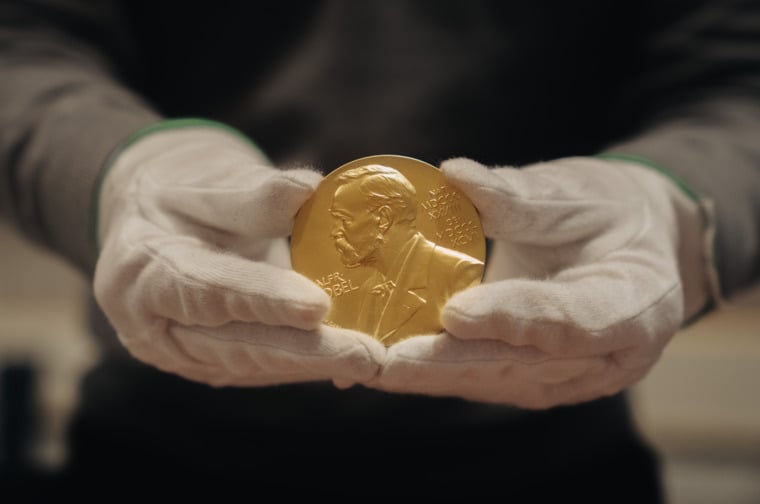
The immediate calendar is set. Kagan and Soai will receive their medals from King Carl XVI Gustaf in Stockholm on December 10, followed by the banquet at City Hall — sharing the 12 million Swedish crowns (about $1.2 million) equally. Nobel week continues Thursday with the literature prize, Friday with the peace prize, and Monday, October 12 with the economics prize.
The scientific story, though, is still unfolding. Researchers continue to probe non-linear effects for clues about how catalysts assemble themselves in solution, and the Soai reaction remains the leading laboratory model for how a lifeless planet might have tipped toward the one-handed chemistry that all life uses. A century after chemists first noticed that nature plays favorites with mirror images, Stockholm’s answer is that two men — one who learned to amplify the choice, one who taught a molecule to make it for itself — finally showed how the choosing can be done.
Sources
- Reuters — Kagan and Soai win 2026 Nobel chemistry prize: citation, prize money, awarding body. Oct 7, 2026
- NobelPrize.org — Official 2026 chemistry press release: popular-science account of both discoveries, Soai reaction description, illustrations. Oct 7, 2026
- Sweden Herald — Ellen Moons quote (“making chemistry choose its mirror image”) and announcement color. Oct 7, 2026
- Wikipedia — Henri B. Kagan biography: birth date, education, DIOP ligand, 1986 non-linear effects, Wolf Prize. Accessed Oct 7, 2026
- Chemical & Engineering News — Soai asymmetric autocatalysis mechanism (pyrimidine-5-carbaldehyde + diisopropylzinc). 2009