
The AI industry’s favorite unit of measurement is no longer the billion. It is the $45 billion deal, repeated. Bloomberg News reported on Monday that Anthropic, the lab behind the Claude AI models, is in talks to buy roughly $45 billion worth of computing power from Nscale, the Nvidia-backed data center developer — for a second facility at the same West Virginia campus where it struck a deal of almost exactly the same size in August.
Let us be precise about what this is, because precision is the whole story here: these are talks. People familiar with the negotiations spoke to Bloomberg. Neither Anthropic nor Nscale commented. And Reuters, reporting Bloomberg’s account, stated plainly that it could not independently verify the report. No contract has been announced, terms could change, and deals at this stage sometimes evaporate. Everything that follows should be read with that label attached — which, in fairness, still leaves a remarkable amount to talk about.
A Second Building at Monarch
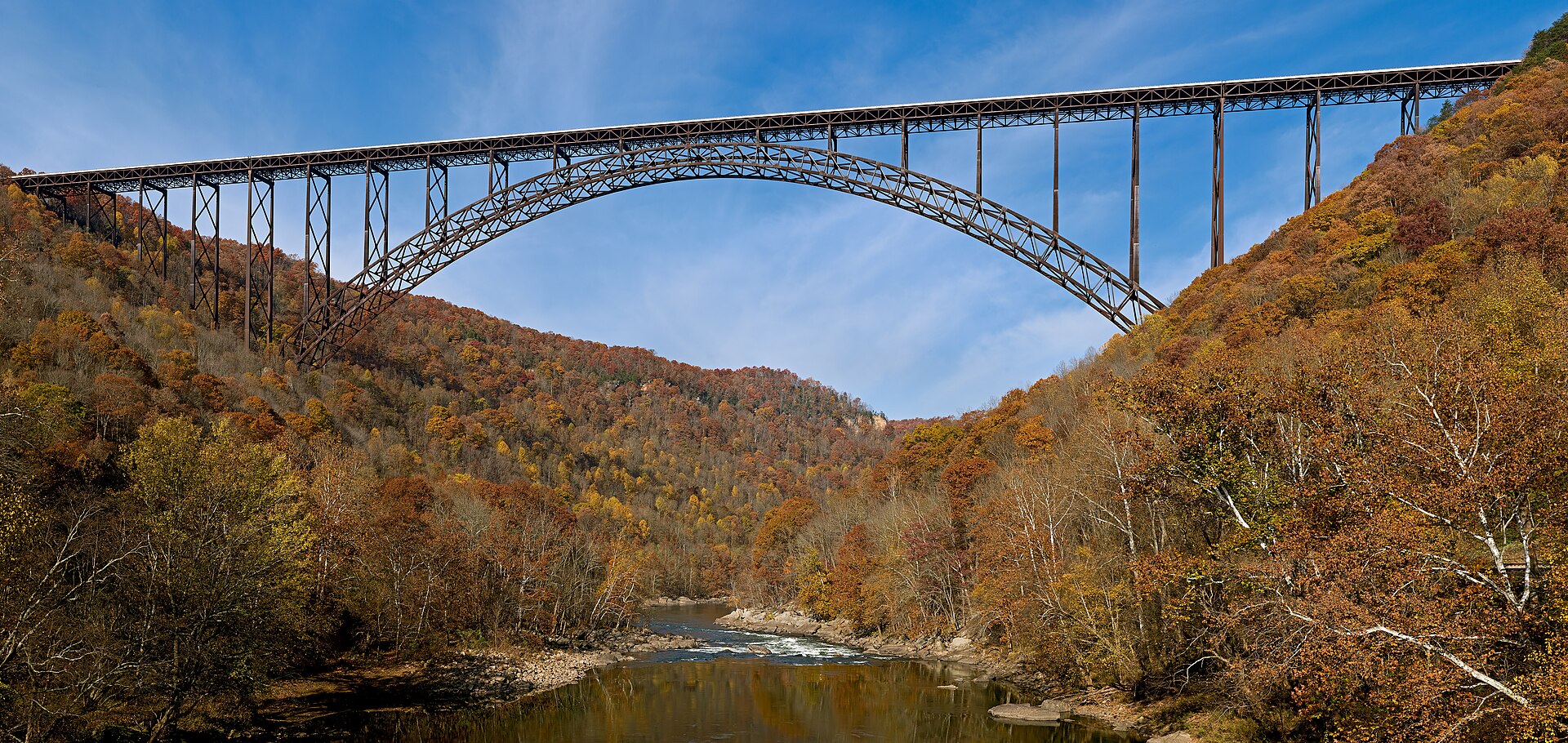
According to the Bloomberg report carried by Reuters, the new capacity would come from a second facility at Nscale’s Monarch data center campus in West Virginia, delivering about 460 megawatts of computing power built on Nvidia’s next-generation Vera Rubin AI chips. Anthropic also holds a right of first refusal on the campus’s expected third building, per the report — meaning that if Monarch keeps growing, Anthropic gets first crack at the next slice of it, too.
The August deal is the template: a six-year agreement for about 460 megawatts at the same campus, with Vera Rubin systems scheduled to begin coming online in late 2027, according to reporting on Nscale’s IPO filing. If the second building lands on similar terms, Anthropic would be lining up close to a gigawatt of capacity at a single West Virginia campus — the kind of power footprint that once belonged to aluminum smelters and steel mills, now devoted to training and running AI models. West Virginia, a state that spent a century exporting coal, would be exporting computation.
The Seat Microsoft Gave Up
There is a ghost at this table. Microsoft previously pulled out of a deal to anchor a flagship data center for Nscale after power-connection delays pushed the expected supply date into the 2030s, Reuters reported. And earlier this year, Anthropic stepped into the West Virginia site after Microsoft walked away from a letter of intent there, according to Stocktwits’ summary of the Bloomberg reporting. In the AI buildout, power is the whole game: chips can be ordered and buildings can be raised, but a grid connection that arrives in the next decade might as well be on the moon. That a company of Microsoft’s scale walked away over timing — and that Anthropic moved in — tells you how scarce deliverable megawatts have become, and how aggressively the Claude maker is willing to move to lock them up years ahead of need.
An IPO, a $30 Billion Target, and Some Debt-Shaped Questions
The timing of the leak is not subtle. Nscale filed for a U.S. initial public offering in September, seeking a New York Stock Exchange listing under the ticker NSCL, and is chasing a valuation of roughly $30 billion, according to Bloomberg reporting summarized by Stocktwits. Its prospectus put its active and contracted total contract value at $103.4 billion as of August 31, a figure that stood at a small fraction of that just two and a half years earlier — a growth curve that would make a rocket blush. Another $45 billion headline, even an unsigned one, is a very convenient thing to have circulating while bankers are pricing your debut. And that backlog is concentrated, to put it mildly, in just two customers: Microsoft and Anthropic are expected to be Nscale’s major customers in the future, according to the prospectus.
Investors, though, have started asking harder questions about this entire category of company. Bloomberg also reported that a cohort of investors has urged Anthropic to lower its IPO valuation target after a series of market setbacks for AI companies. Last week, shares in Nscale rival CoreWeave slumped amid concerns over its roughly $50 billion debt load, fueling a broader rout in AI stocks. The model — borrow heavily, build data centers, rent the capacity to labs whose own spending depends on continued investor enthusiasm — works beautifully right up until someone asks what happens if the music slows down.
Nscale’s own filing was candid about the gap between ambition and financing: the company reported first-half 2026 revenue of $140.6 million, up from $10.4 million a year earlier, alongside a net loss of $1.02 billion, and it has said it has not yet secured binding commitments for all the financing needed to buy the GPUs and build the data centers its contracts require. None of that makes the Anthropic talks imaginary. It makes the distance between “talks” and “delivered, powered, running capacity” the most important distance in the industry — the same distance that just cost Microsoft its flagship seat.
Why Anthropic Keeps Buying
From Anthropic’s side, the logic is straightforward. Frontier AI models consume computing power the way Las Vegas consumes air conditioning, and the lab competes for capacity against Microsoft, Google, Amazon, Meta and OpenAI — rivals with deeper pockets and, in several cases, their own data center empires. Locking up 460 megawatts at a time, years ahead of delivery, is how a lab without a hyperscaler’s balance sheet keeps its seat at the frontier table. This is also a company making unusually public commitments with its equity — just yesterday it pledged 5% of its shares to a public benefit fund — while challengers like Tenstorrent raise billions arguing the infrastructure itself should be more open, and Washington writes new AI accountability rules for federal vendors. Everyone in this industry is spending like the future is guaranteed. The future, as Microsoft’s abandoned flagship shows, has a way of negotiating back.
So: a reported negotiation, worth a reported $45 billion, at a campus in West Virginia, for chips that have not yet shipped and power that has not yet been delivered, between two companies that declined to say a single word about it. That is not a criticism — it is simply the honest shape of the AI boom in October 2026. If a signed deal is announced, in days or whenever, we will report it as one. Until then, talks are talks.
Sources · 3 sources
- Reuters — Nscale, Anthropic in talks for $45 billion cloud computing deal, Bloomberg News reports (Oct 19, 2026)
- Stocktwits — This Nvidia-backed cloud computing firm is reportedly in talks to sign a $45B compute deal with Anthropic (Oct 19, 2026)
- CryptoBriefing — Anthropic in talks to buy $45 billion in computing power from Nscale (Oct 19, 2026)