
Washington's new AI rules are live as of today, and federal vendors now have to answer for their chatbots — in writing, in the contract, where the rules can actually be enforced. According to the AI and GPP Briefing's October 19, 2026 coverage of the General Services Administration memo — class deviation RGO-2026-01 — clause 552.239-7001 now applies to new GSA solicitations and contracts covering chatbots, agentic systems, and other large language model tools that handle government data. The GSA is the government's landlord and purchasing department rolled into one, which means its contract language has a way of becoming everyone's contract language. When the GSA writes a rule, vendors who sell to anyone in Washington eventually feel it.
The requirements are refreshingly concrete for a policy document. Vendors must report incidents within 72 hours. They may not train any model on government data — the prompts, documents, and records that flow through a federal chatbot stay out of the training set, full stop. And they must expose a summary of the steps an agent recorded: when an AI system acts on the government's behalf, there has to be a readable trail of what it did. Each of those three obligations answers a fear that has followed government AI adoption from the beginning — that something would go wrong and nobody would hear about it, that sensitive data would quietly improve someone else's product, and that an autonomous system would take actions nobody could reconstruct afterward.
Why a contract clause matters more than a press release
Washington has produced no shortage of AI frameworks, principles, and executive guidance over the past few years, most of it written at a level of generality that lets every agency nod along and change very little. A procurement clause works differently. It attaches to money. A vendor that wants a GSA contract signs the clause, and a vendor that violates it risks the contract itself. The 72-hour incident clock, in particular, borrows the logic of cybersecurity contracting, where fast disclosure has long been the price of doing business, and applies it to a technology whose failures can be stranger and harder to spot than a breached server — a chatbot confidently inventing policy, or an agent taking an action its operators did not anticipate.
The timing is not happening in a vacuum, either. The same briefing that flagged the GSA clause notes that finance ministries and central banks are increasingly treating AI as a financial stability question — the International Monetary Fund angle, in which a technology adopted everywhere at once, built by a handful of providers, becomes the kind of correlated risk that keeps regulators awake. And the Army, per the same coverage, is moving to buy agents that act on its own networks under terms it writes itself. Read those together and a pattern emerges: the institutions with the most to lose are done evaluating AI as a novelty. They are writing it into procurement, supervision, and doctrine — the boring machinery where real accountability lives.
The states are writing their own rules, in court
While the federal government works through contracts, the states are working through courtrooms. On October 14, eight states — Arizona, Arkansas, Idaho, Iowa, Kansas, Montana, Nebraska, and West Virginia — each sued OpenAI in their own state courts, accusing the company of deceiving parents about ChatGPT's safety, as NBC News reported. The TechStartups daily digest carried the same development in its roundup of the state actions. It is important to be precise about what this is: these are allegations in lawsuits, not findings. OpenAI defends its safeguards, and none of the claims has been tested in court. What the filings establish is political, not legal — a coordinated group of state attorneys general has decided that AI safety representations are consumer-protection territory, and they intend to litigate them that way.
Legislatures are moving in parallel. A week earlier, Pennsylvania's House passed Senate Bill 806, which would require disclosure of AI-generated content in advertising, by 163 votes to 40 — a margin that suggests AI labeling has become one of those rare technology policies that does not split neatly along party lines. The bill now goes to Governor Josh Shapiro. A disclosure rule for advertising is narrower than a contract clause for federal systems, but it points the same direction: generated content and automated decisions should arrive labeled, logged, and answerable to somebody.
What changes on the ground
For vendors, the practical work starts now. Incident response plans need an AI chapter with a 72-hour clock in it. Engineering teams need to be able to prove — not merely assert — that government data is segregated from training pipelines. And agentic products, the fastest-growing category in the industry, need the kind of step-by-step activity summaries that auditors can actually read; a system that cannot explain its own afternoon is going to have a difficult procurement season. None of this bans anything. That is the notable part. The federal government's first serious AI rulebook, arriving through the GSA, is fundamentally a paperwork regime: report fast, keep your hands off the data, show your work.
Whether that regime is strict enough will be argued about for years, and the state lawsuits will test the outer edges of what AI companies can be made to answer for in court. But October 19, 2026 is the day the argument stopped being hypothetical for anyone selling chatbots to Washington. The clause is live, the clock is 72 hours, and the summary of steps your agent took is no longer a nice-to-have feature — it is a contract term. For more of the day's developments, see our news coverage and the latest stories in our games section.
Sources · 4 sources
- AI and GPP Briefing, October 19, 2026 — coverage of GSA class-deviation memo RGO-2026-01 and clause 552.239-7001
- U.S. General Services Administration — the class-deviation memo and clause text
- NBC News — reporting on the October 14 state lawsuits against OpenAI
- TechStartups — daily digest coverage of the state AI actions
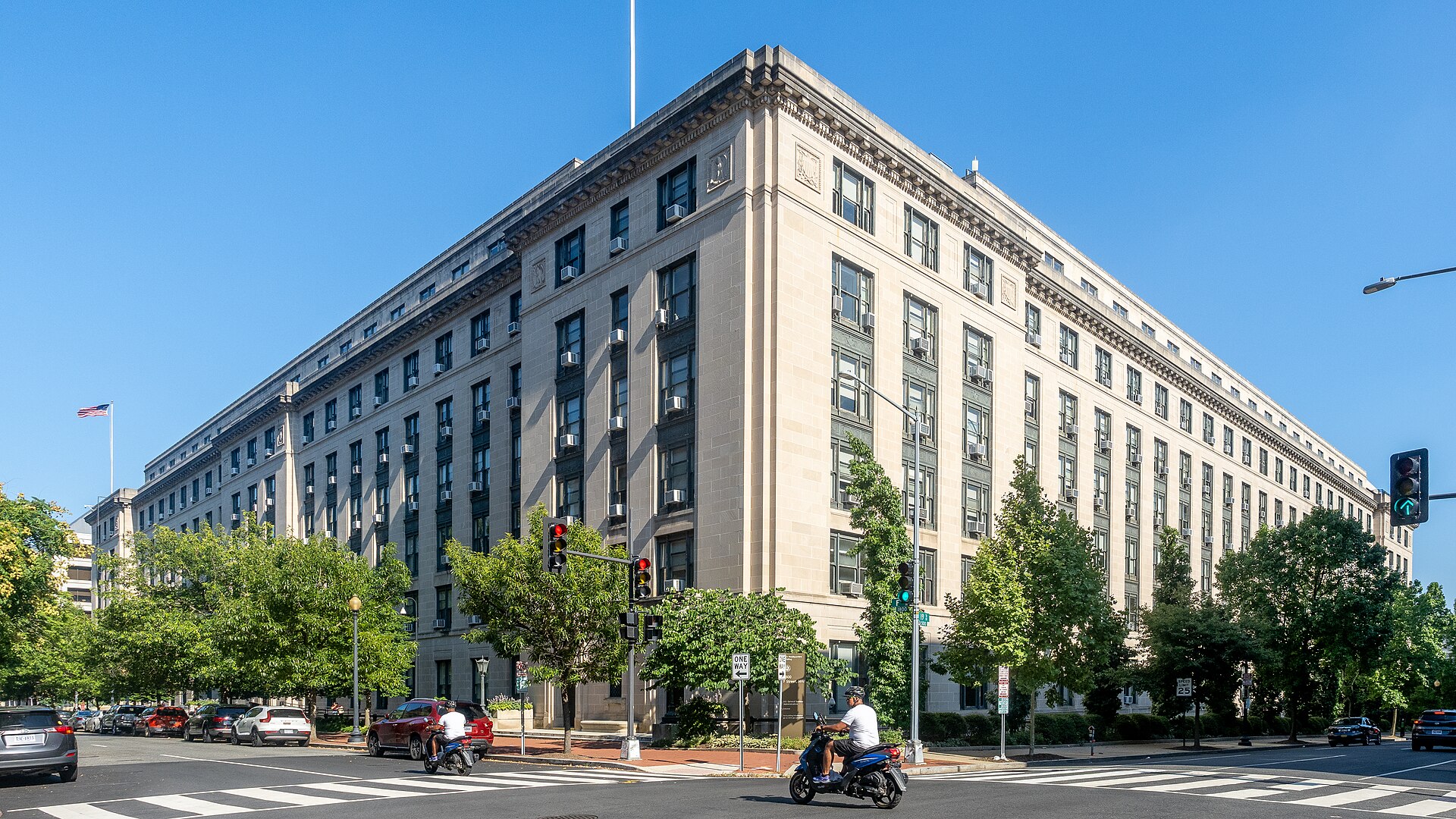
The lawsuits described are allegations that have not been tested in court. Photo: GSA headquarters, Washington, D.C., via Wikimedia Commons.