CUPERTINO
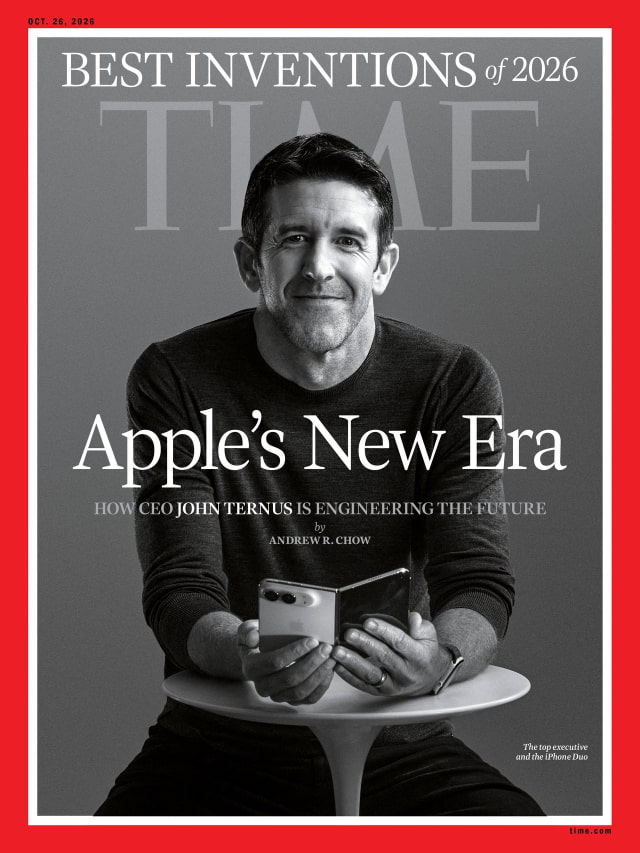
Most new CEOs spend their first six weeks doing listening tours. John Ternus spent his unveiling a foldable iPhone and landing on the cover of TIME. Say this for the engineer era at Apple: it is not easing in quietly.
MacRumors reported Thursday morning that Ternus has been featured on the cover of TIME Magazine's "Best Inventions of 2026" edition, which reaches readers on October 26. GeekWire, covering TIME's annual list of 300 innovations, likewise reported that Ternus and the new iPhone Duo grace the cover. The iPhone Duo is itself one of this year's honored inventions, according to Apple World Today — which means the cover is doing double duty, introducing both the product and the man now responsible for making the next several dozen.
The timeline still takes a second to absorb. Ternus joined Apple in 2001 and rose to senior vice president of hardware engineering before succeeding Tim Cook as CEO on September 1, MacRumors reported. Cook has not left the building — he remains executive chairman, focused mainly on engaging policymakers around the world, and told TIME in a separate interview that he is not meddling with his successor. Eight days after the handover, on September 9, it was Ternus on stage unveiling the iPhone Duo. For a company that treats succession like a state secret and product launches like moon landings, that is about as clean a passing of the torch as corporate America produces.
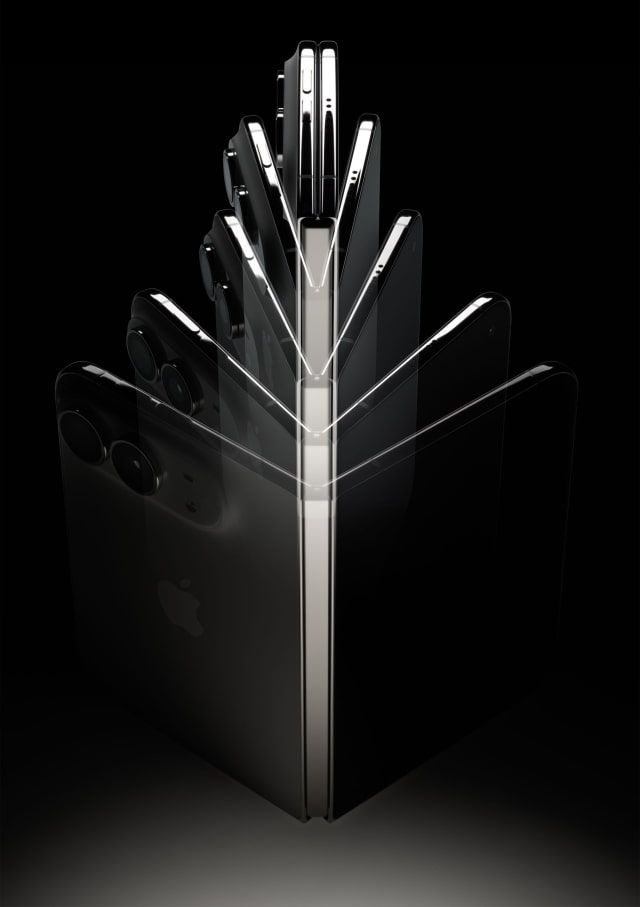
And the Duo is, in a literal sense, his baby. iPhone in Canada, summarizing the TIME profile, reported that Apple's interest in foldables traces back to a 2011 patent application on foldable electronics bearing Ternus's name among six Apple engineers — fifteen years before the product shipped. Ternus told TIME it was clear even then that flexible OLED displays were coming. What was also clear to him, apparently, was that the competition's attempts were not good enough: he told the magazine rival foldables felt, in his words, kind of cheap and crappy. Diplomatic? No. On brand for a hardware engineer who spent a decade and a half refusing to ship the crease? Completely.
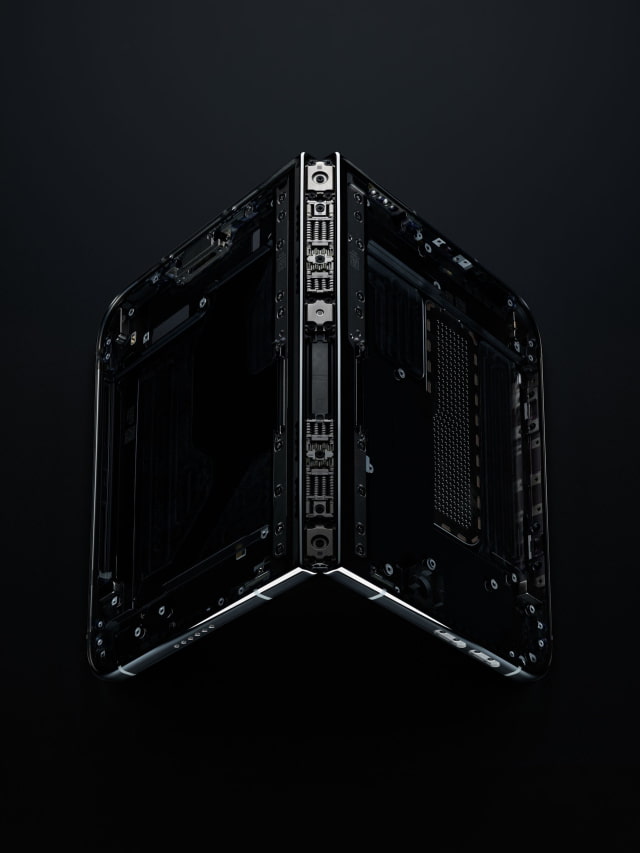
That refusal became a genuine engineering saga. According to iPhone in Canada's account of the profile, Apple vice president of product design Richard Dinh recalled asking whether the team should settle for a display surface similar to what competitors used; Ternus pushed them to keep working instead. The result, per that reporting, is a custom polymer surface using nanotexture technology and a hinge built from more than 100 tiny precision components, with early users saying the screen crease is barely noticeable — historically the single loudest complaint about folding phones. This is the Ternus pitch in miniature: late, expensive, and stubborn about the one detail everyone else shipped around.
The other headline from the interview is about what Apple is happy not to build. MacRumors reported that the large language models powering Siri AI are based on Google's Gemini models and cloud technology, under a joint Apple-Google announcement from earlier this year — and that when TIME asked about it, Ternus shrugged in the most Apple way possible: the company, he said, focuses on the areas where it can bring differentiation rather than insisting on making every single thing in a product. A decade ago that sentence would have been heresy in Cupertino. In 2026, with AI moving faster than any single company's research lab, it reads as the new doctrine — own the hardware, own the experience, rent the frontier.
TIME's framing, via Apple World Today's excerpts of Andrew R. Chow's profile, sets Ternus apart from both predecessors: Cook the global power broker of supply chains and geopolitics, Jobs the rock-star visionary — and Ternus a private, detail-oriented engineer, little known outside Apple until he became a senior hardware executive in 2021, playing to strengths that are also the company's own. There is a neat symmetry in his origin story, which he shared with the magazine: he was eight years old when his father bought an Apple II, and, as MacRumors quoted him, he started playing games on it and fell in love with Apple. The kid on the Apple II now runs the place. Hollywood would reject that script for being too tidy.
His operating philosophy, at least in these early tellings, is constraint. Ternus told TIME that Apple cannot do everything, so it constrains itself to what matters most and puts all its effort there — a sentence that will be quoted back at him at every future keynote, fair or not. Asked where devices fit in an AI-driven world, he argued, per Apple World Today's highlights, that people still want physical things — to talk, to see images of loved ones, to take pictures — and that he does not see the iPhone disappearing. Six weeks in, that is the thesis: the foldable in his hand is the argument. TIME putting it on the cover suggests, at minimum, that the argument is landing.