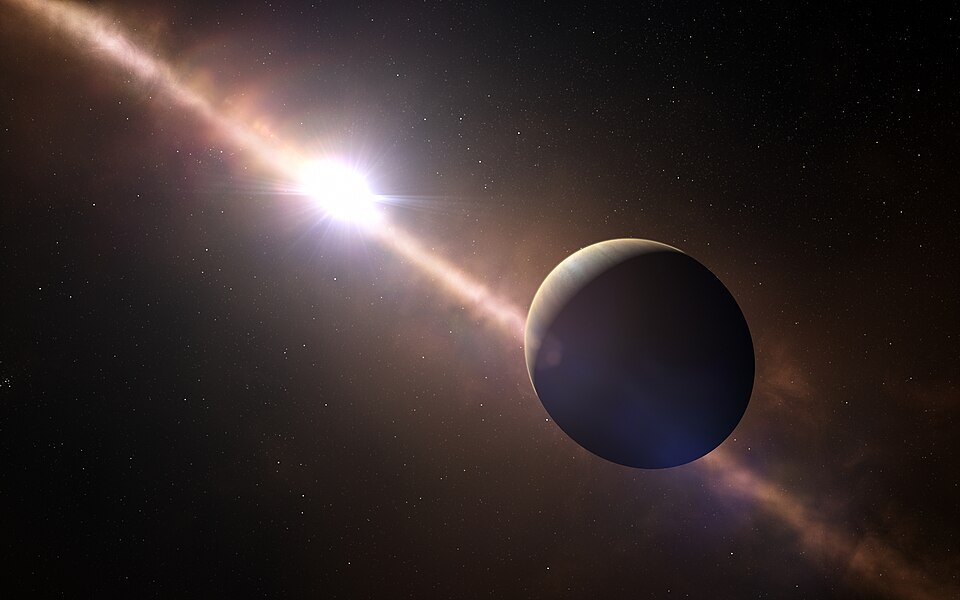
CAMBRIDGE, Mass. — The signal repeats, night after night, from 63 light-years away. Repeating bursts of radio waves, crackling with circular polarization, at frequencies between 0.85 and 3.5 gigahertz — and for the first time in the history of astronomy, researchers have pinned them to a planet outside our solar system. The source, they report, is Beta Pictoris b, a gas giant roughly twelve times the mass of Jupiter orbiting a young star.
Let’s get the important part out of the way first: it is not aliens. “I know radio signals are associated with searches for extraterrestrial intelligence,” said Edo Berger, a professor of astronomy at Harvard University and a co-author of the study, in remarks reported by CNN. “But this is something very different.” What the team found is instead evidence of a magnetic field at least 200 times stronger than Jupiter’s — a planetary aurora machine on a scale nothing in our solar system can match.
How the detection workedAuroras, not aliens
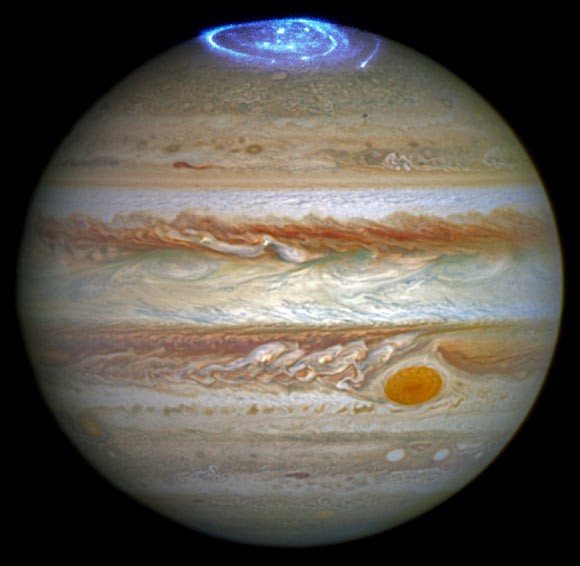
Auroras are the key to this story. On Earth, they happen when charged particles from the sun slam into the atmosphere and funnel along magnetic field lines toward the poles, producing the northern and southern lights. Jupiter does it too — particles spewed by volcanoes on its moon Io get trapped around the planet’s poles, spiraling and emitting radio waves as they go. Beta Pictoris b, the researchers believe, is doing the same thing, only vastly bigger.
“In order to see radio waves that extend all the way to the frequencies that we observed, you need an incredibly strong magnetic field,” Berger said. The team estimates the planet’s field at roughly 1,250 gauss — compared with about 4.3 gauss for Jupiter and just 0.5 for Earth, according to reporting on the paper. That makes it the most powerful planetary magnetic field ever measured anywhere, by an enormous margin.
The hard part was never hearing something; it was knowing who was talking. Astronomers have reported possible radio emissions from exoplanet systems before, but they could never rule out the possibility that the signal was coming from the host star instead. This time the team, led by graduate student Kevin Ortiz Ceballos at the Center for Astrophysics | Harvard & Smithsonian, observed the Beta Pictoris system repeatedly in 2025 and 2026, tying their radio images to the Gaia celestial reference frame using distant extragalactic sources as fixed points.
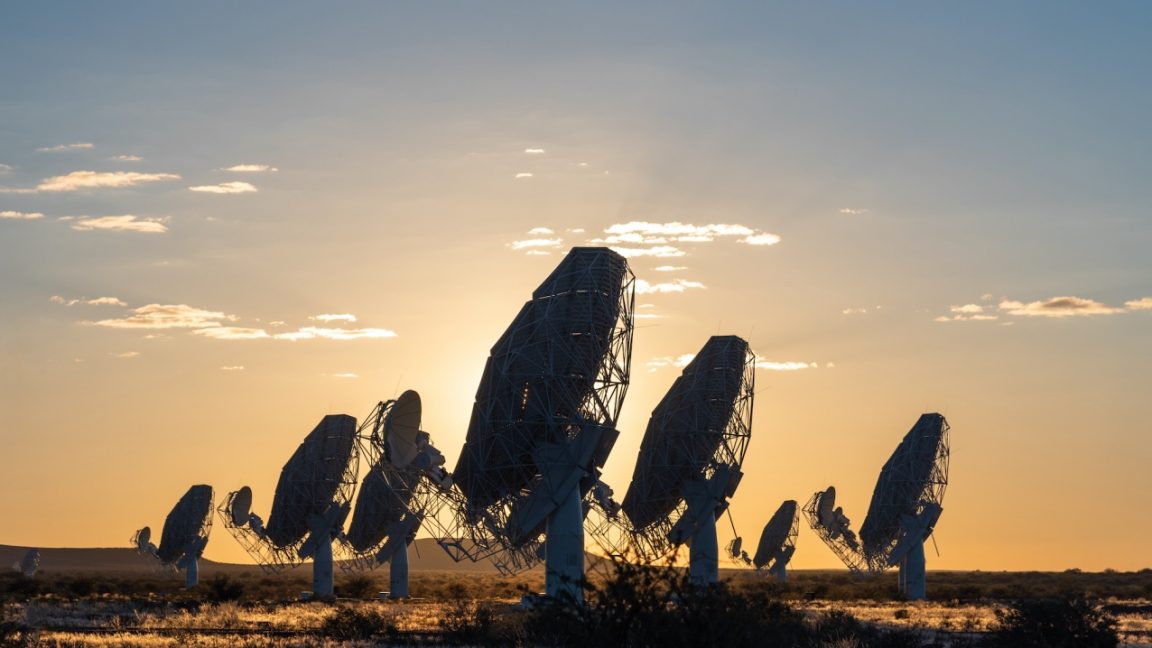
The result: the radio source coincides with the known position of Beta Pictoris b and is highly inconsistent with the host star, at a 4.4-sigma level of significance — while also ruling out the system’s interior planet c. In plain English: the signal lines up with the planet, not the star, with a statistical confidence that makes coincidence look implausible.
The planetA young monster, 63 light-years out
Beta Pictoris b is not a subtle world. Discovered in 2008, it is about twelve times as massive as Jupiter and one of three known planets orbiting Beta Pictoris, a star about 1.75 times the mass of the sun. The system is only about 23 million years old — a newborn next to our 4.5-billion-year-old solar system. The planet spins fast, completing a rotation in just a few hours, and takes roughly 24 years to orbit its star.
Its youth may be part of the story. Young gas giants are still hot and turbulent inside, and powerful internal dynamos could be driving the colossal field. What matters for the future is that the technique worked at all: radio waves are now a proven way to probe the magnetic fields of other worlds, not just their sizes and orbits.
Why it mattersMagnetic fields are planetary armor
Here’s why magnetic fields deserve a headline. A planet’s magnetic field is its shield: it deflects the charged-particle wind streaming off its star, which would otherwise strip away the atmosphere over time. Earth’s modest field is a big part of why our atmosphere — and everything that depends on it — survives. A planet without one is exposed; a planet with one has a chance.
Until now, astronomers had no way to measure exoplanet magnetic fields directly. If this detection holds up, radio astronomy just opened a new sense: the ability to find which distant worlds carry shields and which don’t. Someday the same trick could be aimed at smaller, rocky planets — the kind where an atmosphere could mean habitability. That day is a long way off; Beta Pictoris b is a scorching-hot young giant, not a second Earth. But the path is now visible.
What we don’t know yetPeer review is pending
An honest account includes the caveats. The paper was posted to the arXiv preprint server on September 15 and is still awaiting publication in a peer-reviewed journal, CNN reported. That doesn’t mean it’s wrong — preprints are how modern astronomy shares fast-moving results — but it does mean independent referees haven’t signed off yet, and replication with other radio telescopes will matter.
There are open questions even if the detection is confirmed. The exact mechanism driving the bursts — whether it’s auroral emission alone, magnetic reconnection between the planet and its star, or something stranger — isn’t settled. And a 4.4-sigma localization, while strong, is the beginning of a measurement program, not the end. What the team has done is shown that the measurement is possible. The follow-up campaigns, the paper’s authors and independent observers alike would say, are what turn a first detection into a field.
For now, though, the milestone stands on its own: after decades of listening, humanity has heard a planet speak — not in words, and not from anyone, but in the radio crackle of an aurora wrapped around a world 63 light-years from home. And the team that heard it says it’s only the beginning. For more on this week’s big cosmic stories, see Previously’s Nobel Prize in Physics coverage and NASA’s Crew-12 return.
Sources
- CNN — First-ever radio emission directly detected from an exoplanet; Edo Berger quotes; Center for Astrophysics | Harvard & Smithsonian team; paper posted to arXiv Sept 15, awaiting peer review. Oct 2, 2026
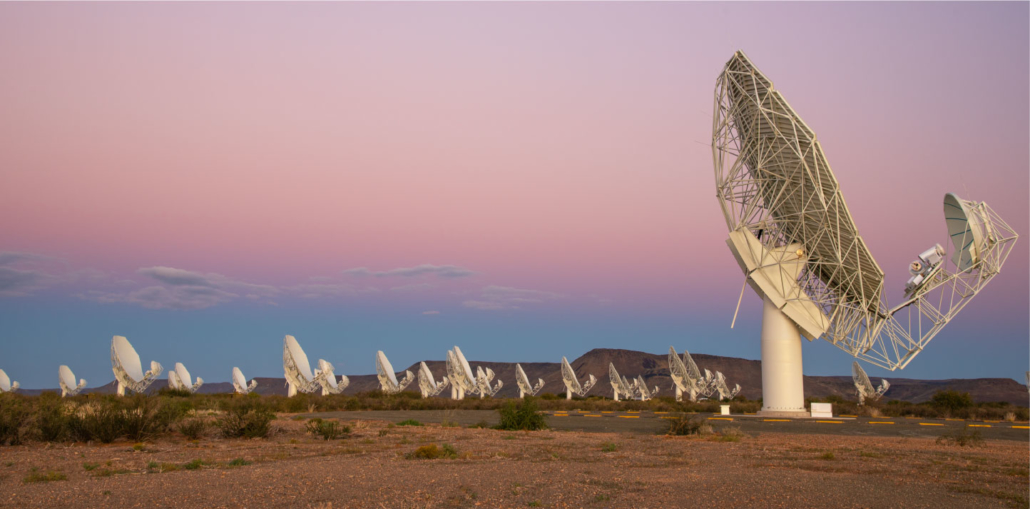
- The Mainstream — Team led by Kevin Ortiz Ceballos using MeerKAT; 1,250-gauss field estimate vs Jupiter’s 4.3; 4.4-sigma localization ruling out the star and planet c. Oct 2026
- Jagran Josh — 0.85–3.5 GHz repeating bursts; L-band and S-band observations; auroral radio emission mechanism; system age and planet mass. Oct 6, 2026