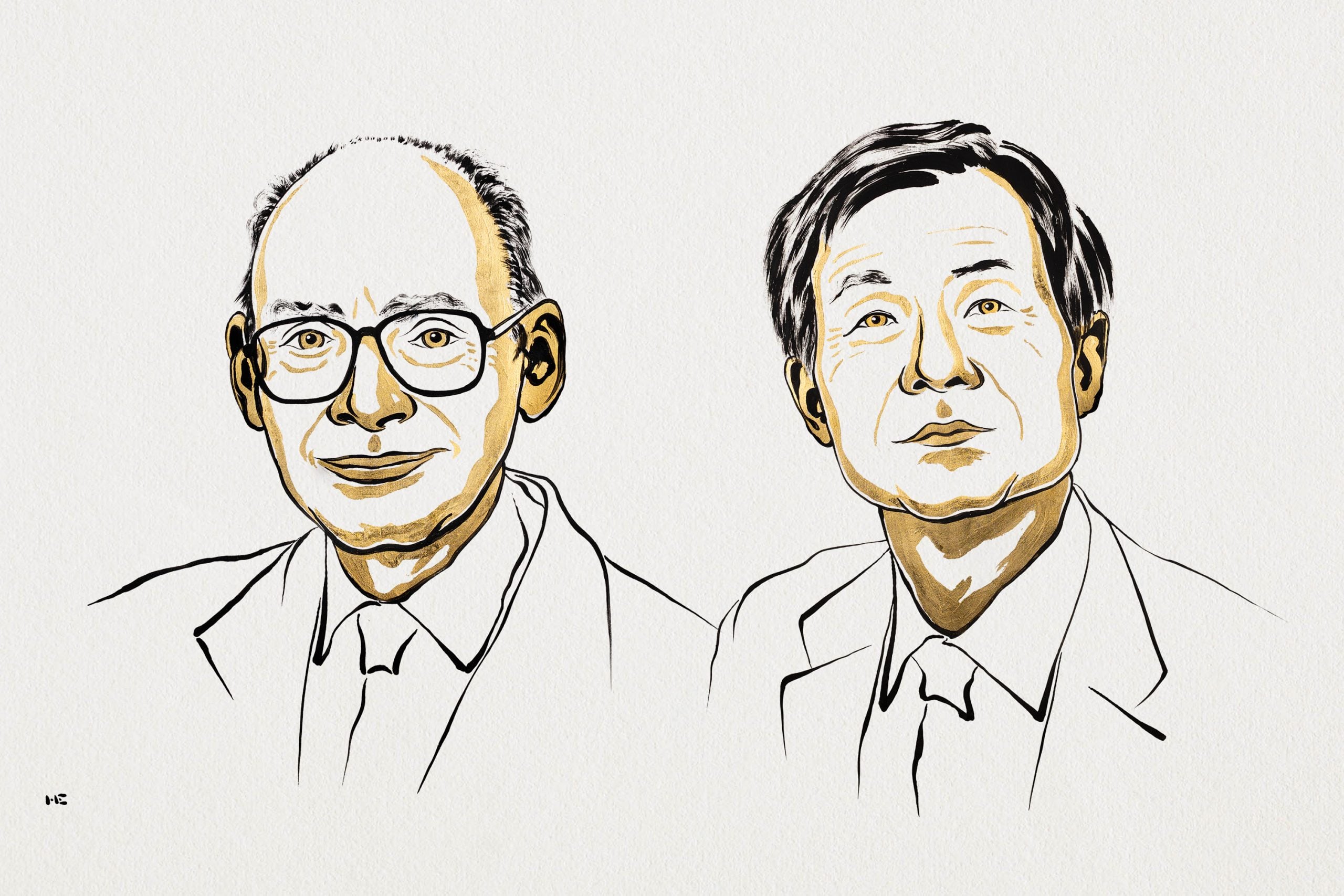
STOCKHOLM — Trillions of them pass through your body every second, and you never feel a thing. They stream out of the sun, sail through planets and galaxies untouched, and carry secrets from the most violent events in the universe. On Tuesday, the Royal Swedish Academy of Sciences awarded the 2026 Nobel Prize in Physics to the man who figured out how to catch the most elusive of them all: Francis Halzen, the Belgian-born physicist behind the IceCube Neutrino Observatory at the South Pole.
The academy’s official citation honored Halzen “for decisive contributions to the IceCube Neutrino Observatory and the discovery of high-energy neutrinos of astrophysical origin,” the academy announced. It is a prize nearly four decades in the making — the reward for a sketch drawn in 1988 that became the world’s largest neutrino telescope, a billion tons of Antarctic ice turned into an instrument for watching the universe through particles that almost never interact with anything.
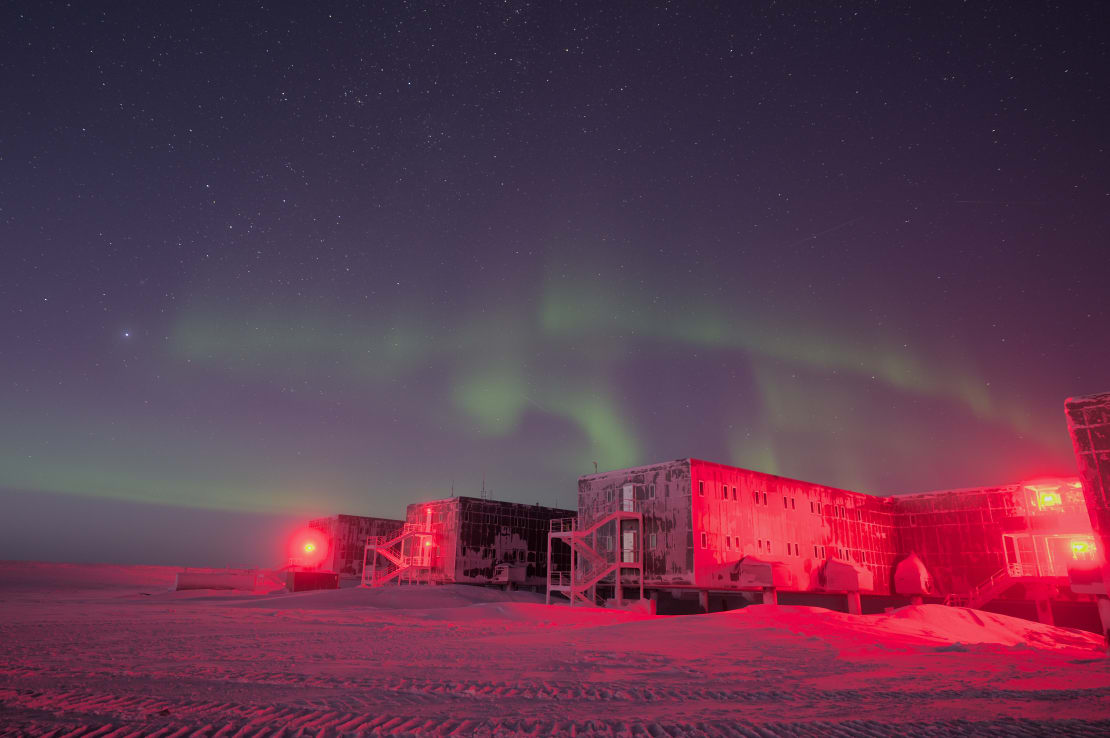
The ghost particlesWhat IceCube is hunting
Neutrinos are often called ghost particles, and the nickname is earned. They have almost no mass and no electric charge, and they can travel through the most extreme environments — stars, planets, entire galaxies — and come out the other side unchanged, as CNN noted in its coverage of the announcement. The catch: because they barely interact with matter, catching one is brutally hard. The National Science Foundation, which funded IceCube for more than two decades, put it plainly: just detecting a single neutrino is a daunting challenge. IceCube was built to detect many — and to figure out where they came from.
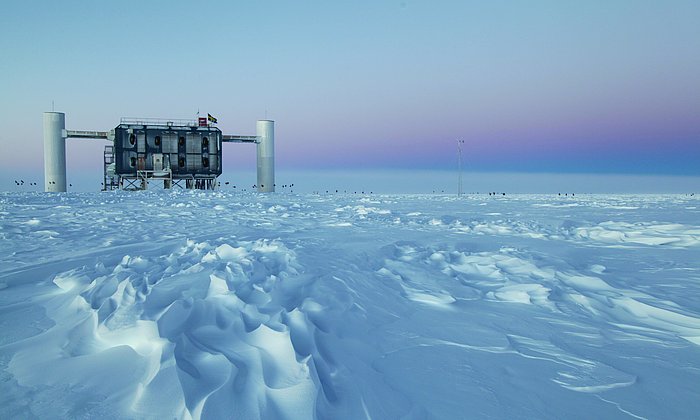
That’s where the South Pole ice comes in. In the rare cases when a neutrino collides with an atomic nucleus, it produces a flash of blue light called Cherenkov radiation. To stand any chance of seeing such collisions, scientists needed a colossal volume of transparent material — and the idea of using Antarctic ice, proposed as far back as the early 1960s by Russian physicist Moisey Markov, was the most audacious version of that plan, as Physics Today reported.
Halzen made it real. As principal investigator of IceCube and a physicist at the University of Wisconsin–Madison, the academy said, he led an international team of researchers and engineers who, in the words of Nobel committee chair Mark Pearce, were given what he called, in a Nobel Prize statement, “a fantastic instrument,” adding that Halzen’s “tenacity and scientific vision” had paved the way for “a new kind of astronomy.”
1988 to 2011The adventure almost nobody believed
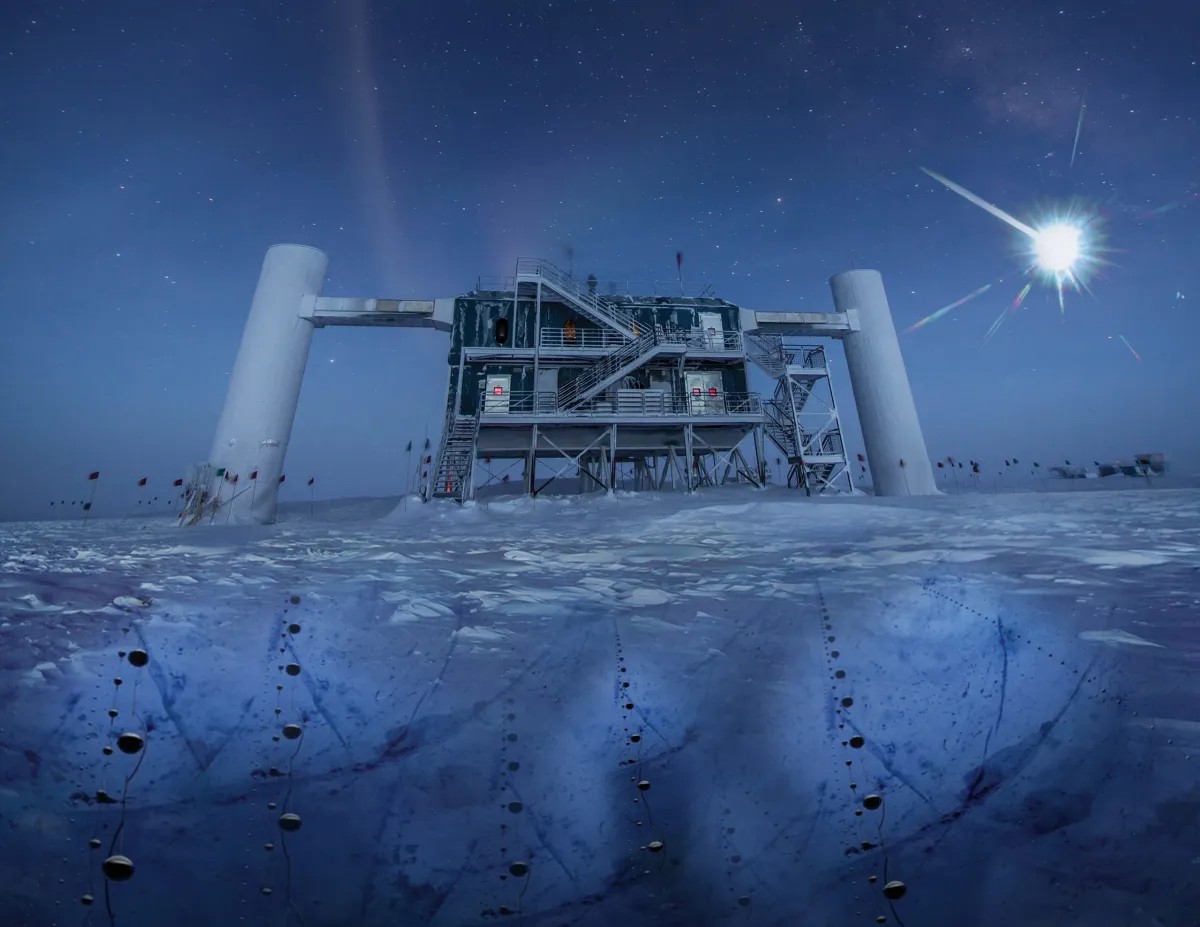
Halzen first presented plans for IceCube in 1988, envisioning a vast network of sensors embedded in the glacial ice, according to CNN. The plan was staggering: lower thousands of digital detectors more than two kilometers into the crystal-clear ice of the South Pole and wait for ghost particles to make the ice flash.
On Tuesday, Halzen joined the Nobel press conference by phone from Italy, where he called the prize a “great surprise” and a “pleasure.” And he was honest about the odds the project faced. “When we started this project, everybody realized this was maybe a good idea but very few thought it would work, including myself,” he said. “This was kind of an adventure where success wasn’t guaranteed, and we were lucky to overcome the various challenges.”
It took decades. IceCube’s construction began in 2004 at the NSF’s Amundsen-Scott South Pole Station, and the observatory began full operations in 2011. Two years later, it published the finding that would define Halzen’s legacy: the highest-energy neutrinos ever observed, carrying more than a million times the energy of any previously detected — the first evidence that neutrinos regularly pass through Earth from distant, high-energy sources outside the solar system.
A new windowWhy cosmic neutrinos matter
Here’s what makes the discovery Nobel-worthy. Astronomy has always relied on messengers that get scrambled on the way: light is blocked by dust, cosmic rays are bent by magnetic fields. High-energy neutrinos suffer neither problem. They point straight back at the cataclysms that fired them — exploding stars, distant galaxies with voracious black holes at their centers, the universe’s most powerful natural particle accelerators.
As Nobel committee member Eva Olsson said at Tuesday’s presentation, these tiny, high-energy particles “transmit information which allow scientists to better understand distant galaxies and exploding stars,” per CNN. The academy said Halzen’s work has laid the foundation for an entirely new type of astronomy — one that watches the universe not with mirrors and lenses but with a cubic kilometer of ice.
IceCube is the sole winner’s monument this year: Halzen is the only laureate, and the prize money — 12 million Swedish crowns, about US$1.2 million, according to Reuters — goes to him alone. He is the 82-year-old who bet a career on the idea that you could catch ghosts by freezing a telescope into the bottom of the world. On Tuesday, the ghosts paid off.
Nobel weekWhat’s next
The physics prize was the second of this year’s Nobels to be unveiled, following Monday’s medicine prize announcement, with chemistry next — see Previously’s coverage of the 2026 chemistry prize. Last year’s physics prize went to U.S.-based scientists John Clarke, Michel Devoret and John Martinis for experiments demonstrating quantum physics in action, research seen as advancing the next generation of computing, per Reuters.
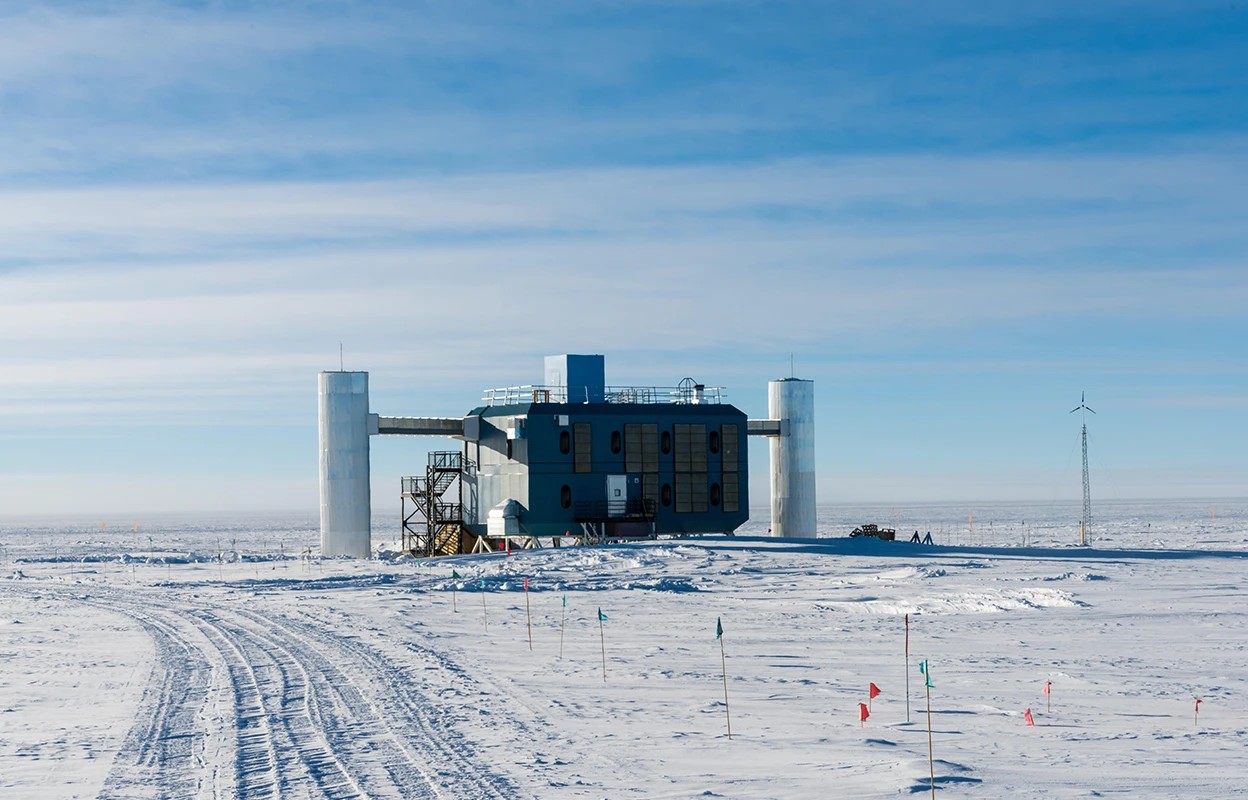
The formal medals will be presented by Sweden’s King Carl XVI Gustaf at the ceremony in Stockholm on December 10, the anniversary of Alfred Nobel’s death, followed by the banquet at Stockholm City Hall. Until then, one image from Tuesday endures: the IceCube Lab, alone on the ice at the bottom of the world, waiting for the next message from the universe’s most violent places — and the man who imagined it, taking a call from Stockholm in Italy, still sounding a little surprised it all worked.
Sources
- Reuters — Francis Halzen wins 2026 Nobel Prize in Physics; 12 million Swedish crowns prize; last year’s laureates Clarke, Devoret and Martinis; Dec 10 ceremony. Oct 6, 2026
- NSF — 2026 Nobel Prize in physics awarded for NSF IceCube neutrino discoveries; construction timeline, 2013 detection at >1 million times previous energies. Oct 2026
- Physics Today — Halzen’s 1988 sketch; Cherenkov radiation detection; Markov’s 1960s proposal; Halzen’s press-conference comments. Oct 6, 2026
- CNN — Halzen, 82, based at UW–Madison; Pearce and Olsson statements; “ghostly” particle properties; phone call from Italy. Oct 6, 2026