
An order with no limits
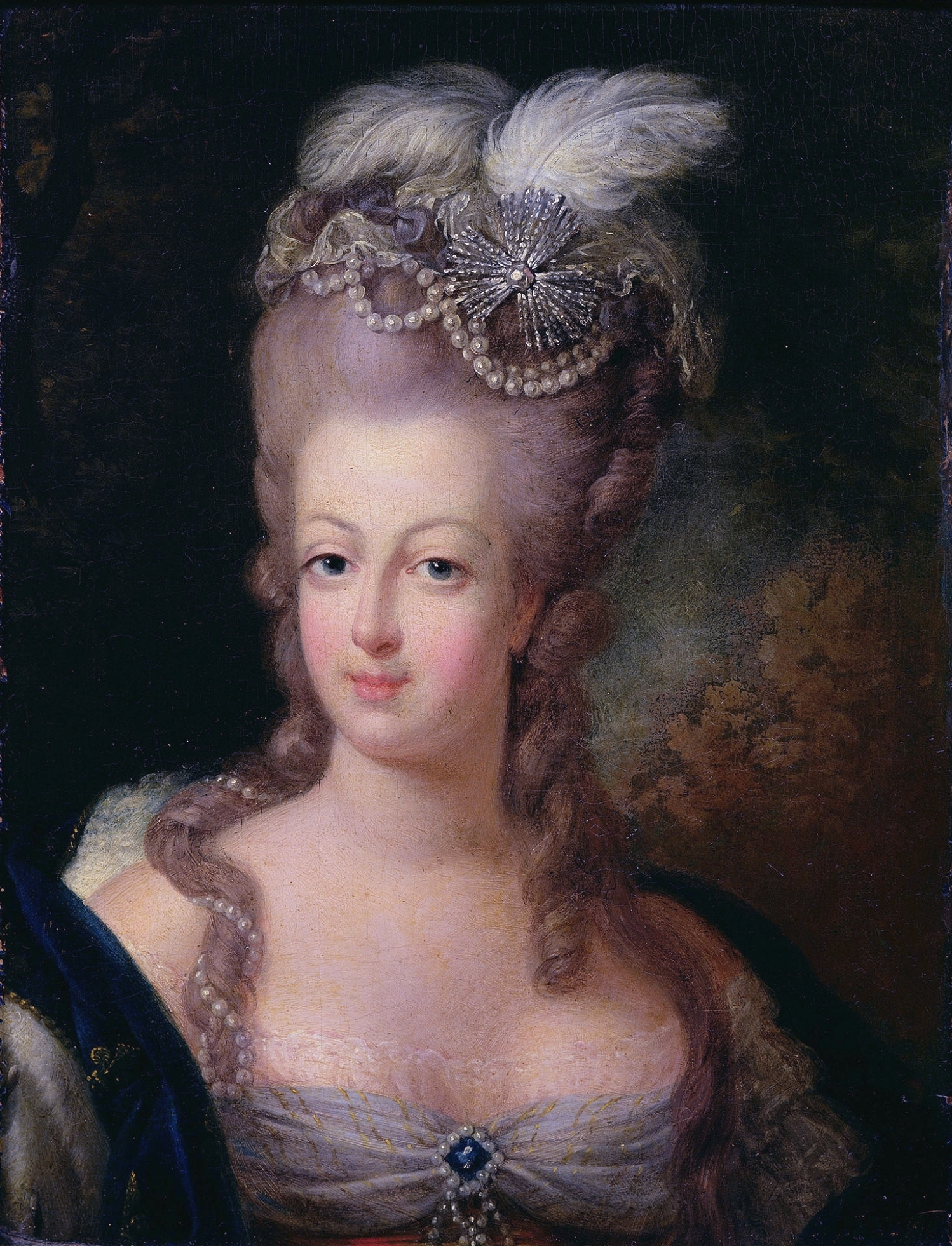
Every luxury watch begins with a customer. This one begins with an instruction that has no equal in the history of the craft. In 1783, in Breguet's own telling, a mysterious admirer of Marie Antoinette ordered a gift for the queen of France: a watch "as spectacular as possible," carrying the fullest range of horological expertise known at the time. Wherever possible, gold was to replace other metals. The complications were to be as numerous and varied as the art allowed. And — the clause that built a legend — no time or financial limits were imposed.
Tradition names the admirer as Count Hans Axel von Fersen, the Swedish nobleman rumored to be the queen's lover. Breguet's records never confirmed him, and the house itself calls the man a mystery to this day. What is not in dispute is what the workshop did with the order. Abraham-Louis Breguet, already the most inventive watchmaker in Europe, treated the commission as a license to build the entire future of watchmaking inside a single case.
Every complication known to man
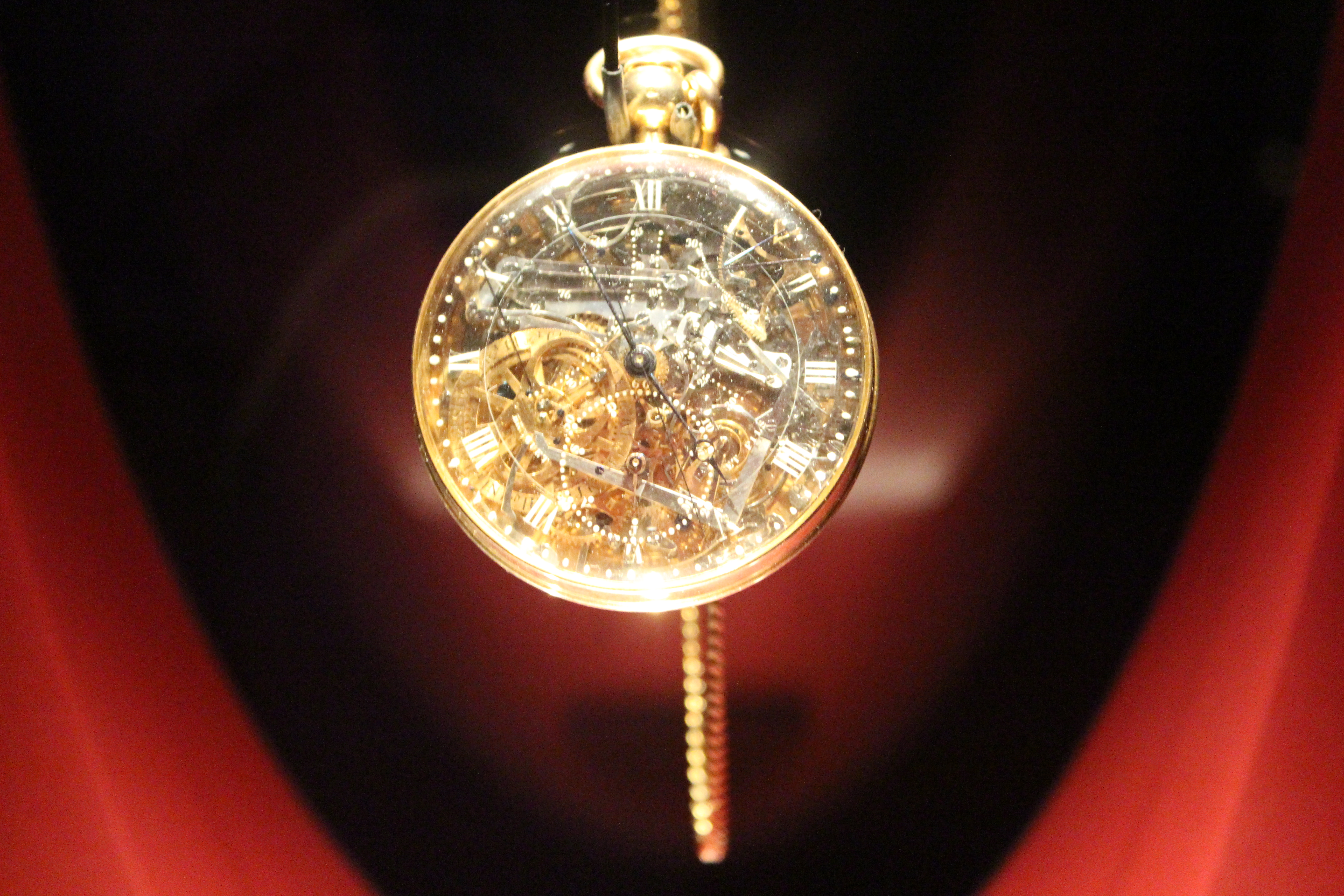
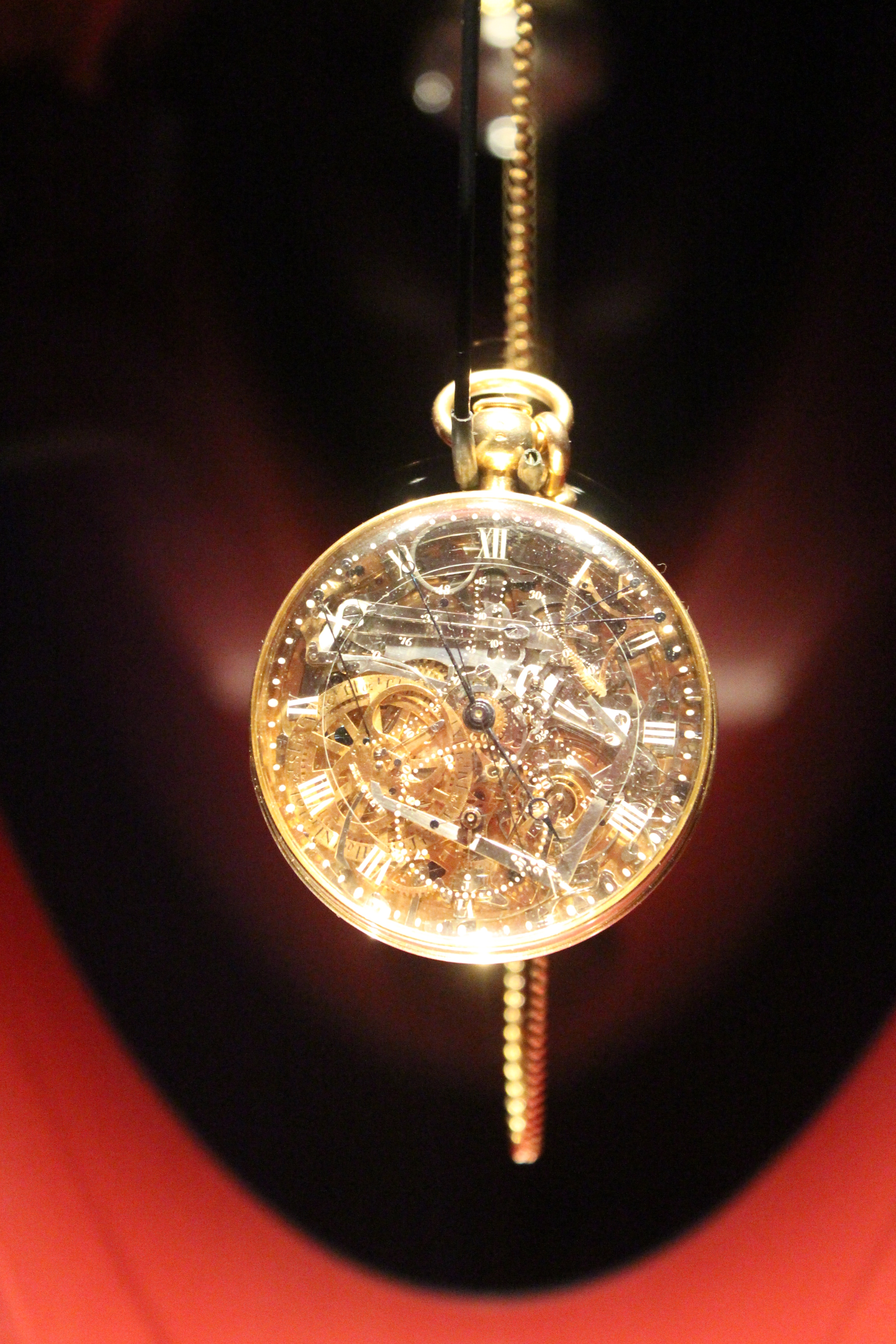
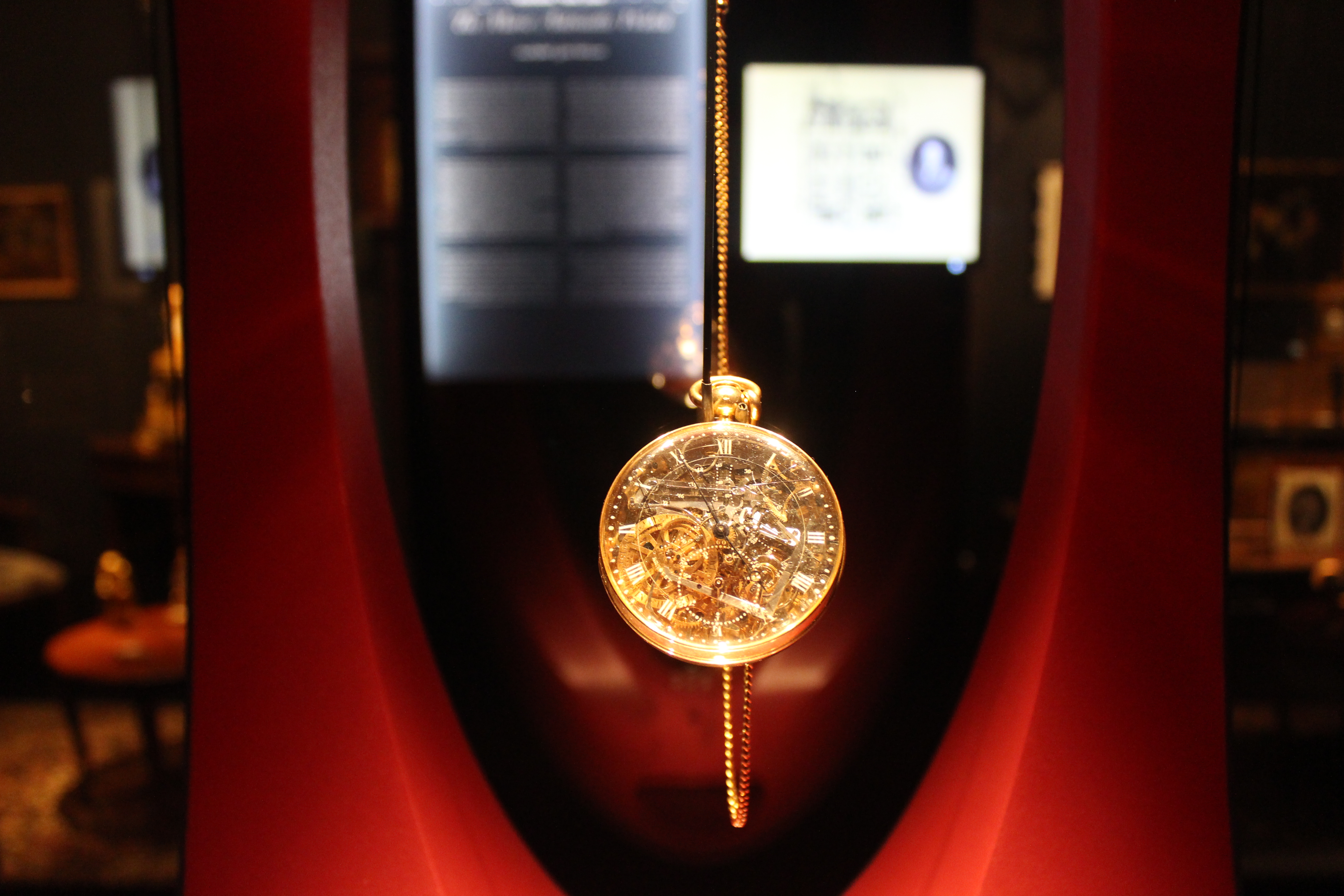
The finished watch — Breguet No. 160, his "Grande Complication" — is a self-winding perpétuelle in 18-karat gold, 60 millimeters across, built from 823 parts. Its movement winds itself with a platinum oscillating weight, an idea so early that the wristwatch era was still more than a century away. Inside one case, Breguet stacked a minute repeater that chimes the time on demand; a complete perpetual calendar showing the day, the date and the month, correcting for leap years on its own; the equation of time, tracking the drift between clock time and solar time; a power-reserve indicator; a metallic thermometer; a large independent seconds hand and a small sweep seconds; a lever escapement with a gold Breguet overcoil; and his double pare-chute, an anti-shock device of his own invention.
Even the invisible parts were extravagant: every point of friction in the movement — every hole, every roller — runs in sapphire, to cut wear to almost nothing. The watch carries two dials, one in white enamel and one cut from rock crystal, so the owner could look straight through the face at the machinery working beneath it. That transparent dial is what glows in the photographs from Jerusalem today: two and a half centuries on, the movement is still the decoration.
Breguet's own history records that the labor alone cost 17,000 gold francs. When the watch finally left the workshops in 1827, it was the most complicated watch ever made — and it held that title for nearly a hundred years.
Finished for a queen 34 years dead
The cruelest fact about the Marie-Antoinette is the simplest one: she never saw it. Work on the watch ground through the last years of the French monarchy, then the Revolution arrived and stopped everything — the workshop's world collapsed, and Breguet spent years in exile while his masterpiece sat unfinished. Marie Antoinette was executed in October 1793. The watch was completed in 1827, under Breguet's son Antoine-Louis — 34 years after the queen's death, and four years after Abraham-Louis Breguet himself died in 1823. The man who ordered it, if the Fersen tradition is true, had been murdered by a Stockholm mob in 1810. Everyone the watch was for, and everyone who began it, was gone before it ticked as a finished object.
It then drifted through the quiet decades: no sale of No. 160 appears in Breguet's archives at all, a silence the house itself calls an enigma. In 1887 it was bought by the British collector Sir Spencer Brunton, and in time it entered the collection of Sir David Lionel Salomons, the great Breguet scholar-collector. When Salomons died in 1925, he bequeathed 57 of his finest Breguet pieces — the Queen at their head — to the L.A. Mayer Institute for Islamic Art in Jerusalem, the museum his daughter Vera founded. There, behind glass, the most storied watch in the world sat in relative quiet. Until a thief who understood exactly what it was came through a back window.
The heist of the century
On a night in April 1983, Naaman Diller — a former combat pilot turned master thief, and an obsessive watchmaker himself — broke into the L.A. Mayer Institute through a rear window, knowing the museum's alarm system was broken. He took 106 timepieces from the Salomons collection, the Marie-Antoinette first among them, in what was called the costliest theft in Israel's history. Then he vanished, and so did the watch. For 23 years the case sat unsolved while the Queen of watches sat hidden in safes scattered across the United States, Europe and Israel — a $30 million masterpiece its thief could never sell, never show, and never stop owning.
What broke the case was a deathbed. Diller died in 2004, leaving his widow, Nili Shamrat, a confession and a will pointing at the loot. When she tried to move the pieces through an attorney — asking the $2 million reward for their return, a figure negotiated down to $35,000 for the first batch — the trail lit up. In 2007, 39 of the 106 stolen pieces came home to Jerusalem, the Marie-Antoinette among them; later recoveries brought the total to 96. Shamrat was convicted in 2010 of receiving stolen property and sentenced to five years' probation and 300 hours of community service. The Associated Press, covering her case, called the watch what the clock world calls it: "the Mona Lisa of the clock world," valued by museum officials at more than $30 million.
The watch Breguet built twice
The story has one more turn, and it is the most Breguet turn imaginable. While the original was still missing, Nicolas Hayek — the Swatch Group chairman who had bought Breguet — challenged the house's watchmakers in 2004 to do the impossible a second time: rebuild No. 160 exactly, working only from the firm's archival drawings and period documents, with no original to measure. The recreation, numbered 1160, took years of research and bench work and was presented in 2008 in a presentation case carved from the wood of Marie Antoinette's favorite oak at Versailles. By then, the punchline had landed: the original had been recovered in December 2007, months before its double was unveiled. Breguet had spent four years resurrecting a watch that was, all along, sitting in a thief's safes.
One honest footnote, because the watch deserves it: for all its paperwork on everything else, the house's archive never recorded who paid for No. 160, or when it first left the building, and modern Breguet scholarship has noted that the queen's name attached itself to the watch decades after the fact. The legend may be better documented as a legend than as a ledger entry. It changes nothing you can see in Jerusalem. The gold is real, the 823 parts are real, the 44 years are real — and so is the number the museum world puts on it.
Previously's Take
Watch records usually belong to auctions — a hammer, a paddle, a number read out in a quiet room. The Marie-Antoinette has no hammer price, because it sits permanently beyond the market: commissioned without a budget, finished for a dead queen, stolen by a man who loved it too much to sell it, and rebuilt by its own maker while it was gone. Thirty million dollars is the valuation the museum world puts on all of that. Spend a minute with the photographs — a movement so dense they had to make the dial out of crystal just to let you see it — and the number stops sounding like the extravagant part. The extravagant part is that anyone in 1783 believed a watch could hold everything. Breguet believed it, and then he proved it, 44 years too late for everyone who asked.
Sources · 7 sources
- Montres Breguet — "Presentation of the 'Marie-Antoinette' watch in a re-edition version" (the house's own history: the 1783 order by a mysterious admirer with no time or financial limits; finished in 1827, 34 years after the queen's death, four years after Breguet's, 44 years after the order; stolen 1983, recovered December 2007; the 2004 Hayek replica challenge).
- Montres Breguet — "The 'Marie-Antoinette' watch No. 160" (the full complication list; every friction point in sapphire; the enamel and rock-crystal dials; labor alone at 17,000 gold francs; the most complicated watch in the world for nearly a century; the archive's silence on its sale).
- Associated Press — "Woman Convicted in Case of Stolen Antoinette Watch," February 2010 (the 1983 theft of 106 pieces; museum officials valuing the watch at more than $30 million; "the Mona Lisa of the clock world"; the $2 million ask negotiated to $35,000; 96 of 106 pieces recovered; Nili Shamrat's conviction, probation and community service).
- Wired — John Biggs, "Return of the Queen," May 17, 2013 (the watch valued at $30 million; the Diller theft and the 2007 recovery; the Salomons bequest to the L.A. Mayer Institute).
- The Telegraph — Alix Kirsta, "The queen, her watch and the master burglar," April 2009 (the Diller heist in detail: the broken alarm, the hidden safes, the deathbed confession).
- JCK — "7 Things You (Probably) Don't Know About Breguet" (completion by Breguet's son Antoine-Louis in 1827; the complication inventory; the 1974 arrival at the L.A. Mayer and the April 1983 theft).
- CNN — Alex Doak, "The incredible stories behind 5 of the world's most expensive watches," December 2020 (No. 160's 823 components; the 1783 commission; the theft and recovery).