
LAS VEGAS, TUESDAY, OCTOBER 13, 2026
A coaching evaluation written for the Las Vegas Raiders’ 2024 head-coaching search became public on Tuesday, and Brian Flores’s lawyers say the document does not merely criticize a candidate — it judges him through racial stereotypes. The Associated Press reported that a Korn Ferry candidate report on Flores was unsealed Tuesday, October 13, as part of Flores’s discrimination lawsuit against the NFL and three teams. USA TODAY reported the same unsealing, and Front Office Sports published detailed accounts of the memo’s contents and the response from Flores’s legal team, who argue that both columns of the report — its listed strengths and its listed weaknesses — lean on stereotypes, and that the memo’s circulation amounts to unlawful retaliation for his lawsuit.
Some background matters here. Flores first sued the NFL and three teams in February 2022, alleging discriminatory hiring practices in the league’s head-coaching market; the case has since expanded to include other plaintiffs. The Korn Ferry report at issue on Tuesday was prepared for the Raiders as they ran their 2024 head-coaching search — a search Flores was not ultimately hired out of. According to the Associated Press, the document lists six strengths and seven weaknesses. On its face, that is the ordinary architecture of an executive-search evaluation. Flores’s attorneys say the language inside it is anything but ordinary, and Tuesday’s unsealing put that language in front of the public for the first time.
Start with the column that is supposed to help him. According to Front Office Sports’ account of the unsealed report, the strengths column describes Flores as polished and a good presenter “despite growing up in Brownsville, Brooklyn” — Brownsville being a predominantly Black and Hispanic neighborhood. The same column, per the reporting, credits a friendship with a billionaire’s son with teaching Flores to relate to white-collar, upper-class people. Flores’s attorneys argue that praise framed this way is not praise at all: it treats a Black coach’s polish as an exception to be explained by his background and his proximity to wealth, rather than as a professional quality that stands on its own. USA TODAY’s coverage of the unsealing likewise highlighted the Brownsville line as the detail Flores’s team considers most revealing about how the evaluation was written.
The weaknesses column, his lawyers say, is worse. Per Front Office Sports, one listed weakness states that Flores “can fool you with his polish upwards.” Attorney Michael Willemin described that phrasing to Front Office Sports as a racially offensive suggestion that a Black man being articulate is surprising — polish recast, in this reading, not as a strength but as a deception practiced on the people above him. Other listed weaknesses, according to the reporting on the unsealed memo, include a longtime senior executive’s claim that hiring Flores — by the Miami Dolphins, per the supplemental complaint — was the worst hiring decision ever made, along with claims about erratic behavior and a chip on his shoulder. Those are the memo’s claims, presented in the filing as evaluators’ characterizations; Tuesday’s reporting did not independently establish them, and they are contested by Flores’s side as part of the pattern the lawsuit alleges.
The legal argument built on top of the document is what gives Tuesday’s unsealing its weight. Attorney Douglas Wigdor told Front Office Sports that the documents show retaliation and that discrimination still shapes head-coaching hiring in the league. The retaliation theory, as Flores’s attorneys frame it, is that a candidate profile written after he had sued the league was shaped by that lawsuit — that the evaluation did not assess the coach so much as it punished the plaintiff. The Associated Press reported that the NFL did not immediately respond to a request for comment on the unsealed report, and neither, in Tuesday’s initial coverage, did the league offer a public defense of the memo’s language.
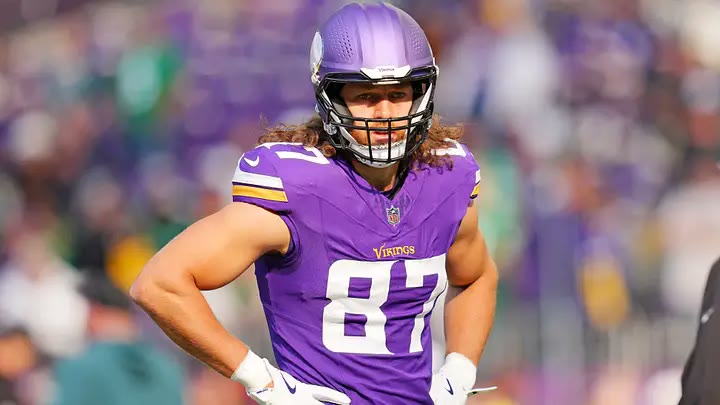
Flores, meanwhile, is not waiting on the coaching market that the lawsuit describes. He is the Minnesota Vikings’ defensive coordinator, employed and coaching while his case proceeds — a fact that cuts two ways in the public argument. His supporters note that a coordinator job is not the head-coaching job his suit says qualified Black candidates are steered away from; the league’s defenders note that he holds one of the NFL’s most prominent assistant roles. What Tuesday added to that argument is paper: an actual search-firm document, written for an actual vacancy, that Flores’s lawyers say shows exactly how a Black candidate gets talked about in the rooms where these decisions are made.
The case itself remains the arena. The lawsuit, filed in February 2022 and expanded since, will now absorb the Korn Ferry report as an exhibit both sides fight over — Flores’s team as evidence of stereotype and retaliation, the league, presumably, as a candid evaluation of the kind every finalist receives. Judges, not headlines, will decide which reading the law accepts. But the reason the memo led sports pages on Tuesday is that it is rare for the public to see this layer of the hiring process at all. Head-coaching searches are conducted in confidence precisely so that language like this stays sealed. Now it isn’t. For more NFL coverage, see our report on Fernando Mendoza’s Raiders debut, the latest on Caleb Williams’ return for the Bears, and our Cowboys–Packers preview, or head to our sports section for the full night’s coverage.
Sources · 5 sources
- The Associated Press · Oct 13, 2026 — report on the unsealed Korn Ferry report in the Flores lawsuit
- USA TODAY · Oct 13, 2026 — coverage of the unsealed Raiders coaching-search memo
- Front Office Sports · Oct 13, 2026 — reporting on the memo’s contents and attorneys’ responses
- TSN · Oct 13, 2026 — carrying the Associated Press report on the unsealed memo
- theScore · Oct 13, 2026 — report on the unsealed report and Flores’s lawyers’ statements