NANTUCKET, Mass. — The U.S. Coast Guard is conducting an air-and-surface search off Nantucket for a medical transport jet carrying six people that vanished early Saturday morning on a flight from Bermuda to Boston. As of Saturday afternoon, authorities had not confirmed a crash, wreckage, or casualties — and the search remained active.
The aircraft, a Gulfstream G100 registered as C-GRJP and operated by the Canada-based Latitude Air Ambulance, departed L.F. Wade International Airport in Bermuda at 12:41 a.m. bound for Boston Logan International Airport. The Federal Aviation Administration issued a search-and-rescue alert notice around 1:20 a.m. after losing contact with the jet, and the Coast Guard’s Northeast District launched crews by air and sea.
This is a developing story. Details below reflect what authorities had confirmed as of Saturday afternoon.
What We Know About the Flight
Flight-tracking data cited by multiple outlets shows the jet cruising at about 24,000 feet for more than an hour before plunging roughly 13,000 feet in about two minutes — from 23,500 feet to near 11,000 feet — shortly after 1 a.m. Contact was lost in that window.
Six people were aboard: four crew members and two passengers, according to Skyport, the operator of Bermuda’s airport. Canada’s transportation minister, Steven MacKinnon, said four Canadians were among the six. Toronto City News reported that two of those aboard were from Bermuda.
Latitude Air Ambulance, which owns the aircraft, operates a fleet of four Gulfstream G100s configured for long-range medical evacuation — typically carrying two pilots, a registered nurse and a respiratory therapist, sometimes with a physician aboard. “We are praying for a safe outcome,” a company spokesperson said Saturday. No identities or medical details of those aboard have been released.
The Search
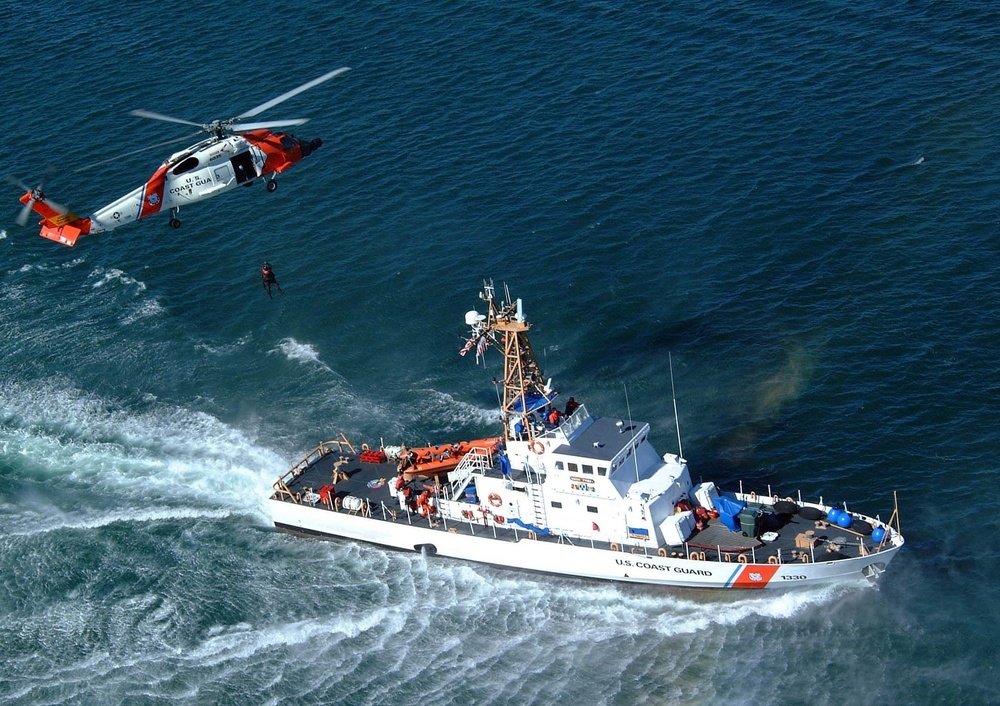
Coast Guard Station Brant Point said crews were searching roughly 13 nautical miles south of Nantucket, the island about 30 miles off Cape Cod. The response, according to local reports, includes a 47-foot Motor Lifeboat, an MH-60 Jayhawk helicopter, an HC-144 Ocean Sentry airplane, a C-130 aircraft, and the 154-foot fast response cutter USCGC William Sparling.
Weather was not believed to be a factor: conditions around Nantucket were reported clear Saturday morning.
The National Transportation Safety Board said it was gathering information but had no further update to share. Bermuda’s government said it has been in contact with American authorities and the families of those aboard. “My thoughts are with everyone on board and their families during this deeply worrying time,” Bermuda Premier David Burt said in a statement.
Why This Route Matters
The Bermuda–Boston corridor is a well-traveled path for medical evacuation flights. Bermuda’s small island hospital system routinely transfers critical patients to major medical centers in Boston, and Canadian air-ambulance operators like Latitude fly the route regularly — nearly 700 miles of open Atlantic between Bermuda and Nantucket, most of it beyond radar-friendly range and far from any runway.
That geography is what makes the search so urgent and so difficult. The sea off Nantucket is busy water — fishing grounds, shipping lanes, ferry routes — but an aircraft that goes down at night in the Atlantic leaves searchers an enormous area to cover, with currents moving anything on the surface by the hour.
The Aircraft and the Company
The missing jet, C-GRJP, is a Gulfstream G100 — a nine-seat light jet that Latitude Air Ambulance configures as a flying intensive-care unit. The company’s fleet numbers four such aircraft, which Latitude describes as capable of long-distance flights without refueling — a necessity on the Bermuda–Boston run, where the great-circle route crosses nearly 700 miles of open ocean with no alternate airport.
A typical Latitude mission carries two pilots, a registered nurse and a registered respiratory therapist, with a physician added for complex cases. The company provides international medical evacuation and repatriation flights — the unglamorous, essential work of moving critically ill patients from places with small hospitals to places with big ones. Bermuda, with a single acute-care hospital for 64,000 residents, sends its most serious cases to Boston with regularity; the 12:41 a.m. departure suggests an urgent transfer, the kind flown at night because the patient cannot wait for morning.
Latitude said its fleet’s G100s are built for exactly this mission profile. What happened between 1:04 a.m. — when FlightAware data shows the steep descent beginning — and 1:20 a.m., when the FAA issued its alert, is now the central question for investigators.
The First Hours of a Search
The Coast Guard’s Northeast District, headquartered in Boston, owns the waters where contact was lost — and Station Brant Point on Nantucket, the closest Coast Guard facility to the search area, took the initial response. The asset list tells you how seriously the first hours are taken: the MH-60 Jayhawk helicopter for low, slow visual searching; the HC-144 Ocean Sentry for wide-area sensor sweeps; the C-130 for long-endurance coverage; the 47-foot Motor Lifeboat for surface work; and the cutter William Sparling as on-scene coordinator.
Search planners feed the last known position, winds, and currents into drift models that expand the search box by the hour — which is why the reported search area, about 13 nautical miles south of Nantucket, will grow if the aircraft isn’t found quickly. At night, in October water, the math is unforgiving, and every asset the district could spare was tasked before dawn.
Massport, which operates Boston Logan, said its “thoughts are with those on board and their loved ones as the search continues.” The airport the jet never reached spent Saturday morning the same way the families did: waiting.
What Comes Next
Search-and-rescue doctrine treats the first 24 hours as critical, and the Coast Guard’s posture Saturday — helicopters, fixed-wing aircraft, cutters and small boats all tasked — reflects that urgency. If the aircraft is not located quickly, the operation typically transitions from rescue to recovery, a determination the Coast Guard makes based on survivability modeling, water temperature, and time.
For now, officials are saying little beyond confirming the search is underway. The FAA, the Coast Guard, the NTSB, the government of Bermuda and the government of Canada are all now involved in a single question: where is C-GRJP?
Six families are waiting for the answer. We will update this story as authorities release more information.
Sources
- CNN, “Coast Guard searches off Nantucket for missing medical transport jet that left Bermuda with 6 aboard,” October 3, 2026.
- USA Today, “Coast Guard searches for missing medical jet carrying 6 off Nantucket,” October 3, 2026.
- Reuters, “US Coast Guard searching for missing jet carrying 6 people bound for Boston,” October 3, 2026.
- Associated Press, “Coast Guard searching for plane with 6 aboard that lost contact on trip from Bermuda to Boston,” October 3, 2026.