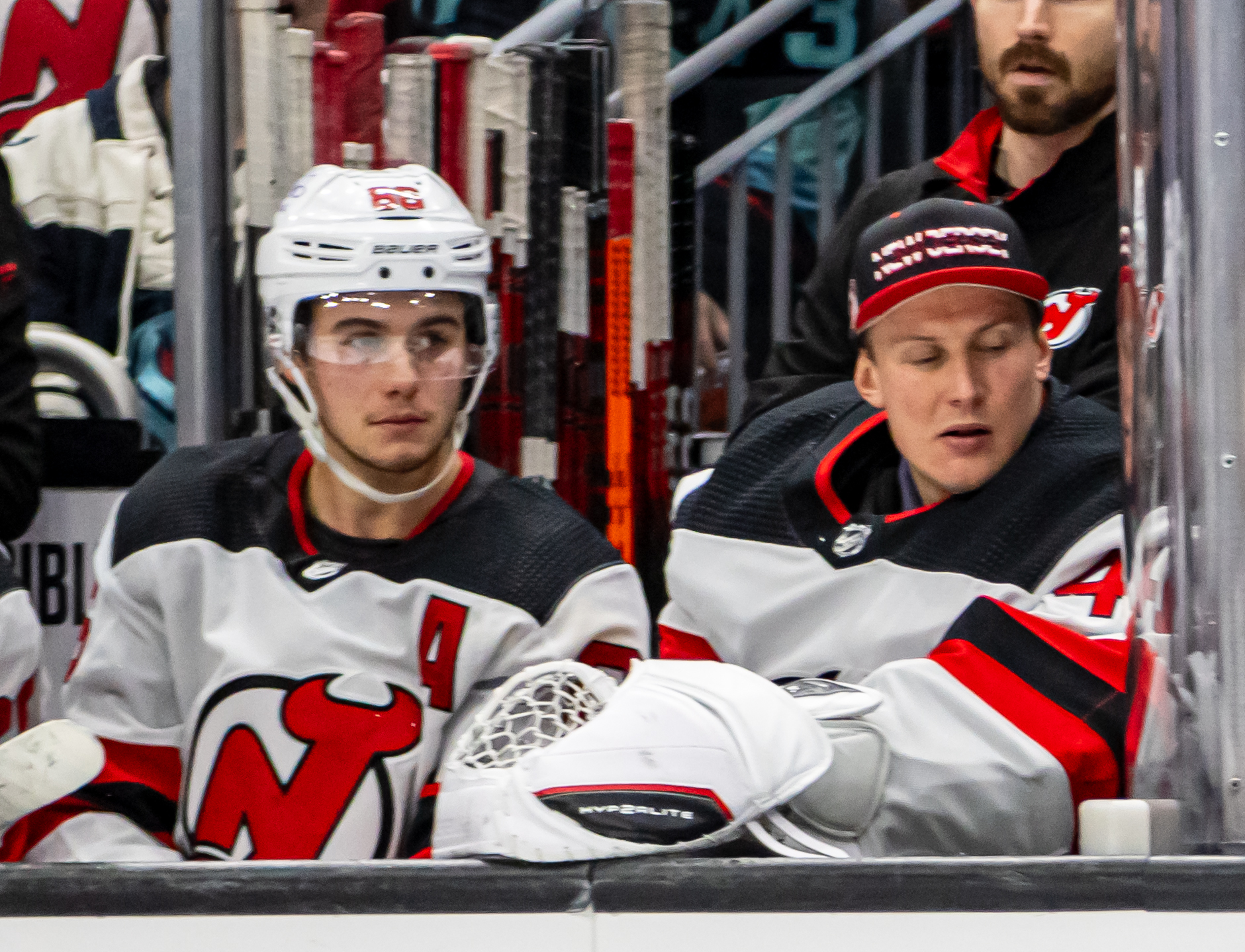

Frozen Frenzy is built for chaos, and on Tuesday night at Little Caesars Arena, the New Jersey Devils and Detroit Red Wings delivered the wildest script on the NHL's 16-game slate. New Jersey beat Detroit 5-4 in overtime, and according to Reuters, it was Jack Hughes who ended it — a breakaway winner 1:19 into the extra period, capping a three-point night for the Devils' franchise center on the second night of a back-to-back.
The finish was pure Hughes. Jesper Bratt, who finished with a goal and two assists of his own, sprang his linemate on the deciding play, and Hughes did the rest alone against John Gibson. NHL.com, in its game story, framed the night as a test of New Jersey's resolve: the Devils never trailed in spirit even when the game kept tilting toward Detroit, and their two best playmakers were on the ice together when the game finally broke. Hughes now owns the kind of overtime highlight that tends to follow a player around for a season — not a deflection, not a scramble, but a clean breakaway, finished with the building going quiet.
A Five-Goal Second Period Broke the Game Open
If the overtime was surgical, the second period was anything but. The two teams combined for five goals in the middle frame, a stretch that Reuters described as a momentum swing that never really stopped swinging. New Jersey's scoring came from everywhere in the lineup: Evan Rodrigues found the net, Anthony Mantha scored against his former team — the kind of goal that always lands a little louder in the visiting building — and captain Nico Hischier converted on the power play.

Detroit answered in kind, and mostly through one line. Alex DeBrincat scored twice and added an assist, the kind of night that usually headlines a home win. Rookie Michael Brandsegg-Nygard had a goal and an assist, and Emmitt Finnie matched him with a goal and an assist of his own, giving the Red Wings scoring from both their established stars and their next wave. The Detroit Free Press noted that Detroit's offense, for long stretches, did everything asked of it: four goals, pressure in waves, and a crowd that believed the night was theirs more than once.
Goaltending Held Just Long Enough
The numbers in net tell the story of two very different evenings. Jake Allen made 22 saves for New Jersey — not a heavy workload, but a timely one, with his best work coming as Detroit pushed to close the game out in the third period. Gibson, at the other end, stopped 32 shots and still took the loss, a stat line that underlines how much of Detroit's problem was structural rather than singular. When a goaltender faces that volume and his team scores four, the postgame questions are rarely about the man in the crease.
That is the uncomfortable math for the Red Wings. The loss drops Detroit to 1-3-2, and the Detroit Free Press coverage made the pattern hard to ignore: the Wings are generating enough offense to win on most nights, but they are spending too much of every game chasing it. Twice on Tuesday they had the crowd and the scoreboard moving together, and twice New Jersey's top players pulled the game back. In a division where the margins are already thin in mid-October, overtime losses at home sting twice — the point banked softens it, but the two points walking out the door with a conference rival do not.
Hughes Owns the Extra Period
There is a reason New Jersey lives comfortably in these moments. When overtime starts and the ice opens up, few players in the league see the game faster than Hughes, and Bratt is nearly his equal as a creator. NHL.com pointed to the pairing's chemistry on the winner: Bratt drawing attention, Hughes reading the seam before it fully existed, and a finish that never gave Gibson a chance to set. For a team playing its second game in two nights, the Devils could have managed the third period for a point and gone home satisfied. Instead, their stars treated overtime like an opportunity, and 79 seconds was all they needed.
The win also says something about the Devils' depth on a compressed night. Rodrigues and Mantha scoring on a back-to-back is exactly how good teams survive October scheduling: secondary goals on the road, a power-play strike from the captain, and just enough goaltending to reach the part of the game where your best player decides it. Mantha's goal against his old club will get the highlight treatment, but Hischier's power-play marker may have been the turning point — it restored New Jersey's belief right when Detroit's five-goal period threatened to bury them.
Detroit, meanwhile, gets a point and a problem. The kids are producing — Brandsegg-Nygard and Finnie combining for four points is a genuine bright spot — and DeBrincat is finishing like a player determined to drag his team into the race. But 1-3-2 is 1-3-2, and moral victories curdle quickly. The Wings' next step is not finding offense. It is learning how to protect a game their offense has already built.
Catch up on the rest of Frozen Frenzy — all 16 games on one night — in our Frozen Frenzy preview and Connor Bedard's return night in Chicago, and keep the NHL hub and the Sports front open as the early-season table takes shape.
Sources · 3 sources
- Reuters — Frozen Frenzy game report, October 13, 2026
- NHL.com — Devils-Red Wings game story, October 13, 2026
- Detroit Free Press — Red Wings coverage, October 13, 2026