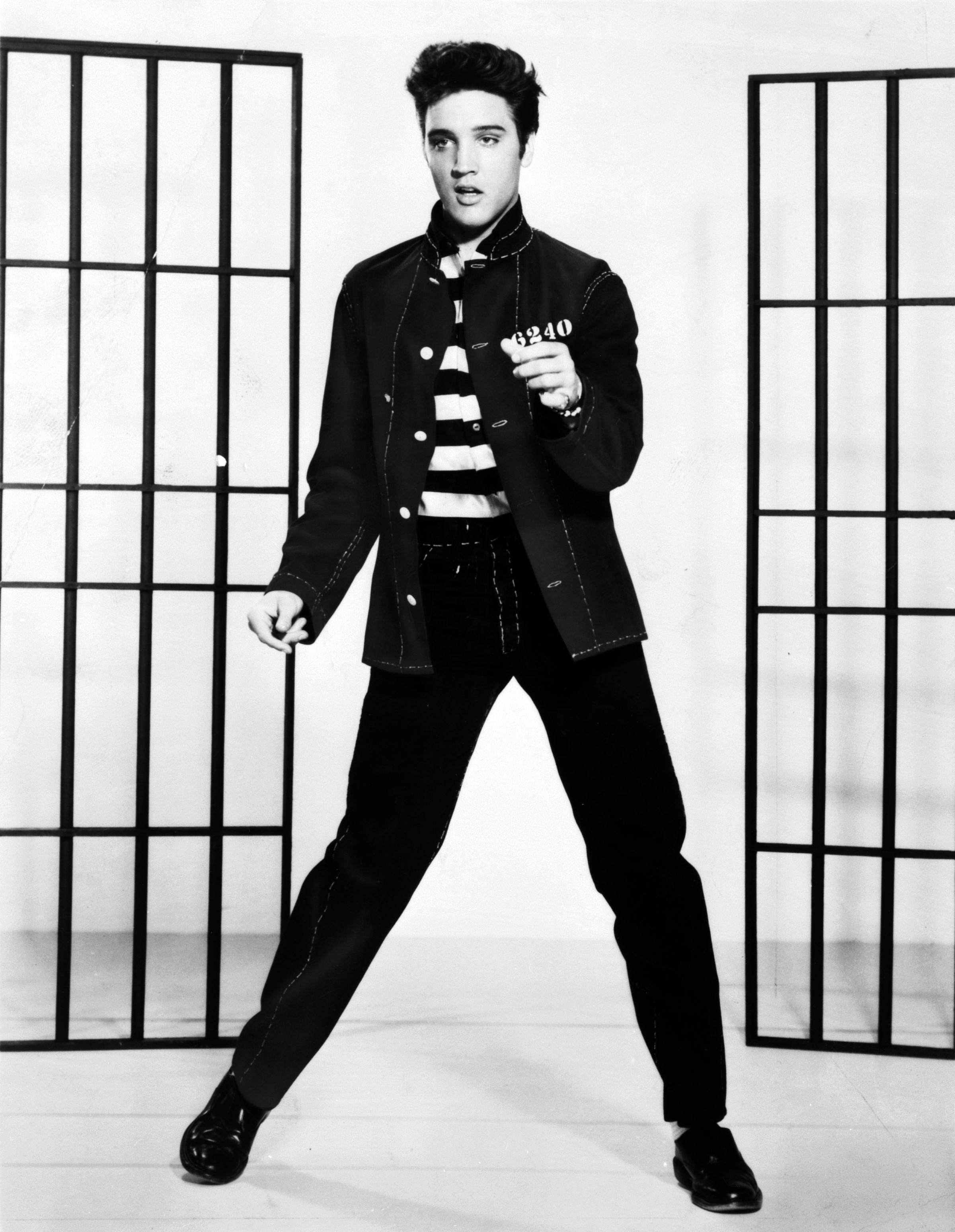

Elvis Presley has been dead for nearly fifty years. His voice, his estate says, is being stolen right now — by software, at scale, one prompt at a time.
Billboard reported that Elvis Presley Enterprises filed a new lawsuit Friday against Suno, the leading AI music company, accusing it of violating the King's likeness rights by letting users clone his voice. It is the second suit the estate's owners have fired at an AI giant in a matter of weeks — they sued Anthropic, maker of Claude, over training on Elvis songs — and it is easily the most significant legal action yet filed on behalf of a single musician over AI, aimed at arguably the most famous recording artist of all time. Variety reported that the 51-page complaint was filed in the Northern District of California by a group of Presley rights holders that includes Authentic Brands Group and Raleigh Music Publishing.
Billboard reported on Saturday that the complaint, filed by veteran music litigator Richard Busch of Adams & Reese, does not talk like a routine copyright case. It talks like an identity theft report. “All of the humanity, history, despair, and triumph that constitutes Elvis' identity was stolen and is stored on servers and harnessed by Suno to make massive amounts of money,” Busch wrote in the complaint, according to Billboard. “Suno did so intentionally, maliciously, and fraudulently to financially benefit itself and artificially compete with Elvis' likeness and copyrights, and continues to do so to this day.”
The law with his name on it
The case is one of the first major tests of a law that could hardly be better named. In 2024, Tennessee — Presley's adopted home state — enacted the ELVIS Act, short for Ensuring Likeness Voice and Image Security. It was the first statute in the nation built specifically for the deepfake era, and it did two things older publicity laws did not. It dropped the requirement that a stolen likeness be used commercially, in an ad, before you could sue. And it aimed past the impersonators to the toolmakers: companies that provide the means to clone a person's voice or image can be liable themselves.
“Suno is the embodiment of why the ELVIS Act was so essentially required,” the lawsuit reads, according to Billboard. “Suno has stolen Elvis' voice, his image, and likeness, as well as his copyrighted works on, literally, a breathtaking scale, and must now be called to answer for its theft.”
Whether that argument holds is a genuinely open question — no court has yet decided how far a law like this reaches into an AI platform. Suno has argued in other likeness litigation that it merely treats artist names as shorthand for a genre and does not permit direct theft of voices. The Elvis complaint calls that claim “unequivocally false,” according to Billboard. Billboard reported that as recently as last month, Suno generated an Elvis clone from lyrics that included his name, and the complaint links to videos it says capture the platform producing songs that sound remarkably like Presley. “Those are NOT examples of Elvis Presley singing,” Busch wrote in the complaint, according to Billboard. “They are synthetic and unlicensed uses of Elvis' voice and likeness. There are hundreds to thousands more like it.”
The songs underneath
Alongside the voice claims, the suit echoes the Anthropic case on training: it accuses Suno of taking copyrighted Elvis recordings — “Can't Help Falling in Love,” “Don't Be Cruel,” “A Little Less Conversation,” “All Shook Up,” “Return to Sender” and “(You're the) Devil in Disguise” among them — to build a system meant to replace the human artists it learned from.
The complaint's most quoted line is likely to be its bleakest. “The next Elvis won't pick up a guitar,” the lawyers wrote in the complaint, according to Billboard and Variety. “Suno's ravenous race to the bottom aims to make human creativity obsolete, coldly replicating without a license in seconds what takes years to learn, struggle with, maintain, and endlessly attempt to make better and perfect.”
Elvis Presley Enterprises is a unit of Authentic Brands Group, the licensing giant that controls the intellectual property tied to Elvis, including much of his catalog and the rights to his name, image and likeness. In a statement to Billboard on Saturday, ABG spokeswoman Lark-Marie Antón said the lawsuit and its evidence “speak for themselves,” adding: “The name, image, likeness, and music of Elvis Presley are among the most valuable intellectual property assets in the world. We protect those rights vigorously.”
Suno, for its part, answered Saturday with the defense it has been building across a courtroom full of cases. “Suno exists to help people create new, original music, not to trade on anyone's name or likeness, and we prohibit any unauthorized use of an artist's work,” a spokeswoman told Billboard. “To protect against this, we do not allow prompts for specific artists' names and songs and work with third party providers to screen uploaded audio files and lyrics for potential misuse. We are always working to strengthen our guardrails and we will continue to add new safeguards that protect artists and our users.”
One defendant, every direction
Friday was a busy day for Suno's legal mail. Variety reported that the same attorneys also filed a separate case against the company Friday on behalf of Eight Mile Style, the publisher that owns much of Eminem's catalog, with similar training accusations covering “Lose Yourself,” “Without Me,” “Till I Collapse,” “The Real Slim Shady,” “Stan” and other hits. The majors got there first: all three big music companies sued Suno in 2024 over AI training. Suno settled with Warner Music Group last year and has vowed to partner with the industry, but it is still litigating with UMG and Sony Music, and it has taken fresh cases in recent months from publishers including Round Hill Music and Reservoir, plus a class action led by Jason Isbell that presses likeness claims of its own.
The Elvis case is different from all of those in one way that matters. The labels are arguing about catalogs. The Elvis estate is arguing about a person — a voice the complaint describes, in passages quoted by Billboard, down to its “distinctively rich vocal timbre,” its “warm velvety resonance and perfectly employed vibrato.” And it is arguing in the one state that wrote a law with his name on it for precisely this fight. The King cannot walk into court. This is what it looks like when his name does it for him.
Sources · 3 sources
- Billboard — “Elvis Presley Rights Owners Sue Suno Over AI Voice Cloning: 'Elvis' Identity Was Stolen'” (Bill Donahue, November 2026): the filing, the ELVIS Act claims, the complaint's quoted language and video evidence, and the Saturday statements from Authentic Brands Group and Suno.
- Variety — “Elvis Music Owners, Eminem Publisher File Sprawling New Lawsuits Against AI Music Generator Suno” (Corbin Bolies, November 2026): independent report of the same filing — the 51-page complaint in the Northern District of California, the plaintiff group (Authentic Brands Group, Raleigh Music Publishing and others), the companion Eight Mile Style case, and the Isbell class action.
- All allegations about Suno's conduct are the complaint's, as reported by Billboard and Variety, and are attributed as such in the body. Suno's response is carried in full above.