
Some commissions start with a colour. This one started with a bird. A client came to Rolls-Royce's Private Office in Dubai with a tribute in mind — a Phantom built for his wife — and at the centre of it, a hummingbird: the creature Rolls-Royce describes as a symbol of joy, resilience and the ability to find beauty in every moment. The brief sounds simple until you ask the obvious question. What do you make a hummingbird out of, inside the most considered cabin in the car industry, so that it actually shimmers the way the living bird does?
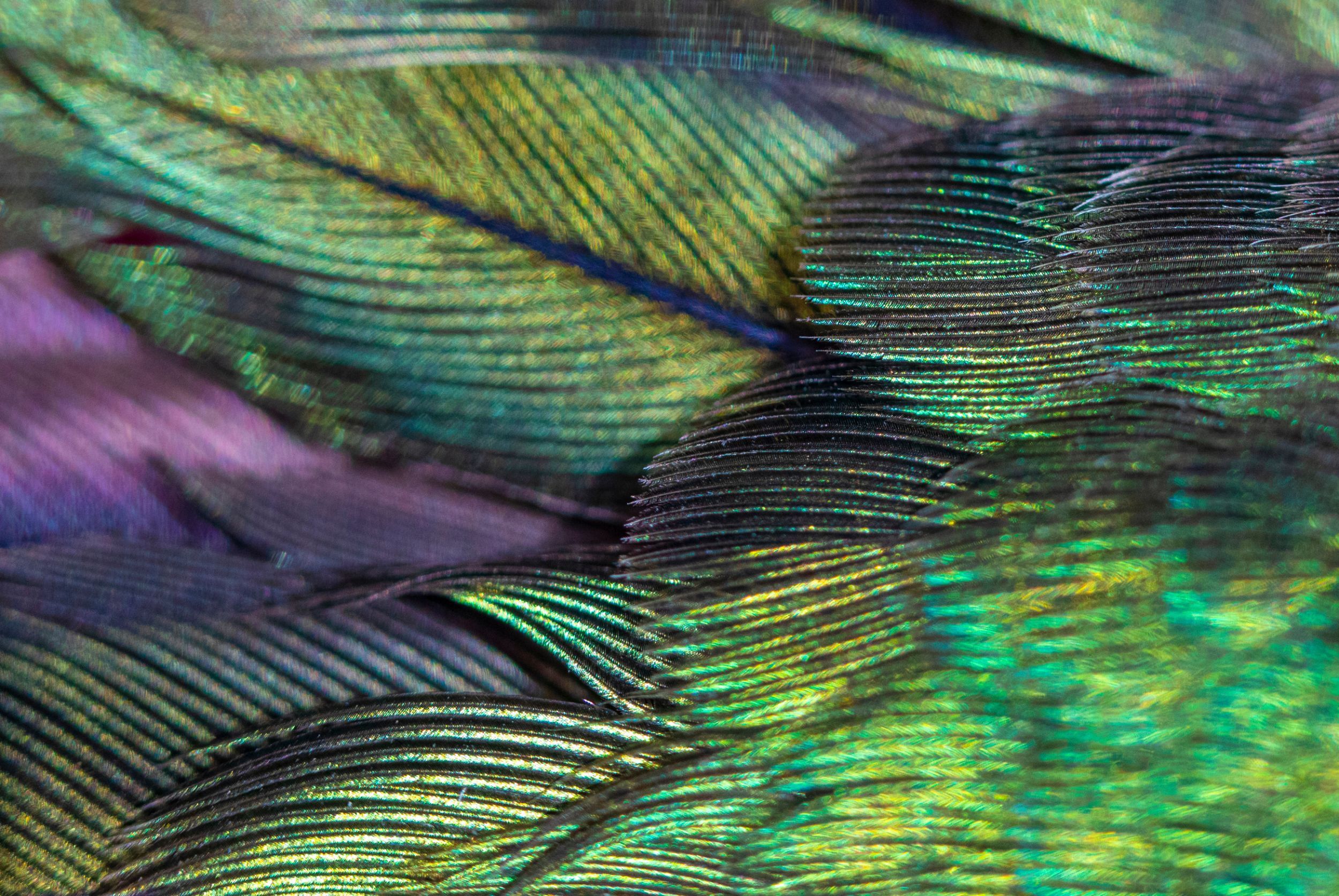
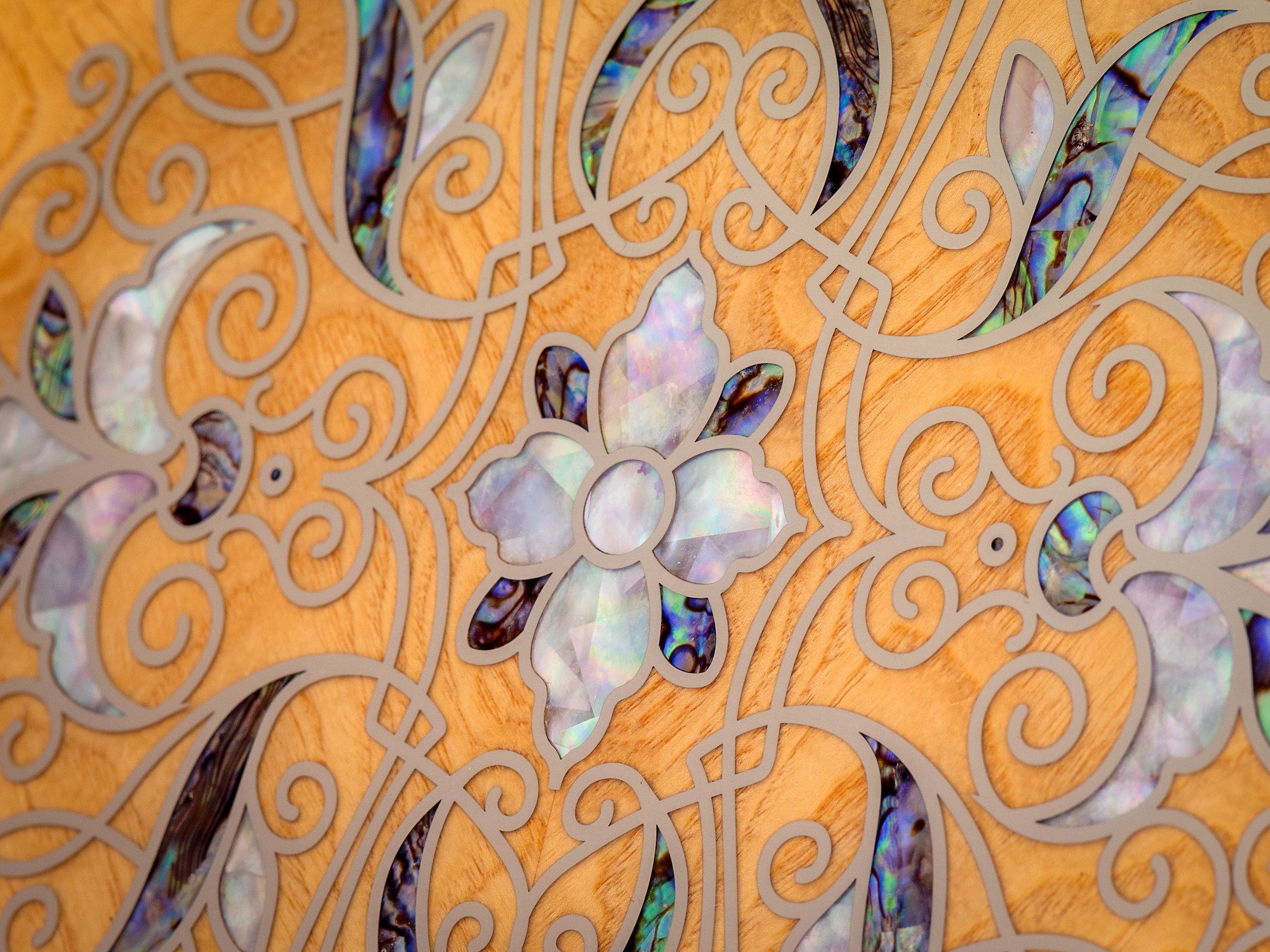
The answer the Bespoke Collective landed on was a material the company had never once used in more than a century of marquetry: abalone shell. The nacreous inner layer of the shell throws blue and green fire as light moves across it — the closest thing nature makes to the gorget feathers of a real hummingbird, which are not really coloured at all, just structured to bend light. Rolls-Royce's own release calls the result the first application of abalone shell marquetry in the marque's history. Carscoops, covering the unveiling at Goodwood, put it plainly: the car marks the first-ever use of iridescent abalone shell marquetry in a Rolls-Royce.
A material that fights back
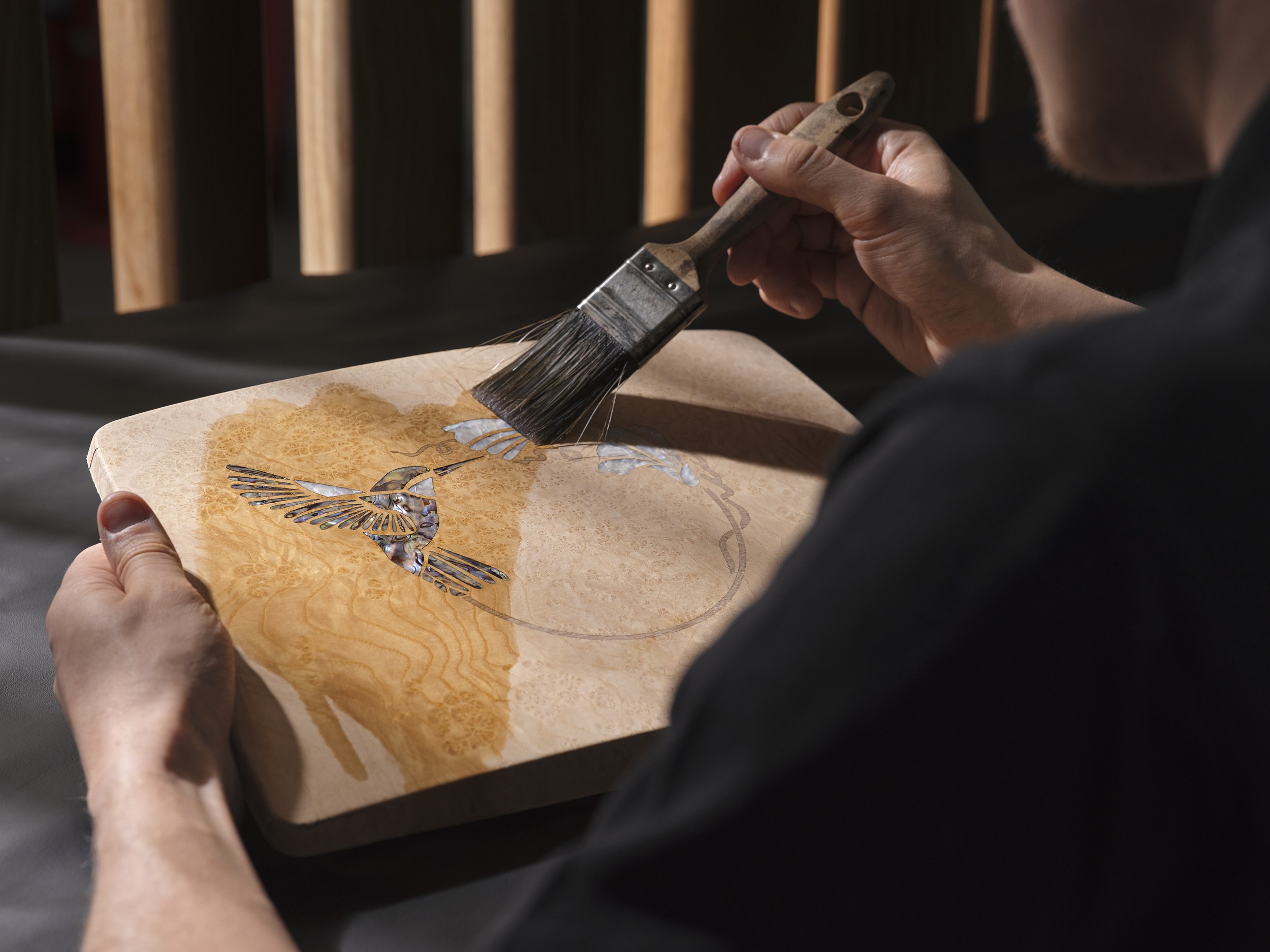
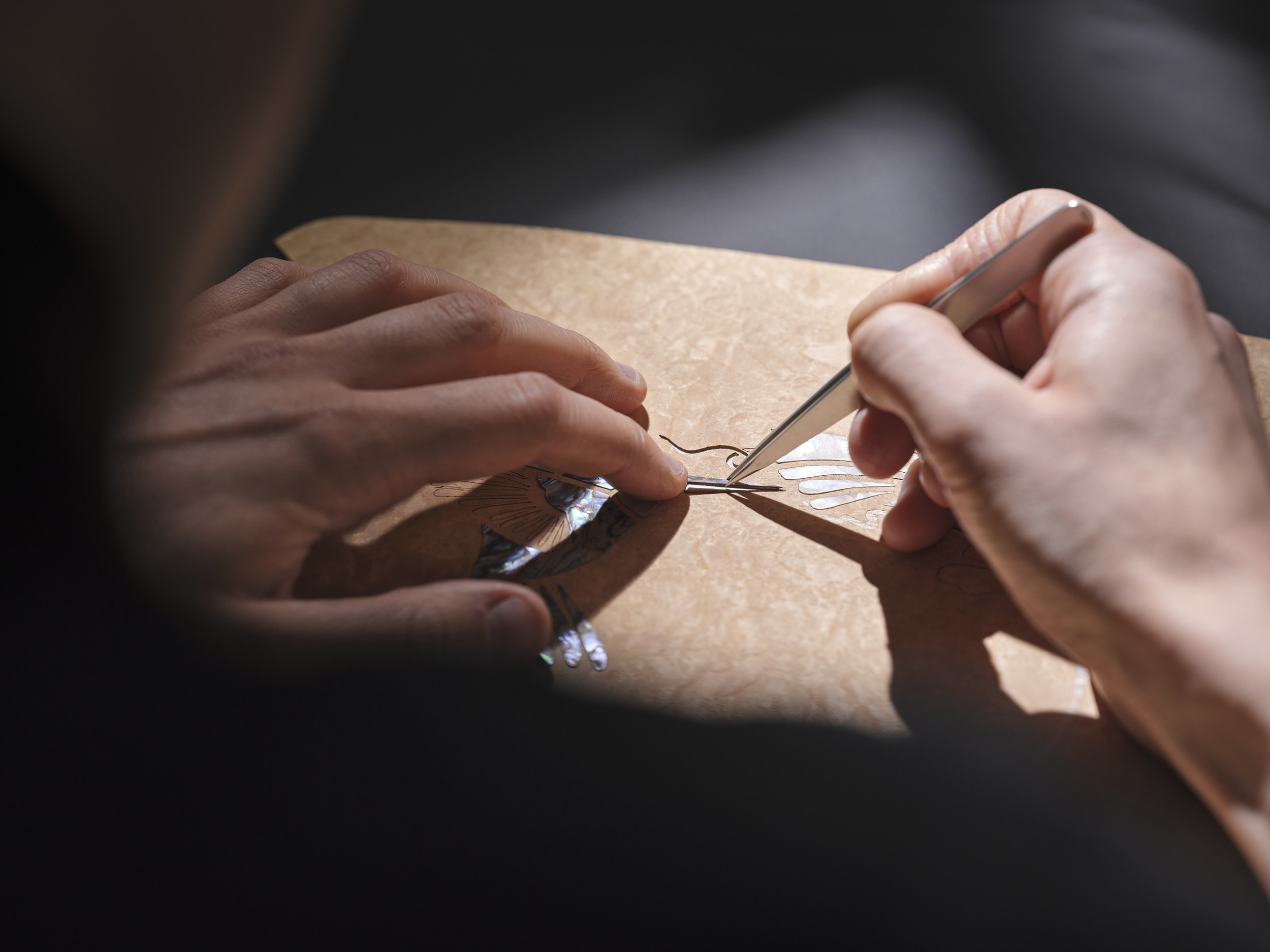
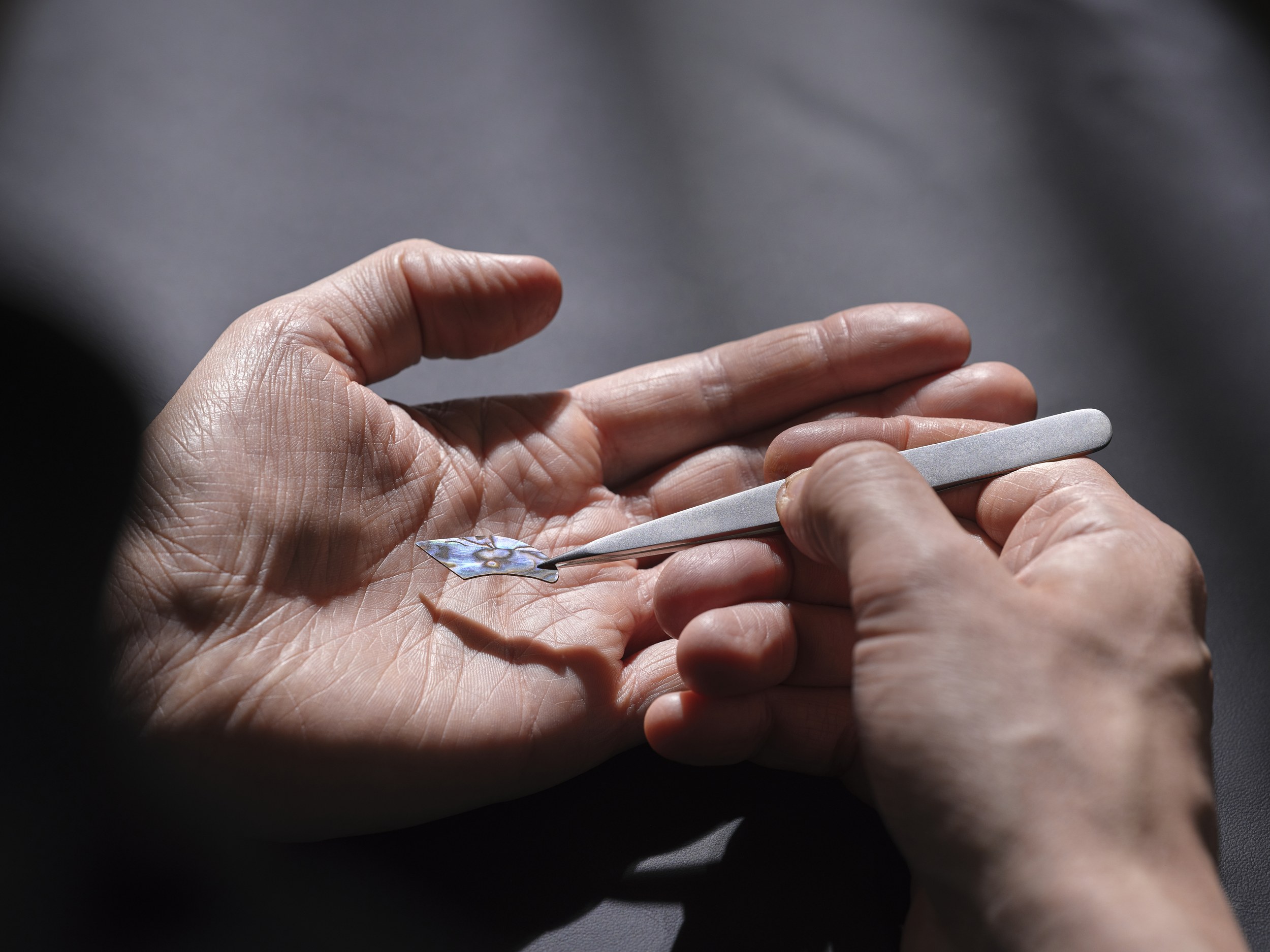
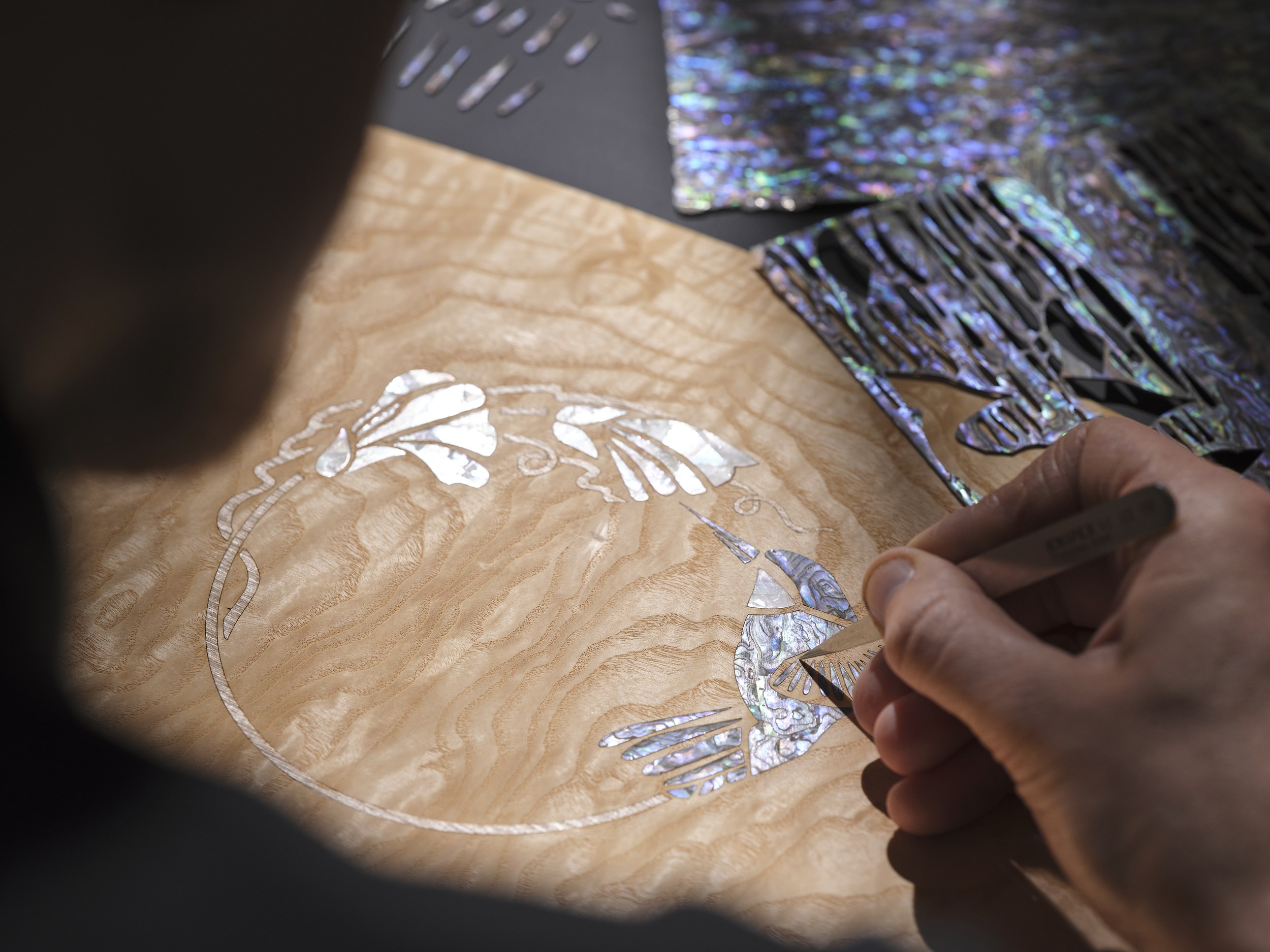
Abalone is beautiful and it is miserable to work. The shell is thin, fine and brittle; cut it a fraction too eagerly and a piece that took an hour to shape is dust. Rolls-Royce's craftspeople spent more than nine months learning the material before the finished car could exist — six full iterations of the composition, according to the company's release, before the technique held. The process they settled on is a study in patience: the pearl and abalone are laser-cut, then thinned down further, their edges worked by hand, each piece laid into Ash Burr veneer and sealed under lacquer. Even after nine months of development, every finished panel was still put together the slow way — piece by piece, by hand.
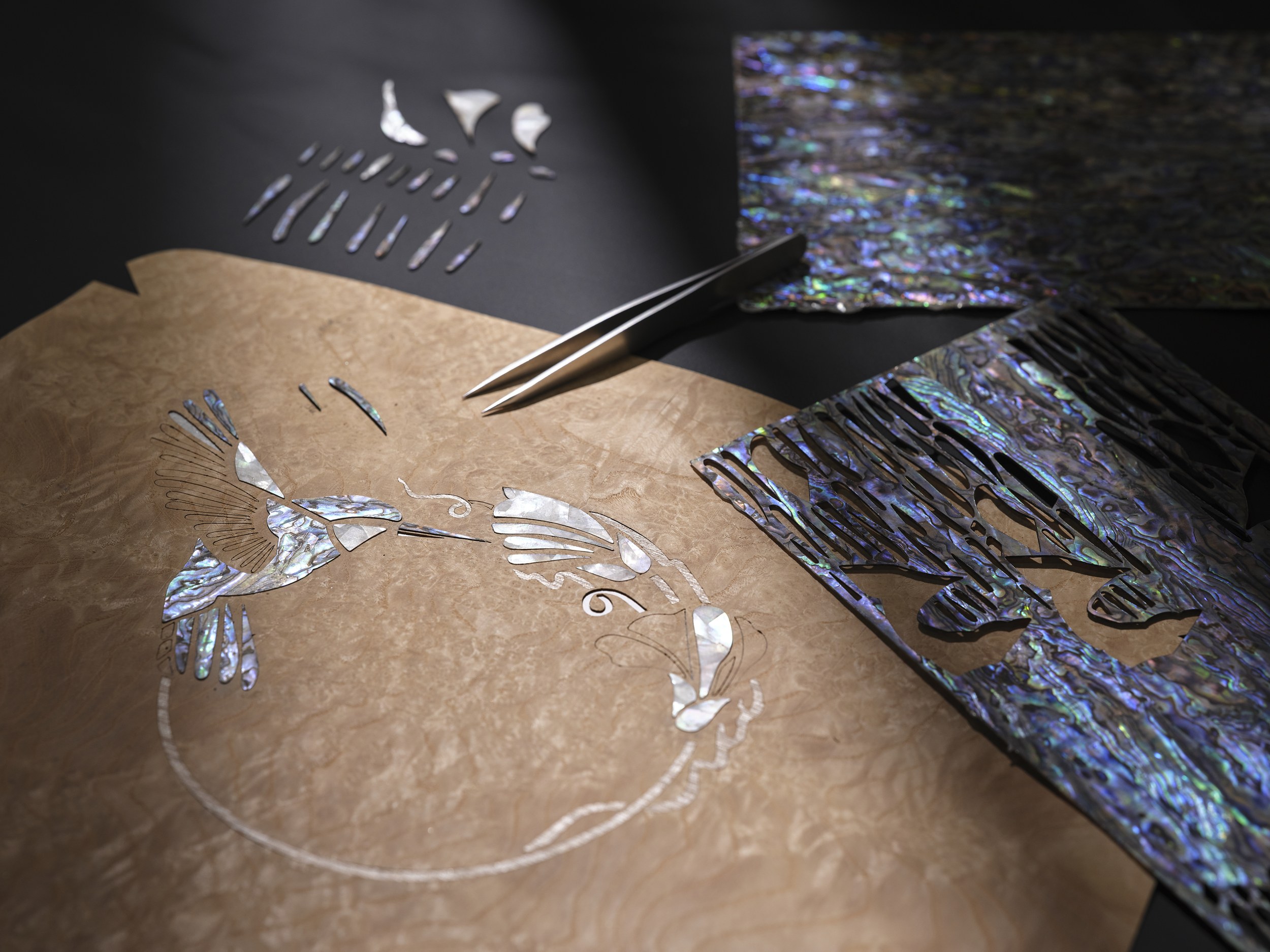
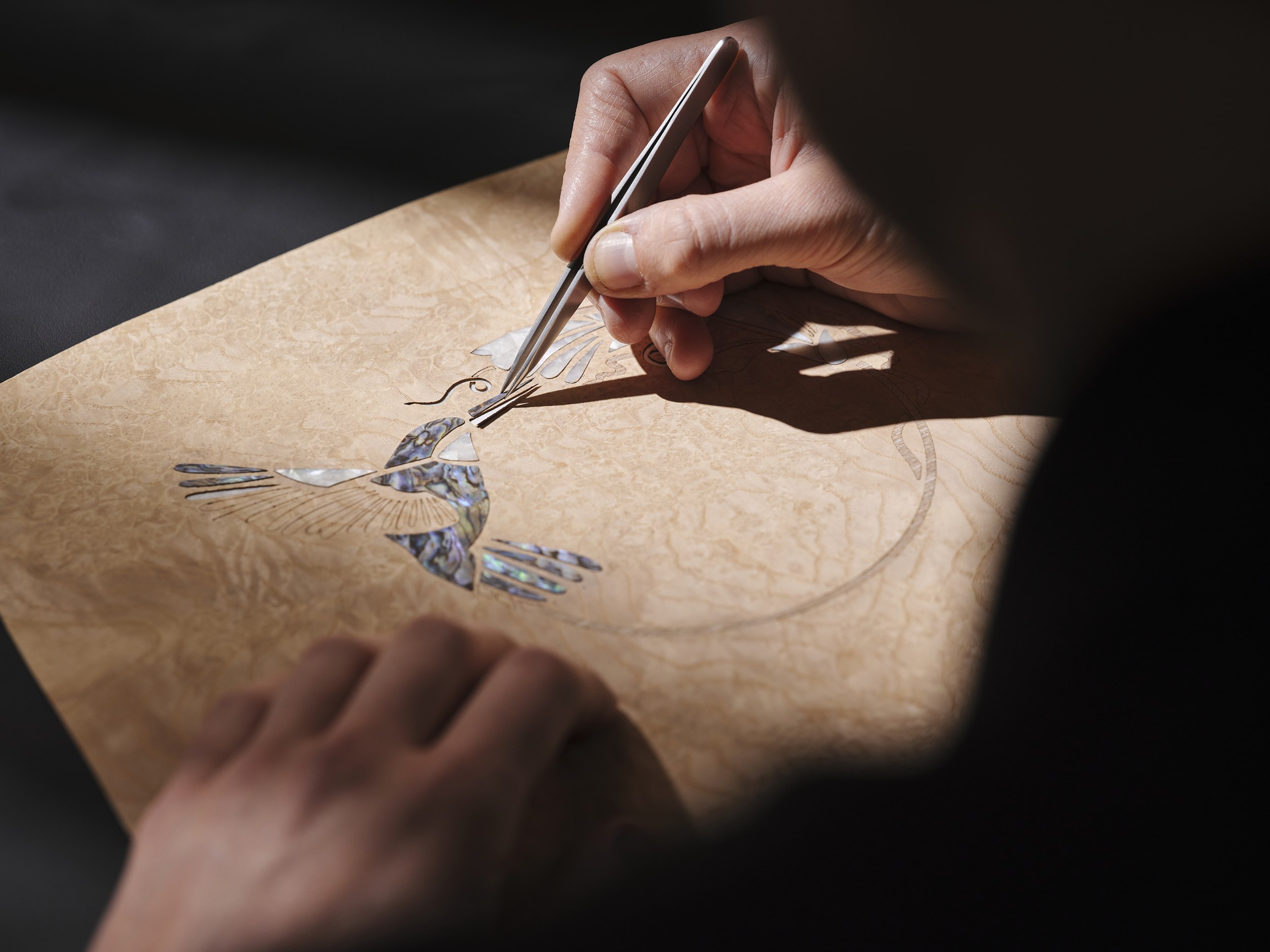
The workshop frames in this gallery — the tweezers, the shell mid-composition, the bird taking shape under a brush — were photographed by Tom Bunning for Rolls-Royce Motor Cars.
Phil Fabre de la Grange, Rolls-Royce's Head of Bespoke, said the introduction of abalone into the marque's marquetry "presented our designers and craftspeople with a fresh creative and technical challenge, resulting in an elegant tribute to the hummingbird's mesmerising presence." Read that the way it deserves to be read: the hardest room in automotive craft admitted, on the record, that a seashell made it start over six times.
Where the birds live
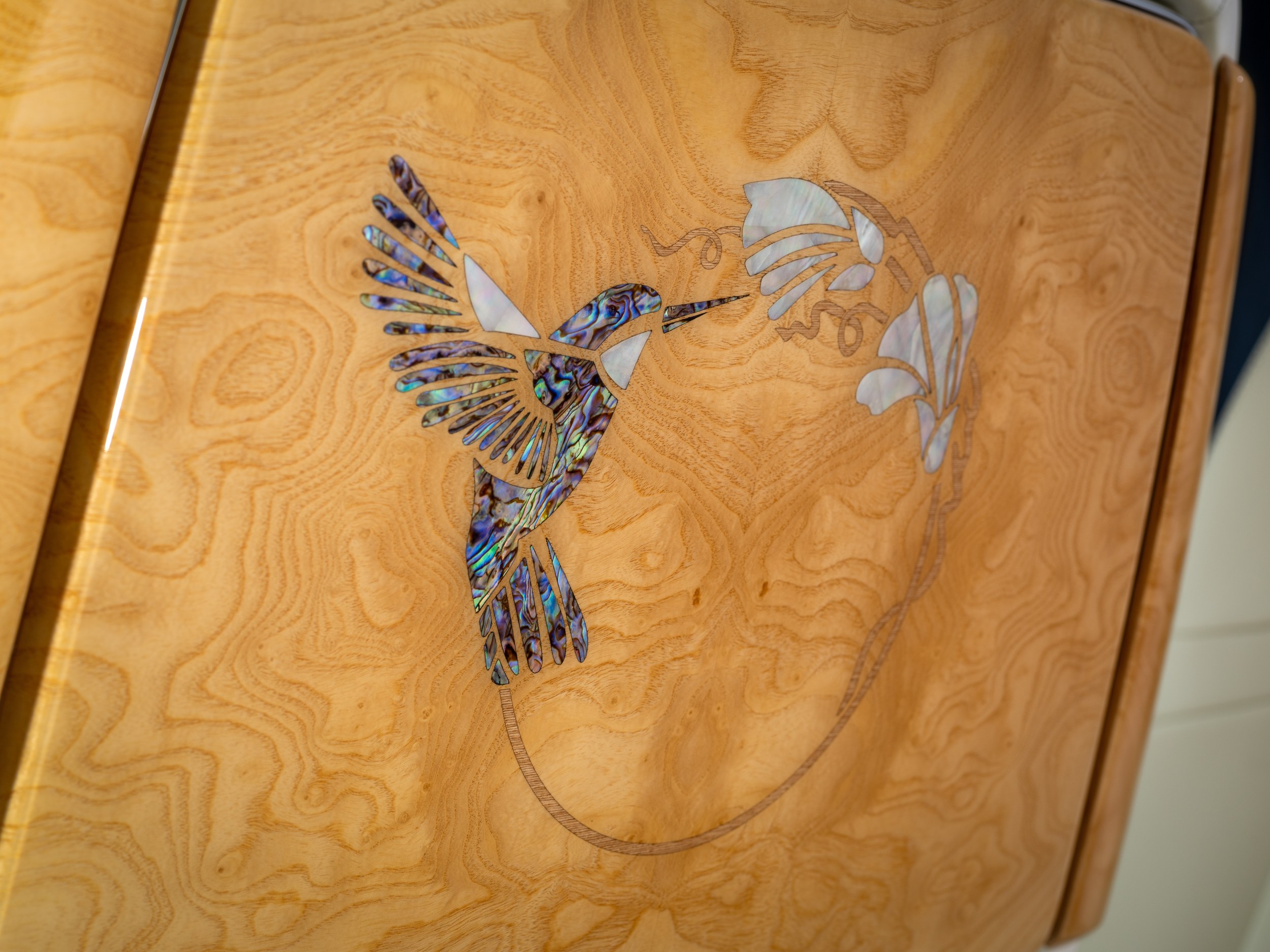
The hummingbirds themselves sit on the rear Picnic Tables — the fold-down tables in front of the rear seats, which is to say, directly in the eyeline of the woman the car was built for. Each bird is a single composition of 53 individual pieces of abalone shell and mother-of-pearl; 18 of those pieces are in the wings alone. Between the rear seats, the Waterfall panel carries a second composition, a botanical motif of 84 pieces in the same shell and pearl, scrolling across the burr veneer like something embroidered rather than inlaid.
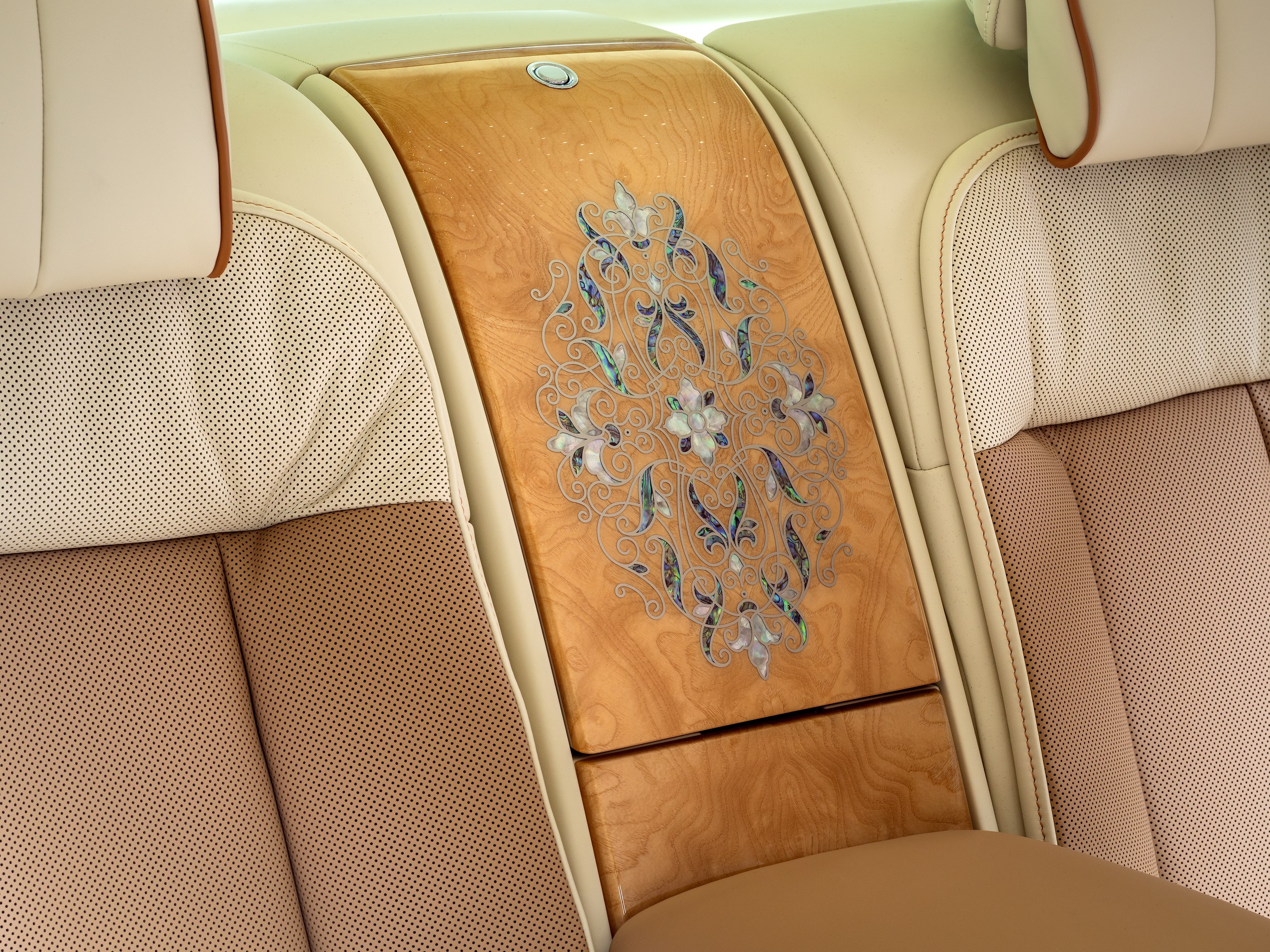
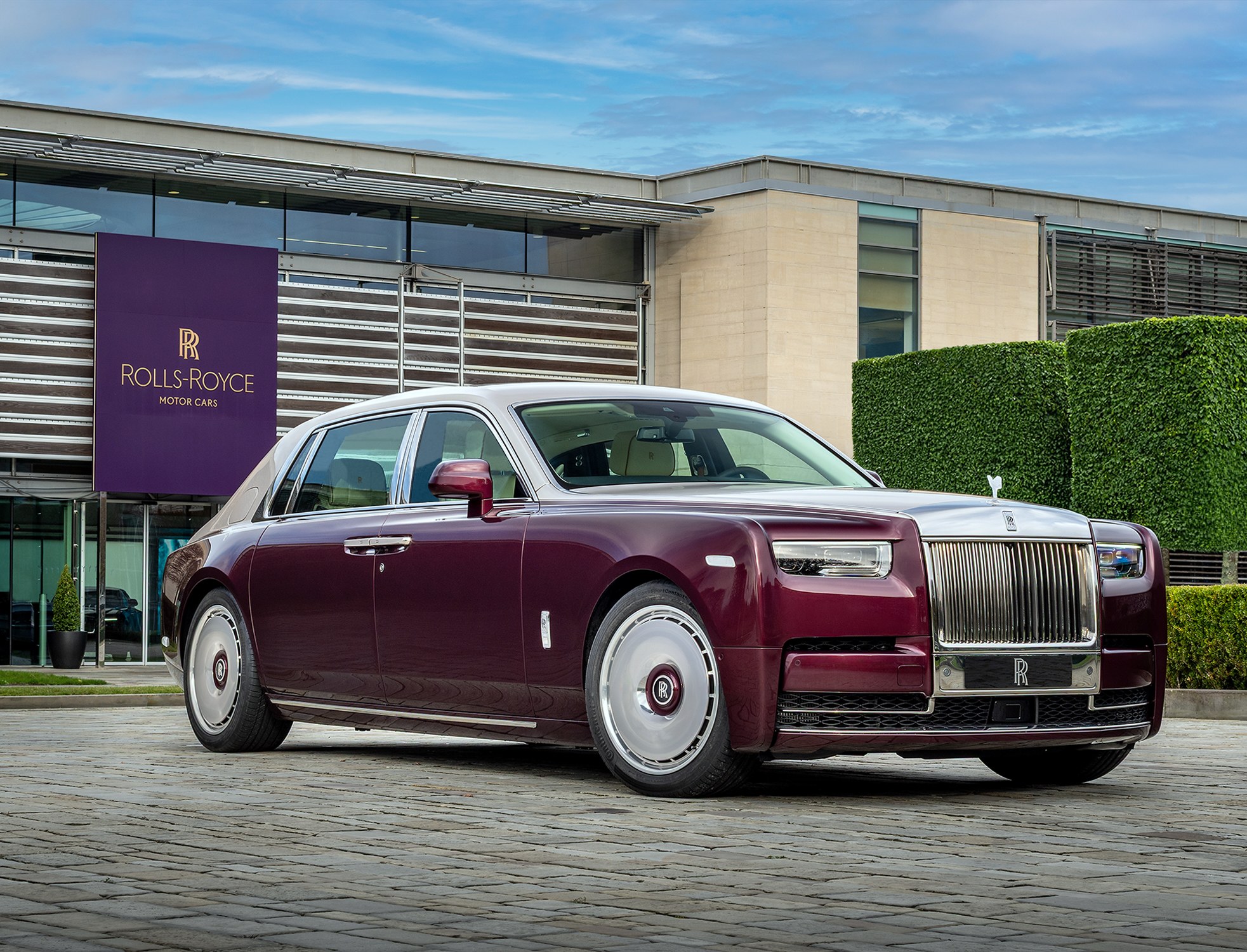
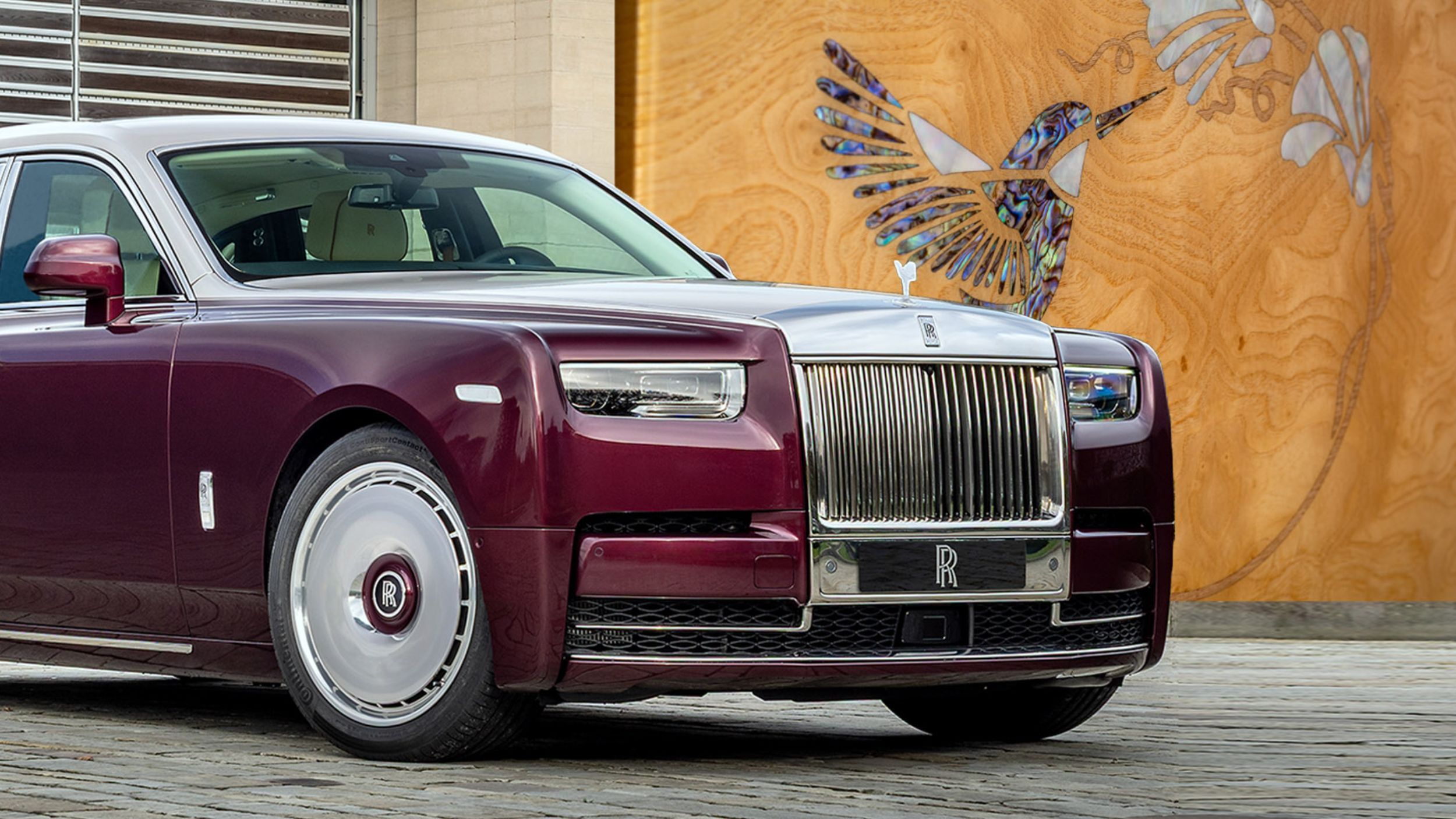
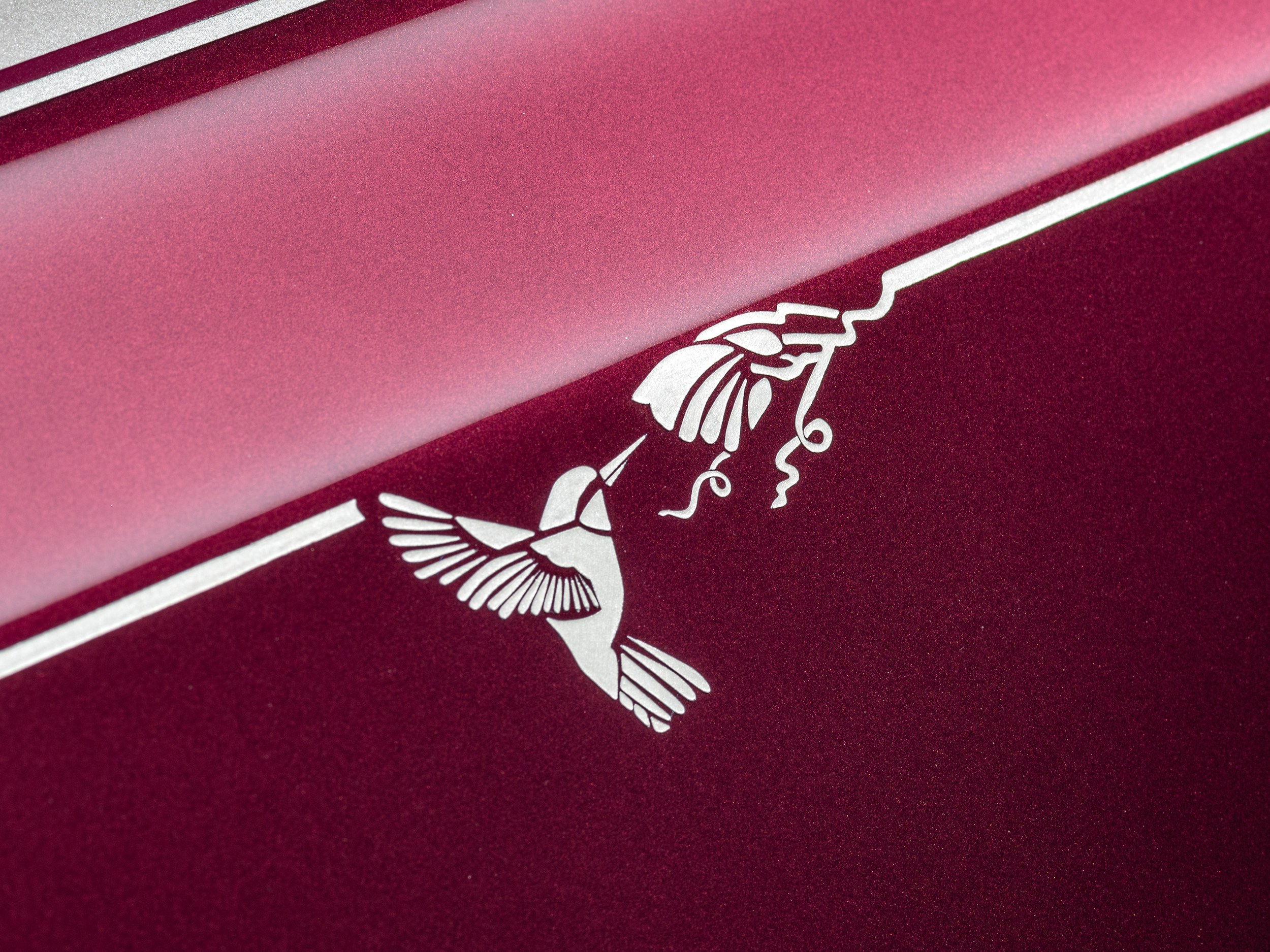
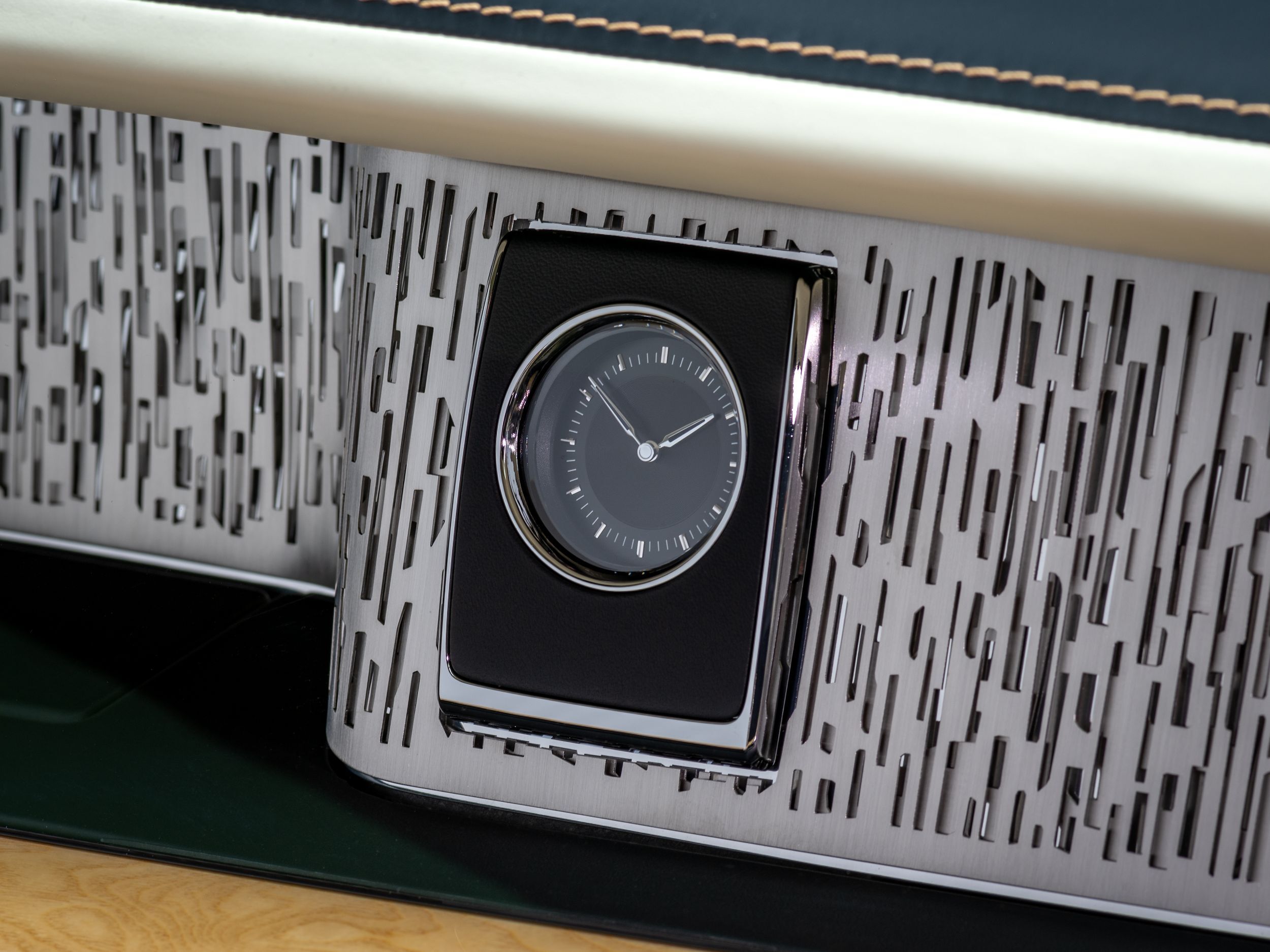
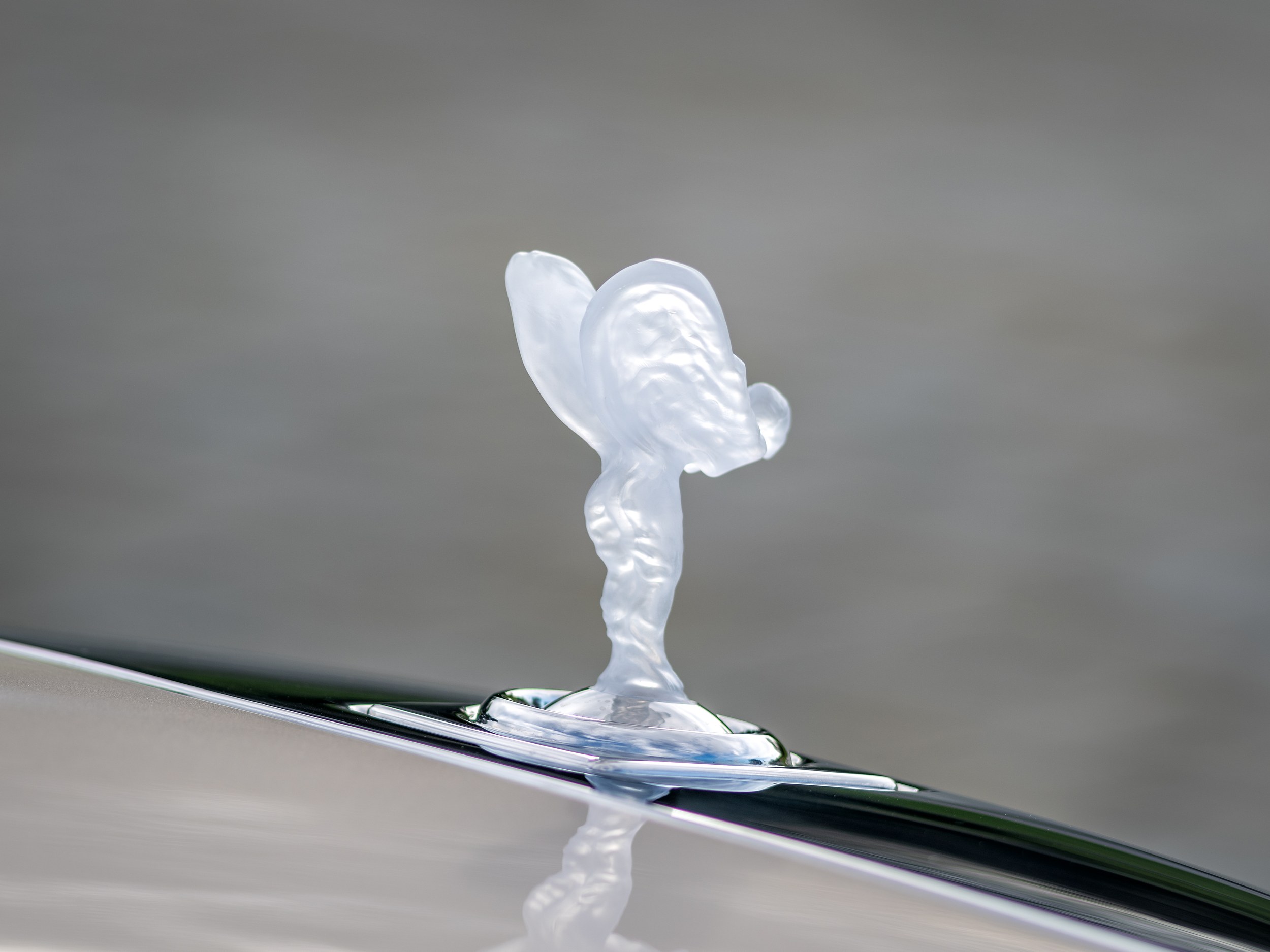
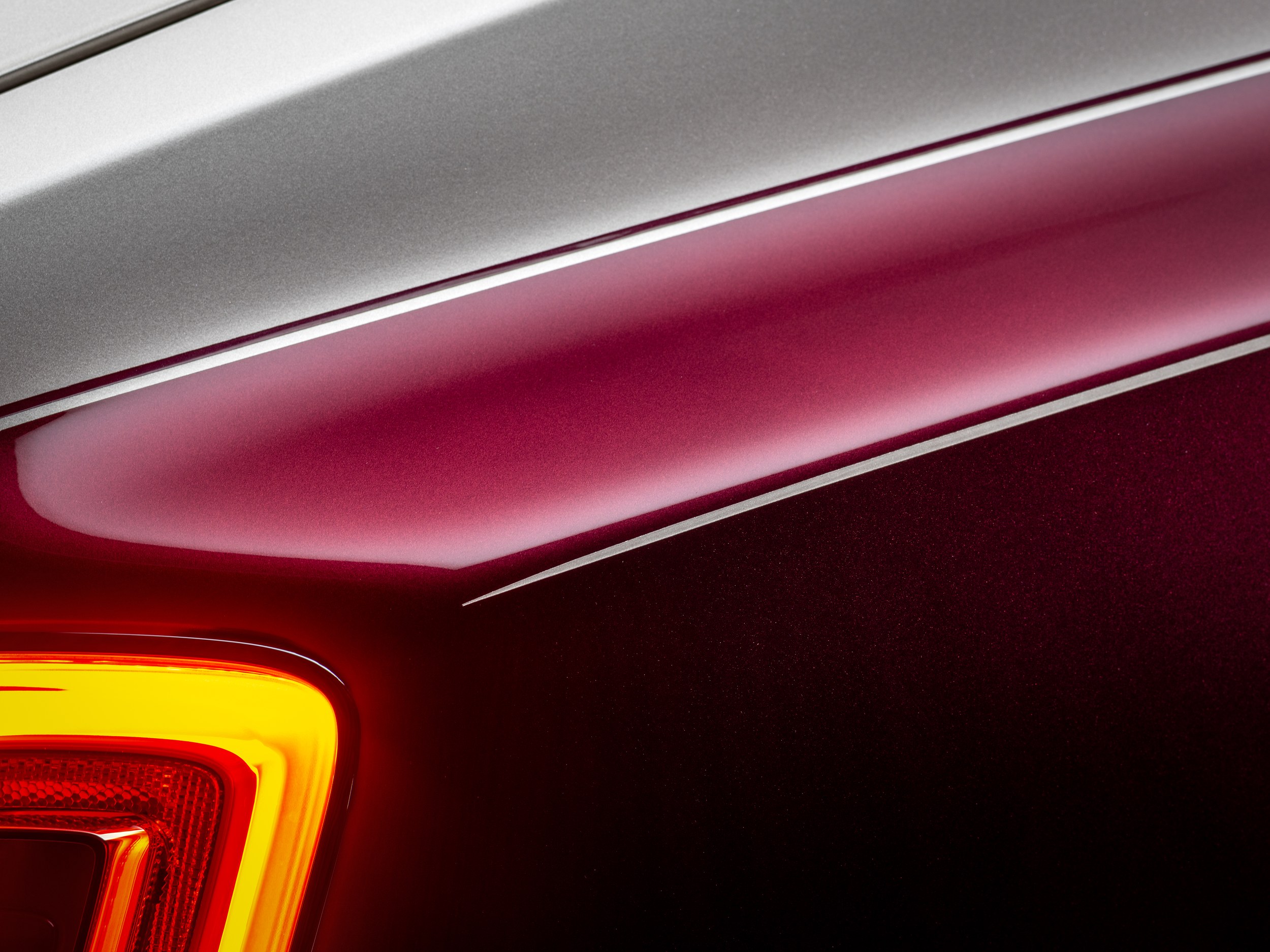
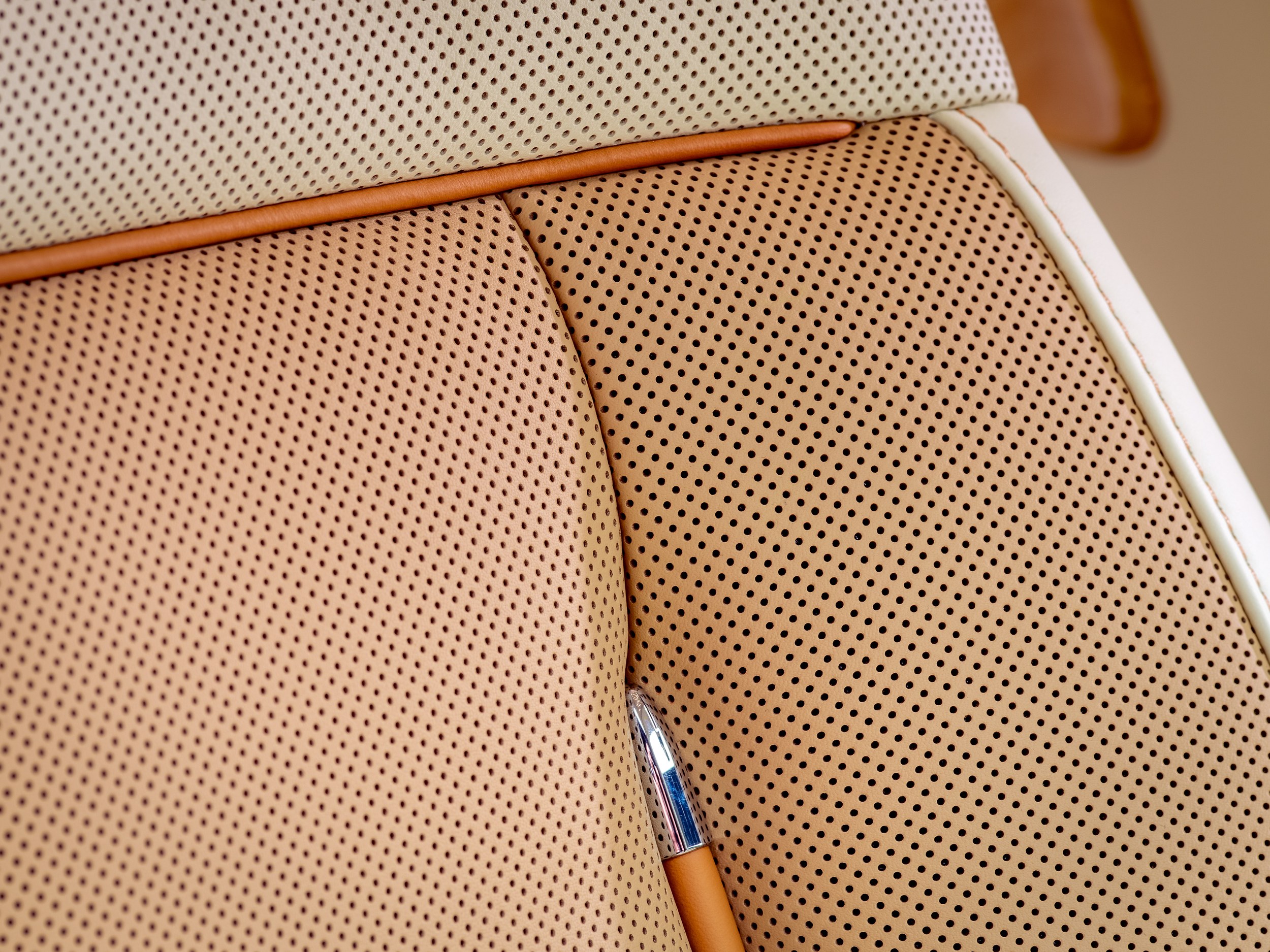
Around the marquetry, the cabin is dressed in Creme Light leather with Moccasin and Tan inserts, Seashell carpets and Silver Birch accents — a pale, quiet room designed to let two panels of shell do all the talking. Up front, the Gallery fascia keeps its analogue clock; outside, the car wears a bi-tone finish of Wildberry — a deep, wine-dark burgundy — over White Sands, its coachline broken, deliberately, by a hand-painted hummingbird. The polished disc wheels finish a silhouette that is otherwise pure Phantom Extended: 5,982 millimetres of it, on a 3,772-millimetre wheelbase, with the standard car's 6.75-litre twin-turbocharged V12 doing its work in near silence.
The price of a first
Rolls-Royce has not disclosed what this commission cost, and at this altitude that silence is itself the pricing information: Private Office commissions are negotiated one client at a time, and the catalogue number is only the floor of the conversation. For scale, the standard Phantom Extended — before a single bespoke request — starts from around $600,000. What nine months of development, six failed iterations and a material the company had never touched add to that figure is a number only two parties know, and neither is saying. As evo noted at the unveiling, a standard car with options can pass half a million pounds without trying; a one-off that required inventing a technique sits somewhere above the reach of a configurator.
That is the real story of the Hummingbird, underneath the shell and the sentiment. Bespoke, at most houses, means choosing from a longer menu. At Private Office level it means the menu gets rewritten: a client describes a feeling, and a room full of craftspeople spends nine months teaching themselves a new material so the feeling survives contact with reality. There will only ever be one of these cars. Somewhere, on every drive she takes in it, a bird made of 53 pieces of shell catches the light in front of her — and changes colour, the way the real thing does, depending on where she sits and how the day is going. Beauty in every moment, built to order.
Sources · 5 sources
- Rolls-Royce Motor Cars — official press release, "Unveiling Phantom Hummingbird"
- Carscoops — "One-Off Rolls-Royce Phantom Hummingbird Is The First To Use Abalone Shells"
- evo — "The Rolls-Royce Phantom Hummingbird is a one-off V12 saloon"
- Autocar Professional — unveiling report, September 2026
- duPont Registry — unveiling report, September 2026