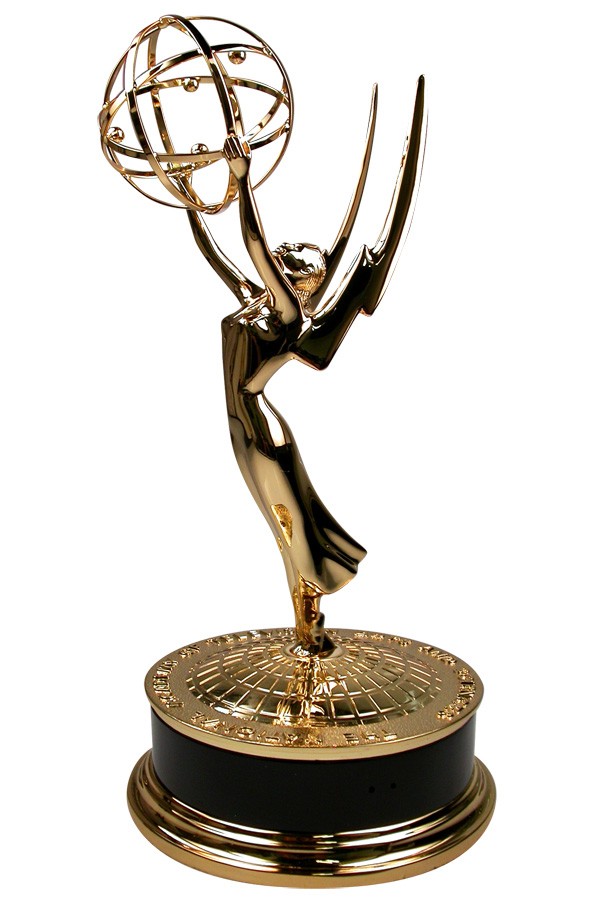
LOS ANGELES — Television’s biggest night is leaving television. The Television Academy and Amazon’s Prime Video announced Tuesday morning a six-year deal making the streaming service the exclusive global home of the Emmy Awards, starting with the 2027 ceremony. The agreement ends the Emmys’ decades-long rotation among the broadcast networks — NBC first aired the show nationally in 1955 and carried this year’s ceremony, the last under the rotating arrangement.
The detail that changes everything: viewers will be able to watch free, without a Prime subscription, in more than 200 countries. “Television has never been more global, and the Emmys should be a celebration that the world can share,” Academy chair Cris Abrego said in a statement, per CNN. This is not a streaming-exclusive paywall moment. It is the opposite — the Academy betting that the way to save the Emmys is to put them in front of literally everyone with an internet connection.
Why this is happening now
Look at the ratings and the timing explains itself. Final audience numbers for the 2026 Emmys came in at 6.8 million viewers, down 10% from the previous year, according to CNN. Awards shows have been bleeding viewers for a decade, and the Emmys have felt it as sharply as anyone. A ceremony honoring the best of television was, ironically, becoming invisible on television itself — watched by a shrinking slice of the broadcast audience while the actual audience for prestige TV lived on streaming.
So the Academy is going where the audience went. A free global stream on Prime Video does two things at once: it removes the friction of finding the show (no cable package, no antenna, no subscription) and it puts the Emmys in front of the international audience that now watches the nominated shows on the same platform family. When Abrego says television has never been more global, he is describing the Emmys’ core problem — a global medium being celebrated on a national stage.

The great awards-show migration
The Emmys deal is the latest in what is becoming a full-scale real estate reshuffling for awards season. Last year brought the announcement that the Oscars will leave ABC for YouTube beginning in 2029 — the film industry’s most prestigious night heading to a video platform, free, to a global audience. And Disney will begin carrying the Grammy Awards across ABC, Hulu, and Disney+ starting next year. The pattern is unmistakable: the big three entertainment awards are all, within a span of a few years, abandoning the old broadcast-exclusive model for something built around streaming, global reach, and — in the Emmys’ and Oscars’ cases — free access.
There is a real logic to it. The Grammys’ move to Disney’s bundle keeps them inside a traditional media ecosystem with streaming distribution. The Oscars’ jump to YouTube is the boldest bet — the biggest awards show on earth on the world’s biggest video platform. And the Emmys land somewhere in between: a major streamer, but with the free-to-all carve-out that makes it functionally a global broadcast, minus the broadcast.
It is also worth sitting with what is being lost. The rotating broadcast deal — NBC, ABC, CBS, Fox trading years — was one of the last rituals of the old television order, a reminder of an era when the four networks were television. That era is over. The shows being honored haven’t aired on broadcast networks in years; now the ceremony honoring them won’t either. The Emmys didn’t leave TV. TV left the Emmys.
What to watch for
The six-year window matters. This isn’t a one-year experiment; it’s a commitment that takes the Emmys through the end of the decade and gives Prime Video time to build the ceremony into a global streaming event. The free-viewing promise in 200+ countries is the thing to hold them to — a deal this big lives or dies on whether a viewer in Lagos or Jakarta actually gets the same front-row seat as a viewer in Los Angeles.
There is also the question of what Prime Video gets out of a free show. The answer is the oldest currency in streaming: attention. A global live event that needs no subscription is a funnel — millions of people opening the Prime Video app in 200+ countries, many of them for the first time, all of them one click away from the rest of the catalog. Amazon is not buying the Emmys out of charity. It is buying the biggest free sample in television history.
And there is the ratings question the Academy can no longer dodge. The 6.8 million for 2026, down 10%, is the baseline this deal is supposed to reverse. If a free global stream on Prime Video can’t move that number, the problem was never distribution. But if it can — if the Emmys find a second life as a worldwide streaming event — every other awards show still clinging to cable will be taking notes.
More on the shifting entertainment landscape: the music world is navigating its own distribution upheaval — our coverage of Dolly Parton’s “Jolene” crossing a billion Spotify streams — and live spectacle keeps pulling crowds where broadcasts can’t, as in Metallica’s Sphere residency. The audience is out there. The Emmys are finally going to meet it.
Sources
- Amazon Prime Video to become exclusive global home of Emmy Awards
Reuters — Oct 6 2026 - Emmy Awards are leaving broadcast TV for Amazon Prime Video
CNN — Oct 6 2026