October 16, 2026
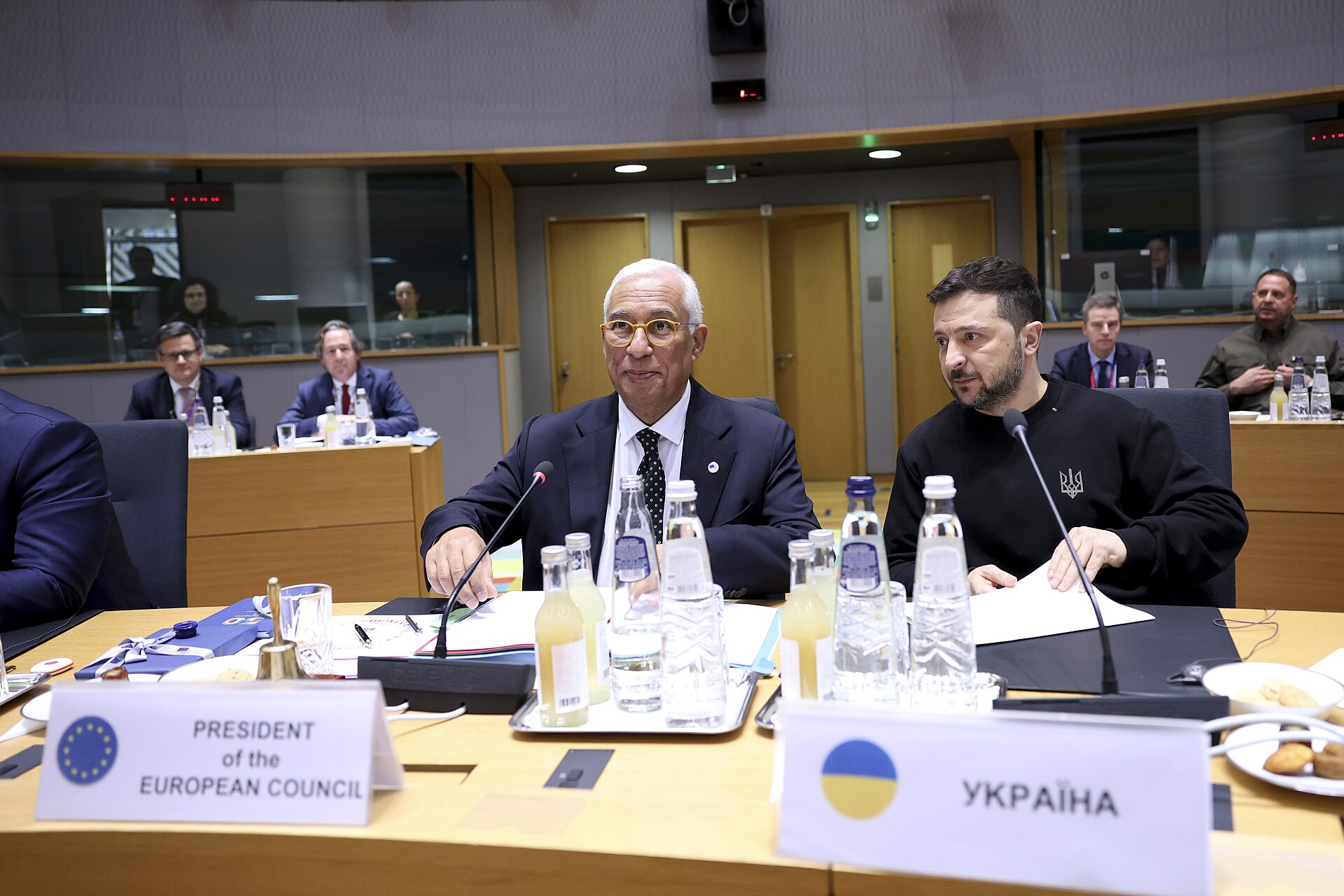
European leaders rallied around Ukrainian President Volodymyr Zelenskiy as he appeared at Friday's European Union summit, Reuters reported, closing ranks at the moment the transatlantic argument over Ukraine's war strategy broke into the open. A day earlier, President Donald Trump told the Newsmax news outlet that Ukraine's resumption of strikes on Russian oil refineries was a disgrace that keeps global energy prices elevated. The summit, the rhetoric from Washington, and another night of strikes on Ukrainian cities together framed the war's newest fault line: Kyiv is hitting the Russian energy system harder than ever, Washington is publicly objecting, and Europe is being asked — again — how much of the bill it is willing to carry.
Trump's Objection, and Kyiv's Answer
Trump's criticism, aired Thursday on Newsmax and reported by Reuters, was aimed at a specific target set and a specific grievance. Ukraine struck a Rosneft refinery southeast of Moscow that helps supply the Russian capital, after Zelenskiy declared Kyiv was abandoning an energy ceasefire Trump had announced and criticised Washington's willingness to strike deals with Moscow. Trump argued that refinery strikes push world oil prices higher ahead of the battle over energy costs, and he repeated his view that Zelenskiy and Putin's mutual hatred makes a settlement hard to reach.
The ceasefire at the center of the dispute was never solid. Trump declared an energy ceasefire on Sunday; Ukraine said it first learned of it from media reports, and Russia never publicly committed to it. Kyiv said it paused refinery strikes for three days, then resumed them after Russia continued attacking Ukraine's energy sector. Kremlin spokesman Dmitry Peskov said Thursday that Moscow did not perceive Kyiv had ever complied, and accused Ukraine of flouting the spirit of American peace efforts. Zelenskiy, for his part, told the Financial Times that Ukraine's patience had run out after Russian strikes knocked out power to hundreds of thousands of people.
Reuters also reported a sharper pressure point behind the rhetoric: as Washington pressed Kyiv to halt the refinery campaign, Ukraine faced reduced usage of a satellite system it relies on for battlefield communications and drone operations, with the order coming from inside the White House, according to two U.S. officials and a Western official briefed on the matter who spoke to Reuters. None of the officials specified who made the decision.
The Night's Strikes, and Putin's Shrug
The war itself did not pause for the summit. In the latest attacks reported by Reuters, Russian drone strikes on the city of Kharkiv killed three people, according to local authorities, while strikes on the Volyn region bordering Poland left 370,000 people without power. Emergency power cuts were introduced in Kyiv during Russian strikes, private energy provider DTEK said. The attacks are the backdrop to Kyiv's argument: Russia is systematically dismantling Ukraine's power grid as temperatures fall, and Ukraine's answer is to make Russia's own energy system pay.
Putin, for his part, played down the effect of the Ukrainian attacks on Russian refineries, saying they had caused nothing particularly significant, Reuters reported. On the eve of Zelenskiy's summit appearance, Russia also moved to place the local assets of French, German, Swedish and Dutch companies under temporary management, in retaliation for EU support for Ukraine. Thursday's decree listed assets of French flooring maker Tarkett, German packaging maker Menshen, Swedish packaging maker Sverige International Holdings and Dutch packaging maker Sonoco, following a similar move last month against Nestlé and retailers Auchan and Metro. The Kremlin called the measure reversible.
Europe's Question, and the Black Sea Spillover
At the summit, the argument was about money as much as solidarity. Belgian Prime Minister Bart De Wever previewed the tension, suggesting Zelenskiy would thank Europe for its support while warning that the funding committed so far will run out because a war is a very costly thing — and asking whether the European family is still willing to put its money where its mouth is. That question, which we have followed through this week's Brussels meetings in our summit coverage, now sits alongside the American one: whether Washington's objection to the refinery campaign becomes a condition on continued support.
The war's spillover reached NATO's southeastern flank on Friday as well. Bulgaria formally asked NATO to deploy combat aircraft and anti-drone systems to bolster its defences, Defence Minister Dimitar Stoyanov said, after drones hit two ships that caught fire off Romania's Black Sea coast this week and a commercial vessel sank off Bulgaria following a drone attack on Tuesday — an incident that prompted Sofia to summon Russia's ambassador. Stoyanov said Bulgaria has written to NATO's Secretary General and the Supreme Allied Commander, has proposed a moratorium on attacks on civilian ships in the Black Sea, expects to join a NATO anti-drone initiative by the end of October, and plans to meet his Romanian and Turkish counterparts to coordinate a common approach. NATO had not immediately commented, Reuters reported.
What Happens Next
Three clocks are now running. The first is military: Ukraine's refinery campaign and Russia's grid campaign are both escalating into the heating season, and each new strike hardens the other's justification. The second is financial: European leaders left Brussels with the funding question De Wever posed still open, and American midterm politics — with energy prices at the center — hang over Washington's position. The third is diplomatic: a ceasefire that one side announced, one side learned about from the news, and one side never signed has collapsed in all but name.
What Friday established is the alignment around those clocks. Europe's leaders used the summit to stand visibly with Zelenskiy. Trump used an interview to distance himself from Kyiv's strategy in the bluntest terms yet. And Putin, dismissing the damage to his refineries while seizing European assets, signalled that Moscow believes time and energy prices are both on its side. The next data point will come, as it has all month, overnight — in the strike reports neither capital can spin.
Sources · 4 sources
Reporting based on coverage from Reuters.
- Reuters — EU leaders rally around Zelenskiy as Trump calls Ukrainian strikes on Russia a 'disgrace'
- Reuters — Ukraine's resumption of strikes on Russian refineries is 'disgrace', Trump says
- Reuters — Bulgaria seeks NATO anti-drone systems, says defence minister
- Reuters — Russia moves on more European firms ahead of Zelenskiy's appearance at EU summit