
STRASBOURG
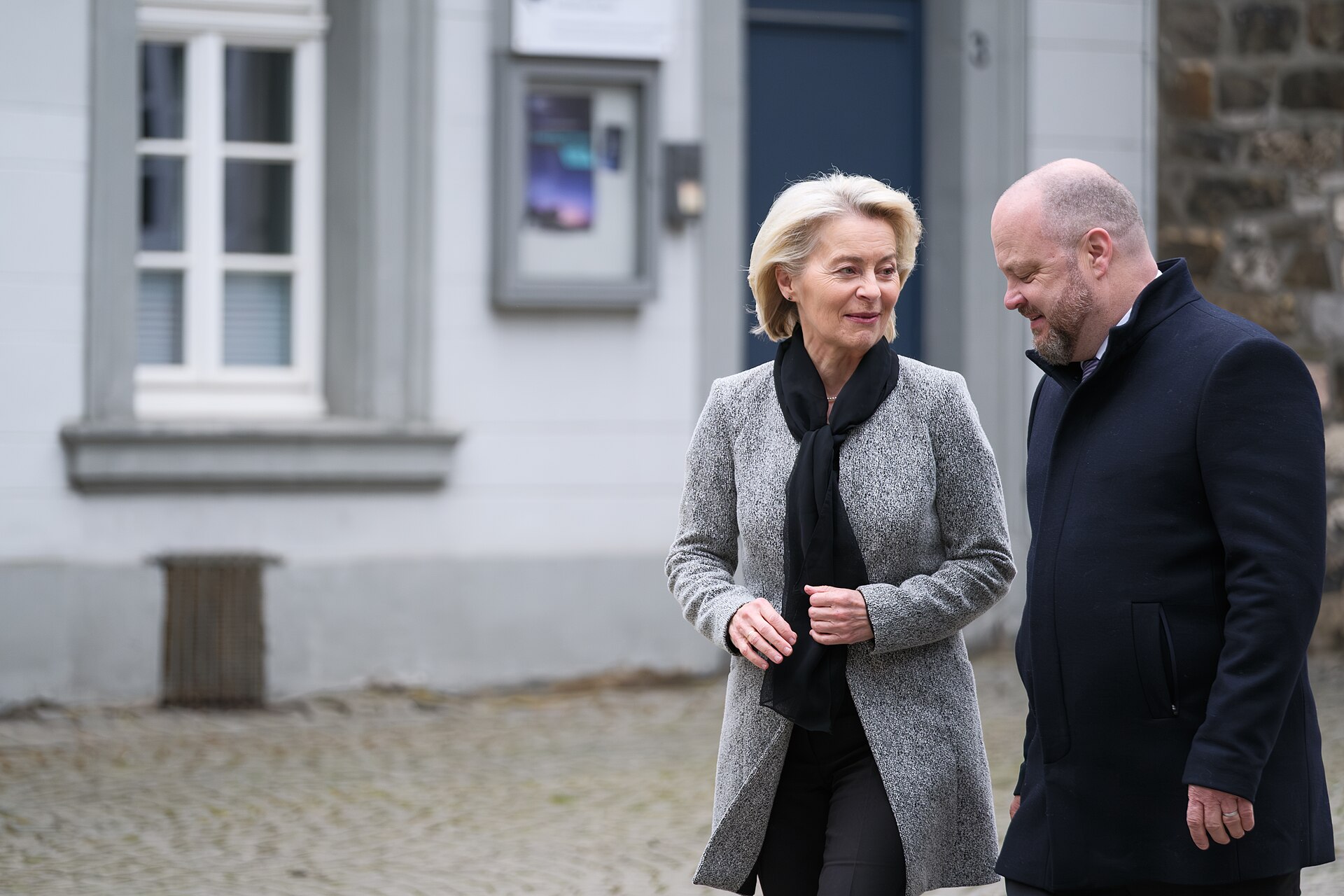
Europe's executive is preparing to give itself a faster weapon against sudden floods of cheap imports. European Commission President Ursula von der Leyen told the European Parliament on Wednesday that the Commission will propose new measures to shield the European Union from unfair competition from cheap imports, including a new instrument that would let EU countries immediately limit access to the single market when surges in those imports threaten European industries, Reuters reported.
The announcement, made in a speech to the Parliament on Wednesday morning, is the clearest signal yet that Brussels intends to move from case-by-case trade defence toward something closer to an emergency brake. "Competitiveness depends on our companies being able to compete on fair terms globally," von der Leyen said. Alongside the new instrument, she said the Commission would also propose a solidarity package designed to help countries that face specific trade threats. "In a world where economic power is increasingly used as a weapon, Europe must use its economic strength to defend its interests together," she said.
What was actually announced on Wednesday
Two proposals are now formally on the table, even though the legal texts themselves have not yet been published. The first is the rapid-limit instrument: a mechanism that would enable member states to restrict access to the EU single market immediately when a surge in cheap imports threatens domestic industries, rather than waiting through the slower investigative timelines that traditional safeguard and anti-dumping procedures require. The second is the solidarity package, a support mechanism for member countries that face specific trade threats, so that a state singled out for economic pressure does not carry the cost of standing firm alone.
The details that will decide how powerful these tools really are are still to come. Von der Leyen's speech did not specify which sectors the instrument would cover first, what threshold of import growth would trigger it, or how long an emergency limit could stay in place before it needed renewal. Those questions will be answered in the Commission's formal proposals, which then face scrutiny from the member states and the European Parliament itself. What Wednesday established is the direction of travel, stated by the Commission president in the Parliament chamber: speed and solidarity, written into the EU's trade-defence toolbox.
The road to Strasbourg ran through last week's summit
Wednesday's speech did not arrive out of nowhere. It follows the line von der Leyen set out after the EU summit on Friday, October 16, when she told a news conference in Brussels that the Commission would propose curbs on imports from China going beyond the safeguard measures the EU had agreed with Beijing to halve inbound shipments of Chinese hybrid cars. The deal struck with China, she said then, would not fix the structural imbalance: the EU's goods trade deficit with China is running at more than one billion euros a day. "And this is why we need to act," she said. "Our industries have called for action and we have heard them and we will respond, including some more safeguards."
At that summit, French President Emmanuel Macron told reporters the EU should focus on measures for chemicals, plastics and ferro-alloys, and von der Leyen said she welcomed a Franco-German paper published last month proposing that the Union reinforce its economy by enacting a new rapid-action measure to strike back against countries that harm it. She said then that the Commission would develop a new instrument to rapidly limit access to the EU single market where that was in the bloc's interest, and that she had clear support from EU leaders. Wednesday's Parliament speech is that summit commitment taking its next institutional step: from leaders' backing in the Council room to a promised proposal in front of the Parliament that will eventually vote on it.
Why speed is the whole argument
The case for a rapid instrument is built on a frustration European manufacturers have voiced for years. Conventional trade-defence cases can take many months to investigate, by which time a surge of low-priced imports can already have taken market share, idled production lines and, in the worst cases, closed plants that do not reopen when the duties finally arrive. An instrument designed to act immediately flips that sequence: limit first, on evidence of a threatening surge, and let the longer legal process follow. Supporters inside the Commission frame it as competitiveness policy as much as trade policy, which is why von der Leyen led with fair terms of competition rather than with any single country or product.
The solidarity element addresses the other half of the problem. Trade pressure on the EU rarely lands evenly across all 27 member states. A threat aimed at one country's exporters, or one region's industry, can be designed to split the bloc's response. A standing solidarity package is meant to remove that leverage in advance: if a member state knows support will follow automatically when it is targeted, the incentive for outside powers to test the bloc one capital at a time gets weaker. That is the logic compressed into von der Leyen's line about Europe defending its interests together, and it echoes the solidarity mechanism she flagged at the October 16 summit for countries or sectors subject to coercion or retaliation from outside the EU.
What happens next
The Commission also has adjacent work already in the pipeline. Von der Leyen said last week that the Commission would make a proposal in December for a new instrument that would limit EU companies' reliance on single sources for certain critical supplies, a supply-chain measure that pairs with the import-surge tool: one limits exposure to a flood of goods, the other limits exposure to a cutoff of them. Wednesday's proposals will need to move through the ordinary legislative process, where member states protective of open trade and industries protective of their order books will pull in opposite directions, and where the Parliament that heard the speech will get its say on thresholds, safeguards and duration.
For readers outside Europe, the stakes are still direct. The EU is one of the largest single markets on earth, and a faster European hand on import limits would be felt by exporters from Asia to the Americas, including American firms that sell into the bloc and American industries that compete with the same low-priced imports at home. European markets were already weighing the region's mood on Wednesday morning, with the pan-European STOXX 600 flat as strong earnings offset worries about unrest in France, according to Reuters market coverage. The trade-defence debate now joins that picture as a standing feature of Europe's economic morning, and Previously will follow the formal proposals in its news coverage as the texts are published.