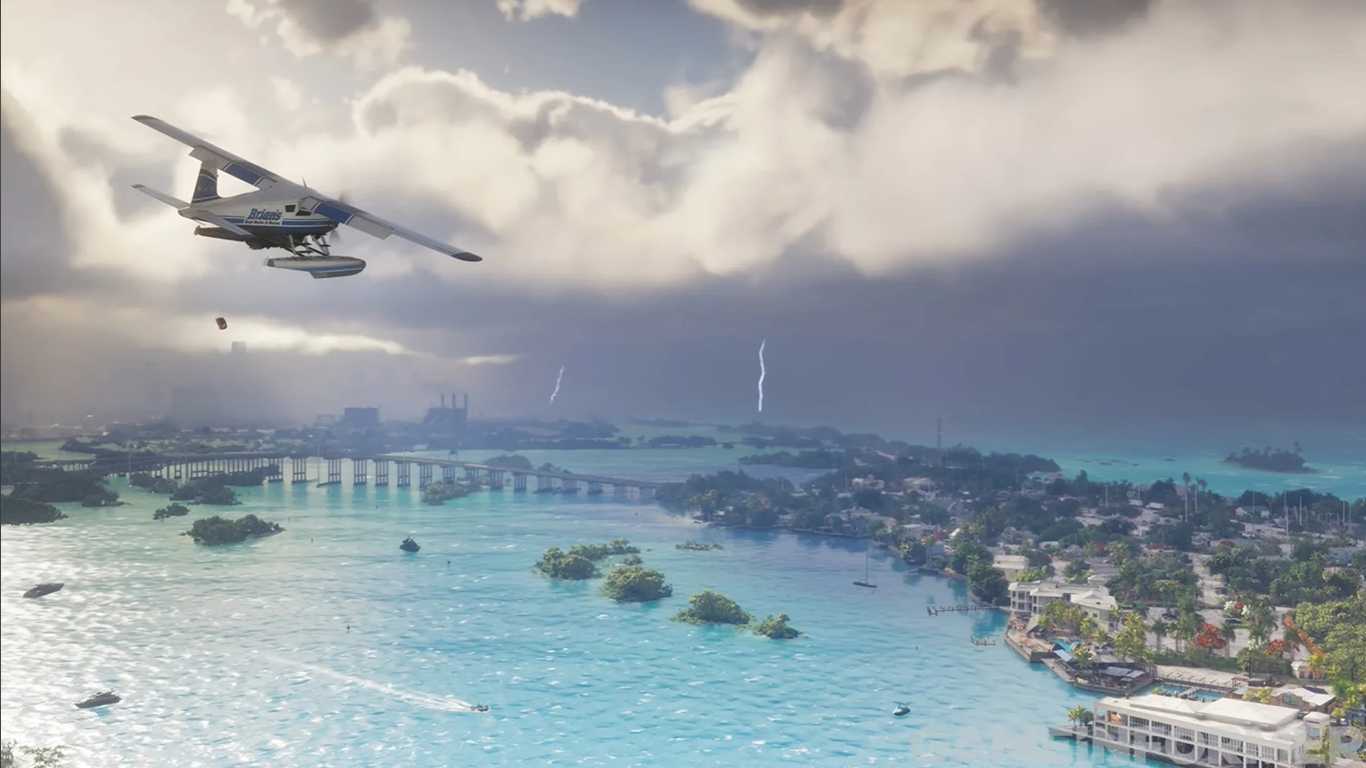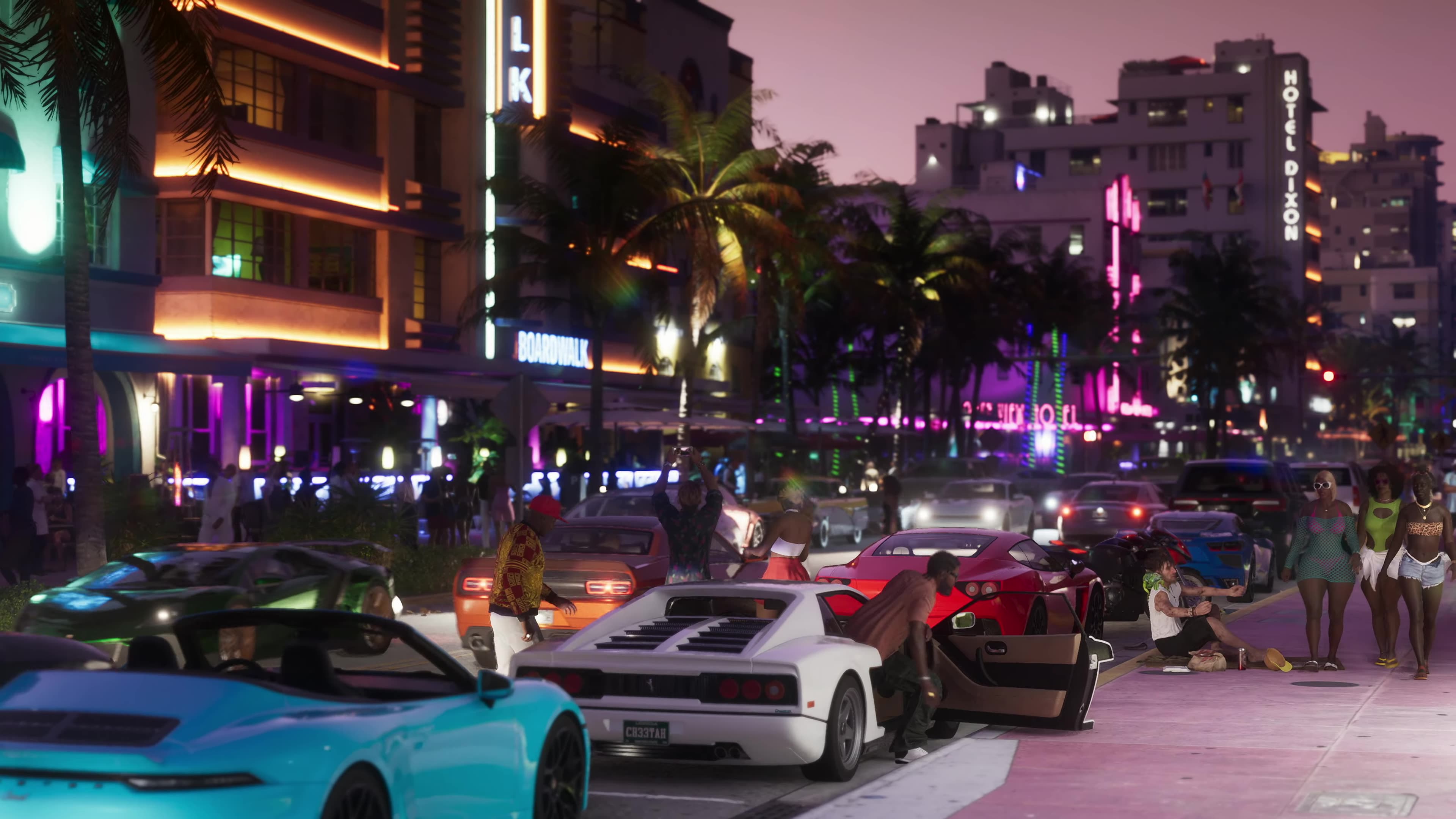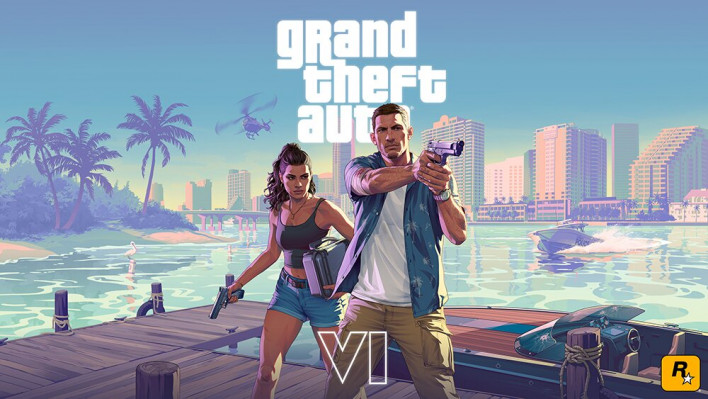

There is a particular kind of silence that follows a Rockstar trailer, and it lasts about as long as it takes Digital Foundry to upload. The launch trailer for Grand Theft Auto VI — ninety seconds, dropped without warning on October 15, captured, Rockstar insists, entirely in-game from a PlayStation 5 — had been live for barely a day before the pixel counters delivered their first real verdict, and the verdict had a word in it nobody at Rockstar wanted trending next to the most anticipated game on Earth: blurry.
Soft. Smeared in the fine detail. Not, in the places where the analysis lingers, the razor-edged native-4K image that two years of "captured on PS5" marketing had trained people to expect. Digital Foundry's breakdown is careful — these are careful people, and we will get to everything their caution means — but the observation itself is plain. Parts of this trailer do not resolve the way parts of Trailer 2 did. Hair, foliage, distant signage, the fine grain of a Vice City street at golden hour: in shot after shot, the detail arrives slightly out of breath.
So let us talk about what that actually means, because there are two ways to read a blurry trailer and only one of them is sane. The reckless reading — already doing laps around social media — is that the game is secretly a mess five weeks from launch. The sane reading is more interesting, and more honest: a trailer is a compressed, re-encoded, platform-delivered artifact, and softness in it can come from half a dozen places that have nothing to do with how the game will look on your television. But it can also come from the game. That is the tension. That is the story.
Start With What Rockstar Actually Said
Rockstar's own framing is unusually specific, and the specificity is why the scrutiny is fair. The studio says the launch trailer was captured entirely in-game from a PlayStation 5. Not rendered for marketing. Not a PC build wearing a console costume. In-game, on the base machine that tens of millions of people will play it on. PlayStation branding bookends the video, part of the marketing partnership that has shadowed this game since Trailer 2, and the footage restates the only date that matters: November 19, 2026, on PS5 and Xbox Series X|S.
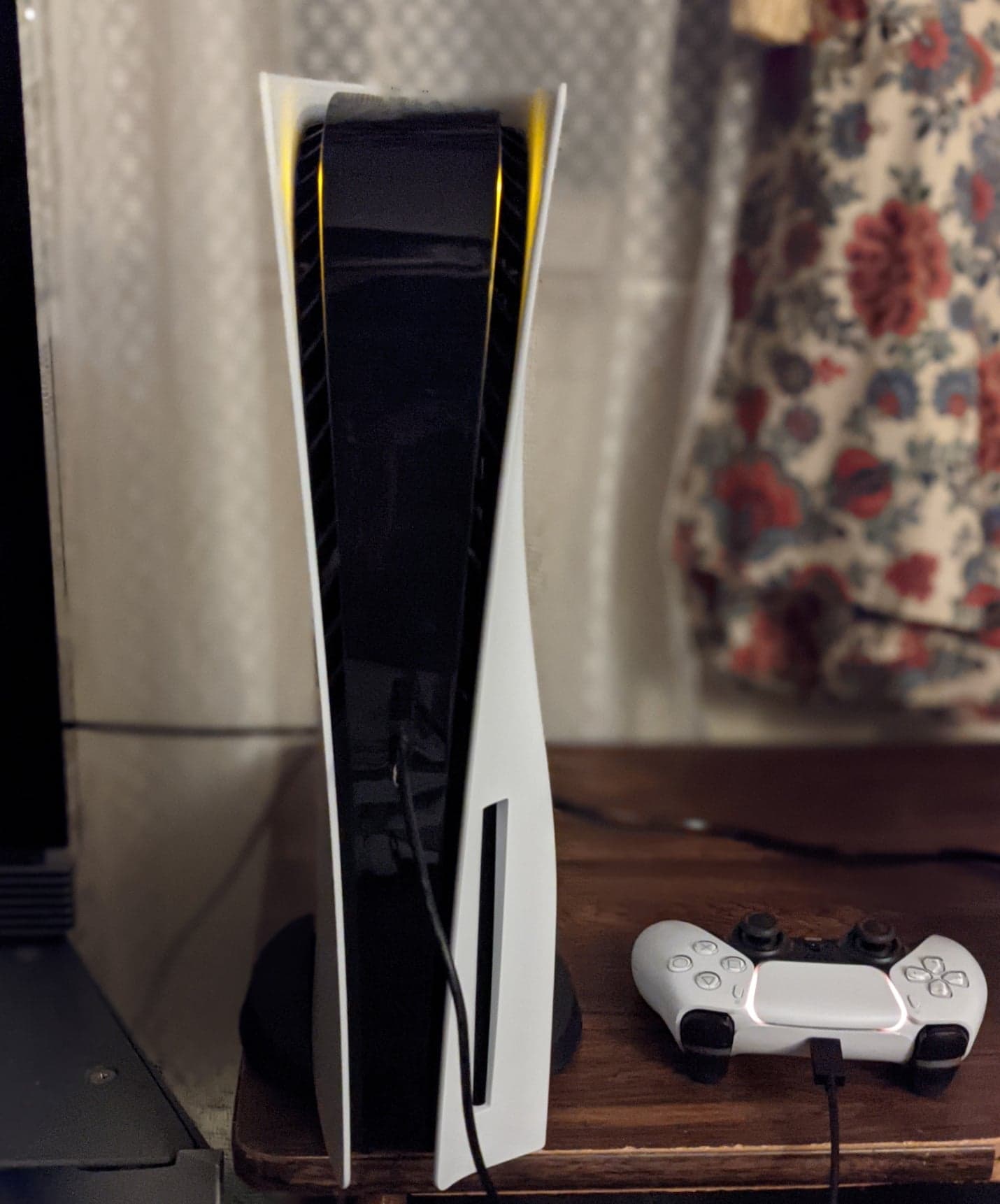
When a studio volunteers that level of provenance, it is inviting exactly the analysis Digital Foundry does. You do not get to say "this is the real game on the real box" and then act surprised when the real game's image gets measured. And what the measurements suggest, in the soft shots, is an image being reconstructed rather than rendered natively — the tell-tale shimmer and smear of a lower internal resolution scaled up, possibly with dynamic resolution scaling doing load-balancing work as scenes get busy. None of that is unusual for a dense open world. Almost all of it would be invisible in motion to a normal human being. But GTA 6 is not being judged by normal standards, because Rockstar spent a decade teaching people to judge it by impossible ones.
A Closer Look at the Trailer Itself
Strip the technical argument away and the trailer, as a piece of storytelling, is doing something deliberate. It is a Jason and Lucia trailer — the marketing has narrowed to the couple and their gravity. Jason talks about leaving the army on bad terms and struggling to find work. Lucia, ankle monitor still part of the wardrobe, is the one who sounds like she has a plan. There is a phone call between them that plays less like a mission briefing and more like two people deciding, in real time, how much trouble they are willing to be in together.
The middle of the trailer is Vice City showing off: a diner, a strip club's neon spill, a high-speed drive with the top down and the radio up, the pair casing and then hitting scores with the loose, practised energy of people who have done this before and intend to keep doing it. Justice's "Flower in a Hurricane" — the new single from the duo Rockstar has confirmed composed the game's original score, featuring Tame Impala, SZA and King Gizzard & The Lizard Wizard — runs under all of it like heat off asphalt.
And here is the thing the frame-by-frame crowd noticed that the rest of us felt without naming: the trailer's best-looking shots are its faces and its interiors, the controlled environments, while the softness tends to gather in the wide, dense, vegetation-and-crowd shots — precisely the shots where an open-world engine is working hardest. That pattern is consistent with dynamic resolution doing its job. It is also consistent with a game whose world is simply more ambitious than its rendering budget at any given second. Both things can be true. In an open world, they usually are.
Why "Blurry" Does Not Mean "Doomed" — and Why It Still Matters
Some necessary calibration. A YouTube trailer has been through a woodchipper before you see it: capture, edit, export, upload, platform re-encode, and whatever quality rung your connection negotiates. Fine detail — hair, chain-link, foliage at distance — is the first casualty of every one of those steps. Digital Foundry knows this better than anyone, and their analysis accounts for it; the softness they flag is the softness that survives that accounting, the kind that looks structural rather than incidental.
There is also precedent, and precedent counsels calm. Big open-world games routinely ship trailers that under-represent the final image, because trailers are cut months early from builds that are still being optimised weekly. The distance between a launch trailer's softest frame and the shipping game's typical frame can be enormous, in either direction. Anyone telling you the blur settles the question of how GTA 6 looks is selling you something.
But here is why it matters anyway: Rockstar has left a vacuum, and vacuums get filled by whoever shows up with a magnifying glass. The studio has confirmed no frame rate target, no performance or fidelity modes, no resolution figures — nothing. For a game launching in five weeks, on two console families with meaningfully different hardware, that silence is a choice, and it turns every soft frame into a referendum. A single candid line from the studio — what to expect on base PS5, what Pro adds, what the frame rate story is — would end most of this conversation tomorrow. Rockstar, being Rockstar, would rather let the conversation run. It has never once hurt them. It just leaves the rest of us reading tea leaves at 400% zoom.

The 30fps Question Hangs Over Everything
Underneath every argument about resolution sits the argument that actually decides how GTA 6 feels to play: frame rate. The series' console history is not encouraging — GTA V launched at 30fps on far weaker hardware and its current-gen re-release treated 60fps as a premium feature — and a world this dense, with this much simulation running under the hood, is exactly the kind of game developers point to when they explain why 30 is the honest target.
Nothing in the launch trailer settles it, and trailer frame cadence is a notoriously unreliable witness anyway. But the softness feeds the suspicion, because resolution and frame rate are drawn from the same budget: a studio protecting 60fps often spends resolution to do it, and a studio protecting image quality often spends frames. If the launch build is a locked, well-paced 30 with an image this rich, most players will forgive it by the second hour. If it is 30 and soft, the conversation gets louder. If there is a performance mode nobody has announced, Rockstar is sitting on the best surprise in gaming. Until the studio speaks, the 30fps question hangs over everything.
What to Watch Between Now and November 19
The calendar from here is short and loud. Review copies are reported to be going out by the end of October, with reviews expected shortly before launch — which means the performance questions get answered by people with capture cards and no marketing department, on a deadline Rockstar does not control. Pre-loading opens in mid-November. And the game itself, all arguments exhausted, arrives November 19.
Watch, in particular, for three things: any official word on performance modes (the single most valuable sentence Rockstar could utter this month); Digital Foundry's inevitable hands-on with retail code, which will replace all of this inference with measurement; and whether the day-one patch conversation starts early — a large, openly acknowledged day-one update would be its own kind of honesty.
The Bottom Line
Is the launch trailer blurry? In places, measurably, yes — and Digital Foundry saying so is not an attack, it is a weather report. Does it mean GTA 6 is in trouble? There is no honest evidence for that, and a great deal of evidence — two prior trailers, the extended look, everything Rockstar has shipped for thirty years — pointing the other way. What the softness really exposes is the gap between a marketing campaign built on "captured on PS5" and a studio that still will not say, plainly, what playing it on a PS5 will be like.
Five weeks. Then nobody has to guess.
SOURCES & REPORTING
- Digital Foundry's technical breakdown of the GTA 6 launch trailer (image quality and performance analysis).
- Rockstar Games — Grand Theft Auto VI launch trailer and Newswire (October 15, 2026): "captured entirely in-game from a PlayStation 5"; November 19, 2026 release on PS5 and Xbox Series X|S; Justice confirmed as composers of the original score.
- Contemporaneous launch-trailer coverage (9to5Toys, Gameranx, Ghacks, October 15–16, 2026) corroborating the trailer's release, length, music and PlayStation capture credit.