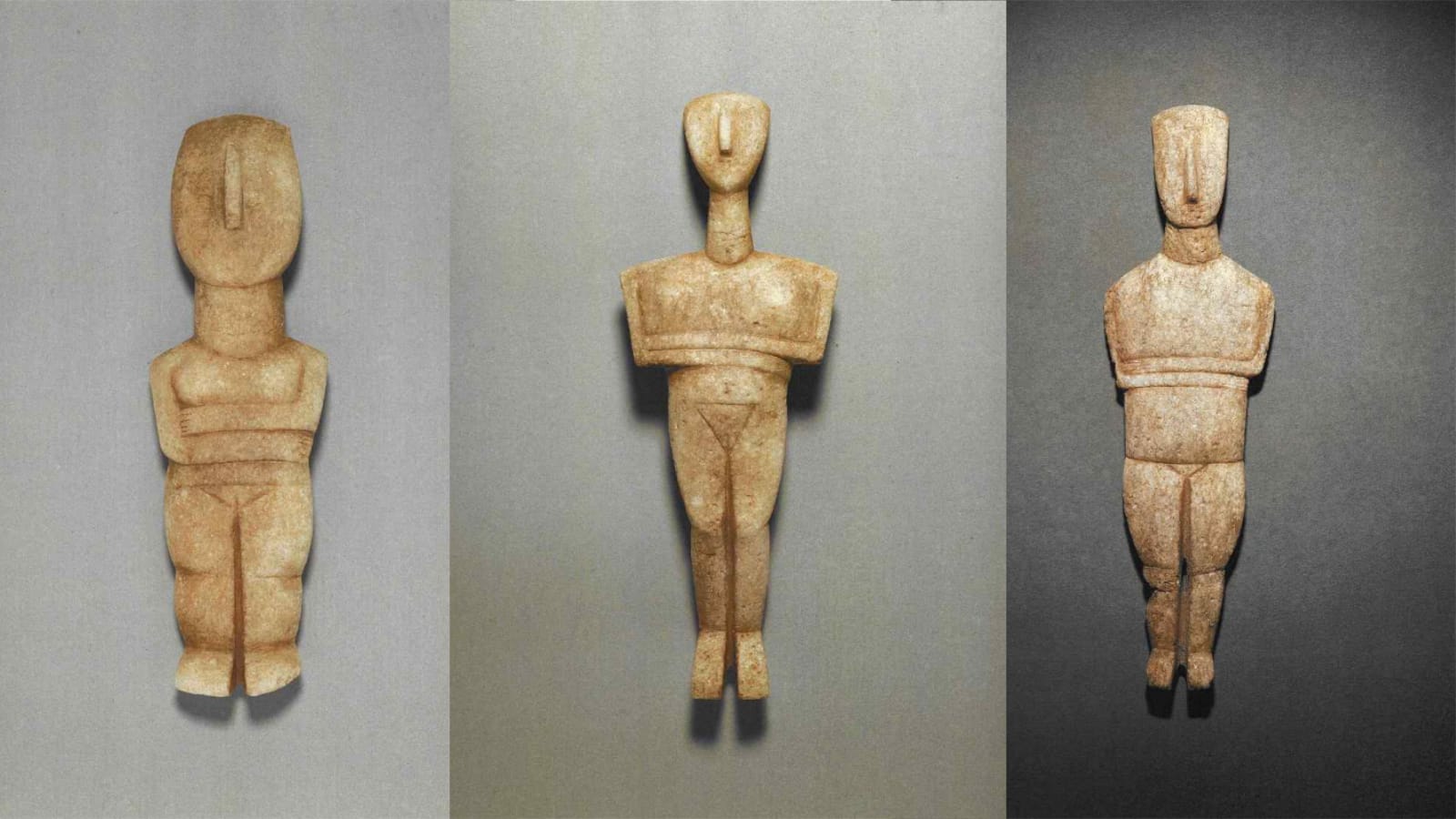

The stones were never the loudest part of this story. Paper was.
In October 2022, Andrew Crowley contacted Sotheby's in London and asked the house to sell three stone figures for him. Each one stood about 30 centimetres tall and weighed around a kilo. He presented them as carvings from the Cyclades islands, in what is now Greece — Bronze Age work, at least 3,000 years old. He also asked the auctioneers to value a fourth piece, an Anatolian stargazer statuette. The story that came with them was the one every auction house knows by heart: the figures had belonged to his grandfather, a man who made his fortune in the United States before retiring to England, and Crowley had inherited them. And like any inheritance worth real money, this one arrived with paperwork — invoices dated 1976, dressed to look as though they had been typed on a typewriter, on paper embossed with an antiques dealer's logo, a nine-pence stamp completing the picture of a transaction from another era.
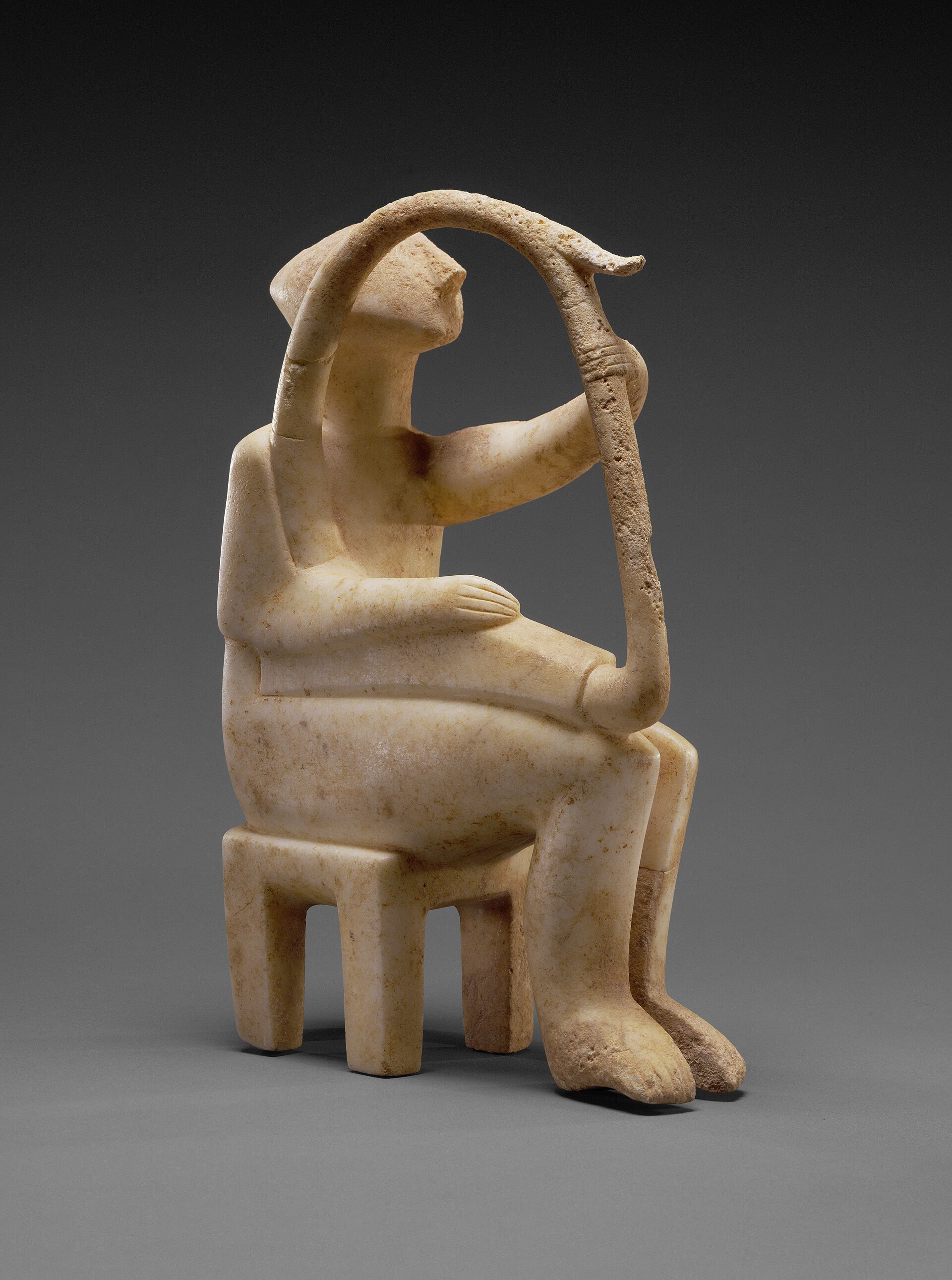
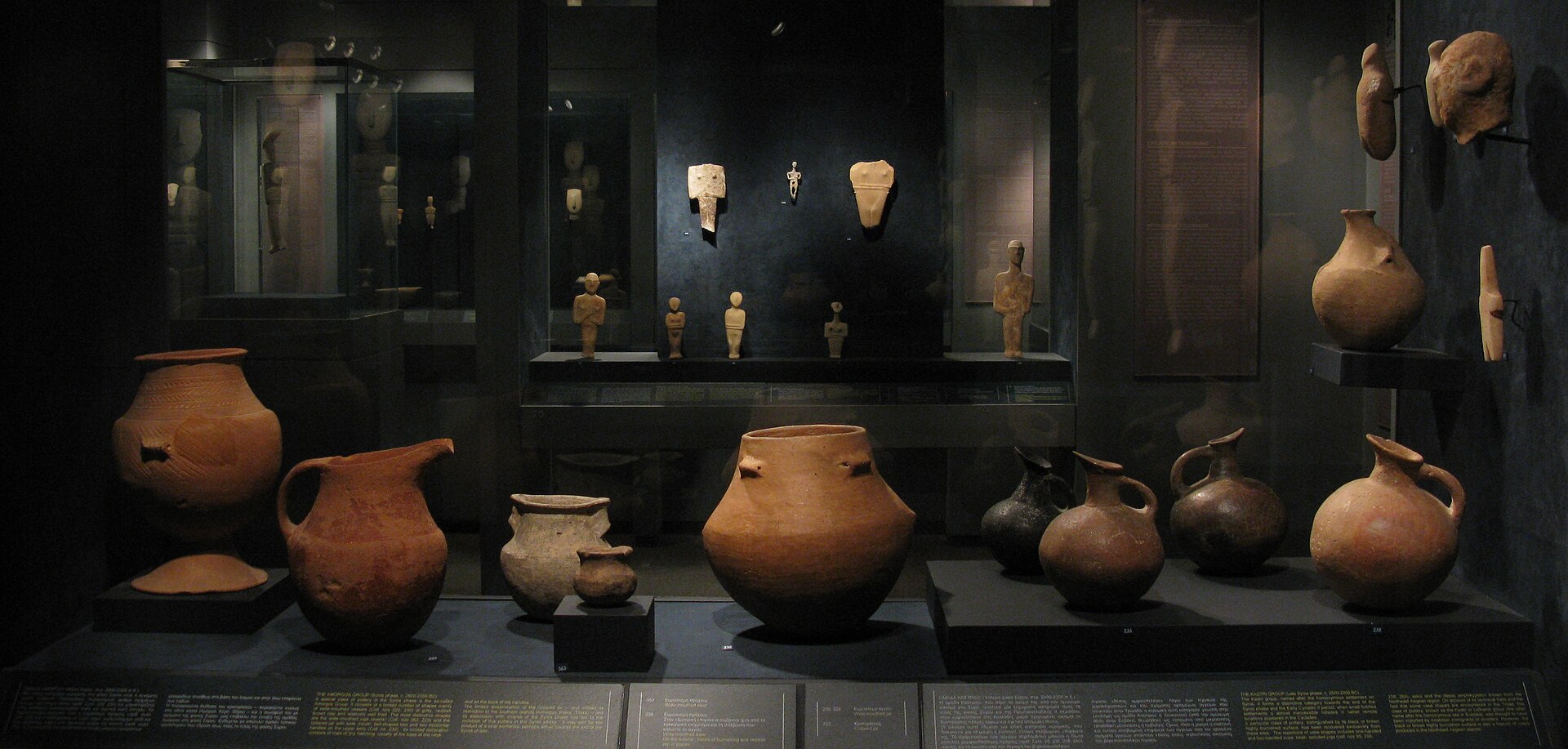
Understand why the paper mattered more than the marble. A genuine Cycladic figure — the canonical kind, a woman carved from island marble sometime around 2700 to 2300 BC, arms folded under her breasts, head tilted back, a long nose and almost nothing else on her face — is one of the most demanding objects in the entire antiquities market, precisely because so few of them can tell you where they have been. The Cyclades were looted hard across the twentieth century. Most figures that survive surfaced without an excavated findspot, without a grave, without a context a scholar can check. So the market learned to price the file alongside the figure. Provenance stopped being the supporting document a long time ago. At this end of the trade, provenance is the product, and everybody in the room — buyer, seller, forger — knows it.
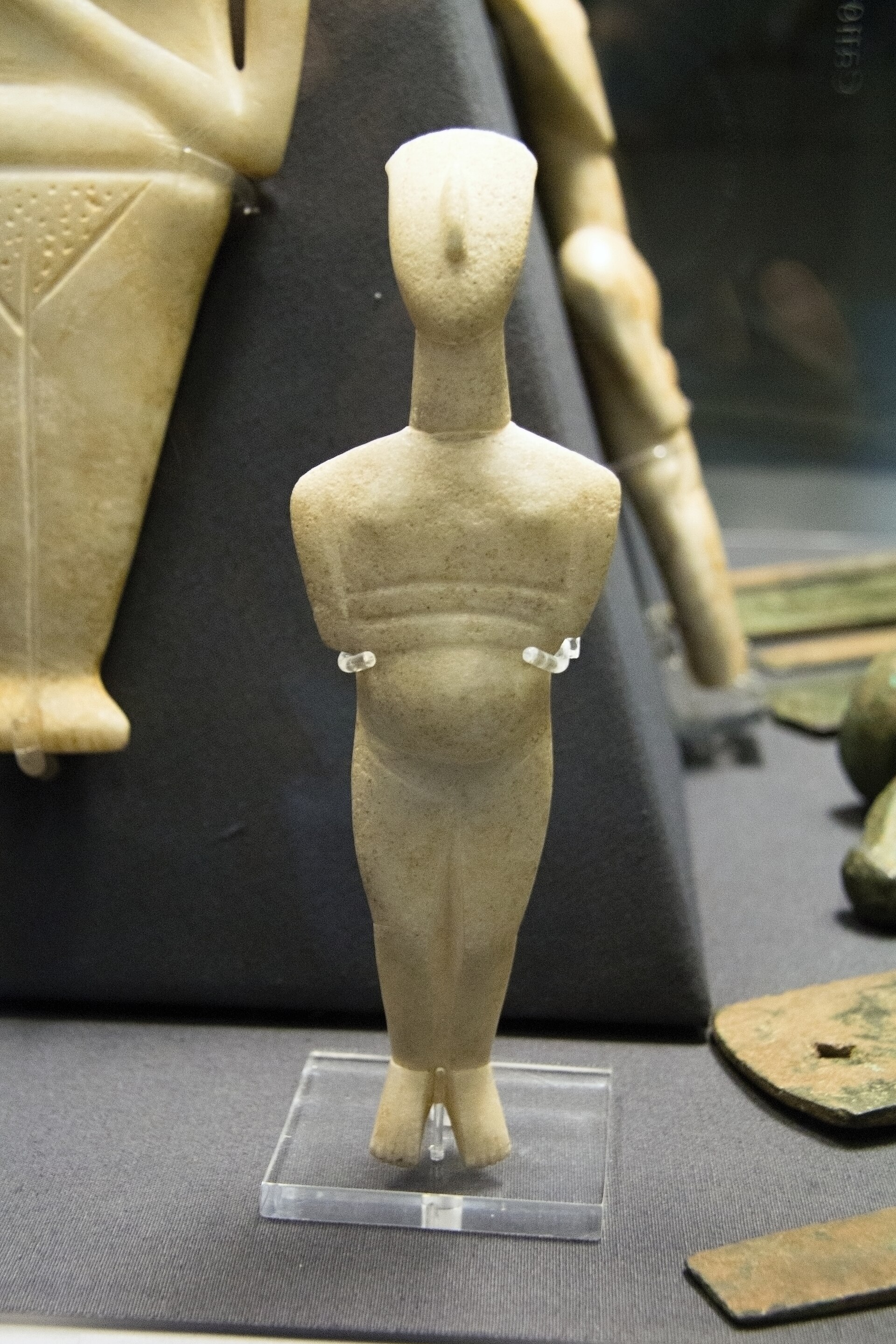
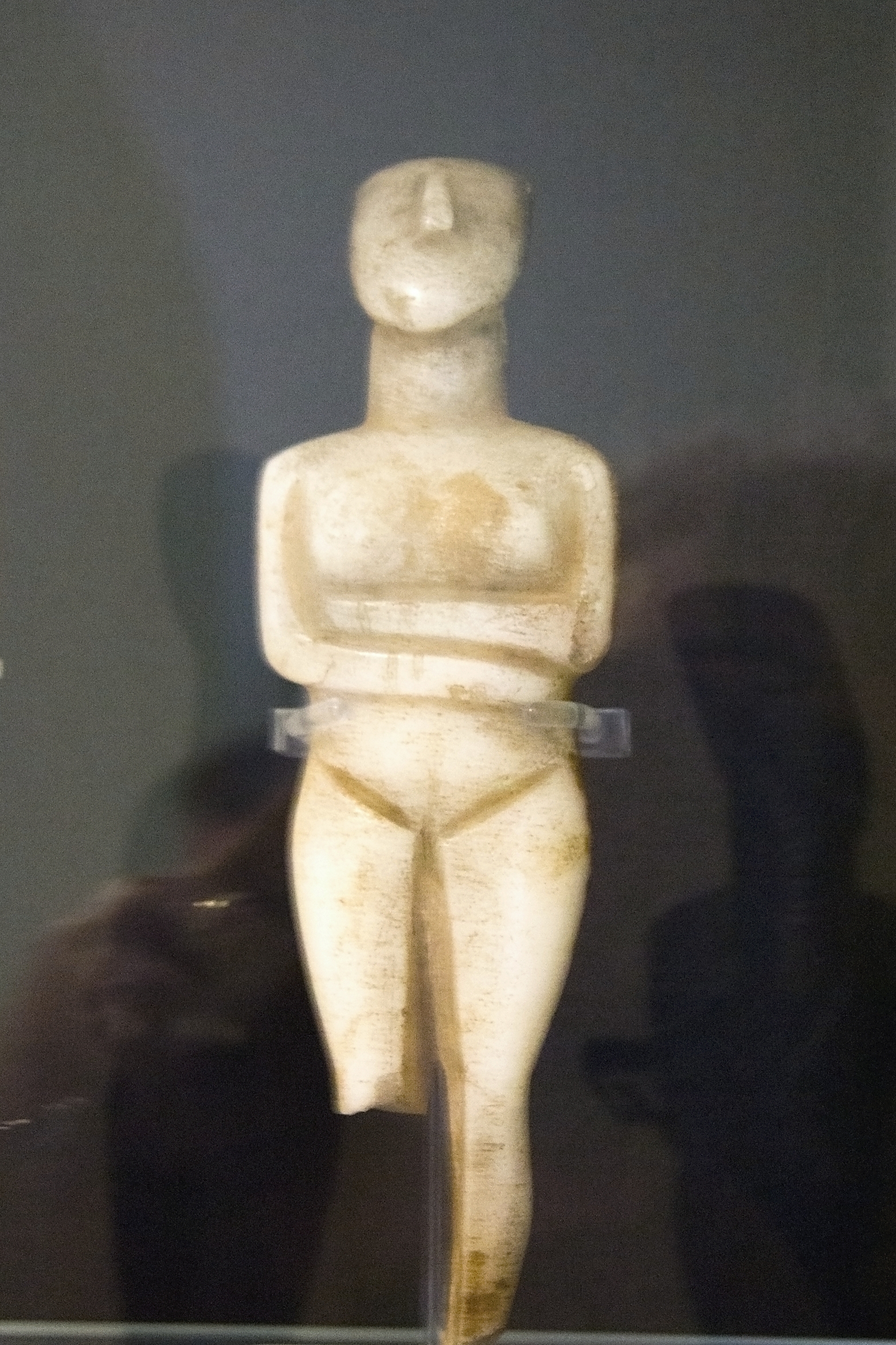
A real file, for this exact kind of object, is almost disappointingly plain. Sotheby's own records carry a Cycladic marble goddess of the Spedos type, dated to about 2500–2400 BC, whose provenance runs to a single line: Michel Dumez-Onof, Mount Street, London, October 1980. Behind that line sits a Sotheby's London exhibition in 1986 and three scholarly publications spread across two decades. One named dealer. One dated purchase. Every link checkable by anybody who wants to check it. That is what the paper is supposed to look like — short, dated, and a little boring. Crowley's file had the opposite problem. It was rich. It had a wealthy grandfather, an American fortune, a 1976 purchase and period dressing down to the stamp. Rich files get read the hardest, and this one was read by people who read files for a living.
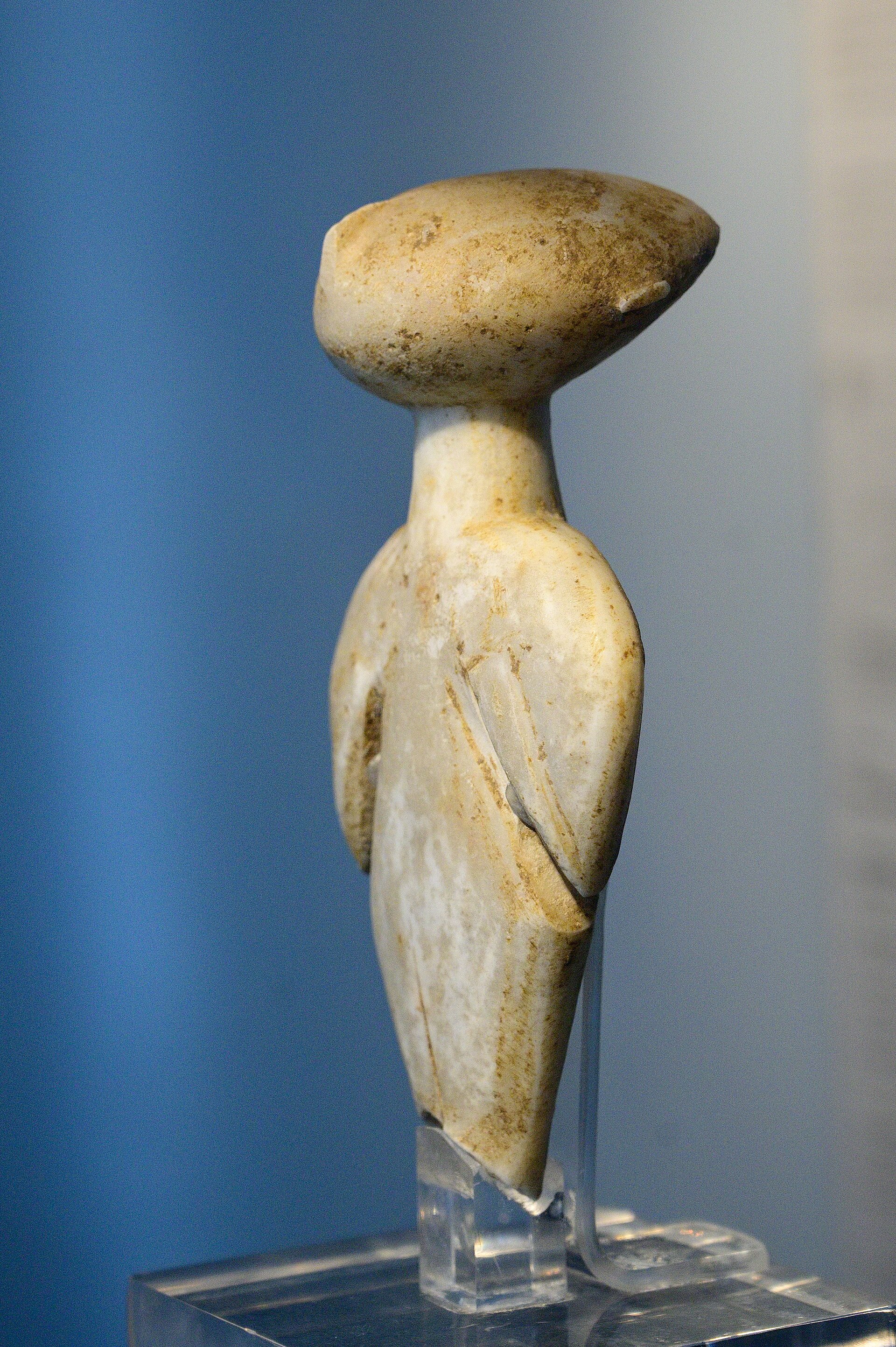
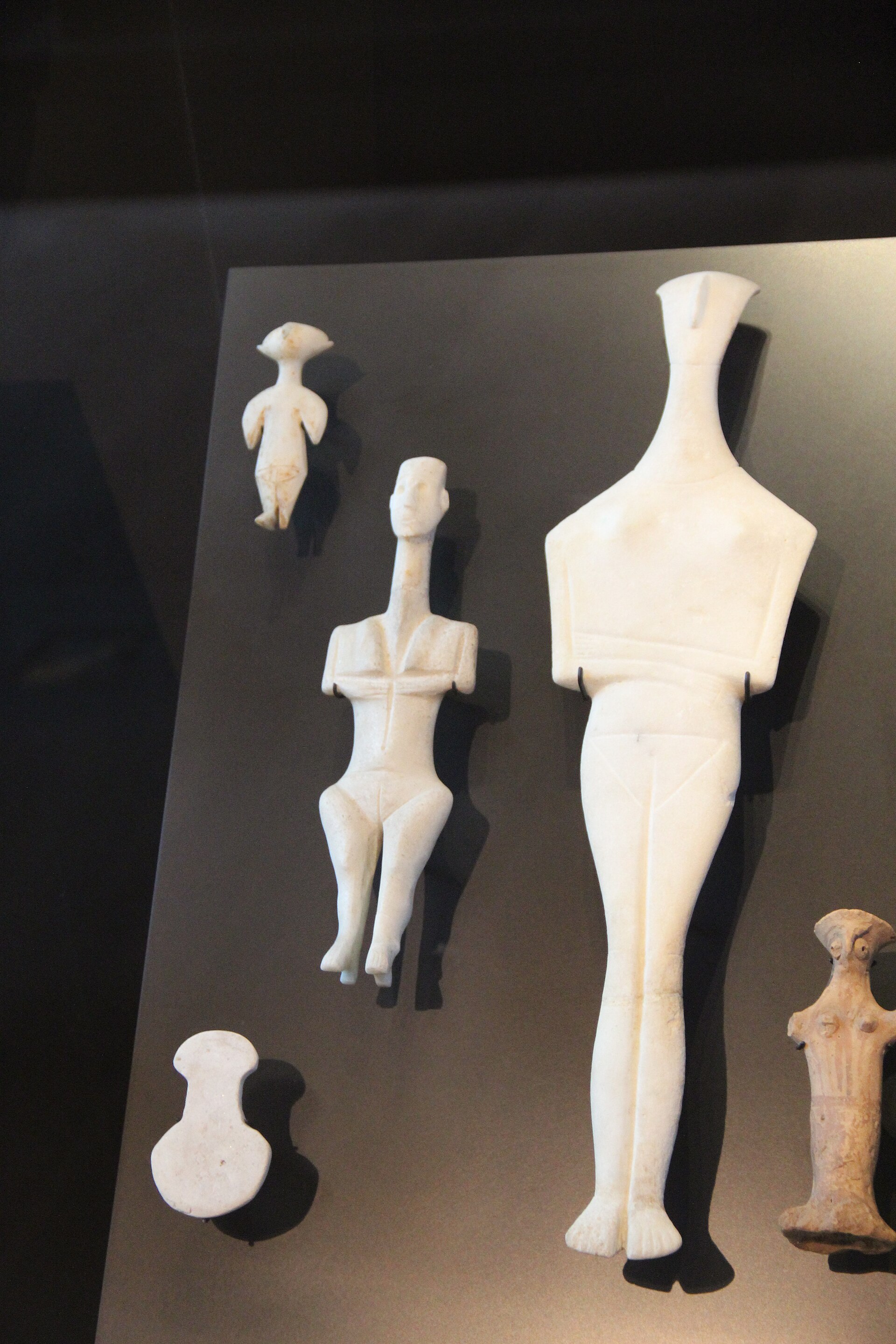
The first readers were Sotheby's own specialists, and they moved the way the house trains them to move. They identified inconsistencies in the sculptures themselves, and they suspected the accompanying documentation was false — among the smaller tells, the court later heard, were spelling mistakes in the documents. Nobody announced anything to Crowley. The auction house's legal department contacted the Metropolitan Police, and the file passed to the Art and Antiques Unit, the small specialist team that exists for exactly this kind of paper. What the specialists started, the laboratory finished, and the laboratory's findings read like a short course in how a document gets caught.
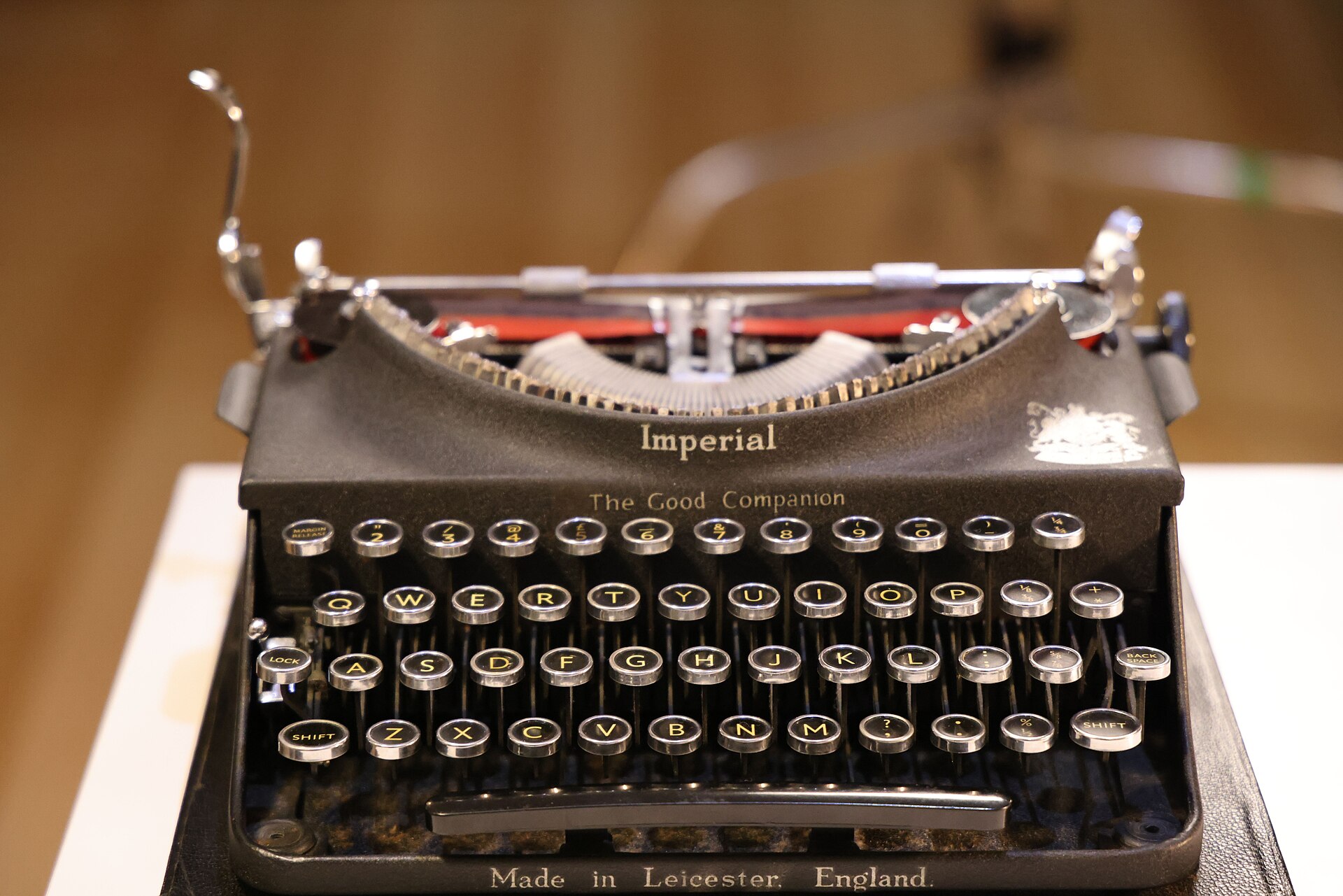
The invoices had been made to look typewritten. They were not written on a typewriter at all. Forensic analysis established that the letters had been printed using modern printer technology that was not in widespread use in the 1970s — the physical impression a typewriter leaves, the thing a reader's fingers and eyes both know, simply was not there. The dealer's embossed logo, convincing at a glance, turned out to have been applied by hand, drawn with a pen or an artist's tool rather than pressed with a stamp. And then there was the typeface. Detectives identified the font on those supposedly 1976 pages and tracked down the man who designed it, in the United States. Working with the FBI in New York, they took a statement from him, and it closed the file: the typeface had not been in use until 2001. A quarter of a century after the date on the invoices. A document cannot be written in a hand that has not been invented yet, and no amount of nine-pence stamps changes that arithmetic.
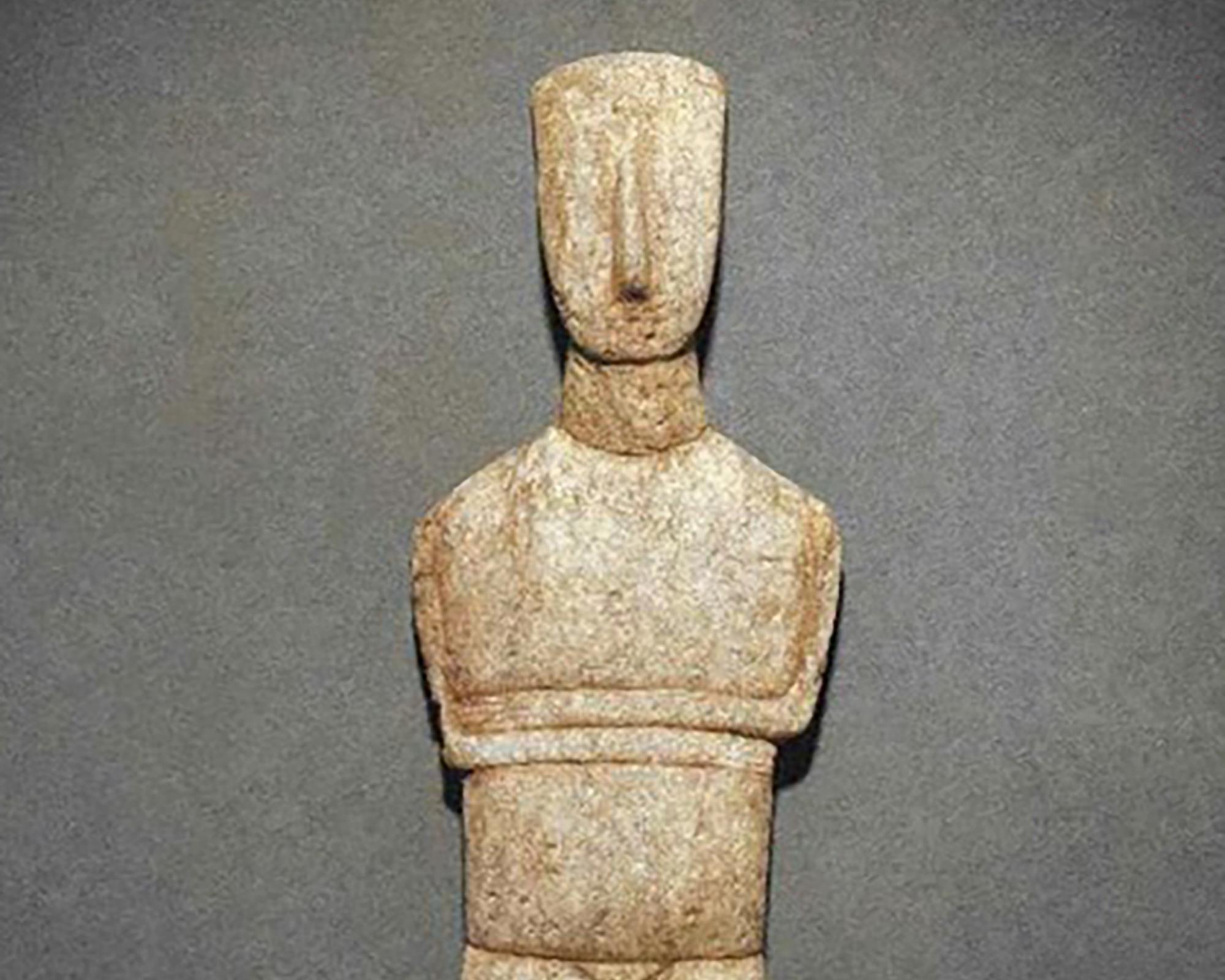
The name on the paperwork deserves its own moment, because choosing it was the cleverest thing in the whole file. The documents were drawn in the name of K.J. Hewett Limited — Kenneth John Hewett, a real and renowned London dealer in ethnographic art and antiquities, a man who had worked with Sotheby's back in the 1950s and 60s and who died in 1994. That is the forger's oldest move, and it works because it is half true: the dealer existed, his reputation existed, his history with the very house being approached existed. What could not exist was his paperwork in this transaction. The invoices were addressed to John Crowley at 23 Ashley Gardens in London — and when The Art Newspaper checked, it found no John Crowley registered at that address in 1976. The grandfather, for all his American fortune, was not known to collect antiquities at all. The chain did not break at one weak link. It was weak links all the way down, and the only link made of real material was a dead man's name.
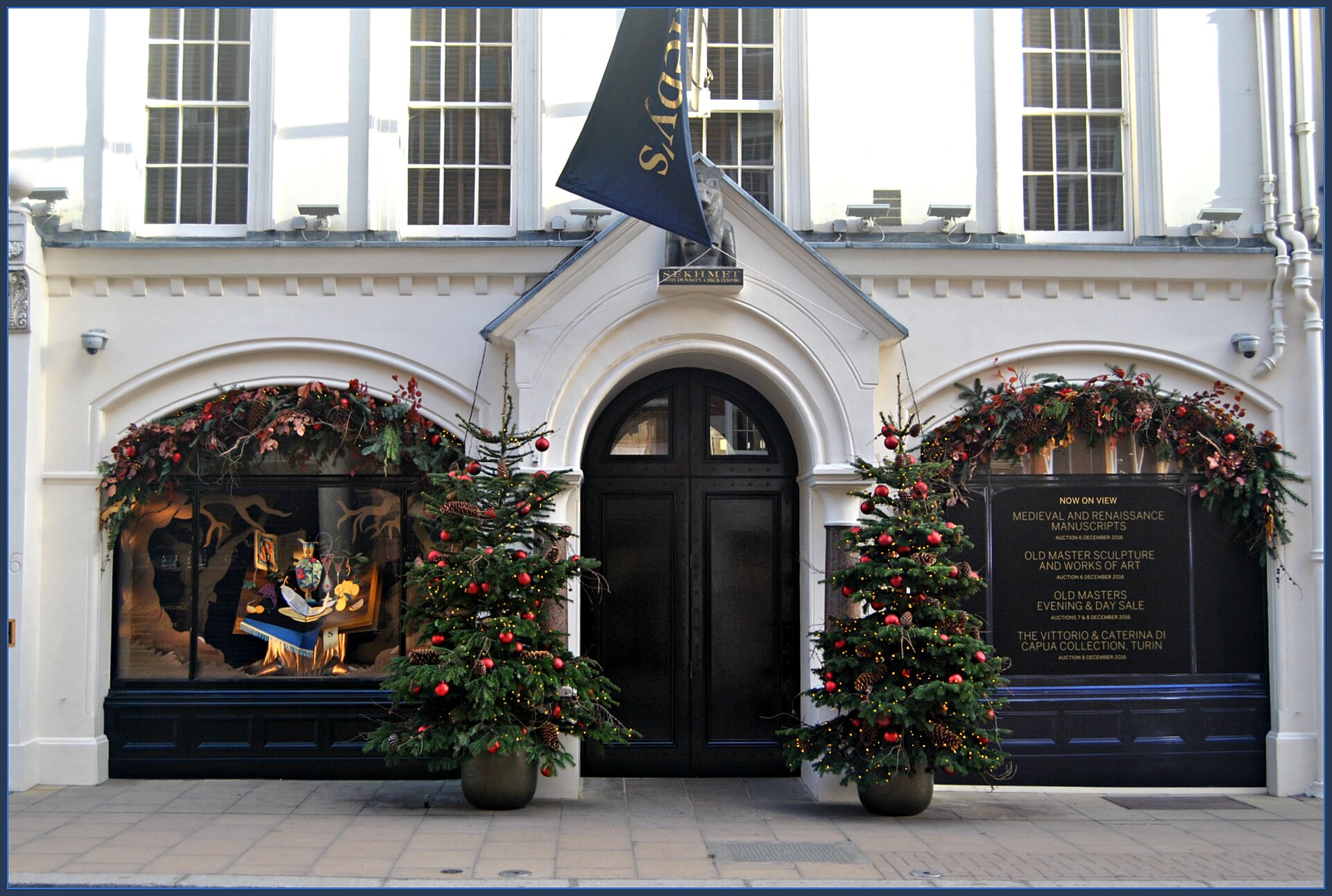
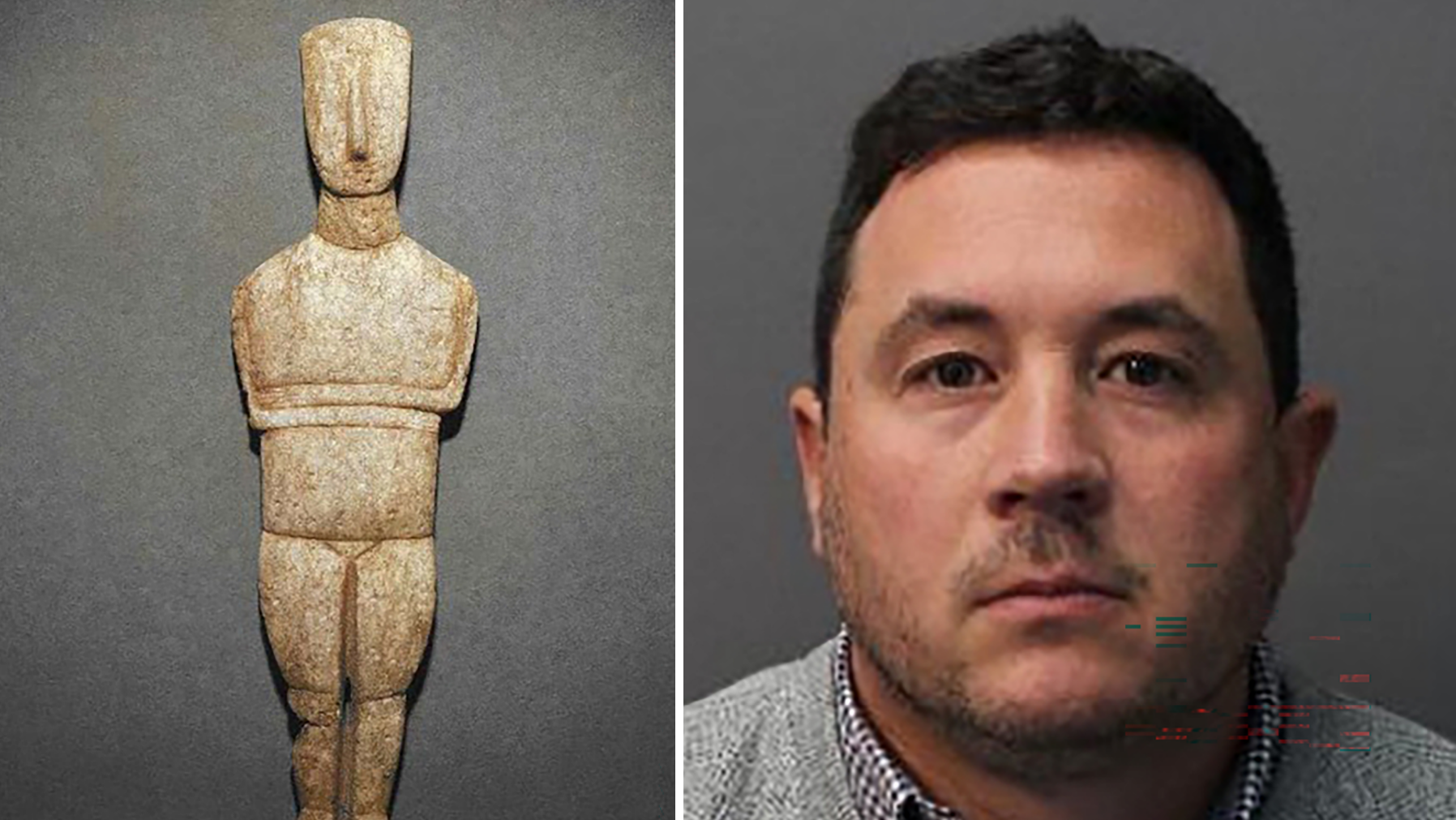
The ending was staged with a certain professional courtesy. On July 27, 2023, Crowley arrived at Sotheby's on New Bond Street in Mayfair, invited in for a meeting with the house's experts. He was arrested outside the front door. The figures were seized, and the police position on them has never wavered: they are believed to be modern replicas. The Anatolian stargazer went the same way as the Cycladic three. What had walked in as a Bronze Age inheritance walked out as evidence.
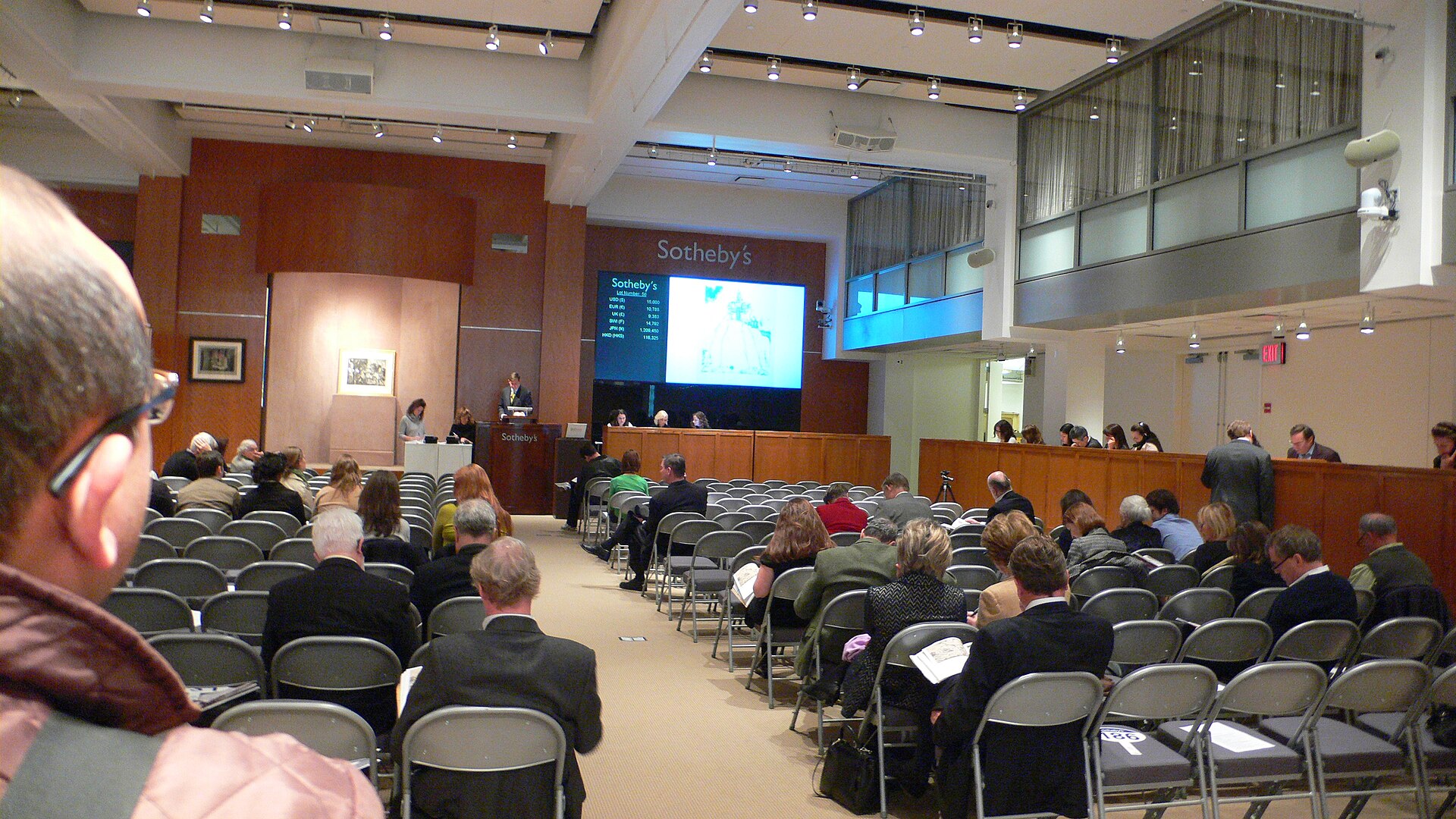
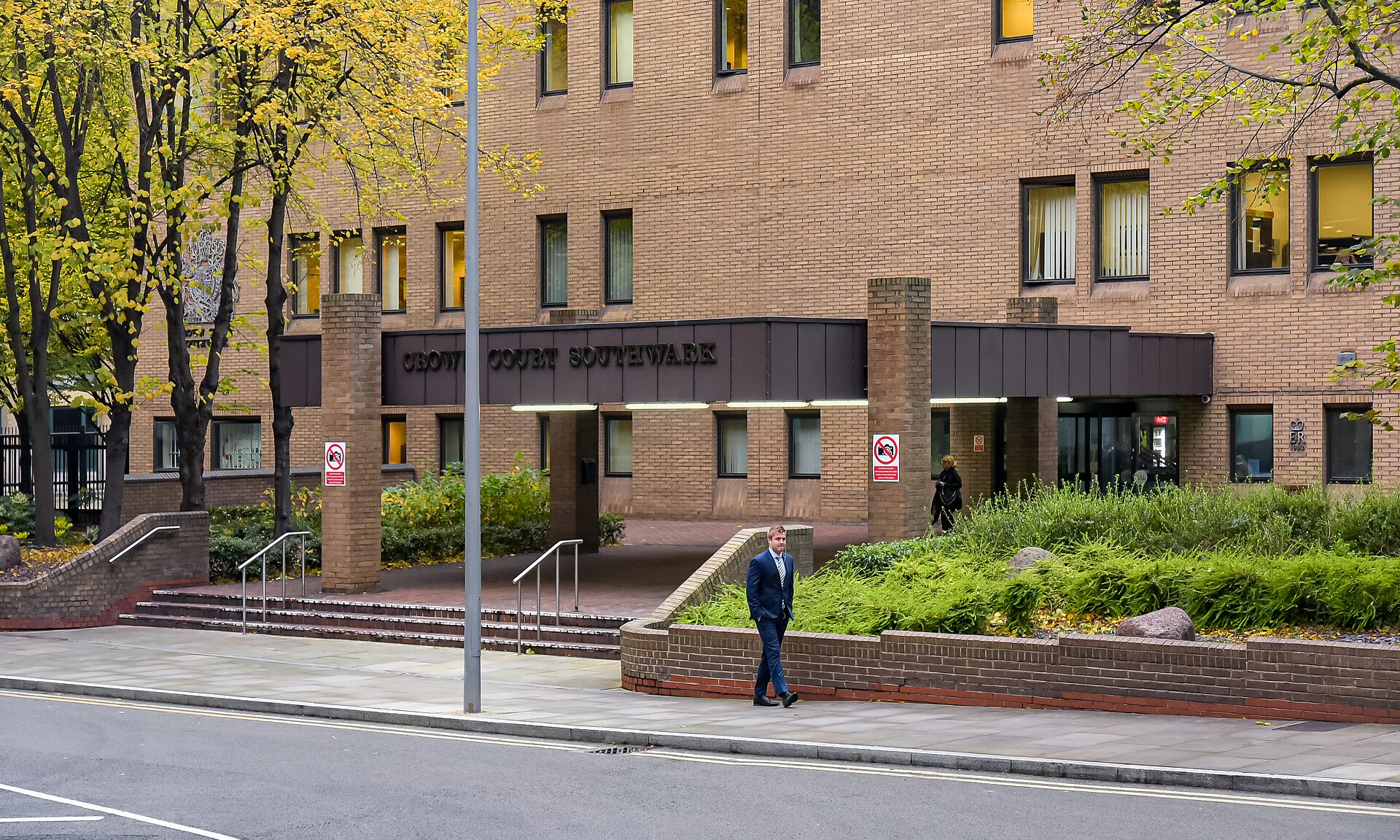
Southwark Crown Court heard the rest of it this spring. Crowley, 46, from Longwell Green near Bristol, pleaded guilty in February to fraud by false representation, covering his dealings with Sotheby's between November 2022 and July 2023. His basis of plea matters, and the judge honoured it: Crowley maintained that he had inherited the statues from his grandfather and did not believe the artefacts were counterfeit. Judge Nicholas Rimmer accepted that. Expert evidence obtained by the police suggested the pieces were not ancient, and the defence offered nothing to dispute it — but the conviction itself was never really about the stones. It centred, from first to last, on the accompanying provenance documents. The crime was the paper.
Even the money in this case was an argument about paperwork, because a value for objects that were never sold has to be built out of other objects' records. Prosecutors put the figure at up to £680,000, based on previous sales of the genuine article. Sotheby's wanted no part of that number — "We believe it was a figure suggested by Mr Crowley, it didn't come from us," a spokesperson said. The Metropolitan Police said the statues could have sold for up to £500,000 had the fraud gone undiscovered. Judge Rimmer cut through all of it: the estimate, he found, hinged on multiple hypotheticals, and he reduced the value to £340,000 for sentencing. Three numbers, and the honest one is the spread between them — what a fake is worth depends entirely on whose file you are reading.
The two men who closed the case described it in terms that flatly contradict each other, and both were right. Detective Constable Ray Swan, who led the Art and Antiques Unit investigation, called it "a sophisticated fraud that required substantial planning," and credited the house: "Sotheby's staff acted responsibly and swiftly in raising their concerns, and their cooperation was instrumental in preventing a significant fraud." Judge Rimmer, sentencing on May 22, 2026, saw the same file from the bench: "It was a crude attempt because Sotheby's rumbled, to use the vernacular, or spotted, these documents as bogus fairly early on." Sophisticated enough to require the FBI and a typeface designer to dismantle. Crude enough that the first specialists who read it knew. Both things happen when a forgery is built by someone who understands what a provenance file should contain, but not how deeply the people at the top of the market actually read one.
The court also heard, in mitigation, a smaller and sadder story: a recovering gambler who had fallen on hard times during Covid and made them worse at the bookmaker's, and who had worked his way to Gamblers Anonymous to get clear of it. Crowley, a director of a courier company who had never sold a work through Sotheby's — or, Christie's confirmed, through them either — was sentenced to two years in prison, suspended for two years. He was ordered to complete 200 hours of unpaid work, 15 days of a rehabilitation activity requirement, and to pay £1,630 in costs. He walked out of Southwark under a sentence that hangs over him for two years, which is its own kind of paper.
The trade has been here before, and the veterans of it recognise the shape instantly. Shaun Greenhalgh built forgeries for seventeen years, each one travelling with a constructed provenance, until a fake Assyrian relief tripped him in 2006 and put him away for four years and eight months. John Drewe, selling John Myatt's forged paintings in the 1980s and 90s, went further than Crowley ever did — he tampered with documents inside the Tate's own archives, planting his paper in the institution's memory itself. The lesson the market keeps relearning is the one Angelina Giovani-Agha, who runs a platform connecting clients with specialist provenance researchers, stated plainly after this verdict: the case is "a textbook example of why robust provenance documentation is not a formality but a first line of defence." And she named the detail that should comfort anybody who buys at this level: it was Sotheby's own due diligence, not a police tip, that triggered the entire investigation. The readers caught it first.
Sotheby's, for its part, kept its statement the way the house keeps a good file — short and dated to the facts. "In the course of our normal due diligence processes, concerns were identified and shared promptly with the Metropolitan Police," its spokesperson said, adding that the house was grateful to have supported "such a meticulous and superbly executed investigation that has helped prevent fraudulent material entering the market." Somewhere in a police store, three stone figures and a stargazer sit in evidence bags, worth whatever modern replicas are worth, which is to say almost nothing. The objects were always almost nothing. The 1976 invoices were the valuable thing — the whole value, the whole crime, and in the end the whole case against their owner, written in a typeface that would not exist for another twenty-five years.
Sources · 8 sources
- The Guardian — Nadeem Badshah, "Fraudster sentenced after trying to sell bogus ancient statues with fake papers to Sotheby's" (Press Association court report), May 23, 2026
- BBC News — "'Ancient' statues fraud foiled by fake paperwork," May 22, 2026
- Metropolitan Police Service — Art and Antiques Unit statement on the sentencing of Andrew Crowley, May 2026 (as carried by Security Matters and the Hanham & Longwell Green Voice, May 27, 2026)
- The Times — "Modern typeface exposes fake sculptures offered to Sotheby's," May 2026
- The Art Newspaper — Riah Pryor, report on the Crowley case and Sotheby's due diligence, July 6, 2026
- Urgent Matter — "Man avoids jail in fake Cycladic figures Sotheby's fraud," June 26, 2026
- Sotheby's — Antiquities, New York, 2008, lot 27 (a Cycladic marble figure of a goddess: provenance, exhibition and literature record)
- Bonhams — Fine Books, Manuscripts, Atlases & Historical Photographs, London, December 4, 2019 (the property of the late Kenneth John Hewett)