
October 17, 2026
LOS ANGELES
Los Angeles County has confirmed the thing its health officials had been watching for: cychlorphine, a synthetic opioid more potent than fentanyl, is in the local street supply, and it has already killed. The county Department of Public Health announced on October 15 that the County of Los Angeles Medical Examiner recently identified the drug as a cause of a death that occurred in February 2026 — the first confirmation of cychlorphine's presence in the county's illicit drug supply. The announcement, carried this weekend by USA TODAY, the New York Post and NBC's Palm Springs affiliate among others, amounts to a standing warning for the whole region: a drug that standard precautions cannot detect is now part of the supply.
What the county confirmed
The facts, as the county states them, are narrow and stark. A person died in Los Angeles County in February. Toxicology worked its way through the system, and the medical examiner's office identified cychlorphine — also known by its chemical name, N-propionitrile chlorphine — as a cause of that death. Until now, the county could say the drug was a national problem documented elsewhere. It can no longer say that. "This fatality due to cychlorphine is the first confirmation of cychlorphine's presence in the local illicit drug supply," the department said in its written statement, per USA TODAY.
The February date matters. The death is not new; the knowledge is. A confirmation that takes months to arrive means the county is, by definition, describing a supply that existed earlier this year — and the department says it is now monitoring the local illicit supply for signs that the drug's circulation is increasing, per its release. One confirmed death is the floor of what is known, not a measurement of what is out there.

Why this drug worries officials
Start with potency. Cychlorphine is an opioid, in the same family as fentanyl and heroin, but more potent than fentanyl, and the county stresses that a very small amount can cause someone to stop breathing. Opioids slow breathing; that is the mechanism of nearly every fatal overdose, and the risk climbs sharply when opioids are combined with alcohol, sedatives, painkillers or other drugs, per the department's warning.
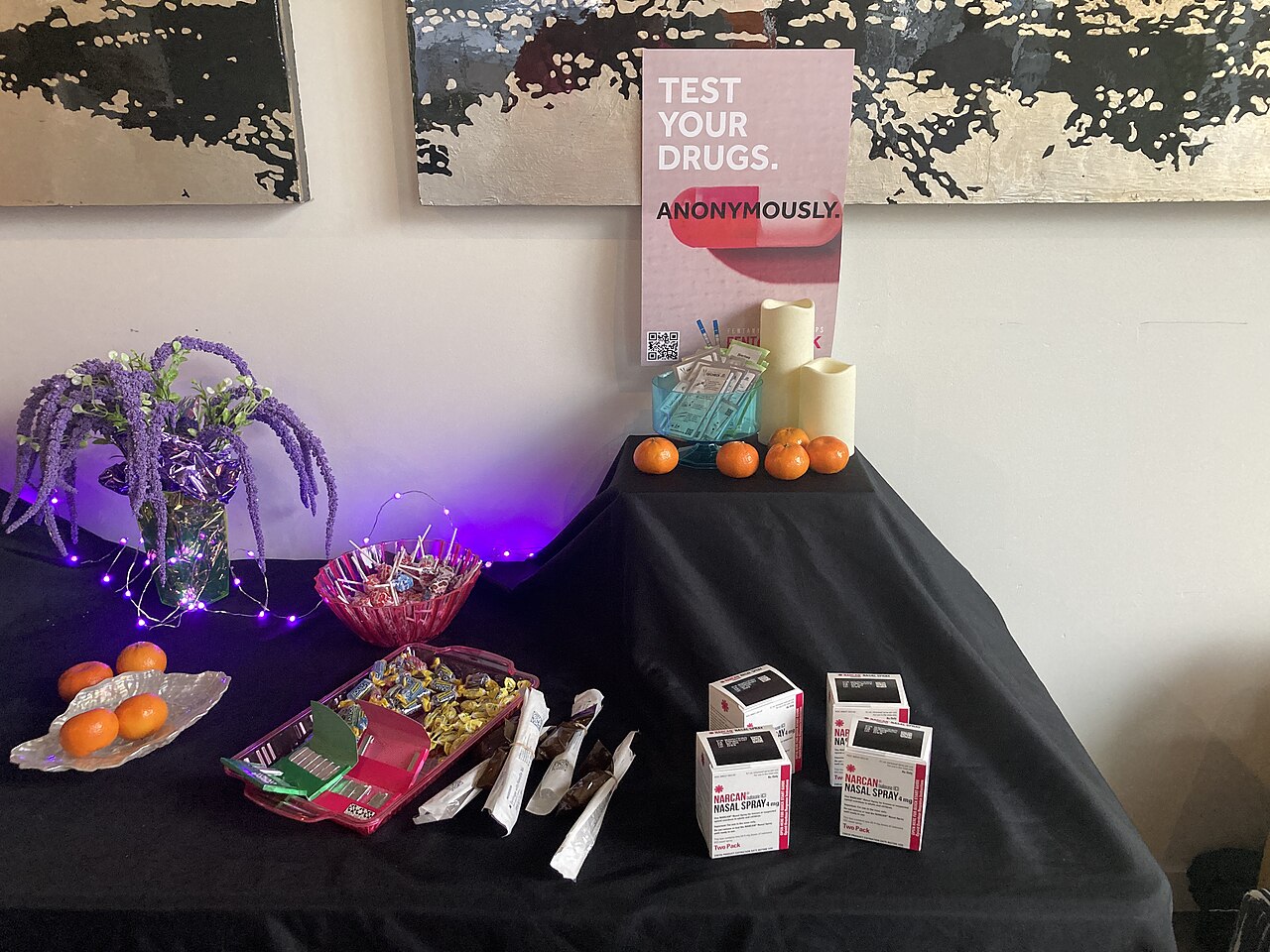
Then there is the detection problem, which officials returned to repeatedly. Cychlorphine is currently undetectable by fentanyl testing strips — the inexpensive, widely distributed harm-reduction tool that has become the standard last check before use. A strip that reads negative tells its user nothing about this drug. And cychlorphine is being mixed into the illicit supply without people knowing, the county says, in forms that cover the whole market: powders, counterfeit tablets manufactured to look like prescription medication, rocks or crystals, and liquids. There is no visual tell, no reliable test at the street level, and no way for a buyer to know it is there. That combination — extreme potency, invisible presence, and a blind spot in the standard safety tool — is why a single confirmed February death produced a countywide alert rather than a case note.
The wider map
Los Angeles is late to this story, not early. Cychlorphine has been known in the United States illicit drug supply only since 2024 and has since been detected in 19 states, per the county. In April 2026, another death caused by cychlorphine was reported in Northern California — San Francisco health officials tied a fatal overdose there to the drug, the first detection in that city, per the county's release and ABC7's reporting carried by the Post. In August 2026, the U.S. Drug Enforcement Administration classified cychlorphine as a Schedule I controlled substance, making it illegal to possess or sell; it has never been approved by the Food and Drug Administration for any medical use. USA TODAY notes the drug belongs to a series of recently introduced synthetic opioids — the nitazene family among them — drawing concern at the local, state and federal levels simultaneously.
The pattern those facts describe is the modern shape of the overdose crisis: a novel synthetic appears in the supply somewhere in the country, spreads state to state faster than laboratory confirmation can follow, and arrives in each new county announced by a medical examiner working months behind the street. Los Angeles County, the most populous county in the nation, now has its first confirmed case, and its health department is saying plainly that it expects the possibility of more.
What officials are asking people to do
The county's guidance is the standard overdose-prevention list, offered with new urgency because the test-strip step in it has a hole. Never use drugs alone. Do not mix drugs — not with alcohol, not with sedatives, not with other opioids. And carry naloxone: the medication can reverse an opioid overdose and successfully restore breathing, according to county health officials, and it works on overdoses involving drugs far stronger than heroin, which is precisely the category now confirmed in the county. Public health says it will keep monitoring the supply for changes in cychlorphine's prevalence locally. For everyone else in the Southwest's largest metro, the takeaway of this week's announcement is simpler and harder: as of February, confirmed on Thursday, the supply in Los Angeles County contains a drug that the usual check cannot see.
Also on this desk's Los Angeles watch this weekend: the Bryson Fire burning near Malibu.
Sources · 4 sources
- Los Angeles County Department of Public Health — First fatal overdose tied to potent opioid cychlorphine reported in Los Angeles County, October 15, 2026
- USA TODAY — L.A. County sees first death from new synthetic opioid cychlorphine, October 16, 2026
- MyNewsLA — L.A. County health officials report first fatal overdose from potent synthetic opioid, October 15, 2026
- New York Post — Urgent warning as super-drug claims first LA victim, October 17, 2026