
October 20, 2026
LAS VEGAS
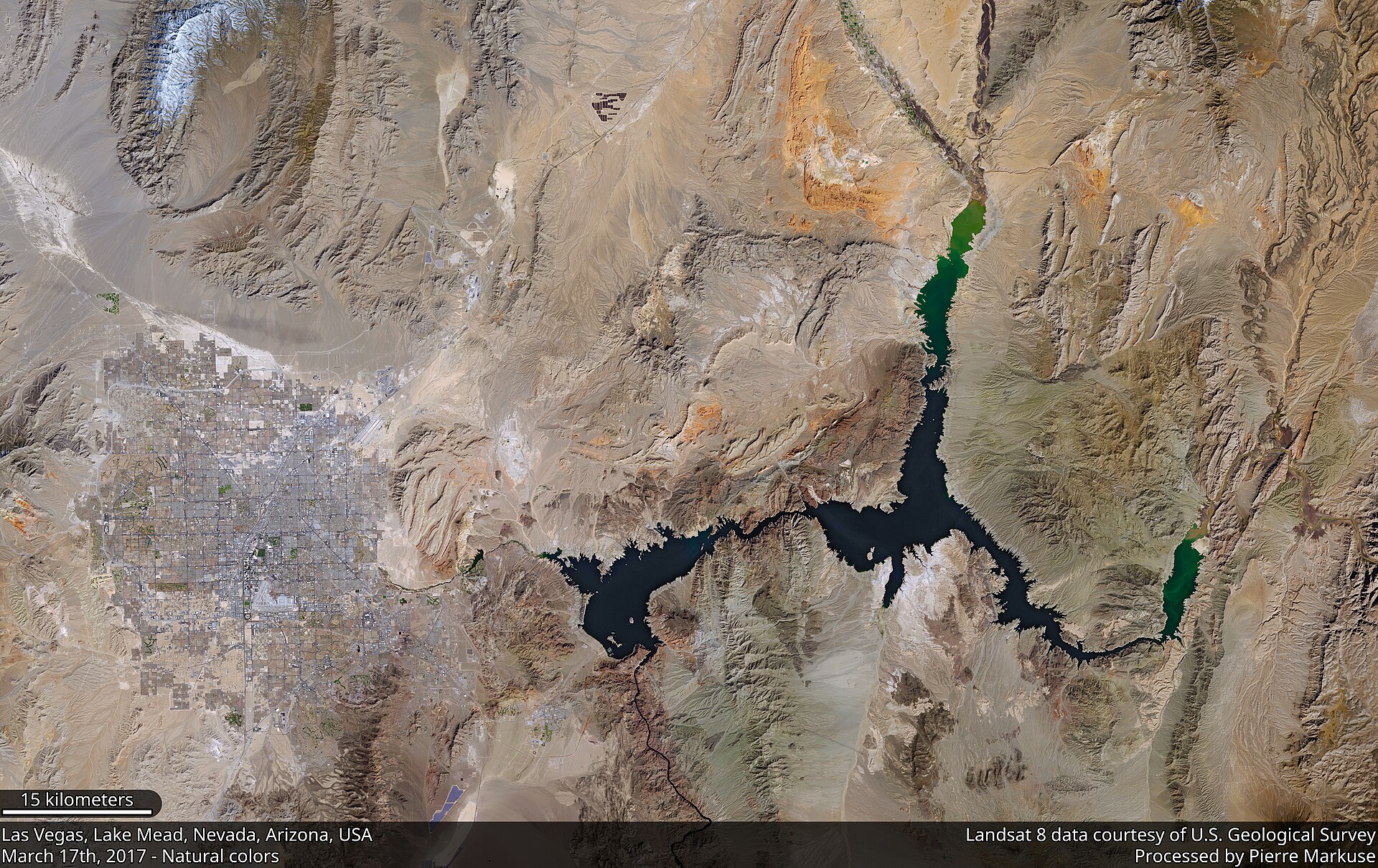
Lake Mead is setting record lows, Colorado River cuts are looming, and on Monday the people who actually run Southern Nevada's water sat down in one room and talked through the menu of fixes — what they cost, what they can and cannot do, and how long they take. The roundtable, on Monday, October 19, was led by Rep. Dina Titus, the Las Vegas Democrat, at the Las Vegas Valley Water District, and the panel included officials from the Southern Nevada Water Authority and the Colorado River Commission of Nevada, according to the Las Vegas Review-Journal.
Titus, according to the Review-Journal, said she has watched the region's water conversation shift from abundance to scarcity over her decades in politics. Then she put the question her constituents put to her: people tell her the valley's conservation rules simply move water around so new development can be built. "How do you answer to that?" she asked the panel, according to the Review-Journal. It is the right question, because it is the one half the valley is already asking at the kitchen table — and the panel's answer is the spine of this whole story.
The conservation answer: growth because of the rules, not despite them
Colby Pellegrino, the Southern Nevada Water Authority's deputy general manager of resources, said the answer is complicated, according to the Review-Journal. Pellegrino asked whether residents moved here before 2002 — the year, on her account, the region got serious about conservation, allowing water use to fall sharply while the valley added hundreds of thousands of residents. The authority, she said, each year projects the region's water security over the next five decades using a liberal estimate for growth, and efficient use is what allows the area to grow. In other words: the rules are not a shell game moving water to developers; on SNWA's telling, they are the only reason the growth constituents are looking at was possible at all on a shrinking river.
Pellegrino also waded into the valley's most argued-over conservation fight, according to the Review-Journal: she said data shows much of the valley's tree loss is caused by rising temperatures, not grass removal. That argument is debated among local arborists, the Review-Journal noted, and it lands while homeowners are suing over the mandatory turf conversions required under a 2021 state law. Keep both halves of that sentence. The water authority has data it trusts; the people who lost trees and lawns have a lawsuit. Monday's roundtable did not settle that argument, and this story will not pretend otherwise. The water stakes behind it keep rising either way — the same squeeze readers saw in the Water District's planned $580 million bond sale as Colorado River cuts loom.
Where the federal money would go
The roundtable was also, openly, about money. Titus is one of 12 Western lawmakers urging Congress to act quickly to match a $4 billion drought mitigation investment made under the Biden administration, according to the Review-Journal, and business groups from all seven Colorado River states, including three from Southern Nevada, have asked for at least $2 billion for water security. Pellegrino said new funding would strengthen a specific list: replacing water-wasting cooling systems, turf conversion rebates, and a full audit of irrigation systems across the valley, according to the Review-Journal. She pointed to water recycling too, including the multi-million-dollar effort to bring Boulder City into the regional wastewater system, which is still not fully funded — the same Boulder City whose growth fights we covered in the Boulder City data center story.
Desalination got the honest treatment as well. The water authority is still in talks to benefit, along with Arizona, from a water transfer tied to a desalination plant in Carlsbad, California, according to the Review-Journal — with billion-dollar price tags and other obstacles attached. And Pellegrino drew a clear line on what federal money should not buy: she opposes spending on short-term fixes like paying Imperial Valley farmers to fallow their fields. "It would be really good to see it go to durable solutions and not temporary fallowing," she said, according to the Review-Journal. Durable is the word to hold onto. Cooling systems, irrigation audits and recycling pipes keep saving water every year after the check clears; a fallowed field saves water for exactly as long as you keep paying for it.
The hydropower cliff, two feet away
The most quietly alarming number of the day belonged to Gail Bates, director of hydropower at the Colorado River Commission of Nevada, according to the Review-Journal. Lake Mead, Bates said, is a little over two feet in elevation from the point where only four of the dam's 17 turbines could function. Big cities like Las Vegas have diverse power sources, she noted, but rural utilities in California, Nevada and Arizona would face large gaps if generation fell that far. Congress has released funding for at least three more turbines that can run at lower lake levels — but they will not be operating until 2029. "We're weathering the storm in terms of hydropower generation output," Bates said, according to the Review-Journal. Weathering is doing a lot of work in that sentence: the replacement turbines arrive in 2029, and the lake is two feet from the threshold now.
All of this sits on a legal backdrop that darkened just days before the roundtable. The session came days after Arizona moved to intervene as an interested party in Nevada's lawsuit against the Trump administration over its Colorado River management plan, and the federal government has asserted legal authority to cut Nevada's allocation by up to 71 percent over the next 10 years, according to the Review-Journal. Titus, for local political context, is running for an eighth term and faces Republican state Sen. Carrie Buck. But Monday was less about the campaign than about the arithmetic: a record-low lake, a federal plan that could cut Nevada's share by up to 71 percent, a hydropower threshold two feet away, and a fix list — conservation, recycling, desalination, new turbines — where everything durable is expensive and everything cheap is temporary. The experts laid the menu out anyway. Paying for it is the part that comes next.
Sources · 3 sources
- Las Vegas Review-Journal — Titus water roundtable at the Las Vegas Valley Water District, October 19, 2026
- Southern Nevada Water Authority — Regional water security and conservation programs
- Las Vegas Valley Water District — Roundtable host, October 19, 2026