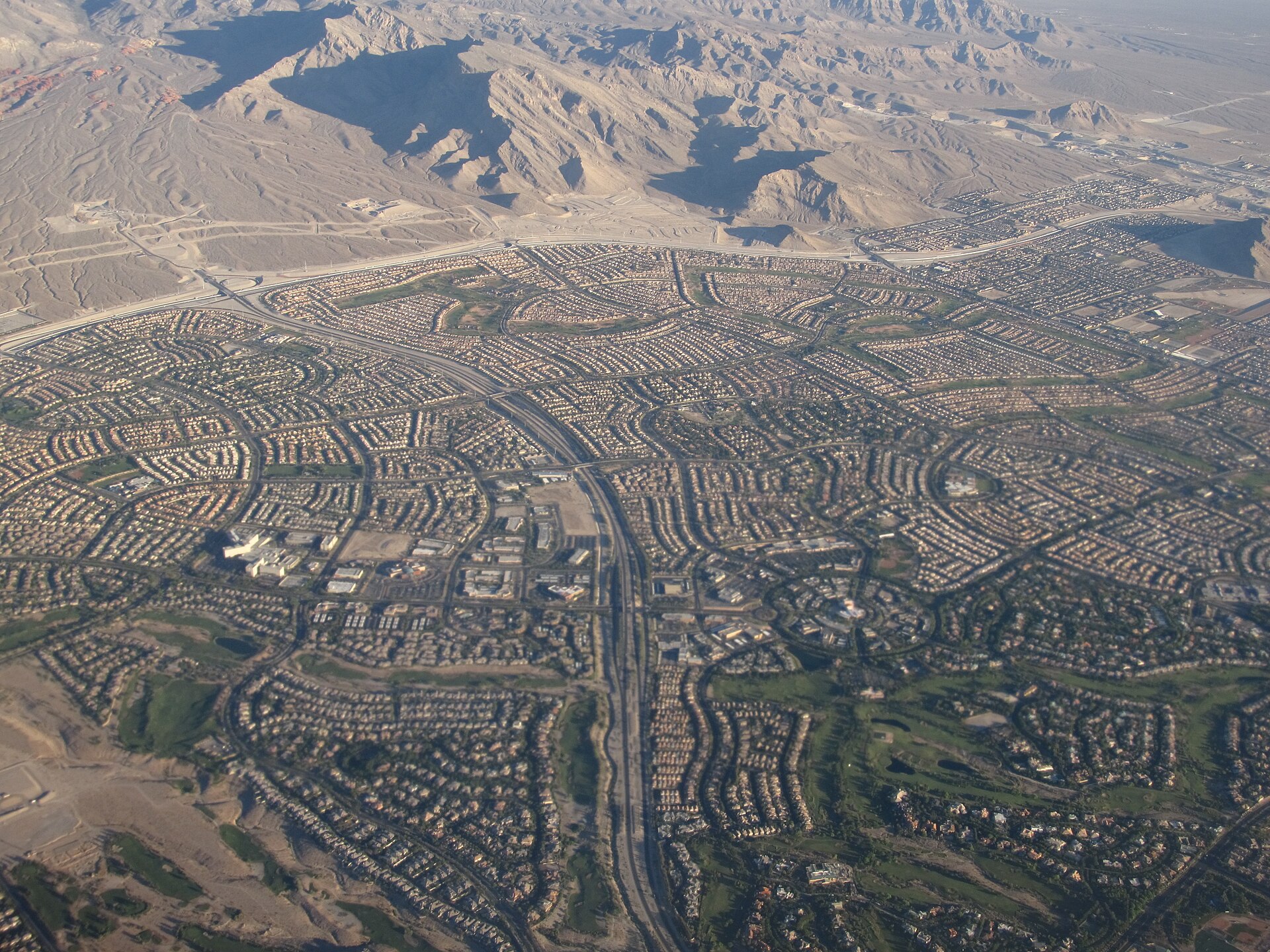
LAS VEGAS — Some numbers stop you cold. Ten thousand homes for sale across the Las Vegas area is one of them. The Review-Journal reported Monday that local inventory has topped the 10,000 mark for the first time in more than a decade — a milestone that sounds like a buyer’s market arriving, with one important caveat from the paper’s own summary: declining demand has yet to push median prices lower.
01The Milestone
Inventory crossing 10,000 matters because of how long it’s been missing. For more than a decade, the Las Vegas area has been defined by scarcity — bidding wars, waived contingencies, and a resale market that rarely gave buyers room to breathe. The Review-Journal’s report (Patrick Blennerhassett, Oct. 5) marks the first time since that era that the valley has had a five-figure supply of homes sitting on the market at once.
What it does not mean, at least not yet, is a price collapse. The paper is explicit on this: demand has softened, but median prices haven’t followed inventory down. That’s the shape of a market in transition rather than a market in freefall — sellers are listing, buyers are hesitating, and the two sides haven’t met in the middle yet. For anyone shopping in the valley right now, the practical translation is more choice and more negotiating room than buyers have had in years, without the fire-sale pricing that usually accompanies a supply surge.
02Checking the Number
Here’s the honest accounting on methodology, because this is where housing stories go wrong: the Review-Journal’s 10,000 figure is the anchor for this story, and it stands on the paper’s own reporting. A separate dataset — realtor.com’s August 2026 luxury housing report — puts the Las Vegas–Henderson–North Las Vegas metro total at 10,788 listings. Different dataset, different methodology, same side of the 10,000 line. It corroborates the direction of travel, not the exact count.

And a caution in the other direction: a local realtor’s recent video put active listings around 7,590 with a $475,000 median — a figure from a different date and a different counting method. It is not directly comparable to the Review-Journal’s number, and treating it as a contradiction would be a mistake. Housing data is only as good as its definitions, and this story uses the Review-Journal’s definition as its core.
03The Top End Tells Its Own Story
The realtor.com August report is worth reading closely, because the luxury tier is where the valley’s inventory buildup is most visible. In the Las Vegas–Henderson–North Las Vegas metro, the entry point to luxury now sits at $1,180,106, and the top 1% of the market begins at $5,273,033. Million-dollar listings are sitting a median of 71 days on market — a number that says, in plain English, that even the high end is waiting longer for buyers than it used to.
Zoom out and the national picture rhymes: realtor.com put the national luxury entry point at $1.20 million in August, down 4% from July, and August marked the 29th consecutive month of annual declines at the 90th percentile. The valley isn’t an outlier; it’s a local expression of a national cooling at the top.
This matters for the 10,000 figure because it explains the composition of the inventory. The homes piling up aren’t evenly distributed across price bands. The luxury and move-up segments are where listings are accumulating and sitting longest — which is exactly what you’d expect when builders spend a decade targeting higher price points and financed buyers pull back as rates stay elevated.
04A Decade of Underbuilding
The roots of this market go back a long way. According to analyst reporting cited by keycrew.co, Las Vegas builders produced between 25,000 and 31,000 new homes a year from 2000 to 2007. After the 2008 financial crisis, annual starts collapsed to 4,000–5,000, then only recovered to 5,000–7,000 through 2018 and 2019. The same analysis estimates the production shortfall left the city with a deficit of roughly 100,000 homes over the past decade.
And the shortage isn’t evenly spread. As keycrew.co’s reporting notes, the deficit is most acute at the entry level: major builders — Toll Brothers and Pulte are named as examples — have concentrated on homes in the $800,000 to $2 million range and above, leaving few options for first-time and workforce buyers. Without new entry-level supply, older affordable homes keep disappearing from the market, pushing prices higher and narrowing opportunities for locals.
Meanwhile, the buyer pool has its own divide. Out-of-state cash buyers — largely migrants from higher-cost West Coast markets — are insulated from mortgage-rate swings but still benefit from seller incentives and price flexibility in the higher-end segments, per the same reporting. Financed local buyers face a different math: in one recent month, mortgage rates swung from the high-5% range to above 6.5%, making monthly payments unpredictable. One response gaining traction is the seller-paid rate buydown, where sellers contribute cash at closing to shave half a percentage point or more off the buyer’s rate — a deal structure that only becomes common when sellers feel they have to compete.
05What It Means for Buyers and Sellers
So what does 10,000 actually change? For buyers, it’s leverage they haven’t had in a decade: more homes to choose from, longer days on market, and sellers increasingly open to concessions like rate buydowns. For sellers, it’s the end of the list-it-Friday, multiple-offers-by-Monday era — pricing has to meet the market, and the market is taking its time. The Review-Journal’s framing is the honest one: supply has arrived, but the price adjustment hasn’t, at least not in the medians.
The land market is already positioning for what comes next. Howard Hughes Holdings has been selling large Summerlin parcels to homebuilders — over $100 million of Summerlin land changed hands this year — a reminder that the pipeline of future supply is still being assembled even as resale inventory climbs. And on the rental side, pressure hasn’t eased: valley tenants are still facing sudden hikes and aggressive collection tactics, as our reporting on the Buenas Apartments rent fight in Glendale showed — a reminder that a softer for-sale market doesn’t automatically mean an easier housing market.
The honest bottom line, sourced throughout: Las Vegas finally has homes to sell again. Whether it becomes a buyer’s market in price — not just in choice — is the question the next few months of data will answer.
Sources
- Las Vegas-area home listings top 10,000 for first time in more than a decade
Las Vegas Review-Journal — Patrick Blennerhassett — 2026-10-05 - August 2026 Luxury Housing Report
realtor.com — 2026-08 - How Out-of-State Buyers Are Driving Change in the Las Vegas Housing Market
keycrew.co — 2026