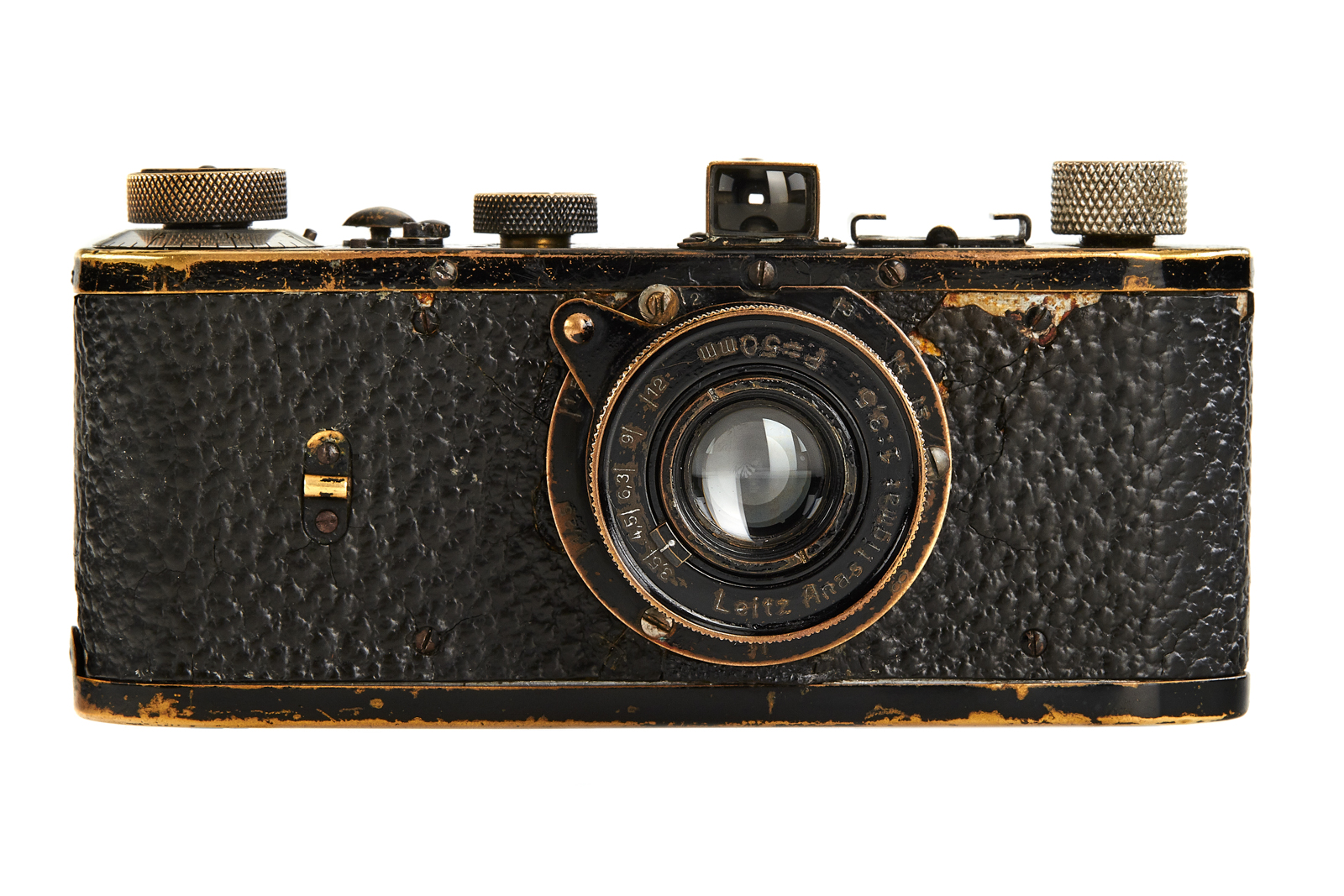
It looks used, because it was — by the man who designed it. The camera is a small black-painted 35mm prototype from 1923, its paint worn through to the brass at the edges, and on 11 June 2022, at the 40th Leitz Photographica Auction in Wetzlar, it sold as Lot 5 for a €12 million hammer. With the 20 percent buyer's premium, the total was €14,400,000 — the figure Leitz prints for the lot, and the one that matters. The estimate had been €2–3 million, from a €1 million starting bid. The buyer was not named.
The lot was Lot 5 of the sale, auction number AI_40_37555: Leica 0-Series No. 105, serial 105, made in 1923. To understand the price, start with what the 0-Series was. In 1923 and 1924, Ernst Leitz built around 23 of these test cameras for the design that went into production in 1925 as the Leica I — the first commercially successful 35mm camera, and the machine that made 35mm the standard format. Around a dozen of the prototypes survive, on Leitz's account. No. 105 is one of them. It is also the one Oskar Barnack kept.
The proof is engraved
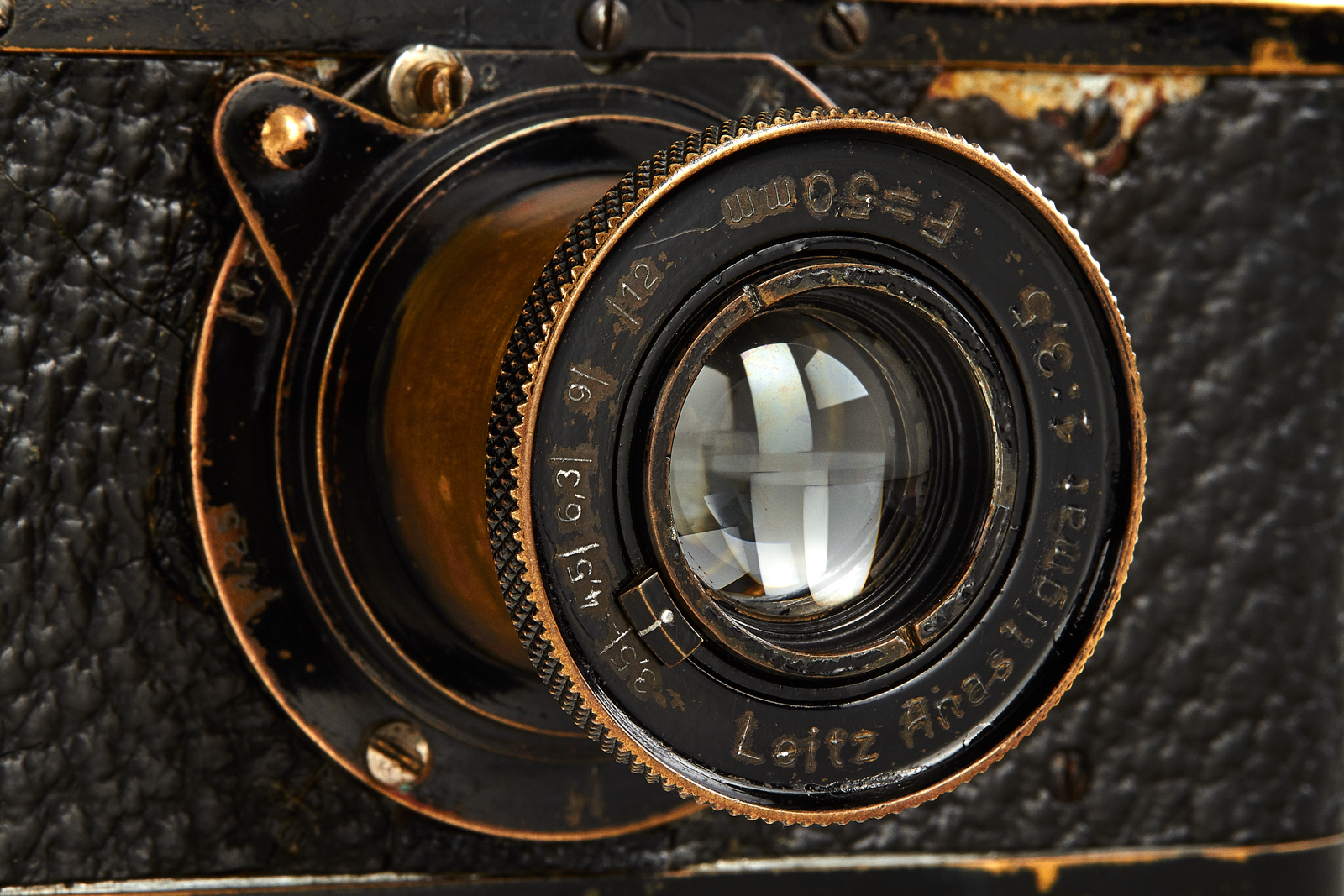
Barnack was the Leitz engineer who designed the camera, and his connection to this example is not a story attached to it later — it is cut into the metal. The Galilean finder carries a distinctive engraving down its brass face: 'Oscar Barnack'. Beside it the top plate is stamped 'No 105' and 'Ernst Leitz'. The black paint carries the patina of years of use, and the lot essay notes that some parts were exchanged by the owner during his time with the camera — the working marks of a test camera that was actually tested, fitted with its 50mm f/3.5 Leitz Anastigmat lens.
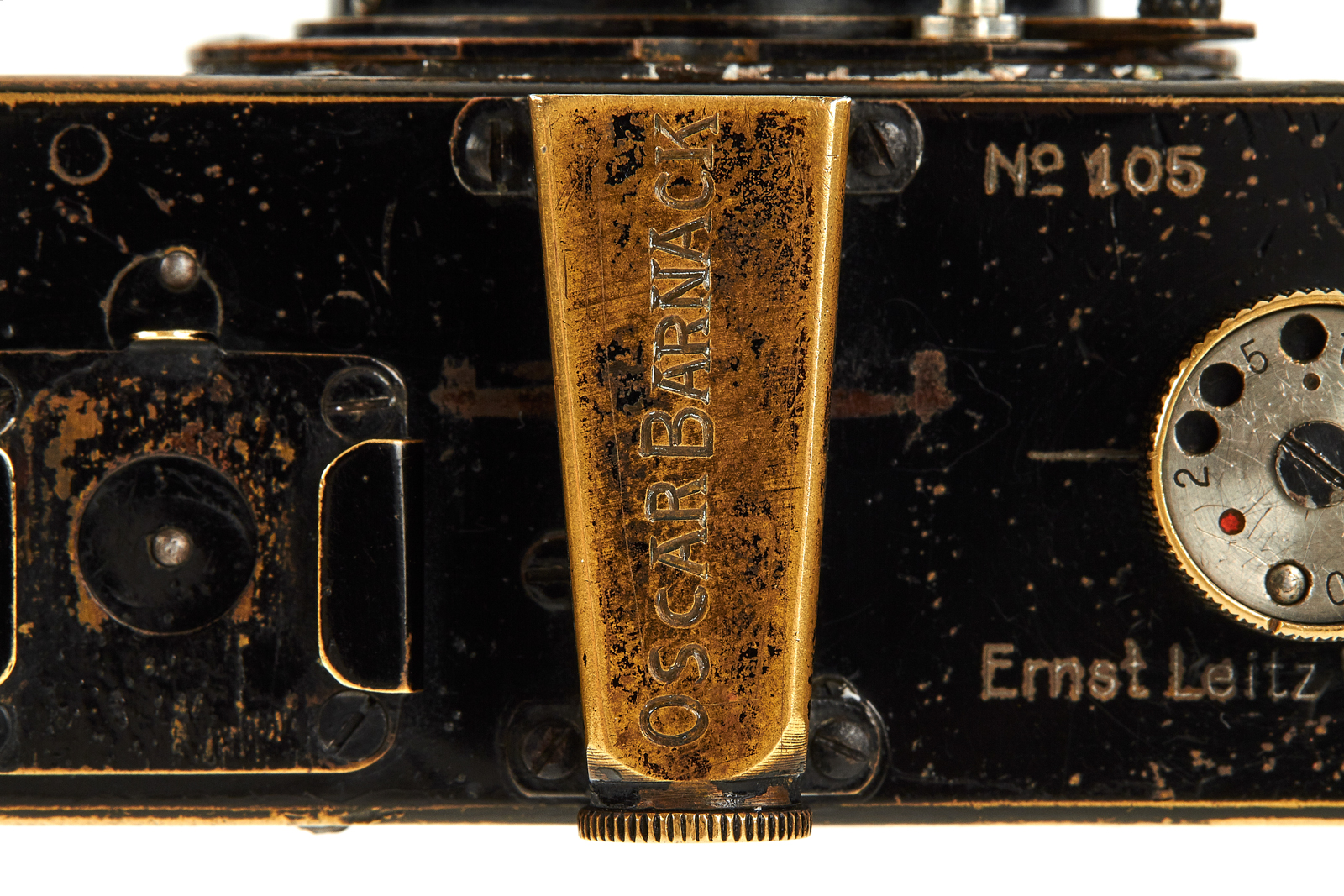
The chain, as the auction house states it: Barnack used the camera until 1930, when he gave it to his son Conrad and moved on to a Leica I Model C with interchangeable lenses. It stayed in family ownership until 1960, when it was sold to a US collector. And the €14.4 million bought more than the body: the lot included the original leather lens cap on a string, a later aluminium cap engraved with the initials 'O.B.', a heavily modified Nettel camera Barnack used in his photographic research, and numerous documents and letters concerning this camera. The price belongs to that whole lot, and no photograph of the camera alone should be captioned as if the body carried the full sum by itself.
Six times the record it replaced
The record No. 105 replaced belonged to another 0-Series: No. 122, which brought €2.4 million including premium in 2018. Barnack's camera made six times that. Leitz calls No. 105 'the most distinguished Leica existing' and 'one of the major historical milestones from the history of photography' — the house's language for its own lot, quoted as such. What the result itself proves is narrower and stronger: on 11 June 2022, this lot, with this documented history, brought €14.4 million. Later 0-Series results sit far below it — No. 112 brought €7.2 million at the 46th Leitz auction in 2025 — which underlines where the premium lives: not in the series, but in this camera, the designer's own.
Fourteen hundred flagship Leicas
There is no materials premium here, and the story does not invent one: the camera is brass, leather and glass of its period. Set the total against what Leica sells now. The current M flagship body, the M11-P, lists at $10,400 in the US. The 2022 total was rendered at the time as about $15,035,832 — roughly 1,446 current flagship bodies, body-only in both cases, across currencies and years, a scale comparison and nothing more. Or take an ordinary vintage camera: a working Canon AE-1 Program with a 50mm lens, the standard starter film camera, trades at $200–$280 used. At those prices the lot equals something like 54,000 to 75,000 of them. A good, usable, historically popular film camera changes hands for a few hundred dollars. The €14.4 million lives in a different category altogether: documented history, not photography equipment.
Around 23 made. Around a dozen surviving. One designer's personal camera, its provenance engraved rather than asserted, its supply fixed forever. The bidding in Wetzlar — from a €1 million start to a €12 million hammer before noon — is what happened when that supply met the room.
Sources: Leitz Photographica Auction, lot page AI_40_37555 and the house's 40th-auction highlights; Leica Camera's June 2022 record release; PetaPixel's sale report; B&H and Crutchfield M11-P listings; KEH/MPB used-market guidance for the AE-1 Program.
Sources · 3 sources
- {'outlet': 'Leitz Photographica Auction'}
- {'outlet': 'Leica Camera'}
- {'outlet': 'PetaPixel'}