
The schooner Herreshoff rarely drew
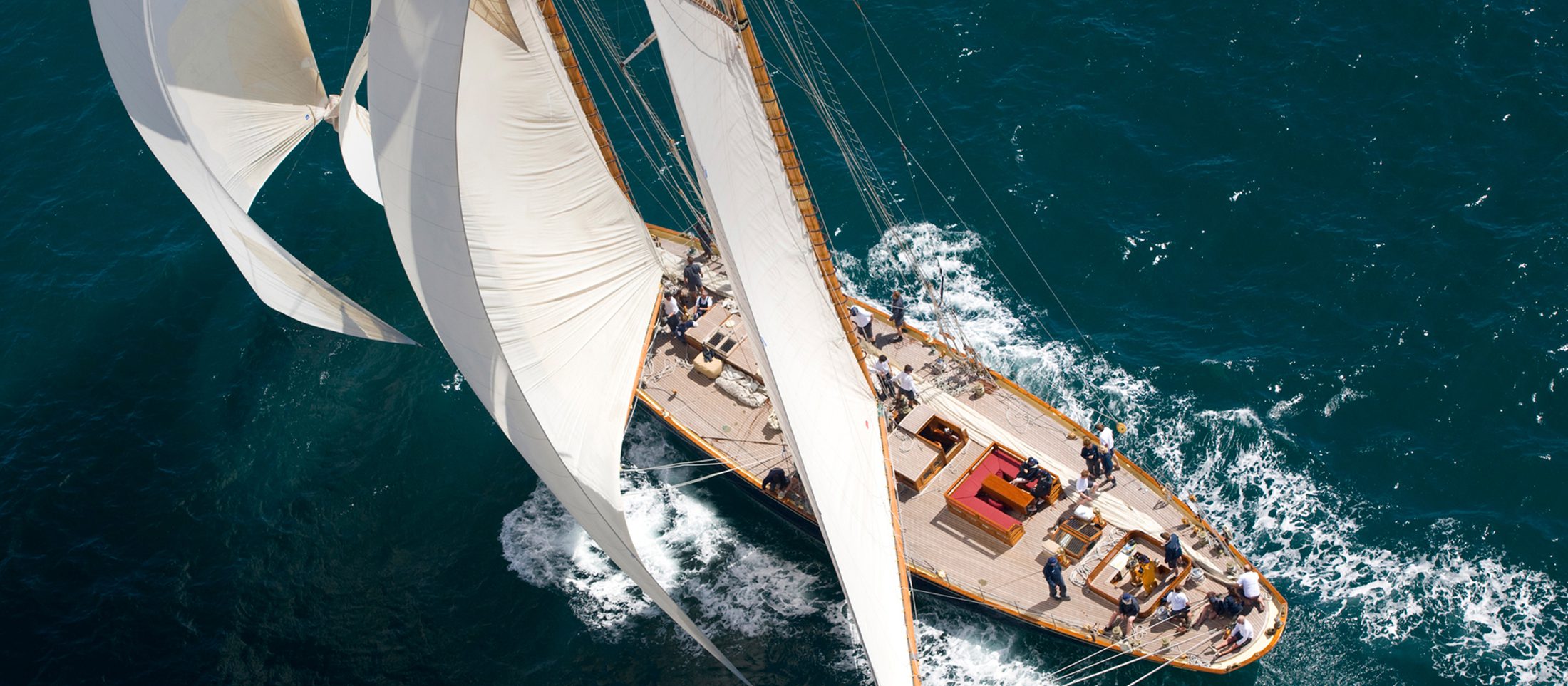
Mariette was completed on 22 October 1915, built in just seven months at Bristol, Rhode Island, to a design by Nathanael G. Herreshoff, the naval architect whose America's Cup defenders defined an era. She is a steel-hulled, twin-masted schooner of 42.06 metres — one of the few schooners Herreshoff drew, from a designer who reportedly found the rig tricky and drew it rarely. Steel was his America's Cup material, and Mariette's hull is built from the same conviction.
A boat like that does not survive a century by being admired. Boat International counts countless transatlantic crossings and regattas behind her, and a score of owners along the way, the US Coastguard among them. Her last major refit before Pendennis was completed at La Spezia in 1995, under Tom Perkins: the Bermuda rig was thrown out, her original gaff set-up restored, and the engines and propellers replaced. Twenty-two years later, she checked in to Falmouth for the next one.
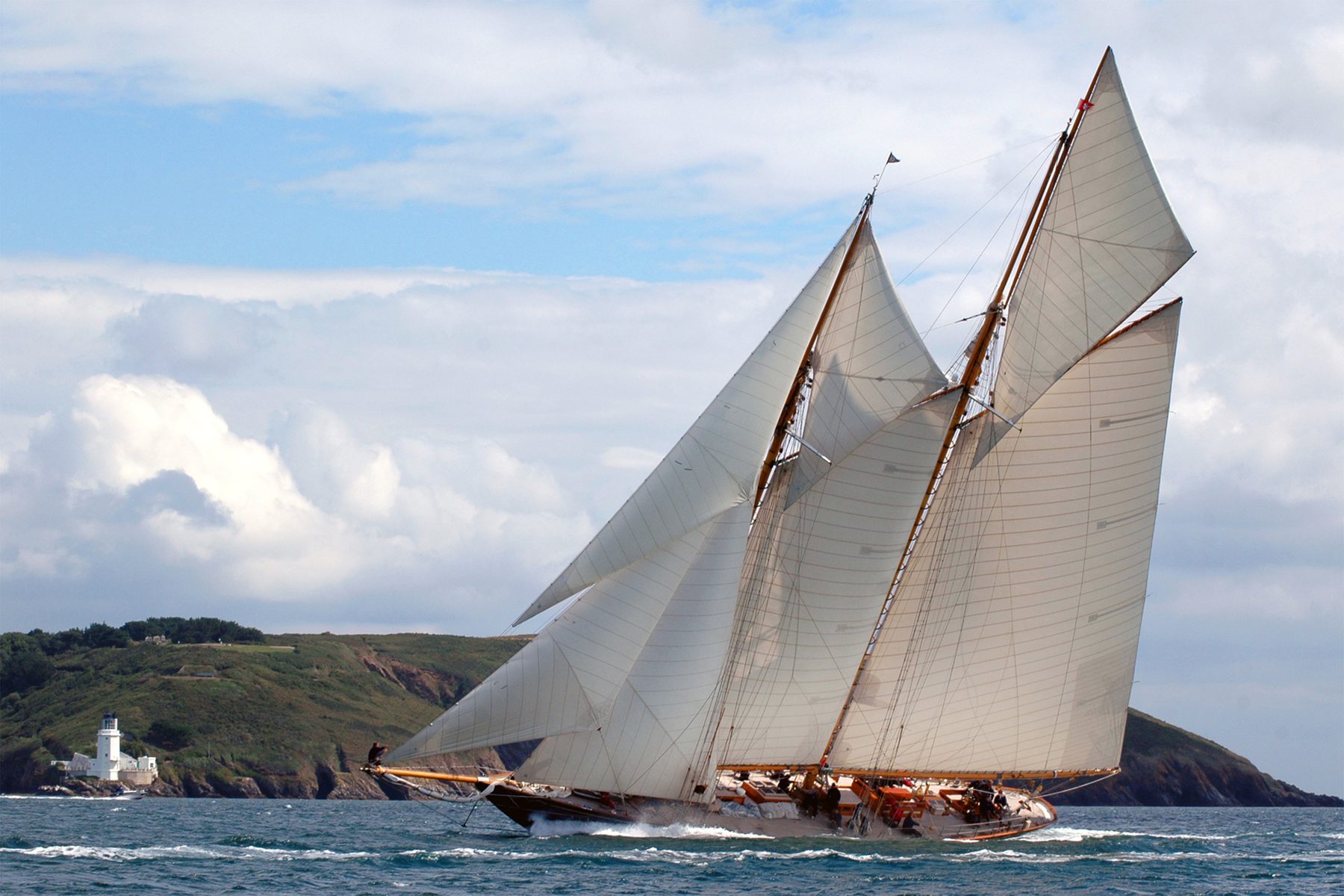
She has been a Pendennis regular for years — first visit in February 2010, back in spring 2012 to prepare for the Pendennis Cup, a regatta she has contested all four times it has been held and won overall in 2012. In 2014 she was one of the first vessels hauled on the yard's new 640-tonne travel hoist. In autumn 2017 she arrived for something bigger. She was hauled out on 1 September, and the yard began the most comprehensive refit of her time there.
The deck was coming up through itself
The headline job was the deck, and the reason was visible underfoot. Mariette's original deck was pitch pine planking laid directly on the steel deck beams. That was replaced in the 1980s with teak planks on a plywood subdeck, and by 2017 the newer deck had failed in a particular way: the screws used to secure it from underneath had started to pierce the surface of the teak. "We had this crop of dragon's teeth coming up through the deck randomly in the high-wear areas," her captain, Charlie Wroe, told Boat International.
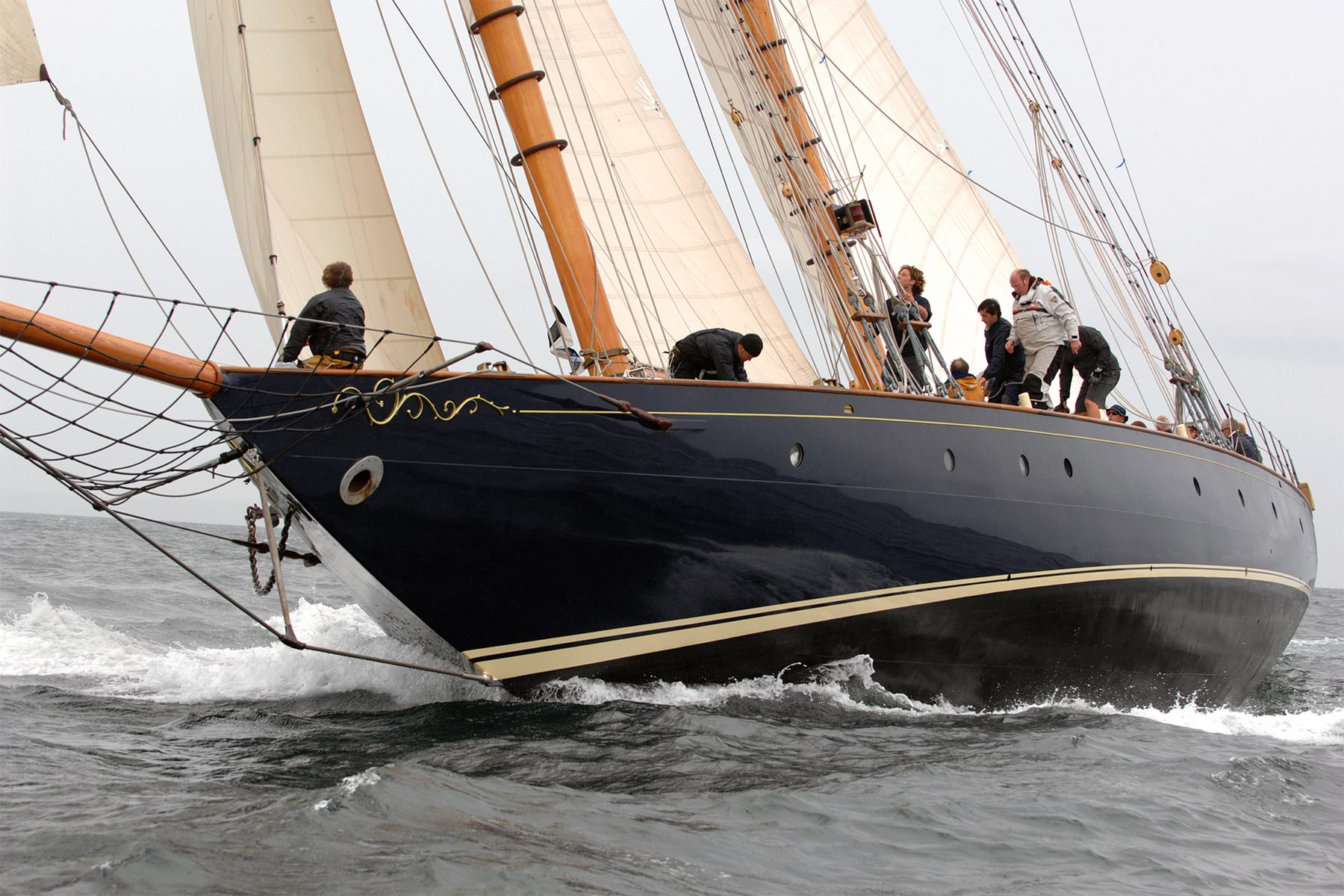
So the whole deck came off — not just the teak but the plywood too — because removing it gave access to the steel structure below. Extra steel members added haphazardly over the years, and the packing pieces inserted to support the old plywood, were taken out and the structure faired with epoxy before two layers of 12mm marine plywood were fitted across the whole deck and the new teak laid over the top: some 150 square metres of it, 20 millimetres thick.
Getting there meant dismantling the boat's familiar silhouette. All but two of the deckhouses were lifted off, re-varnished ashore and put back into position. The upstands were replaced in stainless steel, and the crew re-varnished the masts and spars. The deck work carried sailing improvements with it: a new Lewmar winch for the foresheet, higher-ratio gearboxes on the other electric winches, and winch switches relocated to more practical positions.
What opening her up revealed
Wroe was candid about the gamble in opening her up: the metalwork under the deck could be estimated, but the deep areas of the hull, hidden behind joinery, were an unknown until the boat was apart. Joinery and equipment came out for access to the underwater steelwork, and on the way back in, thought went to preventing water — from showers, toilets and condensation pipes — lying in inaccessible places, and to making the inside of the hull easier to reach next time. Where possible, steel was replaced by stainless steel in the inaccessible areas, the floors in the deep bilge among them, and in highly visible ones such as the bowsprit chainplates. "We didn't want the same problems reoccurring," Wroe said.
The integral steel water tanks went. Wroe called them impossible to service and keep clean; in their place sit six plastic tanks of about 1,600 litres in total, each one removable so the surrounding steelwork can be reached. The steel fuel tanks were retained — diesel had preserved their internal surfaces — but the plumbing serving them, and every water system on board, was replaced. The wiring told a forty-year story: as equipment was added over the decades, redundant cabling was left in place and much of what remained had become unreliable, a spider's web of it drooping from the ceiling in the shaft alley. All of it has been replaced, along with much of the switching.
A clean slate in the engine room
The engineering spaces were redesigned from empty. Systems had been added piecemeal over the years; now everything came out, and the engines themselves — twenty-year-old Caterpillar 3208 V8s — were shot-blasted and painted, the only items reinstalled in their original position. Heavy equipment, the batteries, watermaker, shaft brake and transformer among it, was repositioned closer to the boat's centre of gravity, and weight came out throughout, from scrapping the steel tanks to removing the rarely used autopilot: about a tonne saved in total, by Wroe's count. Navigation and communications systems were upgraded in full, and the engine room re-laid out for better access and drainage — the unglamorous change that decides whether machinery gets serviced properly for the next twenty years.
Inside, the English walnut saloon — original, and the only part of the boat not built by the Herreshoff Manufacturing Company — gained a new flue for its wood burner and a fully replaced headlining. The guest and owner's cabins were renewed with carpet throughout and updated electrical fixtures. The galley and crew mess were reconfigured around a larger table made from a section of the old deck, with three standalone commercial-grade refrigeration units replacing a compressor system whose condensation had caused rotten wood and rusty steelwork. The crew area was overhauled end to end — internal steel surfaces painted, air conditioning and the domestic fresh and grey water systems replaced — and the captain's cabin was redesigned outright.
Eight months, then straight to Norway
After eight months Mariette emerged from the Falmouth sheds in May 2018, redelivered that spring on her fourth visit to the yard. Pendennis called it her most comprehensive refit to date, and the description holds: this was not a cosmetic season. It was a structural one, carried out on a hull launched when the First World War was a year old.
She was put to the test immediately, setting course for Norway — the Sognefjord, then the Lofoten islands — before cruising the Orkney and Shetland islands and heading south for the Cannes and Saint-Tropez regattas. No rest, then, for the centenarian: the refit's whole point was a boat that goes sailing, not a boat that gets looked at.
Previously's Take
A classic yacht's elegance is a maintenance programme wearing good clothes: beams re-faired under plywood, a fire main renewed, drainage that finally works. The 1915 lines earn the attention — the hidden work, repeated expensively by every custodian in turn, earns the boat its second century.
The numbers
Sources · 3 sources
- Pendennis — official case study, Mariette (refit scope and specifications)
- Boat International — "Living legend: Inside the major refit of Herreshoff schooner Mariette of 1915" (haul-out date, captain's account, May 2018 emergence)
- Barche Magazine — "Mariette, a rare gem" (1915 completion, deck construction detail: steel beams, marine plywood, 150 m² of 20mm teak)
Photographs: Pendennis · Pendennis · Pendennis