
Two weeks before Election Day, the 2026 midterms have already become a contest measured in a number that would have been unthinkable for an off-year election: more than $15 billion. That is how much has been raised to influence the midterms and the fight for control of Congress, according to an analysis by NPR’s Stephen Fowler, who crunched the numbers after last week’s final major campaign-finance deadline before Election Day. Fowler’s reporting, published by NPR on October 19, puts the cycle on track to be the most expensive midterm on record — and the shape of the money is as revealing as the total. Democratic candidates are raking in donations at a pace Fowler describes as remarkable even though their party remains unpopular, while on the Republican side, a small number of mega-donors — above all Elon Musk, with more than a quarter-billion dollars in new spending, according to NPR — are pouring money into super PACs to hold the line.
A record total, built two different ways
Start with the scale, because Fowler’s numbers reframe what a midterm is. More than $15 billion has been raised since the start of 2025, according to Federal Election Commission data cited by NPR, and half of that has been spent so far. Advertising spending on House and Senate races alone has topped $4 billion, according to AdImpact data cited by NPR, with hundreds of millions of dollars more planned for the final two weeks. This is no longer a smaller, cheaper cousin of a presidential cycle. It is a presidential-scale money race run across 470 congressional contests at once.
The total is being built by two very different engines, and that split is the heart of Fowler’s reporting for NPR. On one side are Democratic nominees in House and Senate races drawing what NPR’s Up First newsletter, summarizing Fowler, called incredible amounts of donations — totals Fowler himself has described as “gobsmacking” — even though, as NPR notes, the Democratic Party itself remains unpopular. On the other side, Republicans are also unpopular, NPR reports, in an electorate that has soured on the president’s agenda amid an unpopular war in Iran, high fuel costs and rising prices — and the Republican answer at the top end has come not from a broad small-donor surge but from a few mega-donors writing enormous checks to super PACs. Enthusiasm at the candidate level on one side; concentration at the donor level on the other. Both roads lead to the same record.
That reading is consistent with the longer arc tracked outside NPR as well. OpenSecrets, reporting in January on AdImpact’s projections for the 2025–2026 cycle, said the 2026 elections were on track to become the most expensive midterm cycle in U.S. history, with political advertising alone estimated at $10.8 billion — more than 20 percent higher than in 2022, according to OpenSecrets — and with Senate and House spending both projected to reach record highs even as the number of competitive contests shrinks. In other words, the record Fowler is now measuring in actual filings was visible in the forecasts at the start of the year. What has changed is that the money is no longer a projection. It has been raised, reported and, in large part, already spent.
The Senate map the money is redrawing
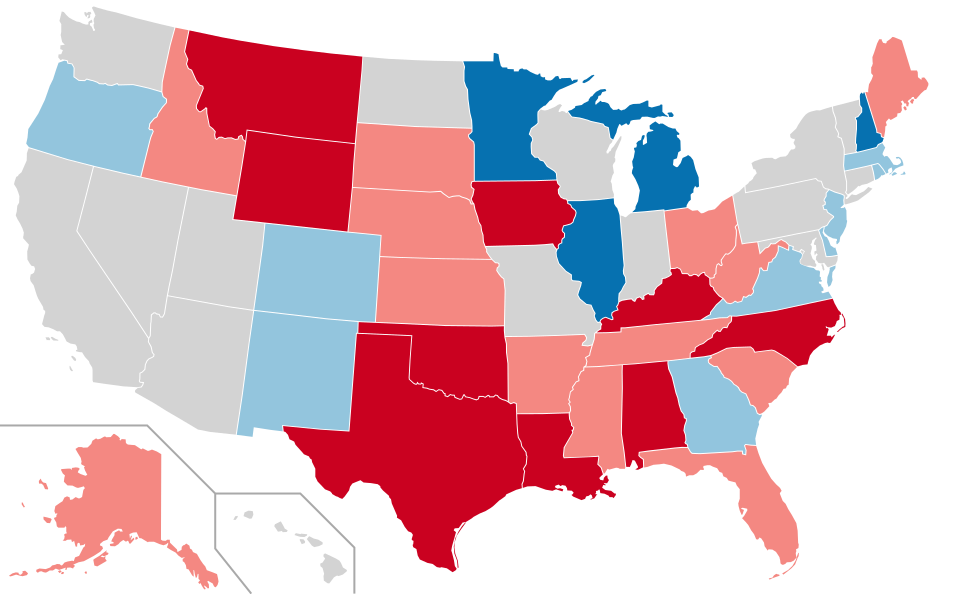
Nowhere is the Democratic candidate-level surge clearer than in the Senate, according to NPR. From July to September, Fowler reports, the Democratic or independent candidate outraised their Republican opponent in 27 of the 35 Senate races on the ballot, posting a nearly 5-to-1 advantage in the 13 most competitive races. NPR’s Up First newsletter put the same finding in the terms the Cook Political Report uses to define the battleground: in the 13 competitive races it highlighted, Republicans are being outraised by a 5-to-1 margin.
Texas is the clearest example. Democratic Senate nominee James Talarico’s main campaign committee reported bringing in about $60 million in the third quarter, according to NPR — a total his campaign says is a record for a Senate campaign in that period before the election, and more than any other Senate candidate has raised over the entire cycle except Democratic Sen. Jon Ossoff in Georgia, NPR reports. And Texas is not an outlier confined to the usual toss-ups like Ohio and Michigan. In Kansas, Democrat Adam Hamilton raised nearly $10 million into his primary campaign committee in the last quarter, compared with just $800,000 for incumbent Republican Sen. Roger Marshall, according to NPR. In Mississippi, Republican Sen. Cindy Hyde-Smith reported less than $700,000 in contributions, NPR reports, while Republican Sens. Mike Rounds of South Dakota and Jim Risch of Idaho each disclosed just under half a million dollars in third-quarter receipts — with their opponents reporting roughly double the haul in each case.
The strategic consequence, as Fowler lays it out for NPR, is a map that keeps expanding. Democrats currently hold 47 Senate seats, NPR notes, and have used their fundraising edge, along with Republican unpopularity, to target races in states where the president won as much as 60 percent of the vote — including Senate contests in more conservative-leaning states like Iowa, Texas, Kansas and Ohio, and newly competitive House districts. Money does not guarantee those states flip. But money is what makes a long-shot race a real race: it pays for staff, for field operations and for the advertising that introduces an unknown challenger to voters who have never heard their name. A challenger who outraises an incumbent by ten-to-one, as in Kansas on NPR’s figures, is not a protest candidate anymore. That context also helps explain the mood underneath the money in our earlier coverage of the president’s record-low approval numbers heading into the midterms — unpopularity at the top does not automatically transfer to every candidate below it, but in this cycle, NPR’s reporting shows, it is showing up in the fundraising column.
The House: incumbents on the wrong side of the ledger
The House picture tells a similar story from a different angle, according to NPR. Next year’s Congress is already set to have a record number of departures, Fowler reports, and the anti-incumbency mood that ran through the primaries has continued into the general-election money race: 50 sitting House members were outraised in the last quarter, and about 90 percent of them were Republicans, according to NPR. Of the 17 vulnerable lawmakers on the National Republican Congressional Committee’s own list of “NRCC Patriots,” NPR reports, only one — Pennsylvania Republican Brian Fitzpatrick — raised more cash than his opponent.
On the Democratic side, the pattern held in the opposite direction. The only vulnerable incumbent on the Democratic Congressional Campaign Committee’s “Frontliner” list who was outraised last quarter was Nevada Rep. Dina Titus, according to NPR, while 40 of the 46 seats targeted as “Red to Blue” flips saw the Democratic candidate raise more money. And in the races expected to be closest, both sides are spending at levels once reserved for Senate contests: more than $7 million combined was raised last quarter in New York’s 17th District contest between Republican Rep. Mike Lawler and Democrat Cait Conley, NPR reports, and Conley’s $5.4 million third-quarter haul was, according to NPR, the largest of any House campaign — more than all but one incumbent U.S. senator raised in the same period. That is the sound of a House majority being contested district by district, with challengers who can afford to stay on the air through Election Day.
Musk’s money, and the Texas funnel
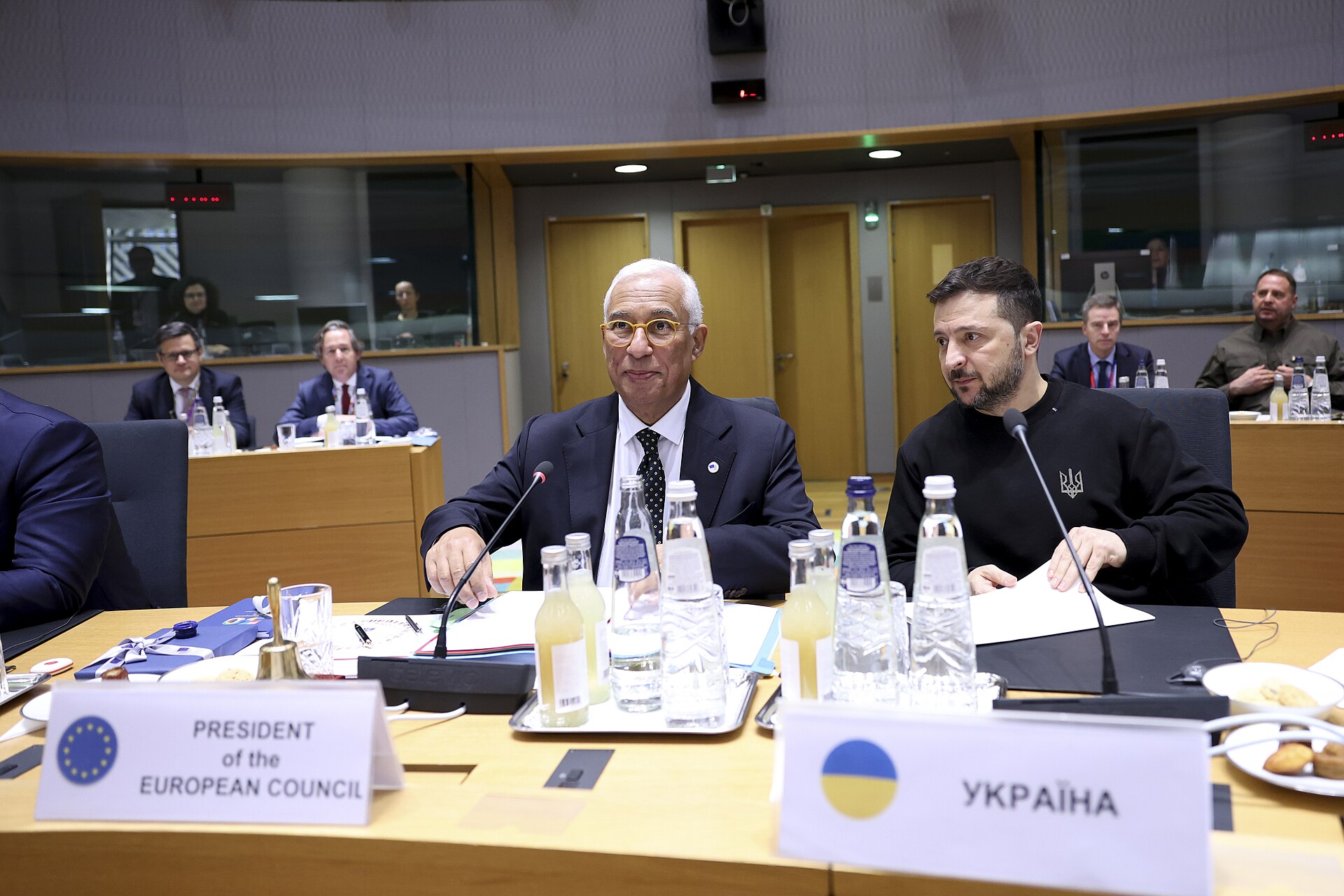
If the Democratic story is breadth — many candidates, many donors, many races — the Republican super PAC story, in Fowler’s telling for NPR, is concentration, and its center is one man. Last week’s filings reveal a fuller picture of Elon Musk’s outsize role in funding the Republican effort to keep Congress, NPR reports. In recent weeks, according to NPR, Musk donated $158 million to the Republican Senate Leadership Fund, $20 million to the Congressional Leadership Fund — the Republican House super PAC — $89 million to his own America PAC, and $10 million to the pro-Ken Paxton Lone Star Liberty PAC. Added together, that is $277 million — the “more than a quarter billion in new spending” by the world’s wealthiest person that NPR’s Up First newsletter highlighted.
Follow the largest check, because Fowler does. The $158 million Senate Leadership Fund contribution, NPR reports, was then used to solely fund a group called Texas PAC, which has already spent more than $148 million to boost Paxton and attack Talarico in the Texas Senate race. To put that in perspective, NPR notes, Musk’s contributions routed through Texas PAC amount to more than the Talarico and Paxton campaigns have raised combined throughout the entire campaign cycle. The figure is roughly the amount spent on advertising for all 470 congressional races in the first week of September, NPR reports — and for every dollar raised by a Senate campaign in the past three months, Musk spent about 56 cents just in Texas.
An independent look at the same landscape points the same way. OpenSecrets, analyzing federal disclosure reports through October 5, found that outside groups had poured nearly $2 billion into the cycle, that the Senate Leadership Fund and Texas PAC were among the top six outside spenders, and that the Texas contest between Talarico and Paxton had generated nearly $287 million in spending — almost $253 million of it by conservatives, according to OpenSecrets. OpenSecrets also described Texas PAC as a new Senate Leadership Fund-linked organization created to back Paxton. Those OpenSecrets figures are an earlier snapshot than the filings Fowler reviewed for NPR, which is why the Texas PAC spending totals differ — but the structure they describe is identical: one race, one linked super PAC, and a flood of money arriving from outside the state whose voters will actually decide it.
Fowler adds one important limit on what that money can do, via NPR: advertising rules give candidates more favorable rates than outside groups get, so a super PAC dollar does not buy as much airtime as a campaign dollar — which means the Musk money bomb, in NPR’s phrasing, does not go as far as its headline size suggests, especially in Texas’s numerous and expensive media markets. That rate gap is precisely why the Democratic candidate-level advantage matters even against a quarter-billion-dollar donor: a dollar raised by the Talarico campaign itself stretches further on television than a dollar spent against him by a super PAC.
Where the final $700 million is going
The last piece of Fowler’s analysis for NPR is the forward look — where the money already reserved says the real battleground is. From now until Election Day, at least $700 million in advertising reservations are planned, according to AdImpact data cited by NPR, and that number is likely to rise in the final sprint. Three-quarters of that planned spending — 75 percent of planned ad buys, as NPR’s Up First newsletter summarized it — is for races that are either toss-ups or lean Republican in the Cook Political Report’s ratings. In plain terms: the advertising map is a defensive map for Republicans, concentrated in seats they currently hold or are favored to hold, and an offensive map for Democrats trying to take them.
The movements underneath that total, as NPR reports them, show both parties adjusting in real time. Since September 28, Republicans have more than quadrupled their ad spending in the Kansas Senate race and tripled their investment in Mississippi’s Senate contest and in House seats in Missouri, Arizona, Pennsylvania and Kentucky, according to NPR — while also pulling spending back from Senate races in North Carolina and Georgia and from onetime toss-up House seats in Iowa, Ohio and Nebraska that now favor Democrats. Democrats, NPR reports, have launched a full-court press on the Senate side in Ohio, Michigan, Maine, Texas and Alaska, while adding Iowa, Kansas, Mississippi and South Carolina to the mix. Meanwhile, Republican outside groups — including, NPR notes, a trio of super PACs tied to MAGA, Inc. — have outspent Democrats on the airwaves despite the candidate-level gap, working to paint Democrats as too extreme to control Congress.
All of it lands on an electorate that is already voting. Early voting is underway in many states, as we tracked when the countdown hit 30 days with early voting already open, and October 15 marked the last major quarterly campaign-finance deadline — but not the end of the disclosures. Large contributions and outside expenditures, NPR notes, will keep being reported on a one- or two-day turnaround all the way through Election Day, so the $15 billion figure Fowler calculated is a floor, not a final total. And the result of all that spending may itself arrive slowly: some of the most competitive congressional races might not be called until days after Election Day, NPR’s Up First newsletter warns. The most expensive midterm in American history may also be one of the slowest to resolve — which means the record total and the long count will be the two numbers that define the night of November 3, and very possibly the week that follows it.
More from the News Desk: Latest news
Sources · 4 sources
- NPR — Democrats — and Elon Musk — continue to dominate midterm campaign fundraising (Stephen Fowler, October 19, 2026)
- NPR — 2026 midterms could be the most expensive on record (Up First newsletter) (October 19, 2026)
- OpenSecrets — Political ad spending is projected to reach a new high in 2026 midterms
- OpenSecrets — Outside spending nears $2 billion — and the biggest groups pull further ahead