
The NFL’s Sunday Ticket case is back in play. The money is not settled.
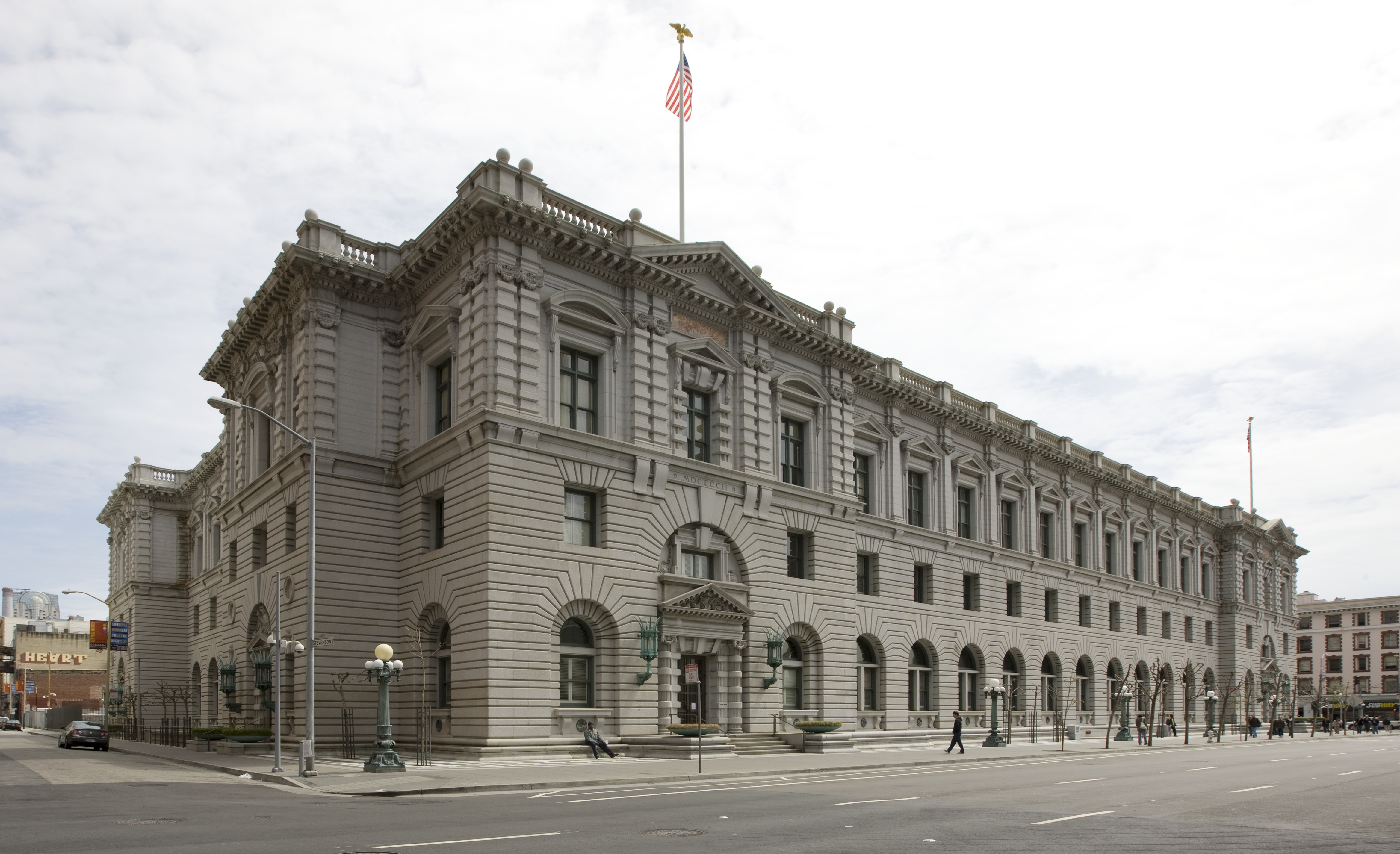
The U.S. Court of Appeals for the Ninth Circuit on Friday, October 30, directed a lower court to reinstate the jury’s liability verdict against the NFL in the long-running Sunday Ticket antitrust case. It also ordered a new trial on damages. Those are two different results, and the distinction is the whole story for fans wondering whether this means money is coming their way.
The court did not restore the roughly $4.7 billion damages award from the 2024 trial. It did not announce individual payments. And its decision does not order a reduction in the price of a current Sunday Ticket subscription.
The 32-page opinion, written by Circuit Judge Anthony D. Johnstone, ends with a specific instruction: restore the liability verdict and hold another trial to determine damages. Reuters reported the reversal Friday, while Bloomberg’s account likewise distinguished the subscribers’ success on liability from the rejected award calculation.
Two questions, two different answers
At its simplest, this dispute has a responsibility question and a money question. Did the challenged arrangements violate antitrust law and injure subscribers? If so, how much should the plaintiffs recover?
The jury answered both in the subscribers’ favor. After the trial, however, U.S. District Judge Philip S. Gutierrez excluded testimony from the subscribers’ economic experts and entered judgment for the NFL. He also conditionally ordered a new damages trial in case that judgment was reversed.
Friday’s appellate ruling separated those decisions. The panel concluded that excluding the expert testimony was an abuse of discretion, undermining the basis for the judgment that had wiped out the subscribers’ win. But it agreed that the jury’s damages calculation could not stand.
That is why describing this as simply a reinstated $4.7 billion award would miss the central qualification. The NFL lost the judgment that had erased liability. It retained the right to a new trial over the amount.
For subscribers, that is a meaningful change—not a completed payout process.
What subscribers challenged
The litigation concerns the DirecTV-era arrangements for out-of-market NFL telecasts. The opinion identifies the class period as June 2011 through February 2023 and describes both residential and commercial subscriber classes.
The plaintiffs challenged a set of interconnected agreements: teams pooled their television rights through the league, the NFL licensed local broadcasts to networks, and DirecTV received exclusive rights to distribute the out-of-market package. Subscribers alleged that restricting distribution to one provider and one package suppressed competition and increased what they paid.
That matters because an out-of-market fan was buying access to games not otherwise available through the local broadcast lineup. A fan’s interest in a particular team and the package needed to watch that team were not necessarily the same thing. The lawsuit examined the economic consequences of those distribution choices, not whether football was worth watching.
The case also included commercial customers, such as sports bars, whose subscription costs differed substantially from household prices. That distinction becomes important when considering how damages were calculated.
Why the old number did not survive
The appellate opinion describes a basic problem with the jury’s apparent arithmetic: it treated the difference between a listed price and an estimated lower price actually paid as an overcharge.
But paying less than the list price represents a discount. It does not, by itself, establish how much more a customer paid because of anticompetitive conduct.
The relevant comparison was between what subscribers actually paid and what they would have paid without that conduct. The panel also noted that the calculation did not account for what commercial subscribers paid, which was much higher on average than residential pricing.
Those are not interchangeable measurements. A large gap between a sticker price and a discounted bill cannot simply become the amount a customer was unlawfully overcharged.
The court therefore upheld the new-trial order on damages. That leaves the amount to be determined through further proceedings rather than carrying the old figure forward as an established debt.
The experts are back in the case
The other half of the ruling concerned economists Daniel Rascher and Douglas Zona, whose testimony supported the subscribers’ case.
Rascher used college football as a comparison for considering how NFL broadcasts might be distributed without the challenged arrangements. Zona analyzed alternative distribution and pricing scenarios. The NFL disputed their analyses, and the district court eventually excluded their testimony.
The appeals panel concluded that the lower court went beyond its proper role in evaluating whether those opinions could be presented. Its analysis distinguished challenges to the experts’ methods and factual foundations from disagreements about the conclusions jurors should draw.
That restored an important foundation of the subscribers’ case. It did not validate every dollar the jury awarded. An expert’s testimony being admissible and a jury’s damages calculation being supported are separate issues; Friday’s outcome turns on that separation.
What happens next—and what does not
The case returns to the district court with instructions to reinstate the liability verdict and conduct a new damages trial. The opinion does not set a date for that trial or establish a final recovery amount.
It also does not provide an individual payment schedule or a new subscription price. Readers should not translate a favorable appellate ruling into a promise of refund checks, an automatic credit, or cheaper football this weekend.
The development is still substantial. The subscribers have regained a liability verdict that had been taken away, and the NFL faces another damages proceeding. But the next consequential number has not been decided.
The league has not accepted the ruling as final. In a statement reported by Reuters on Friday, the NFL said it was disappointed with the decision and is considering seeking further appellate review, while defending its media distribution as the most fan-friendly in sports and entertainment. No appeal had been filed as of this report.
For now, the accurate headline has two halves: the subscribers’ liability win is coming back, and the money question remains open.
Sources · 3 sources
- U.S. Court of Appeals for the Ninth Circuit — Ninth Inning Inc. v. National Football League, Inc. — October 30, 2026 opinion, cases 24-5493 and 24-5691
- Reuters, via 102.7 WBOW — US court reinstates Sunday Ticket class action verdict against NFL
- Bloomberg News / Bloomberg Law — NFL Faces New Trial Over Damages in Sunday Ticket Fight