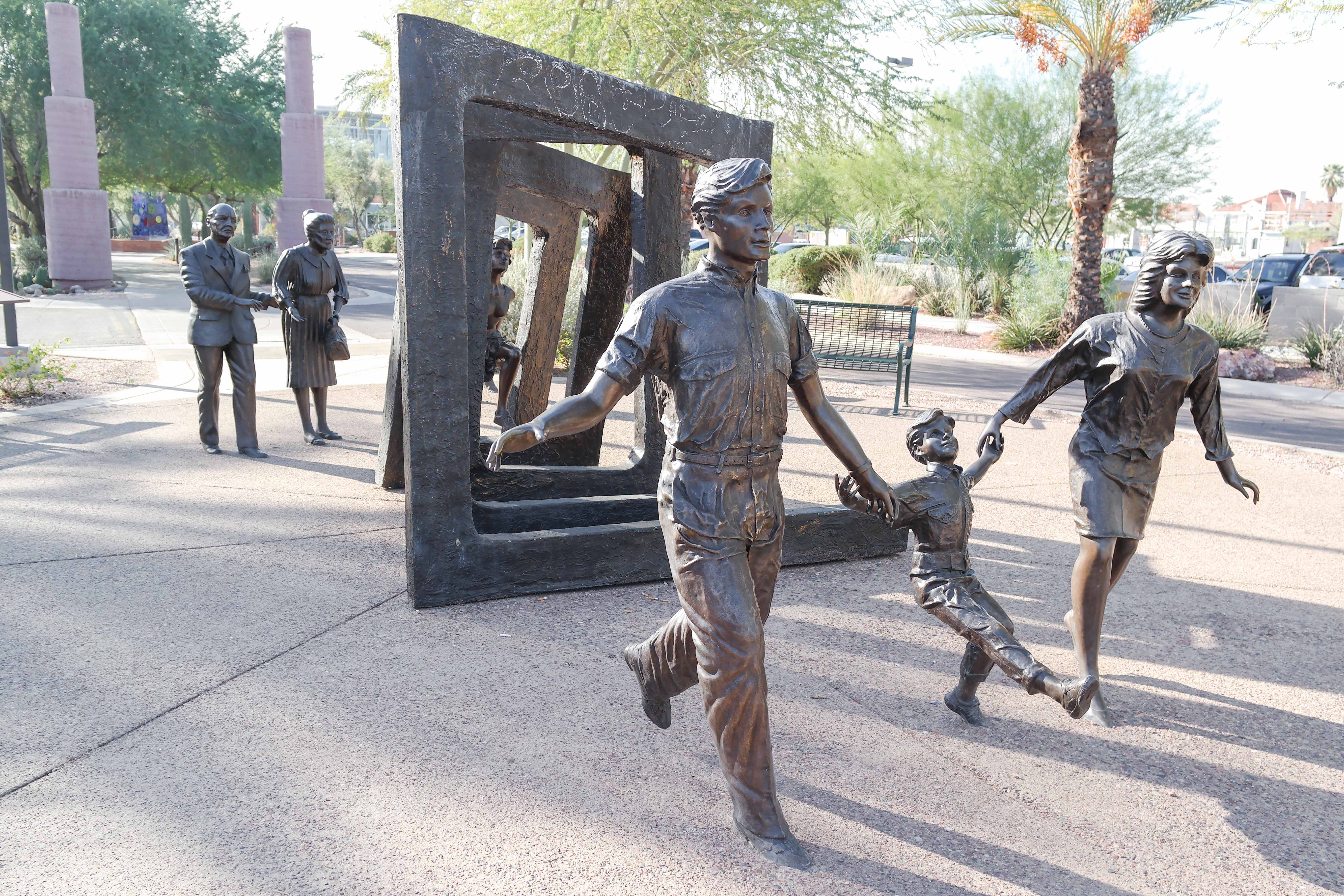

There were supposed to be eight of them. The bronze figures at Phoenix's Cancer Survivors Park — adults of different ages and children, walking through a bronze maze that stands for the journey of cancer treatment — were designed to be encountered together, as a group making its way through something hard. Today, according to the Arizona Republic, only one figure remains in the park near First Street and McDowell Road.
The park belongs to a family of memorials built across the United States and Canada by the Richard & Annette Bloch Family Foundation, an effort that grew out of H&R Block co-founder Richard Bloch's own experience with lung cancer. According to the Richard & Annette Bloch Family Foundation, twenty-five of these parks were built across the United States and Canada, each pairing its sculpture with walks of bronze plaques offering information and encouragement to people facing the disease. In each park, the centerpiece — the sculpture concept is by Victor Salmones, in the Bloch park tradition — shows eight life-size figures passing through the maze: some on the fearful side of treatment, some emerging on the other side of it. It is a deliberately hopeful piece of public art, placed in a public park, meant for anyone who needs it. That openness is also what left it exposed.
How the Figures Disappeared
The losses happened one at a time, over more than a year. Phoenix Parks and Recreation spokesperson Teleia Galaviz told the Arizona Republic that one adult figure was stolen in March 2025, and another in August 2026. A child figure was also taken at some point the department could not pin down. A fourth statue was damaged in what appeared to be an attempted theft and has been moved into city storage. Police reports were filed for the thefts and the vandalism, according to the Republic; the department suspects the statues were taken for the value of their metal as scrap. The Phoenix Police Department did not respond to the Republic's request for more information.
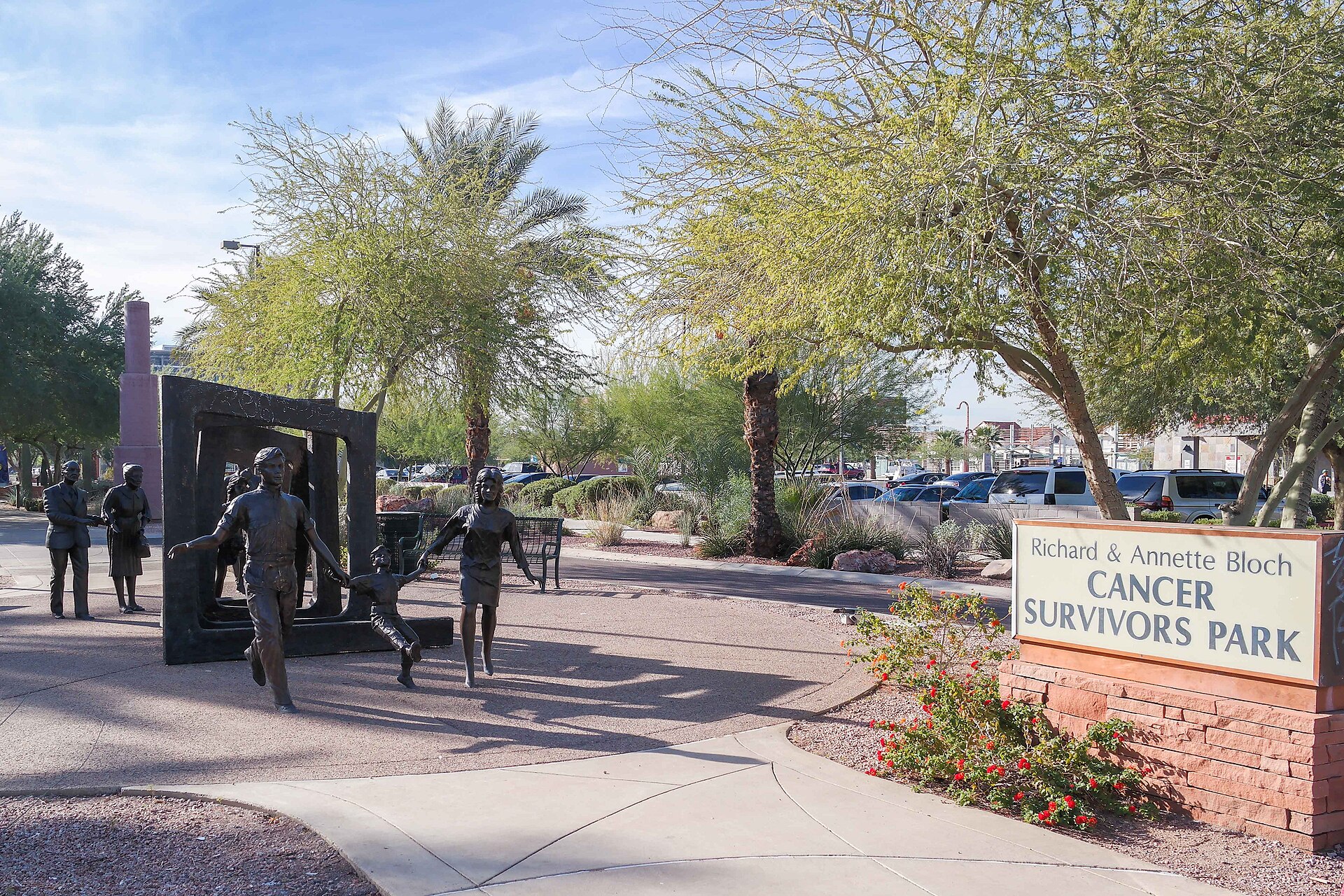
What is left behind tells the story as plainly as any report could. The one remaining figure is an older man — and he is damaged, too. His left hand is severed at the wrist, according to the Arizona Republic. The hand once reached forward, guiding an older woman through the maze beside him. Her figure is gone. A sculpture built to show people helping each other through the worst stretch of their lives now shows one man, reaching toward someone who is no longer there.
Not the First Time, and Not Only Phoenix
This park has been targeted before. The Arizona Republic noted that a child statue was stolen from it in April 2011, an incident that at the time left nothing behind but the figure's bronze shoe. Fifteen years later, the pattern has repeated at a larger scale — and Phoenix is not an isolated case. A survey of the Bloch foundation's parks, summarized in Wikipedia's article on Cancer Survivors Park, lists missing or vandalized figures at sister parks in Bakersfield, Cleveland, Dallas and Houston as well. Bronze theft is a national problem for public memorials; these parks, with their life-size solid figures standing outdoors around the clock, have been hit by it again and again.
There is a hard arithmetic underneath that pattern. To the people who take them, the figures are worth whatever the metal brings. To everyone else — the survivors who walk the maze, the families who visit on anniversaries of diagnoses and remissions — the figures were worth something that does not appear on a scrap scale. The gap between those two valuations is exactly why the thefts sting in a way that ordinary property crime does not.
No Plans to Replace Them, the City Says
For now, the city is not committing to restoring the group. Galaviz told the Arizona Republic on October 8 that Phoenix has no current plans to replace the missing statues. The damaged survivor of the attempted theft remains in storage; the older man remains in the park, alone in a maze built for eight. Nothing in the Republic's reporting suggests a timeline for revisiting that decision, or a fundraising effort to recast the figures.
That leaves the park in an in-between state that anyone can go and see: the plaques, the paths and the maze are still there near First Street and McDowell Road, and so is he. Parks like this one were built on a simple premise from Richard Bloch's own life — that surviving cancer deserved a public place, marked in bronze, where the experience could be recognized rather than hidden. The place is still public. Most of the bronze is gone.
More Southwest coverage is on Previously's news hub and the Previously homepage. Today's other Phoenix story is a quieter kind of loss: New Garden, the city's last chop suey house, closes at the end of October after 84 years.
Sources · 2 sources
- Arizona Republic · Oct 2026 — Statues stolen and damaged at Phoenix's Cancer Survivors Park
- Wikipedia · Cancer Survivors Park — Bloch park network and sister-park status